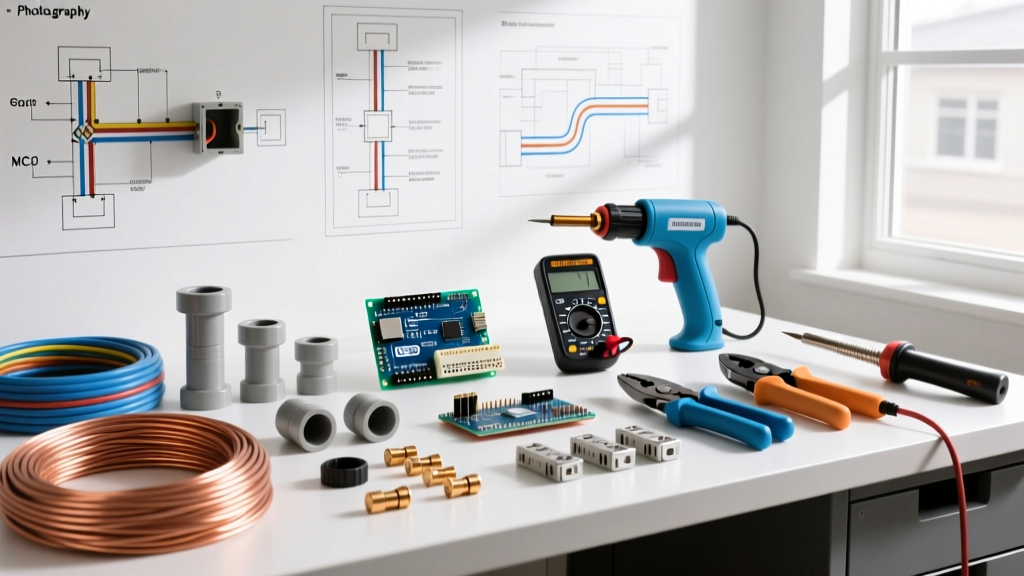

The Modern Standard for Housing Electrical Wiring
When planning housing electrical wiring for modern residences, the baseline has fundamentally shifted. The standard 100-amp service of the late 20th century is obsolete; 2026 new builds and major remodels routinely demand 200-amp to 400-amp services to accommodate Level 2 EV chargers, cold-climate heat pumps, and high-draw induction cooktops. Executing these upgrades requires more than just basic know-how—it demands precision materials and professional-grade tools.
This comprehensive material and tool guide breaks down the exact specifications, current market pricing, and code-compliant components required for residential wiring projects. Whether you are a licensed contractor or an advanced DIYer tackling a permitted addition, selecting the right gear is the first step toward a safe, inspection-ready installation.
Core Cable Materials: The Veins of the Home
The backbone of any residential project is the cabling. While aluminum is reserved for heavy feeder lines (like 4/0 SER for main panels), copper remains the undisputed standard for branch circuit housing electrical wiring.
Non-Metallic Sheathed Cable (NM-B)
For interior, dry-location framing, NM-B (commonly known by the brand name Romex) is the default choice. In 2026, copper volatility has stabilized, but pricing remains higher than historical averages.
- 14/2 AWG (15-Amp Circuits): Used strictly for lighting circuits and low-draw receptacles in bedrooms and living areas. Cost: ~$95 per 250ft roll.
- 12/2 AWG (20-Amp Circuits): The modern workhorse for kitchen, bathroom, and garage receptacles. Cost: ~$145 per 250ft roll.
- 10/3 AWG (30-Amp Circuits): Required for heavy appliances like electric dryers and standard water heaters. Cost: ~$285 per 250ft roll.
Pro Tip: Upgrade to Southwire's SIMpull NM-B wire. The proprietary jacket lubrication reduces pulling friction by up to 50%, drastically reducing the risk of jacket tearing when fishing wires through tight studs and engineered I-joists.
THHN/THWN-2 for Conduit Runs
When housing electrical wiring must be routed through conduit (such as in exposed basement ceilings, garages, or outdoor runs), individual THHN/THWN-2 conductors are required. You will need to pull separate hot, neutral, and ground wires. Always use stranded THHN for conduit runs longer than 50 feet to make pulling around sweeps significantly easier than solid core.
Boxes and Enclosures: Box Fill Calculations
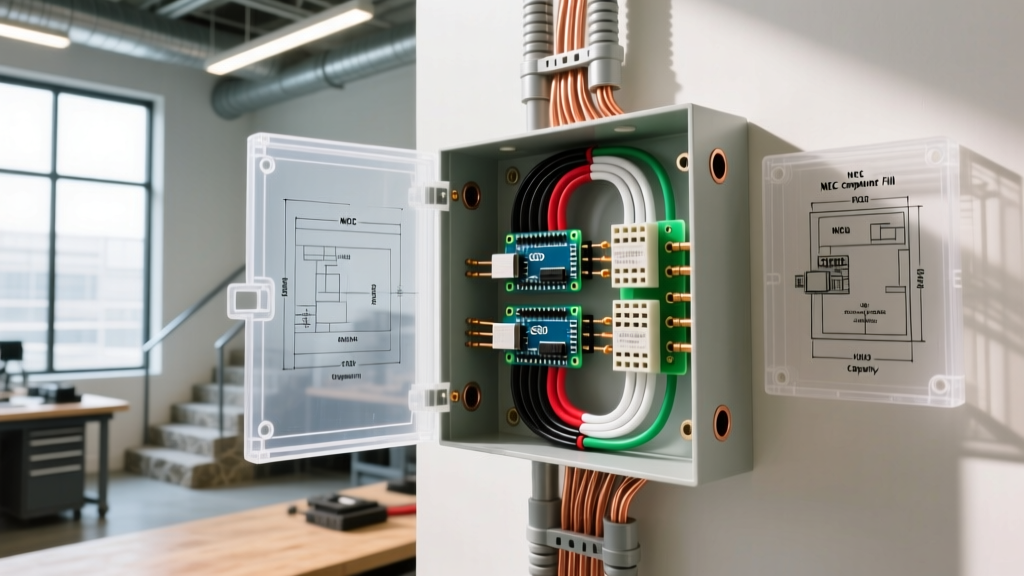
Selecting the correct junction or device box is a frequent point of failure during municipal inspections. The National Electrical Code (NEC) strictly governs 'box fill'—the maximum number of wires, devices, and clamps allowed inside an enclosure.
Essential Box Models for 2026
| Box Type | Recommended Model | Cubic Inch Capacity | Best Application | Est. Price |
|---|---|---|---|---|
| Plastic Nail-On | Carlon B618R-UP | 22.5 cu in. | Standard 12/2 receptacle & switch drops | $1.15 |
| Plastic Old-Work | Carlon E989RR-UP | 23.0 cu in. | Retrofit drywall receptacle additions | $2.40 |
| Metal Octagonal | Raco 504 | 15.5 cu in. | Ceiling fan supports (with proper bracing) | $3.85 |
| 4x4 Metal Square | Steel City 52171 | 21.0 cu in. | Exposed garage conduit junctions | $4.50 |
Note: Always calculate box fill per NEC Article 314.16. A standard duplex receptacle counts as two conductor volumes. If you are using 12 AWG wire (which counts as 2.25 cubic inches per volume), a box with one receptacle and two 12/2 cables requires a minimum of 15.75 cubic inches of space.
Essential Hand and Diagnostic Tools
Quality housing electrical wiring relies heavily on the precision of the tools used to strip, terminate, and test the connections. Cheap tools lead to nicked copper conductors, which create high-resistance hot spots and potential fire hazards.
Wire Preparation & Termination
- Wire Strippers: The Klein Tools 11055 (10-20 AWG) is the industry standard for solid and stranded wire. It features precision-machined stripping holes that remove insulation without scoring the copper. (Price: $28)
- Lineman Pliers: Klein 2000-48N High-Leverage Lineman's Pliers. The extended handle provides 46% greater cutting and gripping power, essential for twisting multiple 12 AWG grounds together before wire-nutting. (Price: $45)
- Screwdrivers: Insulated, laser-tipped screwdrivers like the Wiha 32093 1000V insulated set. The laser tip prevents cam-out on tight terminal screws found on modern AFCI/GFCI breakers. (Price: $65)
Routing and Fishing
Running wire through finished walls requires specialized fish tapes. For standard 150-foot runs, the Greenlee 50501504 steel fish tape is reliable. However, for complex runs with multiple bends or existing insulation, upgrade to a Milwaukee 48-20-0010 fiberglass fish tape, which prevents shorting out if it accidentally contacts a live panel busbar during retrofit work. (Price: $85)
Diagnostic Testing
Never rely on a basic neon voltage tester for modern housing electrical wiring. Smart home wiring and variable-frequency drive (VFD) appliances can induce phantom voltages.
- Non-Contact Voltage Tester: Klein NCVT-2 detects both standard (48-1000V) and low-voltage (12-48V) currents, crucial for troubleshooting doorbell transformers and smart thermostat C-wires. (Price: $35)
- Multimeter: Fluke 117 True RMS Electricians Multimeter. The True RMS capability ensures accurate readings on non-linear loads, and the VoltAlert feature provides an extra layer of safety before touching a conductor. (Price: $220)
Code Compliance and Safety Mandates
Adhering to the National Electrical Code is non-negotiable. According to the National Fire Protection Association (NFPA), the NEC is updated every three years to address emerging electrical hazards. Local jurisdictions in 2026 are largely enforcing the 2023 NEC, with early adopters moving to 2026 standards.
Critical Code Updates to Source Materials For:
- AFCI/GFCI Dual Function Breakers: Areas like kitchens and laundry rooms now frequently require both Arc Fault and Ground Fault protection. Sourcing dual-function breakers (like the Siemens Q120DF) saves panel space and eliminates the need for bulky dual-function receptacles. (Price: $55 each)
- Tamper-Resistant (TR) Receptacles: Standard receptacles are no longer legal in dwelling units. You must purchase TR-rated models (marked with 'TR' on the strap), which feature internal shutters that prevent children from inserting foreign objects. Leviton's T5320-WCP is a reliable, commercial-grade TR option. (Price: $3.50 each)
- Outdoor Disconnects: Recent code cycles require an exterior emergency disconnect for one- and two-family dwellings. Plan your main panel feed to accommodate an outdoor disconnect enclosure like the Square D D221NRB.
For comprehensive safety guidelines regarding electrical installations, arc flash hazards, and proper PPE requirements during panel terminations, always consult the Occupational Safety and Health Administration (OSHA) electrical safety standards.
Future-Proofing: Smart Home and Low Voltage Prep
Modern housing electrical wiring isn't just about 120V/240V power; it's about data. When running NM-B to a new living room or home office, always pull a parallel run of Cat6A solid copper Ethernet cable and RG6 Quad-Shield coaxial. Even if you rely heavily on Wi-Fi and 5G, hardwired backhauls for mesh Wi-Fi access points and PoE (Power over Ethernet) security cameras provide latency and reliability that wireless cannot match.
Install a structured media enclosure (such as the Leviton 28IN-SM) near your main electrical panel to house network switches, PoE injectors, and cable modems, ensuring your high-voltage and low-voltage systems remain organized and separated by code-mandated physical barriers.
Summary: Investing in the Right Gear
Successful housing electrical wiring projects are defined by the quality of the materials hidden behind the drywall and the precision of the tools used to install them. By investing in SIMpull NM-B cable, correctly sized Carlon or Raco enclosures, and True-RMS diagnostic tools from Fluke and Klein, you ensure that your installation will not only pass municipal inspections on the first try but will safely support the electrical demands of the modern home for decades to come. Always pull local permits, schedule rough-in and final inspections, and prioritize NEC compliance over shortcuts.