
Strategic HVAC Planning for Home Renovations
When undertaking a major home renovation, upgrading your climate control system is one of the highest-ROI improvements you can make. However, integrating modern smart thermostats with older electric furnaces requires careful electrical planning. Unlike gas systems, electric furnaces rely on high-amperage sequencers and specific low-voltage control circuits that can easily overwhelm legacy wiring. According to the U.S. Department of Energy, properly installed smart thermostats can save homeowners an average of 10% to 15% on heating costs annually, but these savings are entirely dependent on correct, code-compliant wiring. This guide provides contractors and advanced DIY renovators with a deep-dive blueprint for electric furnace thermostat wiring during the rough-in phase of a remodel.
Assessing Legacy Wiring in Older Homes
Before you close up drywall or order new HVAC control boards, you must audit the existing thermostat cable. Homes built before the 1990s typically feature 2-wire or 4-wire bundles that lack the capacity for modern Wi-Fi-enabled thermostats. During a renovation, relying on "C-wire adapters" or "power extenders" is a temporary patch that often leads to voltage drops and Wi-Fi disconnects. The rough-in phase is your only opportunity to pull new cable through open wall cavities.
Identifying Your Existing Cable Bundle
Strip back the jacket of the existing thermostat wire at the air handler to inspect the internal conductors. You are looking for the gauge, the number of conductors, and the insulation rating. For any 2026 renovation, the absolute minimum standard is 18 AWG solid copper, CL2-rated (Class 2) wire. If your existing wire is stranded, aluminum, or shows brittle insulation, it must be replaced entirely.
| Legacy Wire Type | Conductors | Renovation Verdict |
|---|---|---|
| 18/2 Unshielded | Red, White | Replace immediately. Cannot support cooling, fans, or smart features. |
| 18/4 Standard | Red, White, Yellow, Green | Replace. Lacks the Common (C) wire required for continuous smart thermostat power. |
| 18/5 CL2 Rated | Red, White, Yellow, Green, Blue | Acceptable for basic smart thermostats, but limits future expansion (e.g., humidifiers). |
| 18/8 CL2 Rated | 8 Solid Copper Cores | Gold Standard for 2026 renovations. Supports all current and future HVAC accessories. |
The Electric Furnace Difference: Sequencers and Transformers
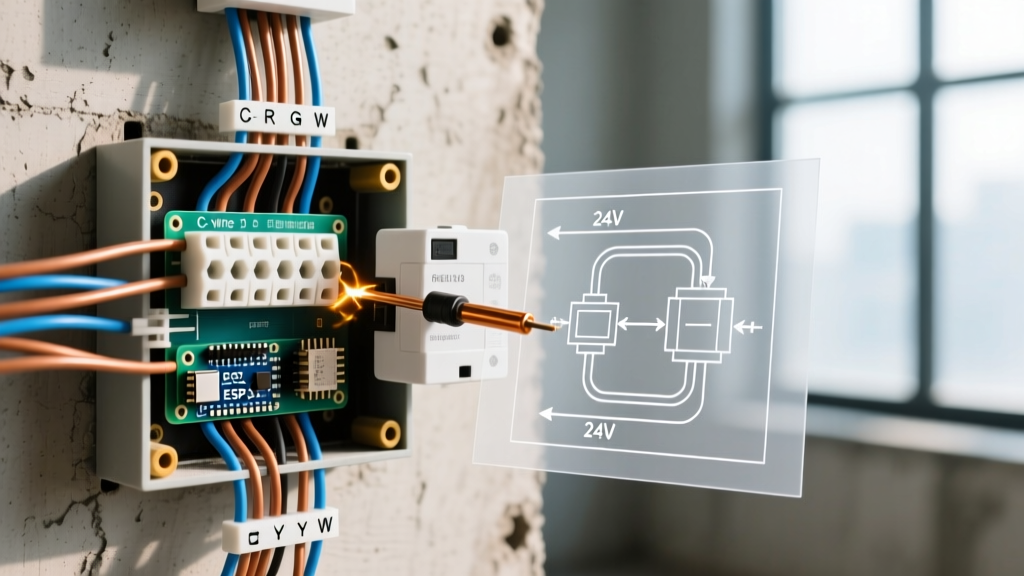
Electric furnace thermostat wiring differs fundamentally from gas or heat pump systems. Electric furnaces do not use a single gas valve; instead, they use sequencers to stage multiple high-voltage heating elements (often drawing 20 to 30 amps per element). The thermostat's "W" (Heat) terminal sends a 24VAC signal to the sequencer coil, which then closes the high-voltage contacts to energize the heating elements.
The 40VA Transformer Bottleneck
This is the most common failure point in electric furnace renovations. Older electric furnaces were typically equipped with a 40VA (Volt-Ampere) 24V transformer. A 40VA transformer can only safely supply about 1.6 amps of current. Modern smart thermostats—especially those with large color screens, occupancy sensors, and Wi-Fi radios—can draw peak currents of 1.5A to 2.0A during startup or when the screen wakes up. If you add a smart thermostat to a 40VA transformer, the voltage will sag, causing the thermostat to reboot endlessly or, worse, overheat and burn out the transformer.
Renovation Action Item: During the HVAC rough-in, upgrade the furnace's 24V transformer to a 75VA model (such as the Honeywell AT72D1683 or an equivalent OEM part, typically costing $25 to $35). This ensures clean, stable voltage for the thermostat and any future accessories like whole-home humidifiers or UV air purifiers.
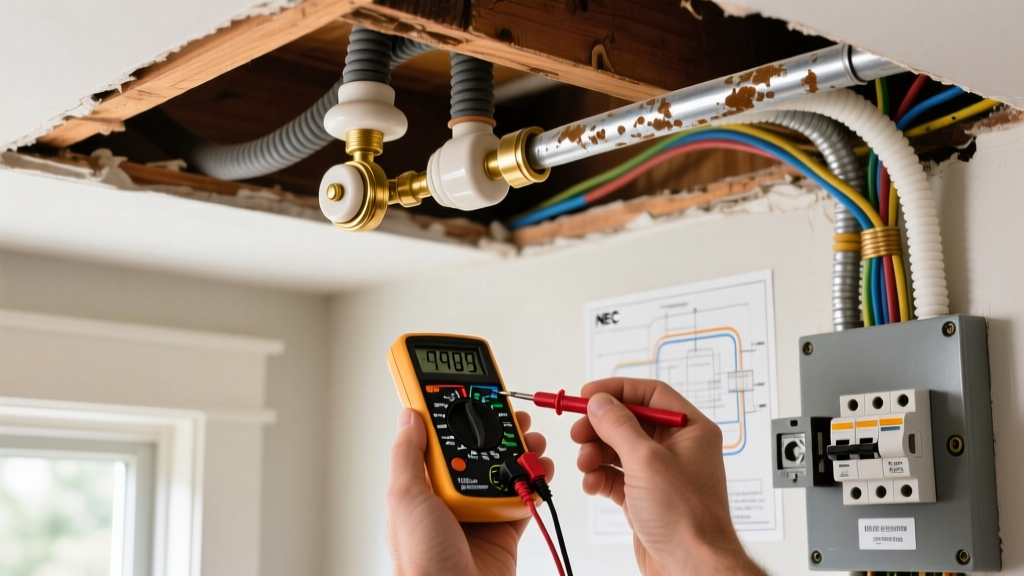
CRITICAL RENOVATION WARNING: Never connect the 24VAC thermostat "R" (Power) wire to a sequencer coil terminal that is also tied directly to a high-voltage line. A miswired sequencer can backfeed 240V directly into your low-voltage thermostat wire, instantly vaporizing the smart thermostat and potentially causing an electrical fire. Always verify isolation with a multimeter before energizing the system.
C-Wire Rough-In Strategies for Open Walls
The ENERGY STAR Smart Thermostat Guidelines explicitly recommend a dedicated Common (C) wire for optimal performance and to prevent "power stealing" from the heating/cooling relays. Power stealing can cause electric furnace sequencers to chatter or partially engage, leading to premature contactor failure.
Step-by-Step Rough-In Procedure
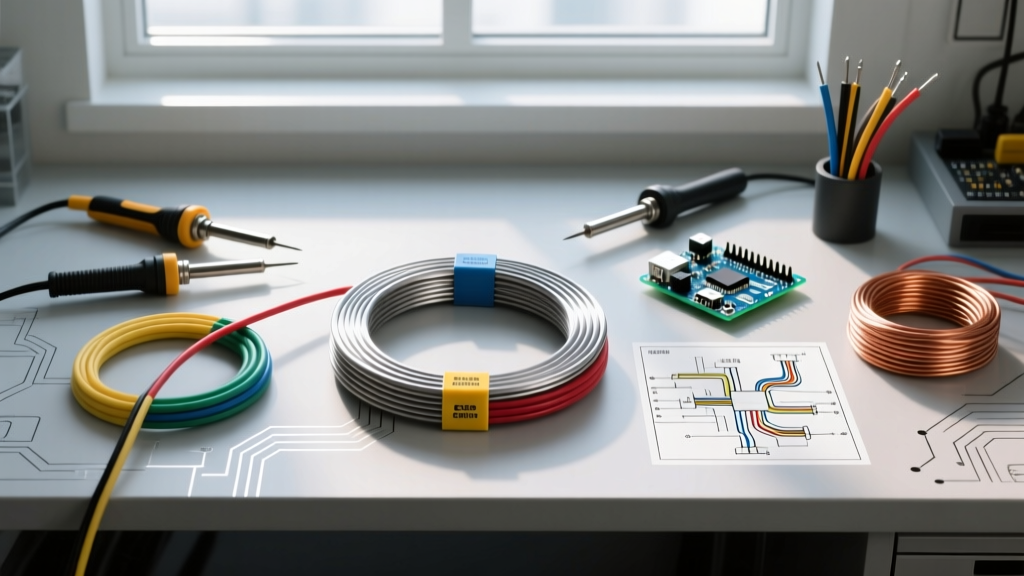
- Select the Cable: Purchase a spool of 18/8 CL2-rated solid copper thermostat wire. The CL2 rating ensures compliance with National Fire Protection Association (NFPA) NEC Article 725 for Class 2 remote-control and signaling circuits.
- Route the Cable: Run the cable from the air handler control box to the thermostat wall plate. Keep low-voltage thermostat wire at least 12 inches away from parallel high-voltage (120V/240V) Romex runs to prevent electromagnetic interference (EMI) that can disrupt smart thermostat Wi-Fi signals.
- Secure the Wire: While NEC Article 725 does not strictly mandate stapling Class 2 cables in the same manner as NM-B high-voltage cable, best practice for renovations is to secure the cable every 4.5 feet and within 8 inches of the wall box to prevent drywallers from accidentally crushing or cutting the wire.
- Leave Ample Slack: Leave at least 18 inches of slack at the thermostat wall plate and 24 inches at the air handler. This allows for future drywall patching, wall-box adjustments, and easier terminal connections.
2026 Renovation Budgeting: Wiring & Component Costs
When scoping your renovation budget, factor in the materials required for a future-proof electric furnace thermostat installation. Prices below reflect average 2026 retail and contractor supply costs.
| Component | Specification | Estimated Cost (2026) |
|---|---|---|
| Thermostat Wire | 18/8 CL2 Solid Copper (250ft spool) | $65 - $85 |
| 24V Transformer Upgrade | 75VA, 120V/240V Primary, 24VAC Secondary | $25 - $40 |
| Control Board Fuses | 3A ATC (Automotive Blade) Fuses (10-pack) | $5 - $8 |
| Wall Plate / Mud Ring | Low-voltage bracket (Old work or new work) | $3 - $6 |
| Labor (Rough-in only) | Electrician/HVAC tech (1-2 hours) | $150 - $250 |
Troubleshooting Edge Cases & Failure Modes
Even with meticulous renovation planning, electric furnace wiring presents unique edge cases. Keep this troubleshooting matrix in mind during the final trim-out and commissioning phase.
- Blown 3A Control Board Fuse: Most modern electric furnace control boards are protected by a standard 3A automotive blade fuse (usually purple). If the "R" and "W" wires touch during installation, or if a sequencer coil shorts out, this fuse will blow. Always keep spares in your renovation toolkit and test the coil resistance (should read 15-30 ohms) before powering up.
- Phantom Voltage and Stray Signals: If your 18/8 wire was run too close to 240V electric furnace supply lines, inductive coupling can introduce stray voltage. Use a non-contact voltage tester and a digital multimeter to verify that the "C" wire reads a solid 0V relative to ground, and exactly 24VAC relative to the "R" wire.
- Sequencer Chatter: If the heating elements click rapidly without engaging, the smart thermostat may be "power stealing" because the C-wire connection at the air handler is loose or connected to the wrong terminal (e.g., connected to a grounding lug instead of the transformer's 24VAC common terminal). Verify the physical C-terminal on the control board.
Final Inspection and Code Compliance
Before scheduling the municipal electrical inspection, verify that all low-voltage connections at the air handler are secured with wire nuts or proper spade terminals, and that no bare copper is exposed outside the terminal block. Ensure the thermostat wall plate is mounted level and that the wall cavity is sealed with fire-blocking foam if the wire penetrates a top or bottom plate. By treating electric furnace thermostat wiring as a critical infrastructure component rather than an afterthought, your renovation will deliver reliable, efficient, and smart climate control for decades to come.