
Building Your Arsenal for Electrical Wiring Basics
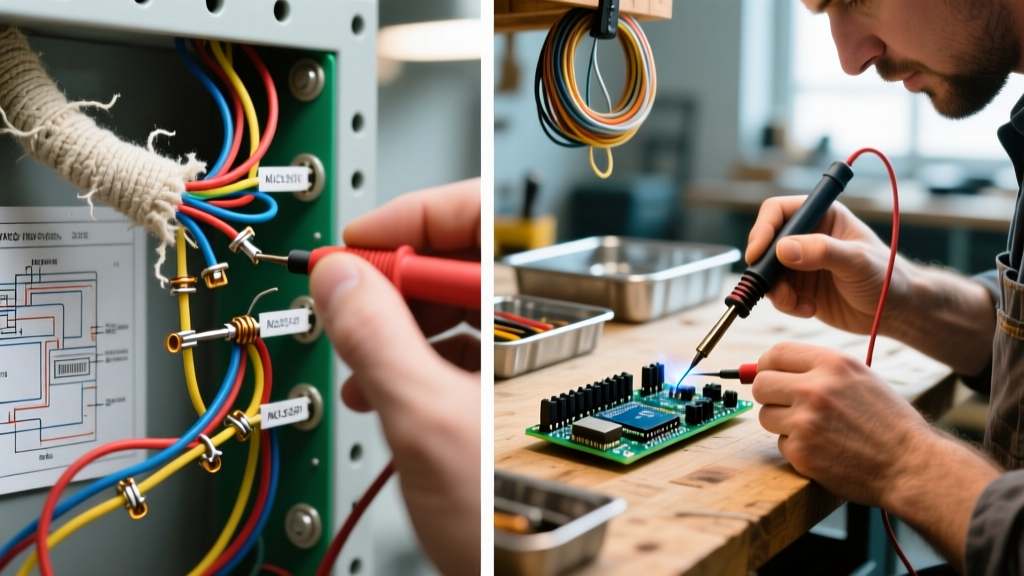
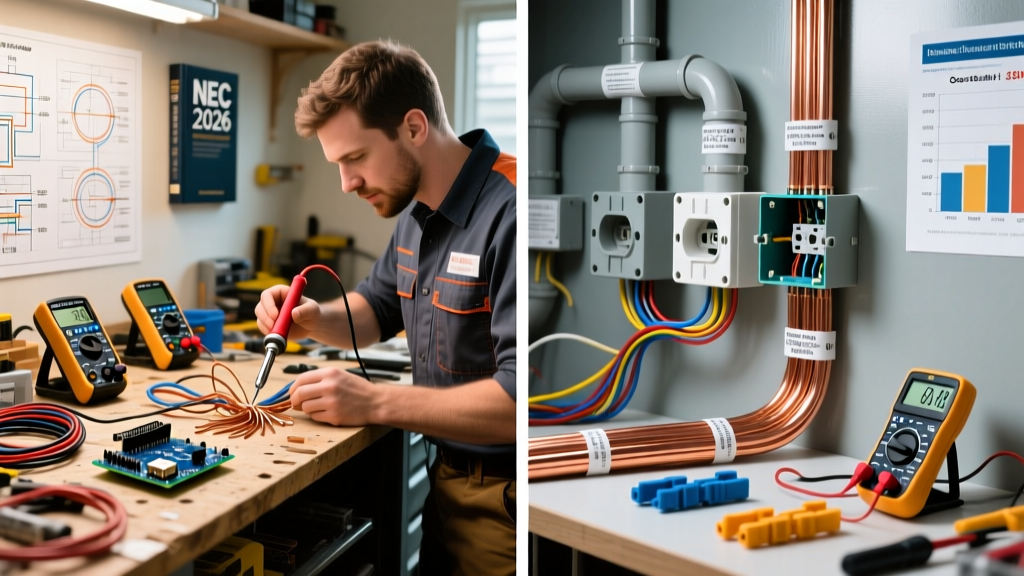
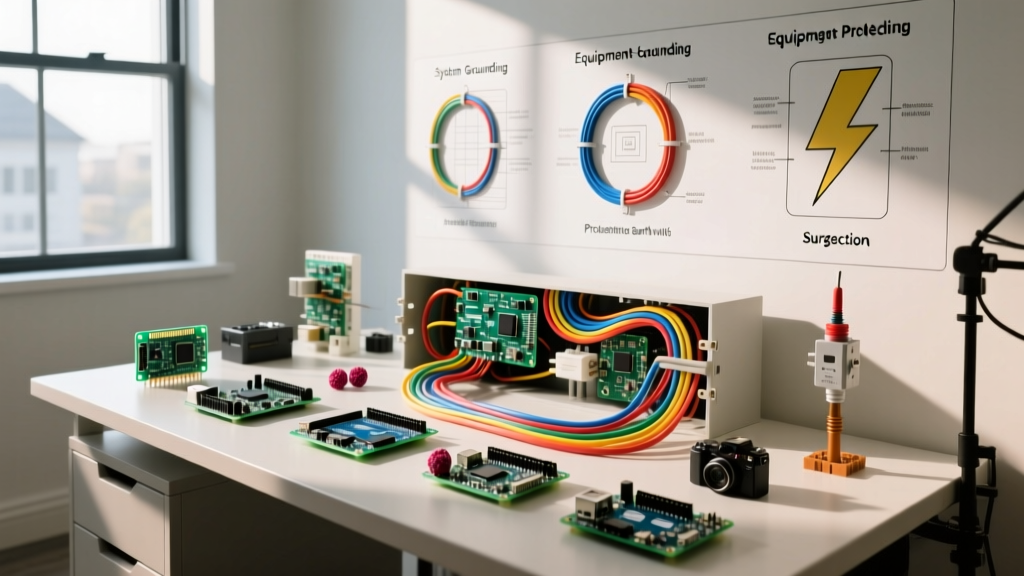
Understanding electrical wiring basics requires more than just theoretical knowledge; it demands the right physical tools to execute safe, code-compliant connections. As we navigate the 2026 landscape of residential electrical work, adherence to the latest National Electrical Code (NEC) is non-negotiable. Whether you are running a new 20-amp kitchen circuit or replacing a damaged receptacle, your material and tool selection dictates the longevity and safety of the installation.
Safety Directive: Before touching any wire, always verify the circuit is de-energized using a non-contact voltage tester. The Occupational Safety and Health Administration (OSHA) mandates strict lockout/tagout procedures for professionals, and DIYers must adopt a similar 'test-before-touch' mentality to prevent arc flash and electrocution.
The Core Hand Tool Checklist
Cheap tools strip screw heads, nick copper conductors, and lead to high-resistance connections that cause fires. Invest in professional-grade, insulated hand tools.
- Multi-Bit Screwdriver: The Klein Tools 32308 11-in-1 ($28) is the industry standard. It includes #1 and #2 Phillips, 1/4-inch and 3/16-inch slotted, and crucial 1/4-inch and 5/16-inch nut drivers for panel cover plates.
- Wire Strippers: Avoid cheap punch-down strippers that nick the copper. The Milwaukee 48-22-3000 Automatic Wire Stripper ($35) cleanly strips 10-24 AWG solid and stranded wire without scoring the conductor, preserving its full ampacity.
- Lineman's Pliers: The Knipex 09 02 250 ($65) or Klein Tools 200048EINS ($45) are essential for twisting stranded/solid wires together before termination and for cutting heavy-gauge Romex sheathing.
- Fish Tapes: For retrofitting walls, a 25-foot fiberglass fish tape like the Klein Tools 56325 ($45) prevents accidental contact with live panels, unlike conductive steel tapes.
Decoding Wire Materials and Gauges
Mastering electrical wiring basics means understanding the relationship between American Wire Gauge (AWG), circuit breaker amperage, and insulation type. Using undersized wire for a given breaker is a primary cause of residential electrical fires, as documented by the U.S. Consumer Product Safety Commission (CPSC).
2026 Material Pricing and Application Matrix
| Wire Type & Gauge | Max Ampacity (Copper) | Standard Breaker Size | Primary Application | Avg. Cost (250ft Roll, 2026) |
|---|---|---|---|---|
| 14/2 NM-B (Romex) | 15 Amps | 15A | General lighting, bedroom receptacles | $105 - $120 |
| 12/2 NM-B (Romex) | 20 Amps | 20A | Kitchen/bath small appliance circuits | $135 - $155 |
| 10/3 NM-B (Romex) | 30 Amps | 30A | Electric dryers, heavy HVAC equipment | $210 - $240 |
| 6 AWG THHN (Stranded) | 65 Amps (75°C column) | 60A | Subpanels, EV charger feeds (in conduit) | $1.40 - $1.80 / ft |
Note: NM-B (Non-Metallic Sheathed Cable) is restricted to dry, indoor environments. For wet locations or direct burial, you must upgrade to UF-B (Underground Feeder) or pull THWN-2 conductors through schedule 40/80 PVC conduit.
Termination: Connectors and Junction Boxes
The days of relying solely on twist-on wire nuts are ending. While Ideal Industries 341 Yellow Wire-Nuts ($0.12/ea) are still code-compliant and reliable when torqued correctly, push-in lever connectors have revolutionized junction box workflows.
WAGO 221 Series vs. Traditional Wire Nuts
- WAGO 221 Lever-Nuts: Costing roughly $0.45 per connection point, these transparent, UL-listed connectors accept 24-12 AWG solid and stranded wire. They eliminate the risk of under-twisting and allow for instant visual verification of the conductor insertion depth.
- Push-In Receptacles: Modern 15A and 20A receptacles (like the Leviton T5262 tamper-resistant duplex, ~$3.50) feature back-wire push-in clamps that grip 14 and 12 AWG solid wire securely, saving minutes per device compared to wrapping shepherd hooks around terminal screws.
Diagnostic and Testing Equipment
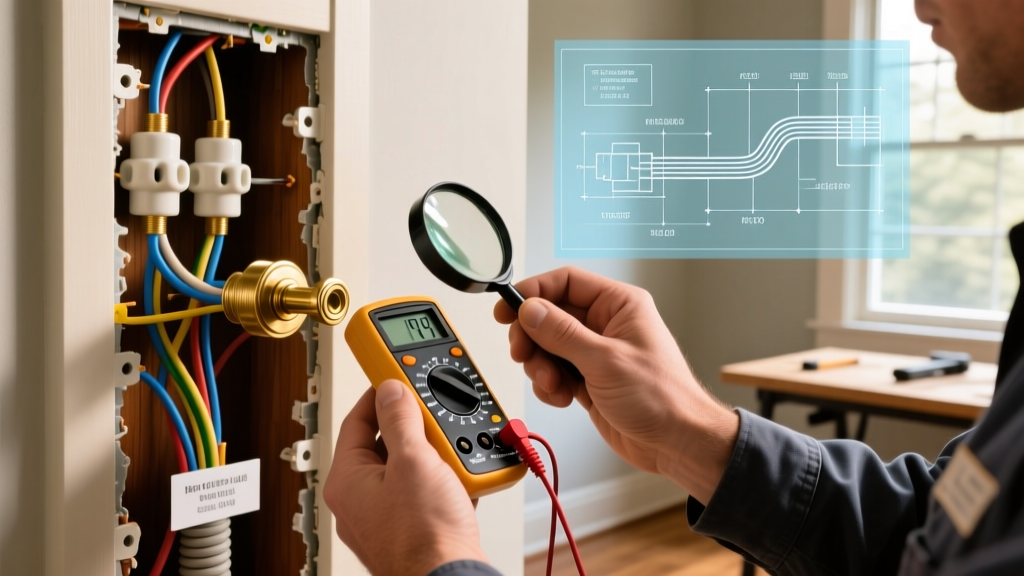
You cannot safely troubleshoot electrical wiring basics without precision testing gear. Multimeters measure voltage, continuity, and resistance, allowing you to verify open neutrals, broken grounds, and voltage drop.
- Non-Contact Voltage Tester (NCVT): The Klein Tools NCVT-2 ($35) detects standard and low-voltage AC. Always test on a known live source before and after checking your target wire to verify the tool's battery and functionality.
- Digital Multimeter (DMM): The Fluke 117 True-RMS Electricians Multimeter ($210) features VoltAlert (non-contact voltage) and AutoVolt (automatic AC/DC selection). For budget-conscious DIYers, the Klein Tools MM400 ($50) provides adequate CAT III 600V safety ratings for residential panels.
- Receptacle Tester: The Gardner Bender GRT-101 ($12) instantly identifies miswired outlets, such as open grounds, hot/neutral reversals, and hot/ground reversals.
Execution: A 4-Step Wiring Workflow
Follow this exact sequence to ensure your rough-in and trim-out phases pass municipal inspections.
- Sheath Stripping: Use a Romex ripper to slit the outer jacket, then cut it back. Leave exactly 1/4 inch to 3/8 inch of the plastic sheath extending into the junction box. The NEC requires the sheath to enter the box to protect the wires from the metal or PVC box edges.
- Conductor Prep: Strip exactly 3/4 inch of insulation from the copper. If you nick the copper, cut the end off and re-strip. A scored conductor creates a localized hot spot under load.
- Box Fill Calculation: Before terminating, ensure your junction box isn't overcrowded. Under NEC Article 314.16, a standard single-gang box (18 cubic inches) can comfortably hold four 12/2 NM cables and one duplex receptacle. Overstuffing causes wire pinching and insulation damage.
- Torque Verification: The 2020 NEC (and subsequent 2023/2026 updates) mandates that terminations be torqued to the manufacturer's specifications. Use an insulated torque screwdriver like the Wiha 60601 ($110) set to 14 in-lbs (standard for most 15A/20A receptacles) to prevent loose connections that cause arcing.
Frequently Asked Questions
Can I mix 14 AWG and 12 AWG wire on a 20-amp circuit?
Technically, the NEC prohibits using 14 AWG wire on any circuit protected by a 20-amp breaker. Even if the majority of the run is 12 AWG, introducing a 14 AWG pigtail or branch creates a bottleneck. If a 20-amp load is applied, the 14 AWG wire will overheat and melt before the breaker trips. Always match the smallest wire gauge in the circuit to the breaker size.
Do I need to use electrical tape on wire nuts?
No. Wrapping electrical tape around wire nuts is an outdated practice that can actually trap heat and degrade the adhesive inside the tape, creating a messy, unsafe connection. If a wire nut connection is properly torqued—meaning the wires twist together and the spring bites into the copper—no tape is required or recommended by UL or the NEC.
What is the difference between AFCI and GFCI protection?
GFCI (Ground Fault Circuit Interrupter) protects humans from lethal shock by detecting current leaking to ground (typically 4-6mA). AFCI (Arc Fault Circuit Interrupter) protects the building from fire by detecting dangerous electrical arcing patterns caused by loose connections or damaged cords. Modern residential wiring basics dictate that most living spaces require AFCI breakers, while wet locations (kitchens, baths, exteriors) require GFCI protection.