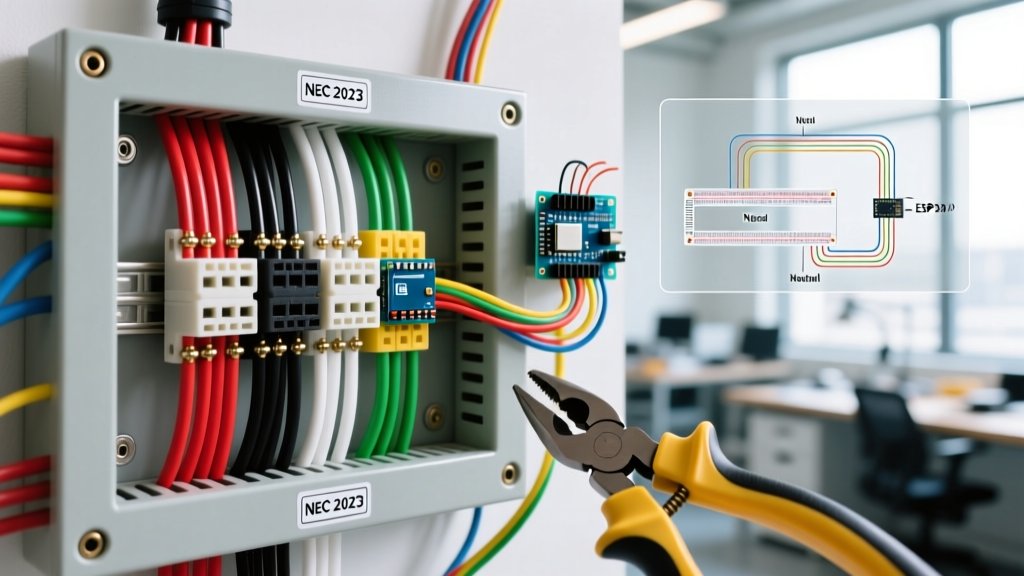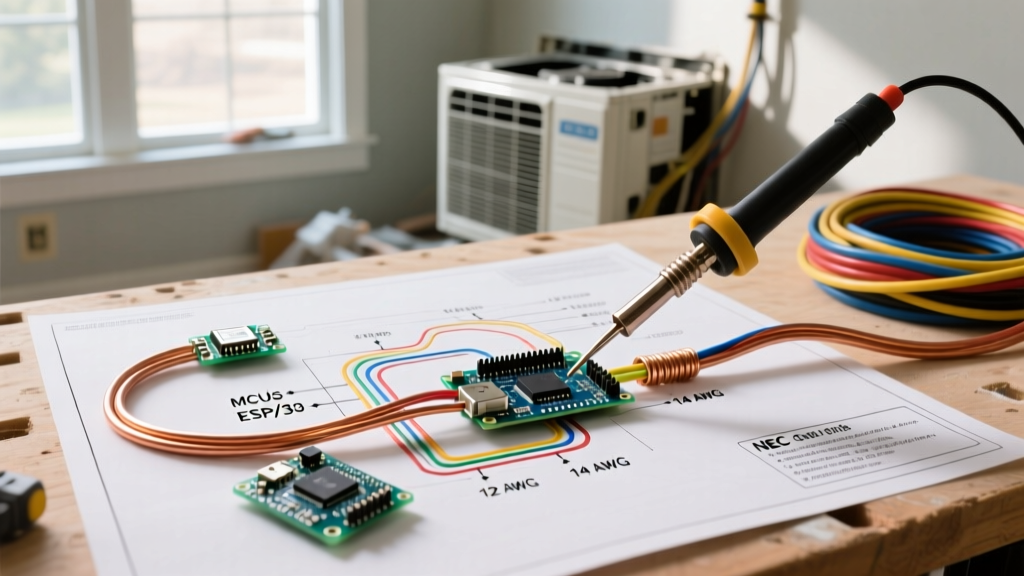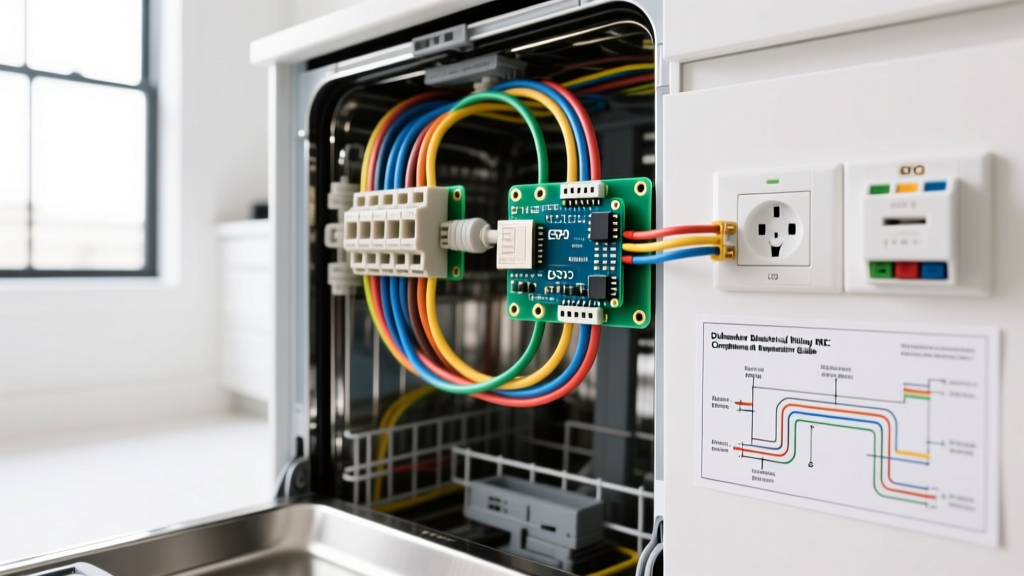

When it comes to kitchen remodels and new construction, dishwasher electrical wiring is one of the most frequently flagged areas during rough-in and final electrical inspections. The intersection of water, high-draw heating elements, and motor loads creates a unique hazard profile that the National Electrical Code (NEC) addresses with strict, uncompromising mandates. For DIYers and licensed electricians alike, understanding the precise code requirements is the difference between a swift final approval and a costly rework order.
As of the 2026 inspection cycle, local authorities having jurisdiction (AHJs) are heavily enforcing updated Ground Fault Circuit Interrupter (GFCI) and Arc Fault Circuit Interrupter (AFCI) protections, alongside rigorous disconnect and accessibility rules. This guide breaks down the exact NEC articles, material specifications, and failure modes you need to know to ensure your dishwasher installation passes inspection on the first visit.
Navigating the NEC: Dishwasher Electrical Wiring Fundamentals
The foundation of any compliant dishwasher installation begins at the panel. According to the National Fire Protection Association (NFPA), which publishes the NEC, kitchen appliances must be supported by adequately sized branch circuits that account for continuous and non-continuous loads.
Branch Circuit Sizing and Dedicated Line Rules
While the NEC does not explicitly mandate a dedicated circuit for a residential dishwasher in every jurisdiction, it is the overwhelming industry standard and required by many local amendments. If the dishwasher shares a circuit, it must not exceed the loading limits outlined in NEC Article 210.23.
- 15-Amp Circuit: Requires a minimum of 14 AWG copper wire (e.g., Southwire 14/2 NM-B). However, most modern dishwashers with integrated water heaters and disposal grinders draw between 10 to 14 amps on startup, making a 15A circuit prone to nuisance tripping.
- 20-Amp Circuit (Recommended): Requires 12 AWG copper wire (e.g., Southwire 12/2 NM-B). This is the gold standard for 2026 installations, accommodating high-draw models (like the Bosch 800 Series or KitchenAid ProWash) without voltage drop or thermal stress.
Pro-Tip on Cable Preparation: Inspectors frequently fail installations where the non-metallic (NM) sheathing is stripped too far back or nicked by the cable clamp. Use an Arlington NM75 non-metallic cable connector and leave exactly 1/4 inch of the outer sheath extending inside the junction box to protect the inner conductor insulation from the clamp's edges.
The GFCI and AFCI Mandate: What Inspectors Look For
The most common reason for a failed dishwasher inspection in the modern code cycle is improper or missing fault protection. The evolution of NEC Articles 210.8 and 210.12 has fundamentally changed how kitchen circuits are protected.
GFCI Protection (NEC 210.8(D))
The NEC mandates GFCI protection for all outlets supplying dishwashers installed in dwelling unit kitchens. This applies whether the dishwasher is hardwired or cord-and-plug connected. If you are using a cord-and-plug setup, the receptacle must be a GFCI type or protected by a GFCI breaker. If hardwired, the branch circuit breaker must provide GFCI protection.
AFCI Protection (NEC 210.12(A))
Kitchen branch circuits also require Arc Fault Circuit Interrupter (AFCI) protection to prevent electrical fires caused by arcing faults in damaged wiring. Because both GFCI and AFCI are required, the most cost-effective and code-compliant solution in 2026 is installing a Dual Function (CAFCI/GFCI) breaker.
Expert Insight: A Square D QO120DF (15A) or QO220DF (20A) Dual Function breaker costs approximately $58 to $65 at major electrical suppliers. Attempting to daisy-chain an AFCI breaker with a GFCI receptacle often leads to 'nuisance tripping' due to the dishwasher's motor inductance, which inspectors and homeowners despise. Always opt for the dual-function breaker at the panel for hardwired setups.
For a broader understanding of kitchen hazards, the Electrical Safety Foundation International (ESFI) provides excellent resources on why these dual protections are non-negotiable in wet environments.
Hardwired vs. Cord-and-Plug: NEC 422.16(B)(2) Constraints
Inspectors will closely examine the physical connection method between the junction box and the appliance. You must choose between hardwiring and a flexible cord, and each has strict code boundaries.
Flexible Cord Rules (NEC 422.16(B)(2))
If you choose to use a cord-and-plug connection (which is highly recommended for ease of appliance replacement), the flexible cord must meet these exact specifications:
- Length: The cord must be a minimum of 3 feet and a maximum of 6.5 feet long.
- Strain Relief: A proper strain relief fitting must be used where the cord enters the dishwasher's internal junction box. Taping the cord or using a standard NM cable clamp on a flexible cord is an automatic inspection failure.
- Receptacle Placement: The receptacle must be accessible. You cannot plug the dishwasher into an outlet located directly behind the dishwasher where removing the appliance is the only way to unplug it. It must be located in an adjacent cabinet, requiring a drilled access hole.
Hardwired Connection Rules
If hardwiring, you must use an approved junction box. The box must be securely mounted to the framing or cabinetry, not left resting on the floor or attached to the back of the appliance. Furthermore, NEC Article 422.31(B) requires a disconnecting means. If the breaker panel is not within sight of the dishwasher, you must either install a local disconnect switch or use a breaker that can be locked out in the OFF position.
Top 5 Dishwasher Wiring Inspection Failures
Based on field data and contractor reports, here are the most frequent red flags that result in a failed inspection, along with the exact code references and required remedies.
| Inspection Failure | NEC Reference | The Code-Compliant Fix |
|---|---|---|
| Junction box hidden behind the dishwasher unit | NEC 314.29 (Accessibility) | Mount the junction box in the adjacent sink base cabinet or on the wall framing where it can be reached without moving the appliance. |
| Flexible cord longer than 6.5 feet or shorter than 3 feet | NEC 422.16(B)(2) | Purchase a factory-molded appliance cord (e.g., Utilitech 6-ft 15-amp cord) that falls strictly within the 3 to 6.5 ft range. |
| Missing GFCI protection on a hardwired 2026 install | NEC 210.8(D) | Replace the standard thermal-magnetic breaker with a Dual Function (AFCI/GFCI) breaker at the main panel. |
| Sharing a 15A lighting circuit with the dishwasher | NEC 210.23(A) | Run a new dedicated 12/2 NM-B home run from the panel to a dedicated 20A breaker. |
| Ground wire not terminated or 'pigtailed' incorrectly | NEC 250.148 | Ensure the bare copper ground is bonded to the metal junction box via a green grounding screw and pigtailed to the appliance ground using a properly sized wire nut (e.g., Ideal Yellow 72B). |
The Pre-Inspection Verification Protocol
Before you call the local building department for your final inspection, run through this 5-point verification checklist to guarantee compliance. According to Energy Star guidelines, proper electrical installation also ensures the appliance operates at its rated efficiency without voltage sag.
- Torque Verification: Use a calibrated torque screwdriver to tighten the breaker and receptacle terminal screws to the manufacturer's specified inch-pound rating (typically 35-45 in-lbs for standard residential breakers). Loose connections cause arcing and thermal imaging failures.
- Box Fill Calculation: Verify that the junction box has adequate cubic inch capacity for the number of conductors, clamps, and wire nuts present (NEC Article 314.16). A standard 4x4x1.5 inch metal box provides 21 cubic inches, which is more than enough for a standard 12/2 NM-B feed and load.
- Sheath Penetration: Confirm the outer NM sheath extends into the box past the cable clamp by at least 1/4 inch, but no more than 1/2 inch.
- Disconnect Test: If hardwired, physically test the lockout/tagout capability of the breaker, or verify the local disconnect switch operates smoothly and cuts power to the unit.
- Moisture Barrier: If the junction box is mounted on an exterior wall or near the sink plumbing, ensure no water lines are routed directly above the electrical connections.
Mastering dishwasher electrical wiring is not just about making the appliance turn on; it is about creating a safe, code-compliant system that will endure years of high-temperature, high-moisture operation. By adhering strictly to NEC Articles 210, 422, and 314, you ensure your installation is safe, efficient, and ready to pass the most rigorous municipal inspections.