
The True Cost to Install Electrical Wiring in 2026
When calculating the cost to install electrical wiring in 2026, homeowners and contractors must look beyond simple hourly labor rates. The global supply chain has largely stabilized post-pandemic, but copper commodity pricing and stringent National Electrical Code (NEC) mandates continue to drive material and compliance costs upward. According to the Copper Development Association, copper prices remain historically elevated, directly impacting the baseline cost of residential and commercial rough-ins.
This guide dissects the exact material and tool expenses you will encounter in 2026, providing a data-driven framework to estimate your next wiring project accurately. Whether you are rewiring a 1970s ranch or roughing in a new addition, understanding the granular costs of conductors, termination hardware, and specialized tools is critical for maintaining your budget.
Material Breakdown: Wire, Conduit, and Termination Costs
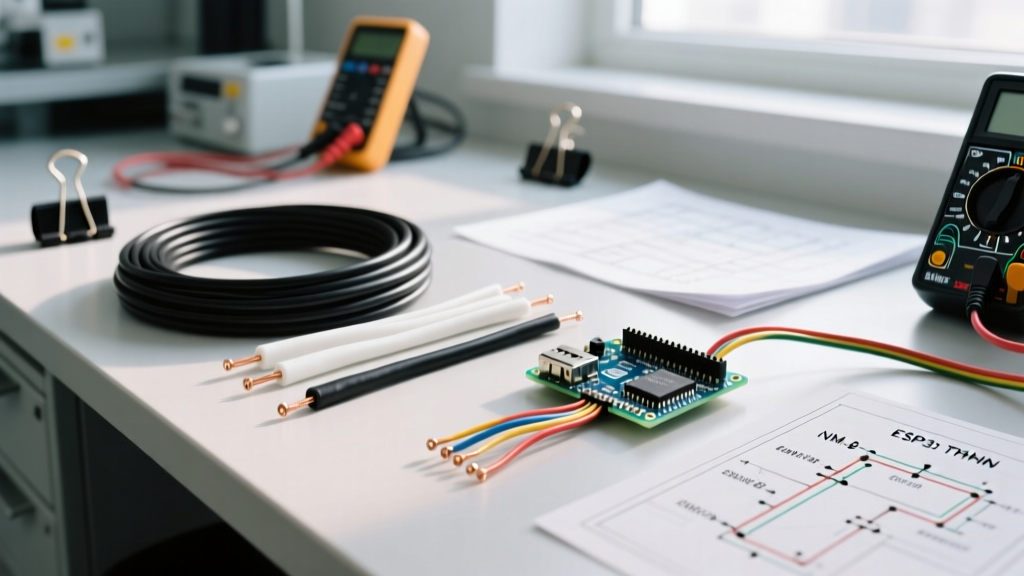
The bulk of your material budget will be consumed by conductors and raceways. In 2026, 12 AWG copper remains the standard for 20-ampere general-purpose circuits, largely replacing 14 AWG in premium builds to mitigate voltage drop and allow for future load expansion.
| Material Type | Spec / Gauge | Primary Application | 2026 Cost (per ft) | 250-ft Spool Cost |
|---|---|---|---|---|
| NM-B (Romex) | 14/2 AWG | 15A Lighting / Receptacles | $0.55 | $135.00 |
| NM-B (Romex) | 12/2 AWG | 20A Kitchen / Bath / General | $0.78 | $195.00 |
| UF-B | 12/2 AWG | Direct Burial / Outdoor | $1.15 | $285.00 |
| THHN (Solid) | 10 AWG | Conduit Pulls / 30A Circuits | $0.42 | $105.00 |
| SER Cable | 4/0-4/0-2/0 Al | 200A Service Feeder | $6.80 | N/A (Cut to length) |
The Copper vs. Aluminum Feeder Decision
For heavy feeder lines (100A to 200A), the cost to install electrical wiring can be slashed by up to 60% by utilizing AA-8000 series aluminum alloy instead of copper. A 4/0 Copper SER cable costs upwards of $14.50 per foot in 2026, whereas the aluminum equivalent sits around $6.80 per foot. However, aluminum requires strict adherence to NEC Article 110.14: you must use dual-rated (AL/CU) lugs and apply an antioxidant compound like Noalox to prevent galvanic corrosion and subsequent high-resistance failure modes at the termination point.
Expert Insight: Never use standard wire nuts for aluminum-to-copper pigtails. In 2026, inspectors strictly enforce the use of listed connectors, such as the AlumiConn lug or Ideal Twister Al/Cu wire connectors, to prevent thermal expansion mismatches that cause arcing.
Essential Tools: Capital vs. Consumable Investments
You cannot accurately estimate project costs without accounting for tooling. Professional-grade tools represent a capital expense, while fasteners and blades are consumables. Here is the baseline investment required for a standard residential rough-in:
- Klein Tools 11055 Wire Stripper (14-10 AWG): ~$29.98. The industry standard for cleanly stripping NM-B sheathing and individual THHN conductors without nicking the copper, which reduces the risk of hot-spot failures.
- Greenlee 881 EMT Bender (1/2 inch): ~$134.00. Essential for commercial or exposed basement conduit runs. Features precise degree markings for accurate offset and saddle bends.
- Milwaukee 48-22-8204 Fish Tape (50 ft): ~$54.00. A spring-steel tape with a slotted leader, crucial for navigating insulated exterior walls and existing drywall cavities.
- Fluke 117 True-RMS Multimeter: ~$199.99. Non-contact voltage (NCV) and AutoVolt features are non-negotiable for safely verifying dead circuits before terminating.
Fastener Economics: Wago Lever Nuts vs. Traditional Wire Nuts
A major shift in 2026 wiring costs is the widespread adoption of push-in and lever connectors. The Wago 221 Series (2-conductor) lever nut costs approximately $0.38 each, compared to $0.04 for a standard Ideal 30-504 wire nut. While Wago connectors increase material costs by nearly 10x per connection, they reduce labor time by 40% and eliminate the risk of loose strands or insufficient torque. For a 2,000 sq ft home requiring roughly 400 splices, upgrading to Wago adds about $136 to the material budget but saves hours of tedious twisting and taping.
Hidden Costs: Code Compliance and Panel Fit-Outs
The most frequently underestimated aspect of wiring costs is the circuit breaker panel fit-out. The National Fire Protection Association (NFPA) continuously updates the NEC to mandate broader Arc-Fault (AFCI) and Ground-Fault (GFCI) protection.
In 2026, NEC Article 210.12 requires AFCI protection for virtually all 120V, 15A and 20A branch circuits supplying living areas, kitchens, and laundry rooms. Furthermore, outdoor outlets now require GFCI protection. The easiest way to achieve this is via Dual-Function (AFCI/GFCI) circuit breakers.
- Standard 20A Breaker (e.g., Eaton BR220): $6.50
- Dual-Function AFCI/GFCI Breaker (e.g., Eaton BRD220): $52.00 - $58.00
If your new addition requires 8 branch circuits, and 6 of them mandate dual-function breakers, your panel material cost jumps from ~$52 (standard) to over $340 just for the breakers. Always factor in local permit fees, which typically range from $150 to $500 depending on the municipality and project valuation.
Room-by-Room Estimation Framework
To understand how these costs translate to a real-world scenario, let us break down the material cost to install electrical wiring for a standard 12x14 foot bedroom addition in 2026.
- Conductor Length Calculation: The room perimeter is 52 feet. Assume a 30-foot home run to the main panel. Add 6 receptacle drops (10 feet each) and 20 feet for switch loops. Total = 162 feet. Add 15% for waste and slack = 186 feet.
- Wire Cost: 186 ft of 12/2 NM-B @ $0.78/ft = $145.08.
- Protection: One 20A Dual-Function AFCI Breaker = $54.00.
- Devices: Four tamper-resistant receptacles (Leviton T5320) @ $3.50 each = $14.00. Two single-pole switches (Leviton 1451) @ $1.50 each = $3.00.
- Hardware & Consumables: Nail-on boxes, conduit staples, Wago 221 connectors, and NM-B cable clamps = $38.00.
Total Material Cost for Bedroom: ~$254.08. This excludes drywall patching, paint, and labor. According to Angi's 2026 Rewiring Cost Guide, professional labor will typically add $3.00 to $6.00 per linear foot of wire installed, meaning the total turnkey cost for this single room would range between $812 and $1,370 when factoring in the electrician's time, overhead, and profit margin.
Final Takeaways for 2026 Wiring Projects
Accurately forecasting the cost to install electrical wiring requires a granular understanding of modern material prices and NEC mandates. By strategically utilizing aluminum for heavy feeders, investing in time-saving termination hardware like Wago connectors, and accurately budgeting for expensive AFCI/GFCI breakers, you can prevent budget overruns. Always verify your local municipality's specific code amendments, as regional inspectors often enforce stricter versions of the NEC that can further impact your material list.