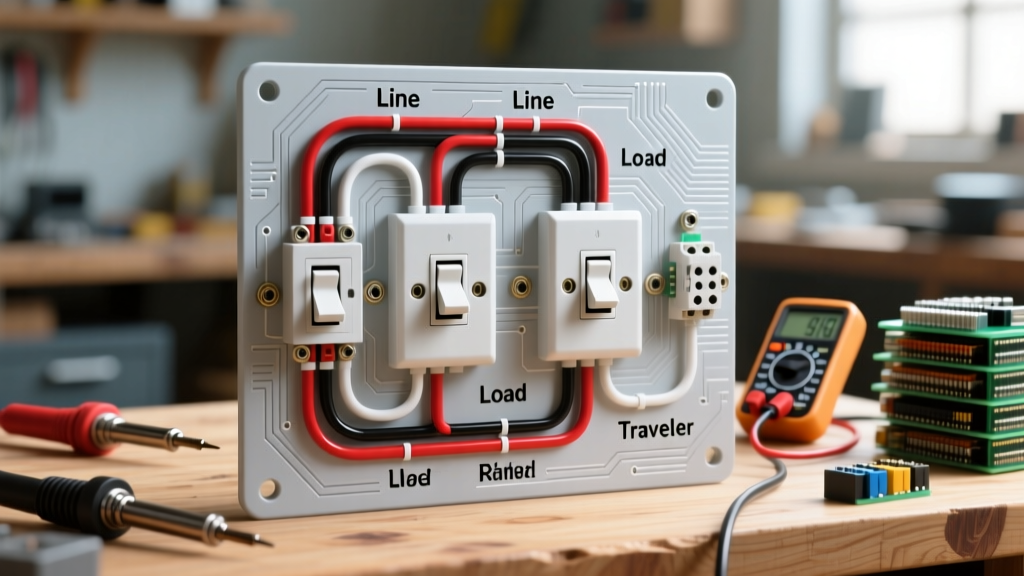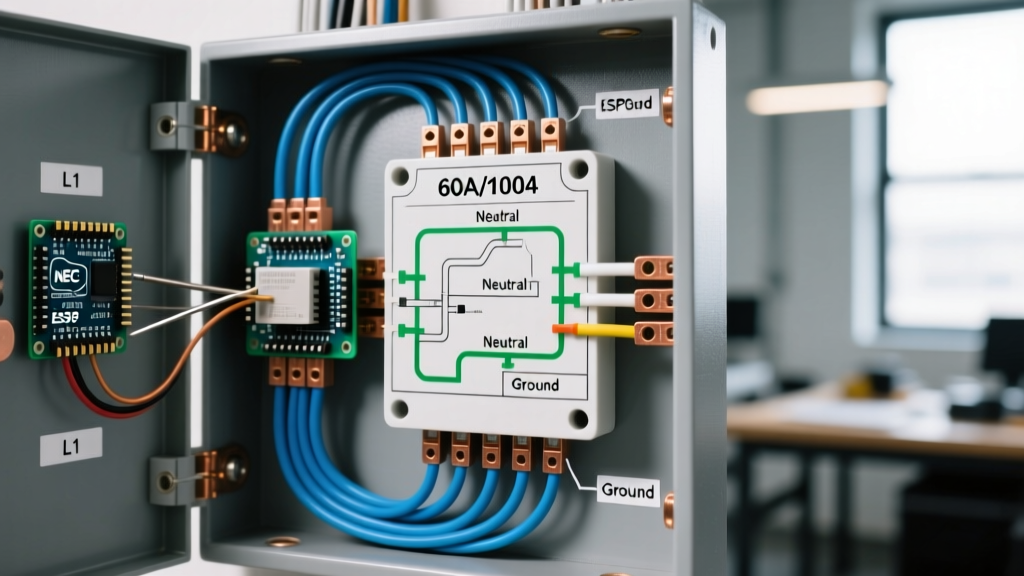

The Critical Distinction: Main Panels vs. Subpanels
When planning a garage workshop, detached barn, or heavy-load addition, wiring electrical sub panel systems correctly is one of the most high-stakes tasks in residential and light commercial electrical work. Unlike your main service panel—where the neutral and ground are bonded together at the main disconnect—a subpanel requires strict isolation between the grounded (neutral) conductor and the grounding (equipment ground) conductor. Failing to isolate these bus bars creates parallel neutral paths, allowing normal return current to flow through bare ground wires, conduit, and even plumbing, presenting a severe shock and fire hazard.
According to the National Fire Protection Association (NFPA), NEC Article 250.32(B) explicitly mandates this separation for buildings or structures supplied by a feeder. In this comprehensive guide, we break down the exact wire sizing, torque specifications, and installation sequences required for 60-amp and 100-amp subpanel installations in 2026.
The Golden Rule: Neutral and Ground Separation
Before pulling a single wire, you must verify your panel's internal configuration. Most modern subpanels, such as the Siemens P2S10030CU or Square D HOM816L125PG, ship with the neutral and ground bars physically separated. However, if you are repurposing an old main panel as a subpanel, you must remove the green bonding screw or bonding strap that connects the neutral bar to the panel's metal chassis.
Expert Insight: Never assume a panel is ready for subpanel duty out of the box. Always visually inspect the neutral bus bar. If it is bolted directly to the panel enclosure without an isolated insulator, you must purchase an accessory ground bar kit (e.g., Square D PK7GTA) and route all bare/green equipment grounding conductors to the new isolated bar, leaving the factory neutral bar strictly for white neutral wires.
Wire Sizing & Conduit Fill for 60A and 100A Feeders
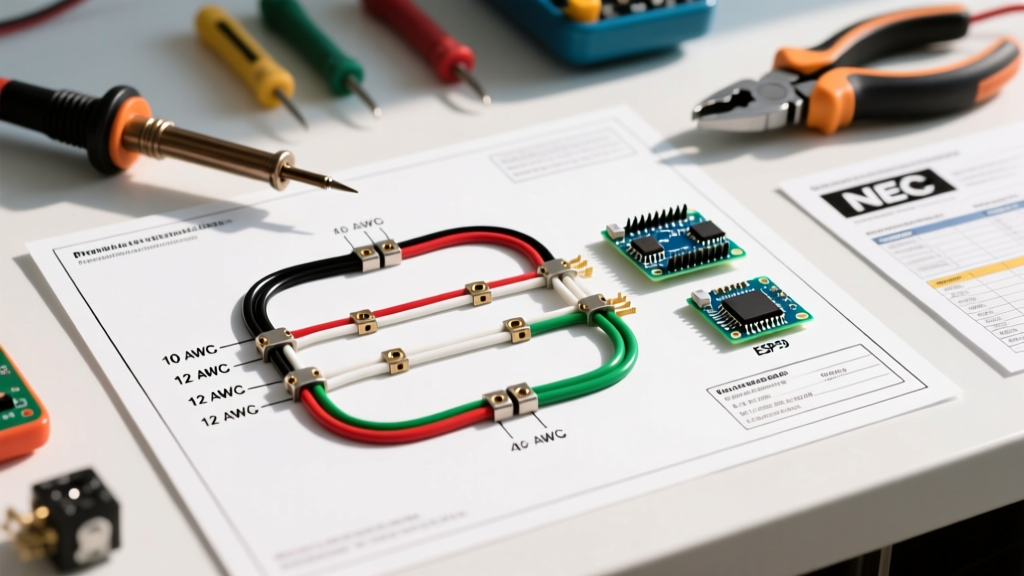
Selecting the correct feeder wire is governed by NEC Article 310 and the 75°C column of Table 310.16, as most modern breaker terminals are rated for 75°C. While copper is excellent for short runs, aluminum SER (Service Entrance Rated) cable is the industry standard for subpanel feeders due to its cost-effectiveness and safety when properly torqued.
| Subpanel Size | Copper Wire (THHN/THWN-2) | Aluminum Wire (XHHW-2 / SER) | Min. Conduit Size (PVC Sch 80) | Ground Wire Size |
|---|---|---|---|---|
| 60-Amp | #6 AWG | #4 AWG | 1 inch | #10 AWG Copper |
| 100-Amp | #3 AWG | #1 AWG | 1.25 inch | #8 AWG Copper |
Voltage Drop Calculations for Long Runs
The NEC recommends a maximum voltage drop of 3% for feeders (NEC Informational Note 210.19(A)). If you are wiring an electrical sub panel in a detached barn located 150 feet from the main panel, standard #1 AWG aluminum will result in a voltage drop of roughly 3.8% on a full 100A load. To maintain optimal performance for sensitive electronics and heavy motors, you must upsize to 1/0 AWG aluminum for runs exceeding 125 feet.
Step-by-Step Wiring Sequence & Torque Specifications
Improperly torqued lugs are a leading cause of electrical fires. Since the adoption of NEC 110.14(D), electricians are required to use calibrated torque tools. The Occupational Safety and Health Administration (OSHA) frequently cites improper terminations during commercial inspections, and residential inspectors are increasingly enforcing this rule.
- Mount the Enclosure: Secure the subpanel to studs using 1/4-inch lag screws. Ensure the knockout holes align perfectly with your incoming conduit.
- Pull the Feeders: Feed the four wires (two hots, one neutral, one ground) through the conduit. Use wire lubricant (like Ideal Yellow 77) for runs over 50 feet to prevent insulation scoring.
- Strip and Seat the Wires: Strip exactly 3/4-inch of insulation. Ensure no bare wire is exposed outside the lug, and no insulation is trapped inside the lug screw mechanism.
- Apply Calibrated Torque: For a Square D Homeline 100A main lug accepting #1 AWG aluminum, the manufacturer specifies 45 inch-pounds of torque. Use an insulated torque screwdriver (e.g., Klein Tools 32500) set to the exact specification printed on the panel's wiring diagram label.
- Route and Terminate Branch Circuits: Keep hot wires on the right side of the panel and neutrals/grounds on the left to prevent crossing and maintain a clean, readable layout.
2026 Cost Breakdown & Material List
Budgeting for a subpanel requires accounting for both the core components and the necessary safety accessories. Below is a realistic cost estimate for a standard 100-amp, 30-space subpanel installation using aluminum SER cable.
- 100A Main Lug Panel (Siemens P2S10030CU): $115 - $140
- 100A 2-Pole Breaker (for Main Panel feed): $35 - $55
- 4/4/4/6 Aluminum SER Cable (per foot): $3.50 - $5.00
- Accessory Ground Bar Kit: $12 - $18
- 1.25" PVC Conduit & Fittings: $80 - $120 (depending on run length)
- Permit & Inspection Fees: $150 - $400 (varies heavily by municipality)
- Total DIY Material Cost (50 ft run): ~$550 - $750
Common Failure Modes & Troubleshooting
Even experienced DIYers make critical errors when wiring electrical sub panel setups. Watch out for these specific failure modes:
1. Backfed Main Breakers Without Retention Kits
If your subpanel is a 'main lug' design but you are using a backfed 2-pole breaker as a local disconnect, NEC 408.36 requires a mechanical retention kit (e.g., Siemens ECLK2). Without this kit, someone could accidentally pull the breaker out of the bus stabs while it is still energized, exposing live 240V terminals.
2. Overloaded Neutral Bars
Most panel neutral bars are rated for only one wire per lug hole. Doubling up neutral wires on a single screw is a direct NEC violation and can cause the wire to loosen over time due to thermal expansion and contraction. If you run out of neutral spaces, install an accessory neutral bar kit rather than doubling up.
3. Mixing Ground and Neutral on the Same Bar
As mentioned, this creates a parallel path. If a neutral wire becomes loose at a receptacle downstream, the return current will seek the ground wire, potentially energizing the metal chassis of appliances like refrigerators or washing machines.
Frequently Asked Questions (FAQ)
Do I need a ground rod for a detached subpanel?
Yes. NEC 250.32 requires a grounding electrode system (typically two 5/8-inch copper-clad ground rods spaced at least 6 feet apart) at any separate structure. However, the equipment ground wire must still be run from the main panel to the subpanel.
Can I use a 60-amp breaker to feed a 100-amp subpanel?
Yes. The subpanel's rating (100A) is simply its maximum capacity. Feeding it with a 60A breaker is perfectly legal and safe, provided the feeder wires are sized for the 60A breaker (e.g., #4 AWG aluminum).
Where can I find official electrical safety guidelines?
The U.S. Department of Energy provides excellent baseline resources for residential electrical system safety, though all physical installations must defer to the local Authority Having Jurisdiction (AHJ) and the latest NEC codebook.