
The Missing Link: Tow Vehicle Panel Integration
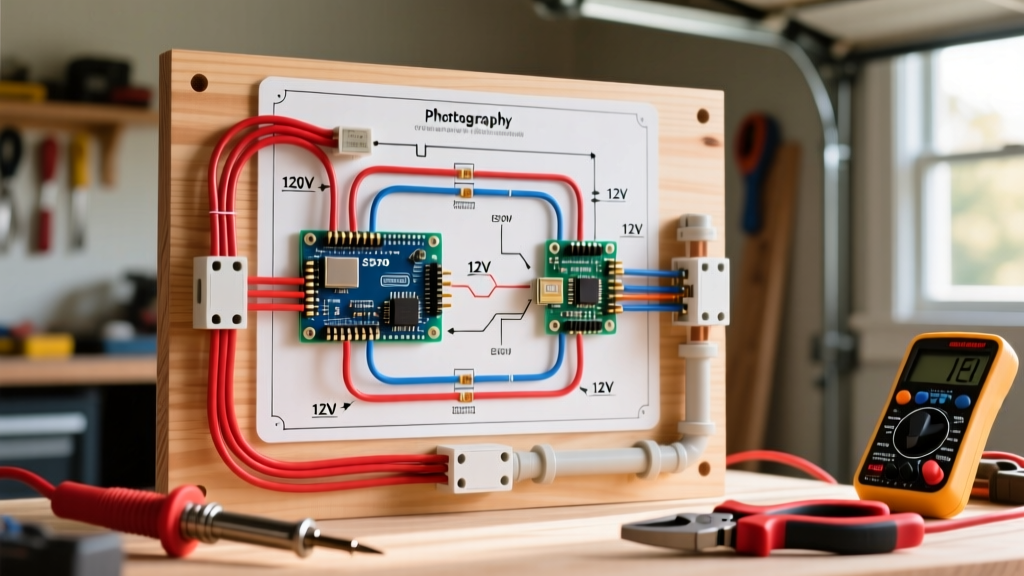
Most online guides stop at the 7-way connector when explaining the wiring diagram for trailer lights and brakes. However, as any seasoned auto-electrician will tell you, the true point of failure rarely lies at the hitch; it originates at the tow vehicle's electrical panel. If your circuit breakers are undersized, your wire gauge induces voltage drop, or your Body Control Module (BCM) is unprotected from back-feed, your trailer brakes will fade and your lighting will malfunction. In this 2026 Panel & Breaker Guide, we bridge the gap between the fuse box and the bumper, ensuring your trailer wiring is safe, compliant, and robust.
Circuit Breaker Sizing for Electric Brakes
Electric trailer brakes require a dedicated, high-amperage power feed directly from the tow vehicle's battery or main distribution panel. Relying on standard automotive blade fuses for a 7-way brake circuit is a critical error. You must use an auto-resetting circuit breaker.
- 30-Amp Auto-Reset Breaker (e.g., Bussmann 185-Series): The industry standard for 1 to 3-axle trailers. Priced around $14 to $18 in 2026, these breakers handle the initial inrush current of multiple brake magnets without nuisance tripping, and they automatically reset once the thermal element cools.
- 40-Amp Auto-Reset Breaker: Required for heavy-duty applications, such as 4-axle gooseneck equipment trailers or large dump trailers where the combined amp draw of the brake magnets and breakaway battery charging exceeds 25 amps continuously.
Expert Warning: Never use a manual-reset breaker for the primary trailer brake feed. If a momentary short occurs (e.g., a pinched wire at the tongue hinge), a manual breaker will leave you stranded on the highway with zero trailer braking capacity until you physically pop the hood and press the reset button.
Wire Gauge Selection & Voltage Drop Matrix
The National Highway Traffic Safety Administration (NHTSA) emphasizes that proper towing safety relies on fully functional lighting and braking systems. Voltage drop is the silent killer of trailer brake efficiency. If you run 14 AWG wire 30 feet from the battery to the 7-pin connector, the voltage at the brake magnets may drop below 10V, resulting in a 30% loss of braking torque. Always use marine-grade, tinned copper wire to resist corrosion inside the conduit.
| Run Distance (Battery to 7-Pin) | Max Amp Draw (Brakes) | Recommended Wire Gauge | Estimated Voltage Drop @ 12A |
|---|---|---|---|
| Under 15 Feet | 12A (1-2 Axles) | 12 AWG | ~0.38V |
| 15 - 25 Feet | 15A (2-3 Axles) | 10 AWG | ~0.30V |
| 25 - 40 Feet | 20A+ (Dump/Heavy) | 8 AWG | ~0.25V |
The Core Wiring Diagram for Trailer Lights and Brakes (7-Way RV)
The standard 7-way RV blade connector (governed by the SAE J286 standard) is the universal interface for modern towing. Understanding the wiring diagram for trailer lights and brakes requires mapping the tow vehicle's panel outputs to the correct pins. For a comprehensive visual and technical breakdown of standard trailer pinouts, etrailer's 7-Way Wiring Guide remains an excellent field reference.
7-Pin Connector Pinout Matrix
- Pin 1 (White) - Ground: The most critical pin. Must be tied to a clean, bare-metal chassis ground on the tow vehicle, not just a painted bumper. Use a 10 AWG ring terminal with a star washer.
- Pin 2 (Brown) - Tail/Running Lights: Fused at 15A max. Powers all side markers and taillights.
- Pin 3 (Yellow) - Left Turn/Stop: Combined turn and brake signal for the left side.
- Pin 4 (Green) - Right Turn/Stop: Combined turn and brake signal for the right side.
- Pin 5 (Blue) - Electric Brakes: The high-current feed from your 30A/40A panel breaker, routed through the brake controller (e.g., Tekonsha Prodigy P3, ~$175).
- Pin 6 (Black/Red) - 12V Auxiliary Power: Used for charging the trailer's breakaway battery or powering interior RV lights. Requires a dedicated 30A breaker and 10 AWG wire from the panel.
- Pin 7 (Purple) - Reverse Lights/Auxiliary: Often used to trigger reverse lockout solenoids on surge brake couplers.
Modern BCM Protection: Powered Converters vs. Direct Taps
If you are wiring a 2020 or newer half-ton truck or SUV, the vehicle's lighting is likely managed by a multiplexed Body Control Module (BCM) that uses Pulse Width Modulation (PWM) and low-amperage LED drivers. Tapping directly into the tail light wires to feed a 7-way connector will overload the BCM, triggering a 'Lighting Fault' code on the dash and potentially frying a $1,200 computer module.
The Solution: Install a powered converter module, such as the Tekonsha 119190ZC ModuLite ($65-$80). This device uses the vehicle's lighting wires only as low-current signal triggers. The actual amperage for the trailer lights is drawn directly from the tow vehicle's battery via an inline 15A fuse, completely isolating the trailer load from the vehicle's delicate panel electronics.
Step-by-Step: Routing from the Fuse Panel to the Hitch
- Disconnect the Battery: Always isolate the negative terminal before working near the main distribution panel.
- Mount the Breakers: Install your 30A (brakes) and 30A (12V aux) auto-reset breakers within 18 inches of the battery positive terminal. This ensures the entire wire run to the rear is protected.
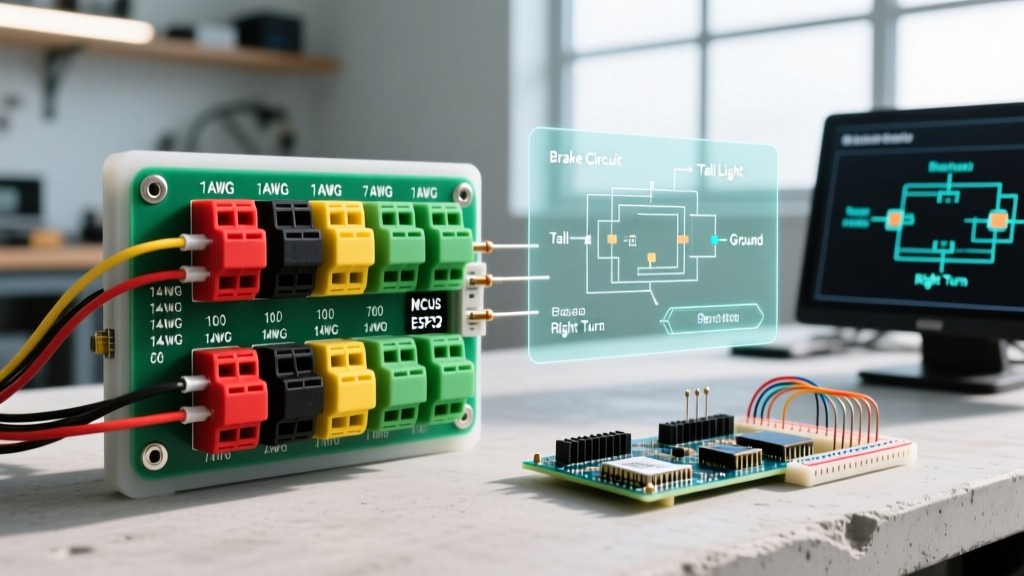
- Run the Main Harness: Route 10 AWG (Blue for brakes, Black for 12V aux) and 12 AWG (White, Brown, Yellow, Green) wires through the frame rail. Use split-loom tubing and zip ties every 12 inches to prevent chafing against exhaust components.
- Install the Brake Controller: Mount the controller under the dash. Splice the Blue brake output wire into the 10 AWG Blue wire running to the rear. Connect the controller's power wire to a 20A fused ignition-switched source in the interior fuse panel.
- Terminate at the 7-Way Socket: Use a heavy-duty, spring-loaded 7-way receptacle (e.g., Pollak HM40975, ~$35). Apply dielectric grease to the pins to prevent galvanic corrosion, which is the leading cause of intermittent brake faults.
Troubleshooting Common Breaker & Ground Failures
Even with a perfect wiring diagram for trailer lights and brakes, real-world conditions introduce variables. Here are the most common panel and breaker edge cases:
- Breaker Tripping on Bumpy Roads: If your 30A auto-reset breaker clicks constantly on rough terrain, inspect the 7-way plug. A loose ground pin (Pin 1) will force return current to back-feed through the brake magnets, spiking the amperage on the hot wire and tripping the breaker.
- Dim Trailer Lights When Brakes Apply: This is a classic voltage drop symptom. The brake controller is pulling 12A, and because the ground wire is undersized (or corroded), the lighting circuit is stealing ground paths through the brake circuit. Upgrade the ground wire to 10 AWG.
- Brake Controller Reads 'S.H.' (Short Circuit): Check the blue wire run. It is likely pinched between the hitch receiver and the frame rail, or the 7-way socket has internal moisture bridging the Blue (brake) and White (ground) pins.
Frequently Asked Questions
Can I use the tow vehicle's factory 4-pin flat connector for trailer brakes?
No. A 4-pin flat connector only carries ground, running lights, and left/right turn signals. It lacks the high-amperage blue wire required for electric brakes and the 12V auxiliary feed for breakaway systems. You must install a 7-way RV connector and run new, properly fused wires from the engine bay panel.
Do I need a separate fuse for the trailer breakaway system?
The breakaway system typically draws power from the Pin 6 (12V Aux) circuit or is wired directly to the trailer's onboard battery. If wired to the tow vehicle's panel, it must share the 30A auto-reset breaker dedicated to the auxiliary charge line to ensure it remains active even if the main lighting fuse blows.
What is the best wire type for trailer panel runs?
For the undercarriage run from the front panel to the rear bumper, use Cross-Linked Polyethylene (XLPE) insulated wire or marine-grade tinned copper (THWN/THHN). Standard PVC automotive wire becomes brittle and cracks when exposed to road salt, UV light, and extreme temperature fluctuations over time.