
Understanding Dual-Power RV Water Heater Electrical Systems
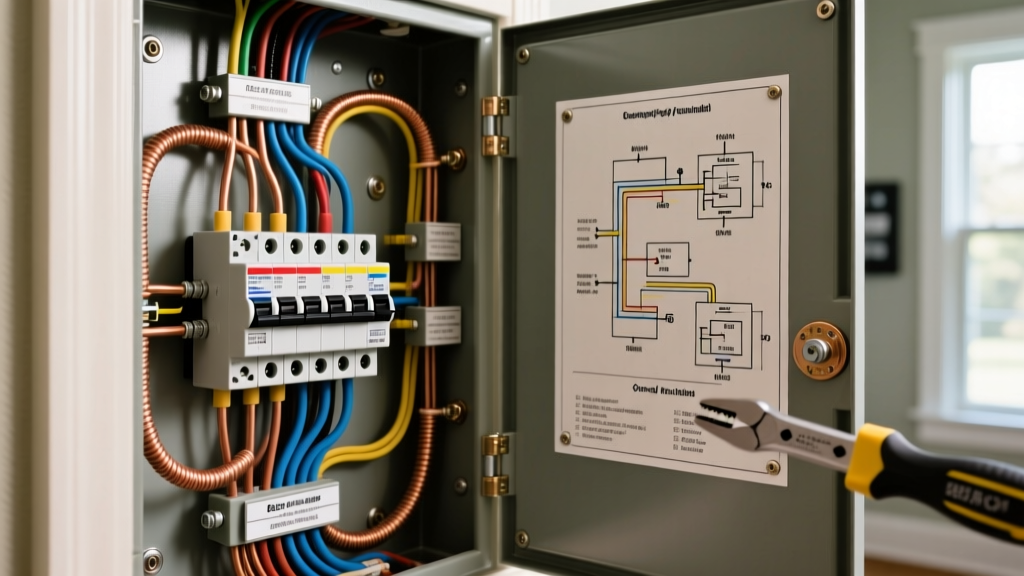
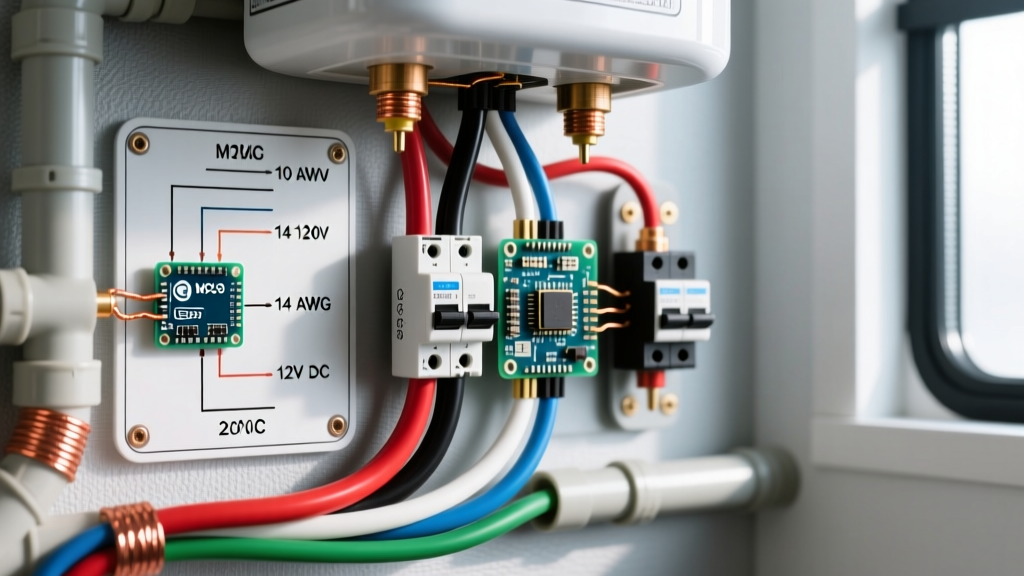
Wiring an electric hot water heater in a recreational vehicle or camper van is fundamentally different from residential installations. In a home, a water heater is a simple, high-amperage 240V or 120V resistive load. In an RV, popular dual-power models like the Suburban SW6DEL or Dometic G6A-8E require a split wiring architecture: a 120V AC circuit to power the 1,440W immersion heating element, and a separate 12V DC circuit to power the control board, thermostat relays, and gas ignition system.
Mistaking these circuits or undersizing the wiring is the leading cause of control board burnout, melted wire insulation, and nuisance GFCI trips on shore power. This guide details the exact specifications, wire gauges, and termination methods required for safe and code-compliant RV electric hot water heater wiring.
CRITICAL SAFETY WARNING: RV electrical systems combine 120V AC shore/inverter power with 12V DC battery systems. A cross-wiring fault between the AC heating element circuit and the DC control board will instantly destroy the water heater's logic board and poses a severe fire hazard. Always verify zero voltage on both circuits with a multimeter before beginning work.
Anatomy of the Wiring: 120V AC vs. 12V DC
Before routing any wire, you must understand the distinct electrical characteristics of the two circuits feeding the water heater. The 120V AC side handles the heavy lifting (heating the water), while the 12V DC side handles the logic (thermostat switching and safety cutoffs).
| Circuit Parameter | 120V AC Heating Element | 12V DC Control Board |
|---|---|---|
| Primary Function | Resistive water heating | Thermostat logic, relays, gas valve |
| Typical Load | 1,440W (12 Amps @ 120V) | 0.5A to 1.5A (Max) |
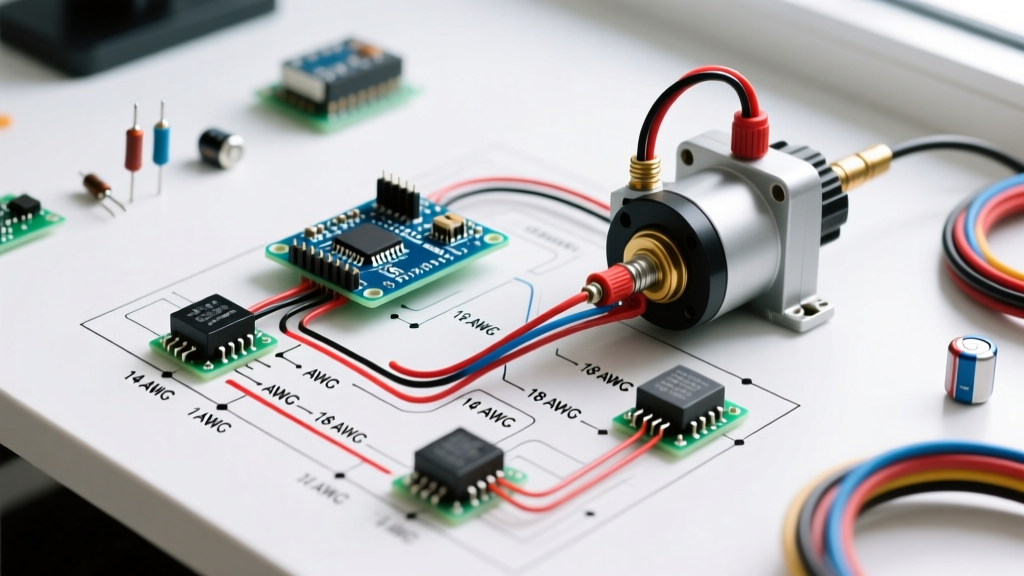
| Minimum Wire Gauge | 14 AWG (12 AWG Recommended) | 16 AWG (14 AWG Recommended) |
| Overcurrent Protection | 15A or 20A AC Breaker | 10A or 15A DC Blade Fuse |
| Wire Type | Stranded THHN or RV-rated Romex | Stranded automotive primary wire |
Step-by-Step: 120V AC Electric Hot Water Heater Wiring
The 120V AC circuit supplies power to the immersion element. On a standard Suburban SW6DEL, the element is rated at 1,440 watts. Using Ohm's law (Watts / Volts = Amps), the continuous draw is exactly 12 Amps. While the National Electrical Code (NEC) and NFPA 70 Article 551 (Recreational Vehicles) permit 14 AWG wire on a 15A breaker, the high-vibration, high-ambient-temperature environment of an RV chassis demands a more robust approach.
1. Sizing the Breaker and Wire Gauge
For 2026 RV builds and retrofits, we mandate the use of 12 AWG stranded copper wire paired with a 20A AC breaker for the water heater circuit. Stranded wire is non-negotiable; solid core wire will work-harden and snap under chassis vibration. As of early 2026, high-quality 12 AWG stranded THHN copper costs approximately $0.85 to $1.10 per foot. Running this from your main AC distribution panel to the water heater compartment ensures minimal voltage drop and prevents the wire from heating up inside the enclosed, poorly ventilated water heater bay.
2. Routing and Terminating the AC Circuit
Unlike residential wiring where wire nuts are standard, RV environments require vibration-resistant terminations. Follow this termination protocol:
- At the Breaker Panel: Crimp a ferrule or a ring terminal onto the 12 AWG stranded wire using a ratcheting crimper (e.g., Titan T32102) before securing it under the breaker's set screw. This prevents stray wire strands from causing a short.
- At the Water Heater Junction: The water heater typically features an external 120V AC junction box with a built-in high-limit thermal cutoff switch. Use closed-end crimp connectors or Wago 221 lever nuts to connect your supply wire to the heater's internal pigtails. Wago 221 connectors are rated for 32A and maintain constant spring pressure, making them immune to vibration-induced loosening.
- Grounding: The equipment grounding conductor (EGC) must be securely bonded to the water heater's metal chassis and the RV's main grounding busbar. A floating ground on a water heater is a lethal shock hazard, especially when the user is standing on wet ground outside the vehicle.
The 12V DC Control Circuit: Avoiding Voltage Drop
The most overlooked aspect of electric hot water heater wiring in RVs is the 12V DC control circuit. Even if you are only using the electric heating element and never plan to use the propane gas mode, the 12V DC circuit must be connected and powered. The 12V DC power energizes the internal relay that actually closes the circuit to the 120V AC heating element.
Calculating Voltage Drop over Distance
In a large 5th-wheel or Class A motorhome, the distance from the DC fuse panel to the water heater can easily exceed 40 feet (80 feet round trip). A 1.5 Amp draw on 18 AWG wire over 80 feet will result in a voltage drop of over 2.5 volts. If your battery bank is sitting at 12.2V, the water heater control board will only see 9.7V. Most RV water heater logic boards (such as those manufactured by Dometic or Airxcel) will trigger an undervoltage lockout and refuse to engage the AC relay, leading owners to falsely diagnose a broken heating element.
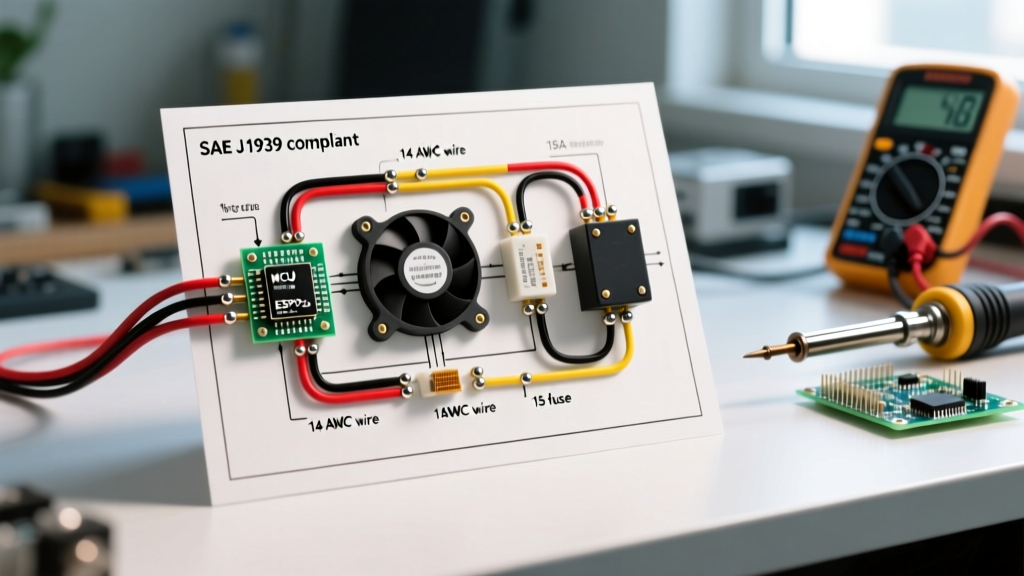
The Fix: Always use 14 AWG stranded wire for the 12V DC control circuit, regardless of the manufacturer's minimum 16 AWG or 18 AWG recommendation. Protect this circuit with a 10A or 15A automotive blade fuse located within 18 inches of the positive battery busbar, in strict accordance with RVIA Standards for overcurrent protection placement.
Troubleshooting Matrix: Common Wiring Failure Modes
When an RV water heater fails to heat electrically, the issue is rarely the heating element itself. Use this diagnostic matrix to trace the fault.
| Symptom | Probable Wiring/Electrical Cause | Diagnostic Action & Fix |
|---|---|---|
| GFCI outlet trips immediately when water heater AC switch is turned on. | Degraded heating element insulation allowing current to leak to the chassis ground, or a failed thermal cutoff switch. | Disconnect AC power. Use a megohmmeter (Megger) to test element insulation resistance. Replace element if resistance to ground is below 1 Megohm. |
| Water heater works on Gas, but does nothing on Electric mode. | 12V DC control circuit voltage drop, blown DC fuse, or failed internal AC relay on the control board. | Measure DC voltage at the board's terminal block while the switch is ON. If below 11V, upgrade wire gauge. If 12V+ is present but AC isn't passing, replace the control board. |
| Water gets lukewarm but never reaches 120°F (49°C) on electric mode. | Undersized AC wiring causing severe voltage drop under load, reducing the wattage output of the resistive element. | Measure AC voltage at the element terminals while actively heating. If voltage drops below 110V, replace 14 AWG wire with 12 AWG or 10 AWG. |
Code Compliance and Component Selection
When sourcing components for your electric hot water heater wiring, ensure all AC breakers are rated for the specific voltage and frequency of your RV's power system (typically 120V/60Hz in North America). For the DC side, use marine-grade or RV-specific fuse blocks that feature tin-plated copper busbars to resist corrosion in humid environments.
Furthermore, always consult the specific installation manual for your water heater model. For example, Airxcel Suburban Support documentation explicitly dictates the torque specifications for the AC terminal block screws. Over-tightening these screws on stranded wire can cut the copper strands, effectively reducing a 12 AWG wire to the current-carrying capacity of a 16 AWG wire, creating a localized hot spot and fire risk.
Frequently Asked Questions
Can I wire a residential 120V water heater into my RV?
Technically yes, but it is highly discouraged. Residential 1,500W or 2,000W elements draw up to 16.6 Amps, which maxes out a standard 20A RV breaker, especially when voltage drops occur on long shore power cords. Furthermore, residential units lack the 12V DC integration and RV-specific vibration dampening required for mobile applications, and installing one will likely void your RV insurance and violate RVIA codes.
Do I need to wire the 12V DC side if I only use the electric element?
Yes. On 95% of modern dual-power RV water heaters, the 12V DC circuit powers the master control board. The wall-mounted 'Electric' switch is actually a low-voltage 12V switch that signals the control board to close a high-voltage 120V AC relay. Without 12V DC power, the AC relay will never engage, and the water will not heat.
What is the best wire type for routing through the RV underbelly?
If you must route wiring through the exposed underbelly, do not use standard Romex (NM-B). The paper wrapping and PVC jacket will absorb moisture and degrade. Use UF-B (Underground Feeder) cable or individual THHN wires pulled through a flexible, liquid-tight non-metallic conduit (LFNC) to protect against road debris, water intrusion, and rodent damage.