
The Critical Role of NEC Article 680 in Hot Tub Safety
Water and electricity are a lethal combination, which is why the National Electrical Code (NEC) dedicates an entire section—Article 680—to swimming pools, fountains, and spas. When interpreting a wiring diagram for hot tub installations, the primary objective is not merely to make the equipment function, but to ensure absolute fault protection and equipotential bonding. A standard 240V residential hot tub draws between 40 and 60 amps, requiring a dedicated circuit, a specialized disconnect, and rigorous grounding protocols.
In 2026, local inspectors are stricter than ever regarding GFCI (Ground Fault Circuit Interrupter) nuisance tripping and improper bonding grids. According to the National Fire Protection Association (NFPA), failures to adhere to NEC Article 680 are among the top reasons for failed residential electrical inspections and, more importantly, a leading cause of severe electrical shock hazards in outdoor environments.
Essential Components for a Code-Compliant Hot Tub Circuit
Before pulling any wire, you must procure the exact materials required by code. Substituting standard indoor materials for outdoor, wet-location applications is a direct code violation. Below is the definitive bill of materials for a standard 60-amp, 240V hot tub installation.
| Component | Specification / Model Example | NEC Code Reference | Est. Cost (2026) |
|---|---|---|---|
| GFCI Breaker (60A) | Eaton BR260GFI or Siemens Q260GFI (2-Pole, Class A) | 680.42(B)(1) | $140 - $180 |
| Feed Wire (4 Conductors) | 6 AWG THHN/THWN-2 Stranded Copper (Black, Red, White, Green) | 310.15 & 680.42 | $3.50 / ft |
| Conduit | 1-inch Schedule 40 PVC (Underground) / 1.5-inch Schedule 80 (Exposed) | 352.10 & 352.12 | $1.20 / ft |
| Bonding Wire | 8 AWG Solid Bare Copper | 680.42(B) | $2.10 / ft |
| Outdoor Disconnect | 60A Non-Fused or Fused AC Disconnect (NEMA 3R Rated) | 680.41 | $45 - $75 |
Step-by-Step Wiring Diagram Logic & Execution
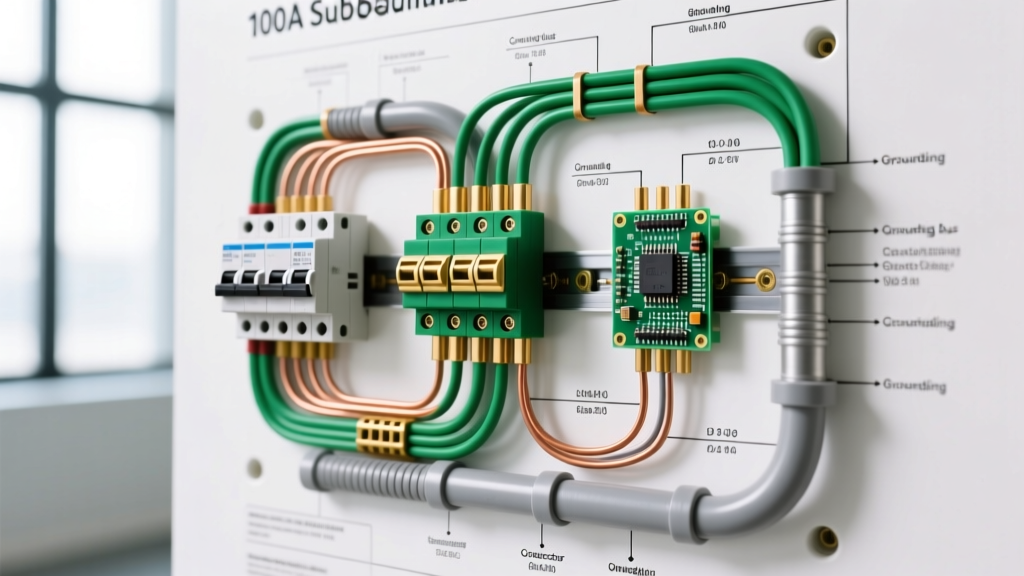
A proper wiring diagram for a hot tub revolves around three distinct zones: the main service panel, the conduit run, and the spa disconnect panel. Here is the precise execution sequence.
1. Subpanel Placement and Conduit Routing
The NEC mandates that the outdoor disconnect or subpanel must be located at least 5 feet away from the inside walls of the hot tub, yet within sight of the tub. This prevents a user from reaching the panel while in the water. Route your 1-inch PVC conduit underground at a depth of 18 inches. Where the conduit emerges from the ground and is subject to physical damage (within 8 feet of the surface), you must transition to Schedule 80 PVC or rigid metal conduit (RMC) to protect the conductors.
2. Pulling the Feeders and Equipment Ground
For a 60A circuit, 6 AWG stranded copper is mandatory. Solid wire is highly discouraged for outdoor conduit pulls due to its stiffness and susceptibility to micro-fractures when bending through sweeps. Your conduit must contain four distinct wires:
- Two Hot Legs (Black & Red): Carrying 120V each, totaling 240V across the load.
- One Neutral (White): Required if the hot tub features 120V components (like a blower, ozonator, or underwater LED lighting). Even if the tub is strictly 240V, the GFCI breaker requires a neutral connection to power its internal monitoring electronics.
- One Equipment Ground (Green): This is your fault-current path back to the main panel's ground bar.
3. Wiring the GFCI Breaker (The Pigtail Rule)
The most common point of failure in a hot tub wiring diagram is the GFCI neutral pigtail. The white, coiled pigtail wire extending from the Eaton or Siemens GFCI breaker must be connected directly to the main panel's neutral bar. It cannot be connected to the load neutral, and it cannot be left floating. This pigtail provides the 120V reference voltage the breaker needs to detect a ground fault imbalance as small as 4 to 6 milliamps.
Expert Torque Warning: Do not guess when tightening breaker lugs. Use a calibrated torque screwdriver. Most 60A residential breakers require between 35 and 50 inch-pounds of torque. Under-torqued lugs cause arcing and thermal expansion, which will trip the GFCI repeatedly as the metal heats and cools.
The Equipotential Bonding Grid: The Most Failed Inspection Point
Many DIYers and even journeyman electricians confuse grounding with bonding. Grounding provides a path for fault current to trip the breaker. Bonding, however, connects all conductive surfaces together so that no voltage potential can exist between them. If you are sitting in the tub and touch a metal handrail, you must not become the path of least resistance.
According to guidelines frequently discussed in Electrical Contractor Magazine, NEC 680.42(B) requires an equipotential bonding grid. You must use 8 AWG solid bare copper wire to bond the following components together:
- All metal parts of the spa equipment (pump motor housing, heater tube, control box).
- Metal conduit and piping within 5 feet of the tub.
- Any metal reinforcing steel (rebar) in the concrete pad surrounding the tub.
- Metal handrails, ladders, or adjacent fencing within 5 feet.
- The equipment grounding terminal in the spa disconnect panel.
This 8 AWG wire does not carry current under normal operation; it simply ensures that if a fault occurs, every metal surface rises to the exact same voltage simultaneously, eliminating the shock hazard.
Common Inspection Failures and How to Avoid Them
To ensure your installation passes inspection on the first visit, audit your work against these frequent NEC violations:
- Shared Neutrals: The neutral wire for the hot tub circuit must be dedicated. It cannot share a neutral bar lug with another circuit, nor can it be routed through a multi-wire branch circuit (MWBC) setup. One lug, one wire.
- Conduit Fill Violations: Four 6 AWG THHN wires in a 1-inch PVC conduit is acceptable (approx. 31% fill), but if you add a 5th wire or use 1/2-inch conduit, you violate NEC Chapter 9, Table 1, leading to heat buildup and insulation degradation.
- Missing Drip Loops: When wiring the spa control box, ensure the conduit entering the bottom of the box has a slight downward sweep (a drip loop) before entering the hub. This prevents condensation and rainwater from tracking down the wires and into the contactors.
- Using the Wrong GFCI Class: Ensure the breaker is a Class A GFCI (trips at 4-6mA). Class B or equipment-protection GFCIs (tripping at 30mA+) are strictly prohibited for human-immersion water features.
Final Commissioning and Testing
Once the wiring diagram for the hot tub is fully executed and all torque marks are verified, power on the main breaker. Before filling the tub with water, use a digital multimeter to verify 240V across the two hot legs at the spa terminal block, and 120V from each hot leg to the neutral. Finally, press the 'TEST' button on the GFCI breaker. The breaker must trip immediately, cutting all power to the spa panel. Reset the breaker, fill the tub, and enjoy a safe, code-compliant soak.