
The Complexity of Gooseneck Electrical Systems
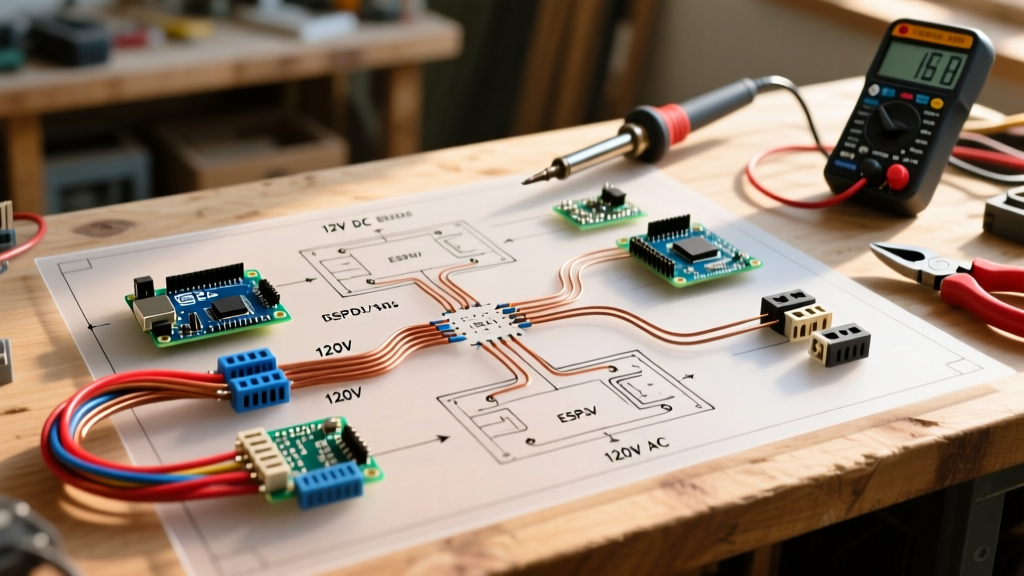
Wiring a gooseneck trailer is fundamentally different from wiring a standard bumper-pull utility trailer. While a basic trailer only requires lighting circuits, a heavy-duty gooseneck demands robust electrical integration for high-amperage 12V DC motors. Specifically, you are dealing with Electric Over Hydraulic (EOH) brake actuator motors and heavy-duty 12V loading winch motors. If you rely on a generic light-duty schematic, you will experience severe voltage drop, melted connectors, and catastrophic brake failure under load.
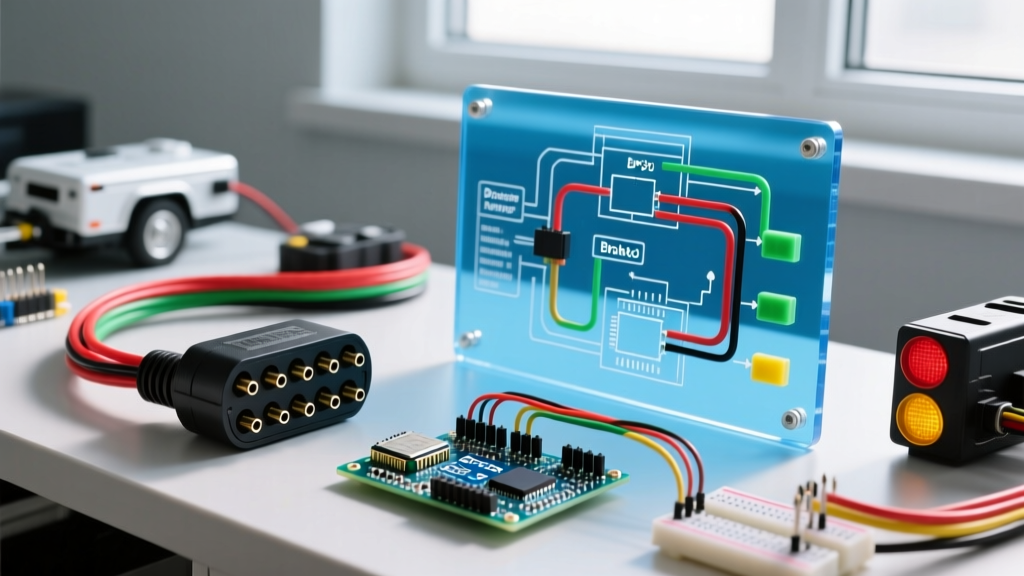
This comprehensive guide provides the exact wiring diagram for gooseneck trailer configurations, merging the standard 7-way RV blade lighting circuit with dedicated motor wiring tutorials. Whether you are wiring a 40-foot flatbed or a 16-foot equipment hauler, understanding the separation of signal wires and motor power feeds is critical for 2026 towing safety standards.
The Foundation: 7-Way RV Blade Pinout & Wire Gauge
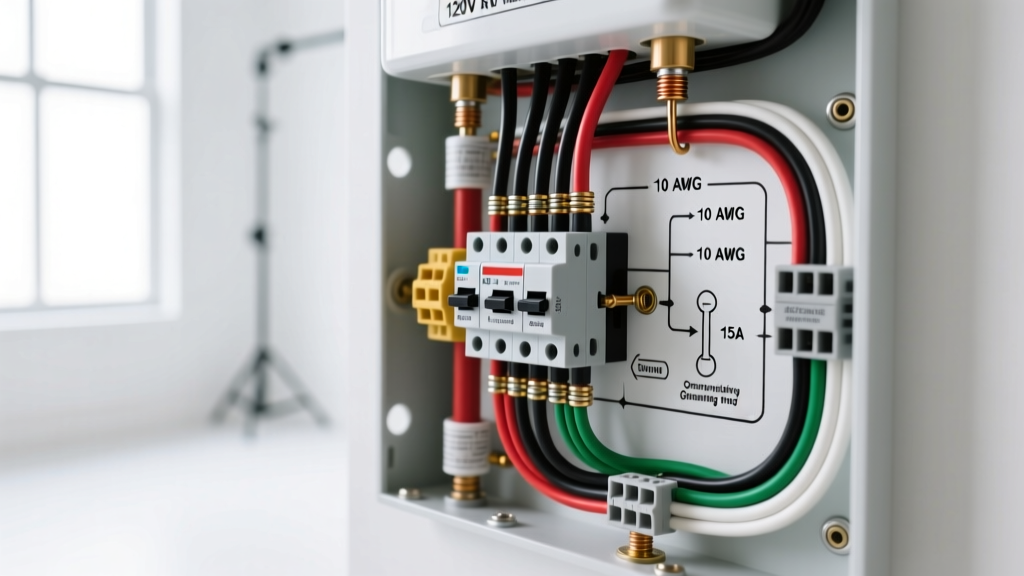
The 7-way RV blade connector is the universal standard for gooseneck trailers. However, the factory wire gauges on many commercial harnesses are insufficient for the continuous draw of modern EOH brake motors. Below is the industry-standard pinout, alongside the recommended minimum American Wire Gauge (AWG) for heavy-duty applications.
| Pin | Function | Standard Wire Color | Heavy-Duty AWG Recommendation |
|---|---|---|---|
| 1 | Ground (Chassis) | White | 8 AWG (or dual 10 AWG) |
| 2 | 12V Aux / Battery Charge | Black | 10 AWG (Minimum for EOH power) |
| 3 | Tail / Running Lights | Brown | 14 AWG |
| 4 | Left Turn / Stop | Yellow | 14 AWG |
| 5 | Right Turn / Stop | Green | 14 AWG |
| 6 | Electric Brake Signal | Blue | 12 AWG |
| 7 | Reverse Lights / Aux | Purple | 14 AWG |
Critical 2026 Code Update: Due to rising copper costs, many budget harness manufacturers have downgraded their 12V Aux (Black) wire to 12 AWG. If you are running an EOH brake actuator, you must verify this wire gauge. If it is 12 AWG or thinner, run a dedicated 10 AWG power wire directly from the truck battery to the trailer breakaway battery and actuator.
Motor Wiring Tutorial 1: Electric Over Hydraulic (EOH) Brake Actuator
The most common misunderstanding in gooseneck wiring involves the EOH brake actuator motor (such as the popular HydraStar HBA-16 or Carlisle HydraStar). Many DIYers assume the Blue wire (Pin 6) powers the hydraulic pump motor. This is false.
Signal vs. Power: The Dual-Circuit Requirement
An EOH actuator contains a 12V DC motor that drives a hydraulic pump. This motor draws between 15 and 25 amps under peak braking pressure. The Blue wire from your truck's brake controller only sends a low-amperage Pulse Width Modulation (PWM) signal to the actuator's internal circuit board. The actual power to run the motor must come from the 12V Aux wire (Pin 2, Black) or a dedicated heavy-gauge power feed.
- The Signal Circuit: Run 12 AWG blue wire from the brake controller (e.g., Redarc Tow-Pro Elite or Curt Spectrum) to Pin 6 on the trailer plug, and directly to the blue signal wire on the EOH actuator.
- The Power Circuit: Run 10 AWG black wire from the truck's positive battery terminal, through a 40-amp auto-reset circuit breaker (mounted within 18 inches of the battery), to Pin 2 on the trailer plug. On the trailer side, connect this to the actuator's black power wire and the breakaway battery's positive terminal.
- The Ground Circuit: Connect the actuator's white ground wire directly to the trailer's main steel frame using a star washer and a dedicated grounding bolt. Do not rely on the hitch ball for grounding the motor.
If you attempt to power the EOH motor solely through a standard 16 AWG breakaway battery wire, the motor will starve for voltage, resulting in delayed braking and eventual actuator burnout. For deeper technical specifications on actuator wiring, refer to the HydraStar USA official installation manuals.
Motor Wiring Tutorial 2: 12V DC Loading Winch
Gooseneck trailers equipped with beavertail ramps often feature a 12V DC series-wound winch motor (typically rated between 12,000 lbs and 16,500 lbs capacity). Never wire a loading winch through the 7-way RV connector. A winch motor under load can pull 300 to 400 amps, which will instantly melt the 7-way plug and fry the truck's alternator diodes.
The Quick-Disconnect Solenoid Setup
To wire a high-amperage winch motor safely, you must use a dedicated quick-disconnect system and a heavy-duty solenoid.
- Wire Selection: Use 2 AWG or 1/0 AWG pure copper welding cable. In 2026, expect to pay roughly $1.80 to $2.50 per foot for high-strand-count, ultra-flexible welding cable. Avoid Copper Clad Aluminum (CCA) wire, as it suffers from severe voltage drop over the 25-foot run from the truck bed to the trailer winch.
- Truck Side: Connect the positive 2 AWG cable to the truck battery via a 250-amp marine-grade circuit breaker. Route the cable to the truck bed and terminate it with a 175-amp Anderson Powerpole or a heavy-duty Cole Hersee quick-disconnect plug.
- Trailer Side: Route the 2 AWG cable from the quick-disconnect to a 150-amp continuous duty solenoid (like the Warn 72631). The solenoid prevents the winch from accidentally engaging if the remote control is shorted. From the solenoid, run the final leads directly to the winch motor's positive and negative terminals.
- Grounding: The winch motor's negative terminal must be grounded to the trailer frame using a 2 AWG cable, bolted directly to the winch mounting plate.
The Grounding Bottleneck: Preventing Motor Failure
According to data aggregated by etrailer's wiring FAQ and various RV service centers, over 85% of trailer electrical failures are ground-related. When wiring motors on a gooseneck trailer, the standard white ground wire in the 7-way plug is entirely inadequate for handling the return current of an EOH brake motor and lighting circuits simultaneously.
The Dedicated Ground Strap Protocol
To eliminate voltage drop and ensure your DC motors receive a full 12.6V, implement a dedicated ground strap. Use a 6 AWG braided copper ground strap and bolt it directly from the truck's frame (near the hitch receiver) to the gooseneck trailer's coupler frame. This creates a secondary, high-amperage ground path that bypasses the 7-way plug entirely. This is especially critical for aluminum-frame gooseneck trailers, where aluminum oxide rapidly increases electrical resistance at the hitch pivot points.
Troubleshooting Matrix: Motor & Wiring Faults
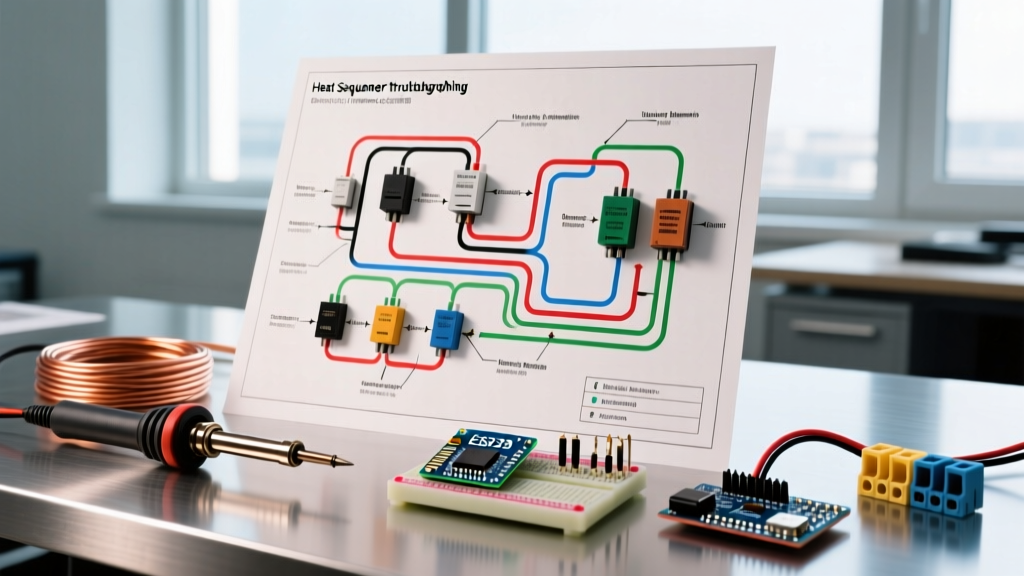
When your gooseneck trailer motors fail to operate, use this diagnostic matrix before replacing expensive components. Always test with a digital multimeter (DMM) set to DC Volts.
| Symptom | Probable Cause | Multimeter Test & Fix |
|---|---|---|
| EOH brakes feel weak or delayed | Voltage drop on 12V power feed (Black wire) | Test voltage at actuator while braking. If below 11.5V, upgrade Black wire to 8 AWG and check truck-side 40A breaker. |
| Winch motor clicks but won't turn | Solenoid engagement without sufficient amperage | Check voltage across winch motor terminals under load. If it drops below 9V, replace CCA wire with pure copper 1/0 AWG. |
| Brake controller shows 'Overload' or 'S.H.' | Short to ground on the Blue signal wire | Disconnect trailer. Test continuity between Blue wire and ground. Inspect gooseneck pivot area for pinched wiring harness. |
| Lights dim when winch is operated | Shared ground path causing backfeed | Verify winch motor has a dedicated 2 AWG ground to the frame, separate from the 7-way lighting ground. |
Final Safety and Compliance Checks
Before taking your newly wired gooseneck trailer on the highway, perform a comprehensive amp-draw test. Use a DC clamp meter to measure the actual current draw of your EOH actuator and winch motors under load. Ensure all circuit breakers are rated 125% higher than the continuous draw of the motor they protect, in accordance with standard DC electrical safety practices. For further reading on standardizing your trailer connectors and lighting compliance, review the guidelines provided by Curt Manufacturing and your local Department of Transportation.
By treating your gooseneck trailer's electrical system as a heavy-duty DC motor network rather than a simple lighting harness, you guarantee reliable braking, efficient loading, and total compliance with modern towing safety standards.