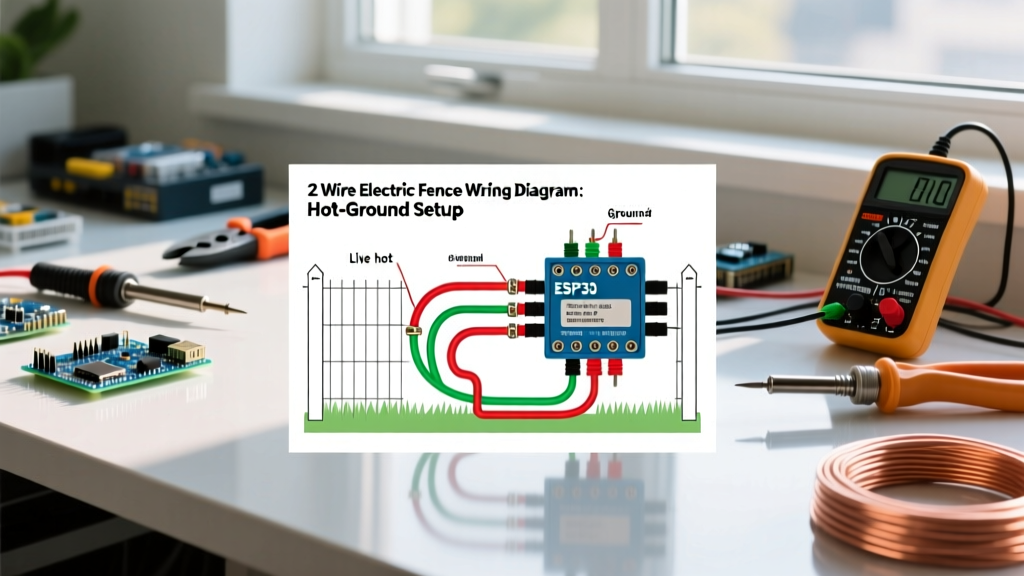

Why a 2-Wire Hot-Ground Return System?
When designing an agricultural or perimeter security fence, soil composition dictates your grounding strategy. In regions with rocky, sandy, or chronically dry soil, a standard all-hot wire fence will fail because the earth lacks the moisture required to complete the electrical circuit back to the energizer's ground rods. The solution is the 2-wire hot-ground return system. By alternating a hot wire and a dedicated ground wire, the animal completes the circuit by touching both wires simultaneously, entirely bypassing the soil. This guide details the complete 2 wire electric fence wiring diagram from a critical, often-overlooked perspective: the AC mains panel, breaker sizing, and physical energizer grounding infrastructure.
Mains Panel & Breaker Sizing for the Energizer
A high-output mains energizer, such as the Gallagher M5800i (58 Joules, ~$420 in 2026), requires a stable, code-compliant power supply. While the continuous amperage draw of a fence charger is remarkably low (typically under 1.5 Amps), the inrush current and the need for outdoor safety dictate strict breaker panel requirements.
Step-by-Step AC Panel Connection
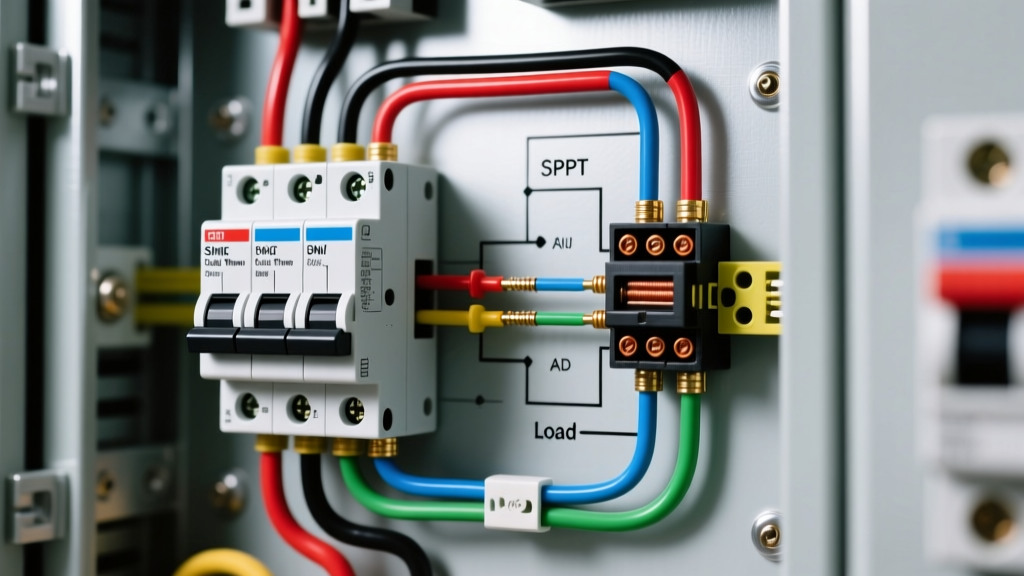
- Dedicated Circuit: Install a dedicated 15-Amp, 120-Volt single-pole GFCI breaker in your main or sub-panel. We recommend the Square D HOM115GFIC (~$55). According to the National Electrical Code (NEC) Article 210.8(A)(3), GFCI protection is mandatory for outdoor receptacles to prevent lethal shock hazards in damp agricultural environments.
- Wire Gauge & Conduit: Run 12 AWG THHN/THWN copper wire (black, white, green) through a 1/2-inch Schedule 40 PVC conduit. Bury the conduit at least 18 inches deep to protect it from frost heave and tractor implements.
- Surge Protective Device (SPD): Fence energizers contain sensitive PCBs that are highly susceptible to grid surges and nearby lightning strikes. Install a whole-panel SPD, such as the Square D HEPD50 (~$130), directly on the bus bars adjacent to the fence breaker. This diverts transient voltage spikes before they reach the energizer's transformer.
- Receptacle Installation: Terminate the 12 AWG wire into a weatherproof, in-use bubble cover receptacle box mounted inside the energizer shed. Ensure the box is sealed with silicone caulk to prevent moisture ingress, which can cause nuisance GFCI tripping.
The Core 2 Wire Electric Fence Wiring Diagram
With the AC power safely delivered to the shed, we move to the physical fence layout. The 2-wire hot-ground diagram relies on precise spacing and terminal connections to ensure the shock is delivered effectively.
- Wire 1 (Hot): Connects to the energizer's RED (Positive/Fence) terminal. This wire is run through standard insulators on the fence posts.
- Wire 2 (Ground Return): Connects to the energizer's BLACK (Negative/Ground) terminal. This wire runs parallel to the hot wire, separated by at least 4 inches of vertical air space.
- Ground Rod Bonding: The BLACK terminal must also be bonded to your physical ground rod array using a heavy-gauge copper wire (minimum 8 AWG).
CRITICAL SAFETY WARNING: Never wire a 2-wire electric fence to existing barbed wire. Animals can become entangled in barbed wire while receiving a continuous shock, leading to severe injury or death. Furthermore, the Ontario Ministry of Agriculture (OMAFRA) and international agricultural safety boards strictly prohibit electrifying barbed wire. Always use smooth 12.5 AWG high-tensile galvanized wire or polytape.
Component Breakdown & 2026 Pricing Matrix
Building a reliable 2-wire system requires commercial-grade components. The table below outlines the exact hardware needed for a 5,000-foot hot-ground run powered by a 120V mains energizer.
| Component | Recommended Model / Spec | Estimated 2026 Cost | Purpose |
|---|---|---|---|
| Mains Energizer | Gallagher M5800i (58 Joules) | $420.00 | Generates high-voltage, low-impedance pulses. |
| GFCI Breaker | Square D HOM115GFIC (15A) | $55.00 | Code-compliant outdoor shock protection. |
| Fence Wire | 12.5 AWG HTGW Class 3 (4,000ft spool) | $145.00 | High-tensile conductive hot and ground lines. |
| Ground Rods | 8-ft Copper-Clad Steel (5/8" dia) | $32.00 / each | Dissipates fault currents and grounds the black terminal. |
| Ground Clamps | Bronze Alloy Acorn Clamps | $4.50 / each | Bonds wire to rod without galvanic corrosion. |
| Lightning Arrestor | Gallagher Lightning Diverter | $48.00 | Diverts direct strikes away from the energizer PCB. |
Ground Rod Array Specifications
The most common failure point in any electric fence is an inadequate ground rod array. For a 58-Joule energizer, the Gallagher installation guidelines mandate a minimum of three 8-foot ground rods. However, for a 2-wire hot-ground system acting as the primary return path, we recommend scaling up to five rods.
- Spacing: Rods must be spaced at least 10 feet apart. Placing them closer causes their electrical fields to overlap, effectively reducing them to the surface area of a single rod.
- Material Compatibility: Use bronze or brass alloy clamps to attach your 8 AWG copper ground wire to the copper-clad steel rods. Never use aluminum clamps on copper-clad rods; the dissimilar metals will cause galvanic corrosion, creating a high-resistance layer that blocks the shock pulse within 12 to 18 months.
- Moisture Maintenance: If your climate experiences severe summer droughts, pour 2 gallons of water mixed with 1 lb of rock salt around the base of each ground rod quarterly to lower soil resistance.
Troubleshooting Voltage Drop in 2-Wire Systems
Even with a perfect wiring diagram, environmental factors can degrade performance. Use this diagnostic framework to identify issues.
1. Voltage Reads Below 4,000V at the End of the Line
Cause: Vegetation shorting out the hot wire, or the hot and ground wires are sagging and touching each other.
Fix: Increase post spacing tension using inline strainers. Ensure insulators maintain a strict 4-inch vertical gap between the hot and ground wires. Clear all brush within a 3-foot radius of the fence line.
2. Energizer Clicks, but Animal Feels No Shock
Cause: The animal is standing in dry soil and only touching the hot wire, or the ground wire is broken.
Fix: Verify the continuity of the ground return wire using a digital multimeter. Ensure the animal is physically large enough to bridge the 4-inch gap between the hot and ground wires. For smaller livestock (sheep/goats), reduce the wire spacing to 2 inches.
3. GFCI Breaker Trips Immediately Upon Energizer Startup
Cause: Moisture inside the energizer casing, a degraded SPD, or a direct short in the AC wiring conduit.
Fix: Disconnect the energizer from the fence line and plug it into a known-good indoor outlet. If it holds, the fault is in the fence line (e.g., a cracked insulator grounding out to a wet metal post). If it still trips the indoor GFCI, the energizer's internal transformer has failed and requires replacement.
Frequently Asked Questions
Can I use polywire instead of high-tensile steel for a 2-wire system?
Yes, but only for temporary rotational grazing setups under 2,000 feet. Polywire has a much higher electrical resistance than galvanized steel. Over long distances, the voltage on the ground return wire will drop significantly, rendering the 2-wire system ineffective. For permanent perimeter fencing, 12.5 AWG high-tensile wire is mandatory.
Do I need to disconnect the energizer during a lightning storm?
While you do not need to manually unplug the unit, your panel must be equipped with a properly rated Surge Protective Device (SPD) and an inline lightning arrestor on the fence lead-out wire. The arrestor must be grounded to an independent rod, separate from the energizer's main ground array, to prevent high-voltage feedback into the shed.
Is it legal to wire the ground return wire to my building's main electrical ground?
Absolutely not. NEC guidelines and agricultural safety standards strictly prohibit bonding a fence energizer's ground terminal to a building's electrical grounding system, utility water pipes, or telephone grounds. A lightning strike or energizer fault could backfeed thousands of volts into your home's wiring, destroying appliances and creating a severe electrocution hazard. The fence ground rod array must be entirely independent and located at least 30 feet away from any utility grounding system.