
The Thermal Reality of Precious Metals
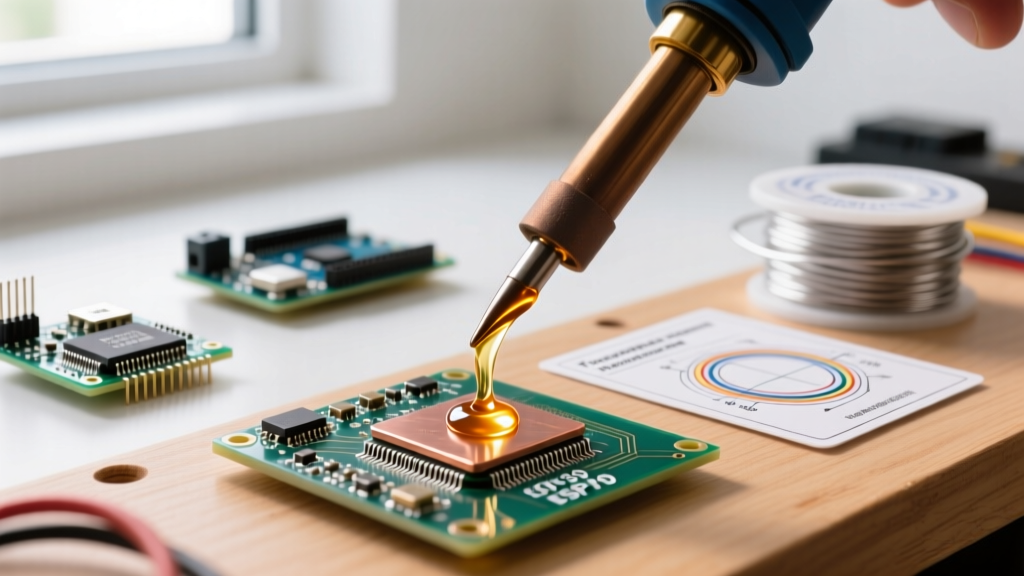
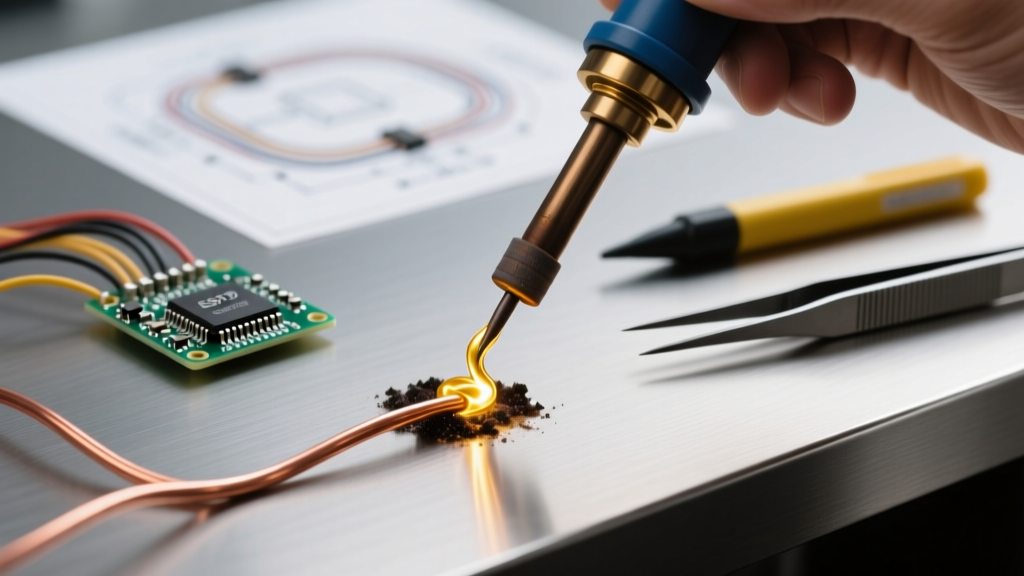
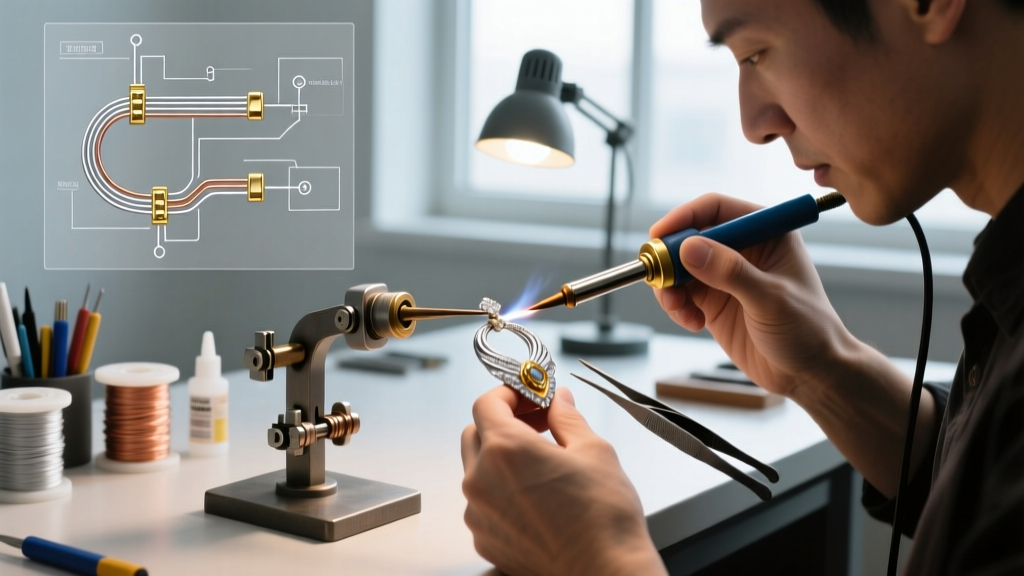
When transitioning from electronics to metalwork, artisans quickly realize that third hand soldering jewelry requires a fundamentally different approach to thermal management. Unlike FR-4 fiberglass PCBs that insulate heat, precious metals are aggressive thermal conductors. A silver ring shank will wick heat away from a solder joint in milliseconds, demanding precise tool placement, specialized holding fixtures, and an acute understanding of metallurgy.
According to experts at Ganoksin, the premier online community for jewelry professionals, improper heat sinking caused by the wrong third-hand tool is responsible for a significant percentage of failed bezel settings and melted gemstones. This guide breaks down how to configure your holding setups based on the specific thermal properties of your chosen metal.
Why Standard PCB Third Hands Fail for Jewelers
Standard helping hands designed for electronics typically feature steel alligator clips with heavy springs. In jewelry soldering, these present three critical failure points:
- Unintended Heat Sinking: Steel alligator clips possess high thermal mass. If clamped too close to a silver joint, they will absorb the heat from your butane or oxy-propane torch, preventing the silver solder from reaching its flow point (typically between 1,325°F and 1,450°F).
- Solder Adhesion: If flux burns off or fails to coat the steel clip, molten silver solder will alloy with the steel, permanently fusing your workpiece to the tool.
- Workpiece Marring: The aggressive teeth of standard electrical clips will gouge soft precious metals like 24k gold or fine silver, requiring hours of additional polishing.
Material-Specific Third Hand Configurations
Sterling & Fine Silver (High Thermal Conductivity)
Silver is the most thermally conductive metal used in jewelry. Sterling silver (92.5% Ag) has a thermal conductivity of roughly 360 W/m·K. When performing third hand soldering jewelry tasks in silver, you must use titanium tweezers or clamps. Titanium has a very low thermal conductivity (21.9 W/m·K) and, crucially, silver solder does not readily alloy with it. This means even if your flux fails, the solder will peel off the titanium tip once cooled, saving your tool and your workpiece.
Setup Strategy: Use a heavy-duty titanium cross-locking tweezer mounted on a magnetic base or a specialized bench pin system. Clamp the piece at least 1.5 inches away from the joint to avoid thermal wicking, and utilize a charcoal or ceramic soldering block beneath the piece to reflect ambient heat back into the metal.
Gold Alloys (Karat Variations & Heat Sinking)
Gold's thermal conductivity drops as alloying metals (like copper and zinc) increase. 24k gold conducts at 318 W/m·K, while 14k gold drops to approximately 180 W/m·K. Because gold is exceptionally expensive, the margin for error is zero. Melting a shank due to improper third-hand heat reflection can cost hundreds of dollars in lost material and labor.
Setup Strategy: For gold, use a third hand equipped with ceramic-tipped tweezers or high-purity titanium. Ceramic acts as an absolute thermal break. When sizing a 14k gold ring, clamp the ring shank with ceramic tweezers to isolate the heat strictly to the sizing joint, preventing the rest of the ring from annealing and losing its temper.
Copper & Brass (Oxidation & Flux Management)
Copper and brass are highly susceptible to firescale (cuprous oxide) when heated. Unlike silver and gold, where the third hand is primarily for thermal isolation, copper and brass require third-hand configurations that maximize surface area exposure for flux application.
Setup Strategy: Use open-wire titanium binding fixtures or adjustable copper wire jigs rather than solid clamps. Solid clamps block the application of borax-based cone fluxes, leading to localized oxidation that is nearly impossible to remove without aggressive pickling in heated sulfuric acid or sodium bisulfate solutions.
Thermal Conductivity & Tooling Matrix
| Metal | Thermal Conductivity (W/m·K) | Recommended Third Hand Material | Optimal Heat Source |
|---|---|---|---|
| Fine Silver (999) | 429 | Titanium / Ceramic | Oxy-Propane / Hydrogen |
| Sterling Silver (925) | 360 | Titanium Cross-Locking | Butane Micro-Torch |
| 18k Yellow Gold | 250 | Ceramic-Tipped Tweezers | Oxy-Acetylene (Micro) |
| 14k Yellow Gold | 180 | Titanium / Steel (with flux) | Butane / Propane |
| Copper / Brass | 385 / 109 | Open-Wire Titanium Jigs | Propane Air-Gas |
Premium Third Hand Tools for Jewelers in 2026
Investing in purpose-built holding tools is non-negotiable for professional results. Here are the industry standards currently dominating the market:
- GRS BenchMate with Titanium Tweezers ($325 - $375): The undisputed king of bench holding. The BenchMate uses a vacuum base or mechanical clamp to secure to your bench, featuring interchangeable collets. Upgrading to their titanium locking tweezers ensures solder will never fuse to the arms.
- Lindner Design Titanium Cross-Locking Tweezers ($89 - $110): Lindner produces aerospace-grade titanium tweezers that are incredibly lightweight. Their cross-locking mechanism provides immense clamping pressure without requiring continuous hand fatigue, making them ideal for holding heavy belt buckles or large bangles.
- Knew Concepts Third Hand System ($165 - $185): Featuring a unique magnetic base and articulating arms, this system allows jewelers to position workpieces at compound angles over a charcoal block, perfect for complex wire-weaving and chainmaille soldering.
Step-by-Step: Soldering a Sterling Silver Bezel
Follow this exact workflow to ensure a clean, gap-free solder joint when attaching a bezel wire to a backplate using a third hand setup.
- Preparation: Sand the silver backplate with 400-grit paper to create a mechanical bond surface. Clean the bezel wire in an ultrasonic cleaner.
- Fixture Setup: Mount a Lindner Titanium cross-locking tweezer to a magnetic base. Clamp the edge of the backplate firmly, ensuring the tweezers are at least 2 inches from the bezel footprint.
- Flux & Placement: Apply a generous coat of Stay-Silv white paste flux to the entire backplate. Place the bezel wire over the flux footprint and use a titanium scriber to press it flat against the plate.
- Heat Application: Using a butane torch with a pinpoint flame, apply broad, sweeping heat to the backplate (not the thin bezel wire). The titanium third hand will prevent heat from escaping down the backplate.
- Solder Flow: Once the flux turns clear and glassy (approx. 1,100°F), touch a snippet of Hard Silver Solder (flow point 1,450°F) to the joint. Capillary action will draw the solder completely around the bezel base.
Expert Insight: Never quench a piece held in a rigid third hand directly into water. The sudden thermal contraction can warp the metal or, worse, cause the rigid titanium tweezers to snap the solder joint before it fully crystallizes. Always air-cool for 15 seconds before releasing the clamp and quenching.
Troubleshooting Common Failure Modes
| Failure Mode | Root Cause | Material-Specific Solution |
|---|---|---|
| Solder balls up and refuses to flow | Third hand is acting as a heat sink, dropping joint temp below flow point. | Move titanium clamp further away; use a ceramic soldering block to reflect heat. |
| Workpiece fused to the tweezers | Using steel tweezers; flux burned off before solder flowed. | Switch to Grade 5 Titanium tweezers; apply secondary flux coating mid-heat. |
| Bezel wire melts before solder flows | Thin wire heats faster than the thick backplate. | Apply heat exclusively to the heavy backplate; let thermal transfer melt the solder. |
| Firescale buildup under the clamp | Clamp blocked flux application on copper/brass. | Use open-wire jigs or apply flux, clamp, and re-apply flux over the clamp edges. |
Mastering the nuances of holding fixtures is what separates amateur soldering attempts from professional, gallery-ready jewelry. By respecting the thermal conductivity of your specific metal and pairing it with the correct titanium or ceramic third-hand tooling, you ensure pristine joints, protect your investments, and drastically reduce post-solder cleanup time. For further reading on advanced metallurgical soldering behaviors, consult the technical archives at Rio Grande or the American Welding Society guidelines on precious metal brazing.