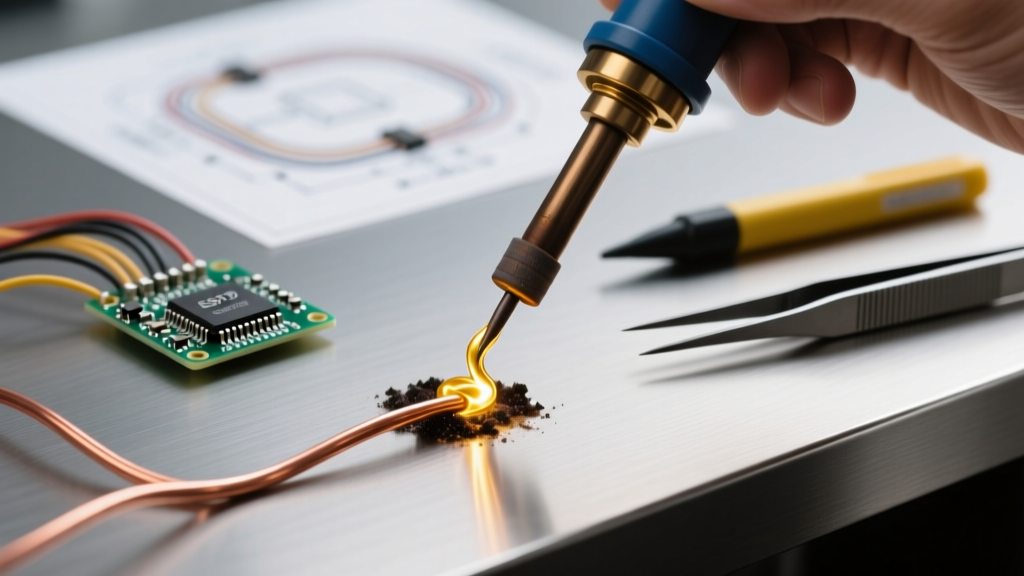
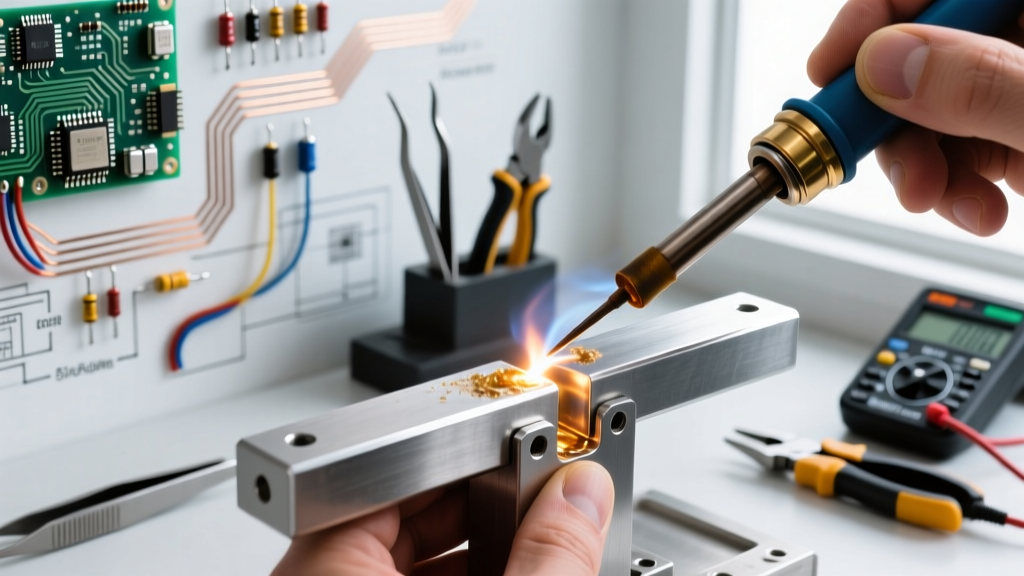
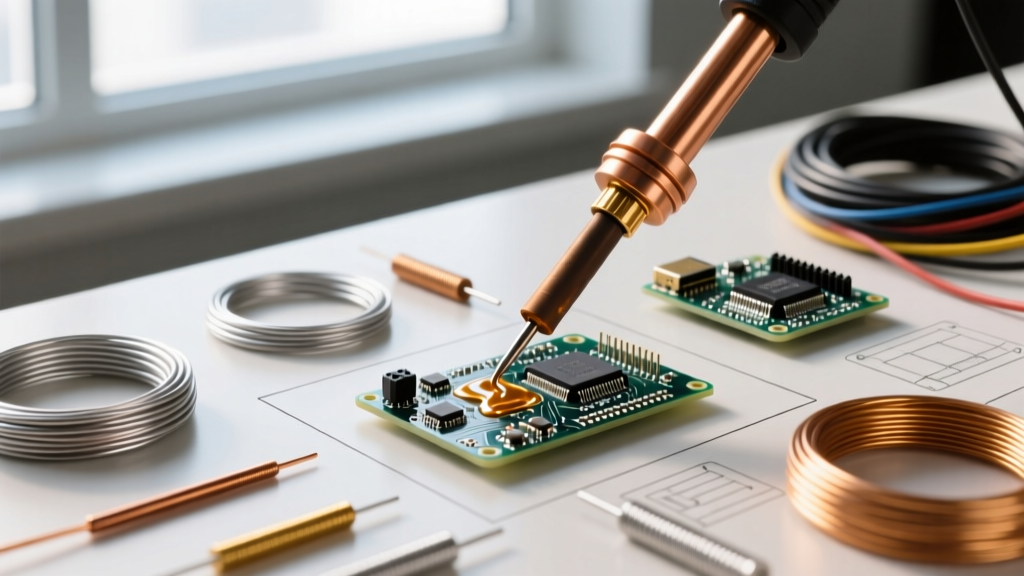
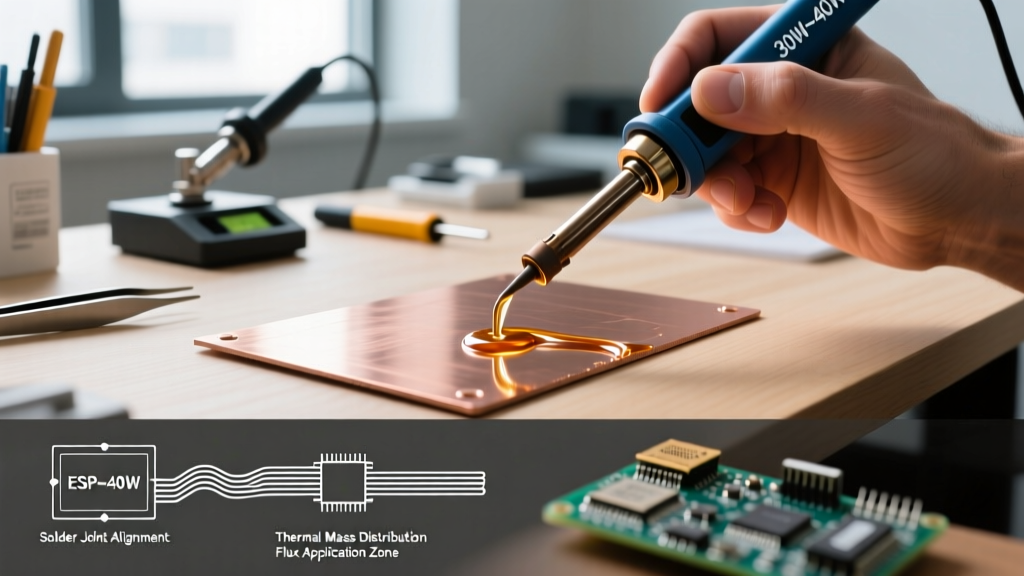
The Metallurgical Barrier: Why Stainless Steel Resists Solder
Soldering copper to stainless steel is one of the most notoriously frustrating tasks in electronics fabrication, plumbing, and jewelry making. While copper readily accepts standard rosin fluxes and tin-lead or lead-free alloys, stainless steel actively rejects them. The culprit is the passive chromium oxide layer that gives stainless steel its corrosion resistance. This microscopically thin, self-healing oxide barrier prevents molten solder from wetting the base metal, resulting in weak, globular cold joints.
To successfully join these two dissimilar metals, you must chemically strip the oxide layer at the exact moment the solder flows, while simultaneously managing a massive thermal conductivity mismatch. According the 1.0
According to technical guidelines from Harris Products Group, standard electronics-grade rosin fluxes (like RMA or RA) are entirely ineffective on stainless steel. You must step up to highly active organic acid (OA) or inorganic acid (IA) fluxes, which introduces new challenges regarding post-solder corrosion and joint reliability.
Material Selection Matrix: Flux and Filler Alloys
Choosing the right chemical and metallurgical combination is 80% of the battle. Below is a decision matrix for selecting the appropriate flux and filler alloy based on your specific application requirements.
The Neutralization Protocol
Cooling: Allow the joint to cool to room temperature. Quenching in water can cause thermal shock and micro-fractures in the solder fillet.
Hot Water Rinse: Rinse the assembly under 60°C (140°F) distilled water to dissolve the bulk of the water-soluble zinc chloride salts.
Chemical Neutralization: Apply a mild baking soda (sodium bicarbonate) and water paste to the joint area. You will see effervescence (bubbling) as the base neutralizes the residual hydrochloric/zinc acid.
Final Clean: Scrub gently with a nylon brush, rinse again with distilled water, and dry with compressed air or an isopropyl alcohol displacement rinse.
Advanced 2026 Techniques: Ultrasonic Soldering
For high-reliability aerospace or medical applications where acid fluxes are strictly prohibited due to outgassing or corrosion risks, the industry has increasingly turned to ultrasonic soldering. Ultrasonic soldering irons operate at frequencies between 20kHz and 60kHz, introducing high-frequency acoustic cavitation directly into the molten solder pool.
This cavitation creates microscopic vacuum bubbles that violently collapse against the stainless steel surface, physically shattering the chromium oxide layer without the need for chemical fluxes. While ultrasonic equipment represents a significant capital investment (often exceeding $2,500 for benchtop units), it allows for fluxless soldering of copper to 316L stainless steel using standard SAC305 or specialized indium-based alloys. As noted by advanced metallurgy resources at Indium Corporation, ultrasonic tinning is becoming the gold standard for hermetic seals and flux-sensitive sensor assemblies.
Final Quality Inspection Criteria
A successful copper-to-stainless joint should exhibit a smooth, concave fillet with a shiny or semi-matte finish (depending on the alloy). The solder must feather out to a zero-degree contact angle on both the copper and the stainless steel. If the solder pulls back from the stainless edge, forming a high contact angle, the oxide layer was not fully breached, and the joint will fail under mechanical or thermal stress. Always perform a mechanical tug test and a 10x optical inspection to ensure no flux inclusions or micro-voids compromise the metallurgical bond.