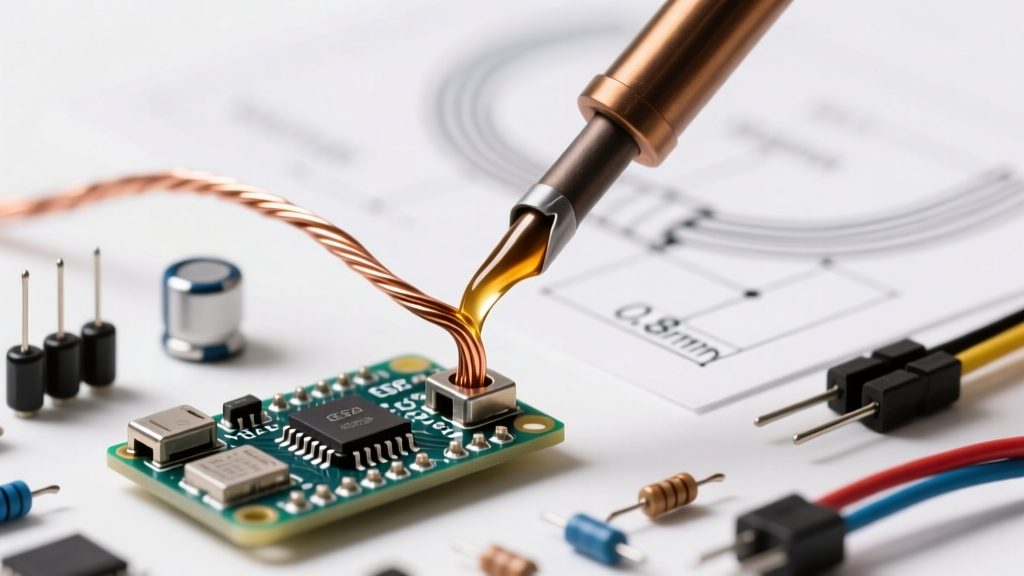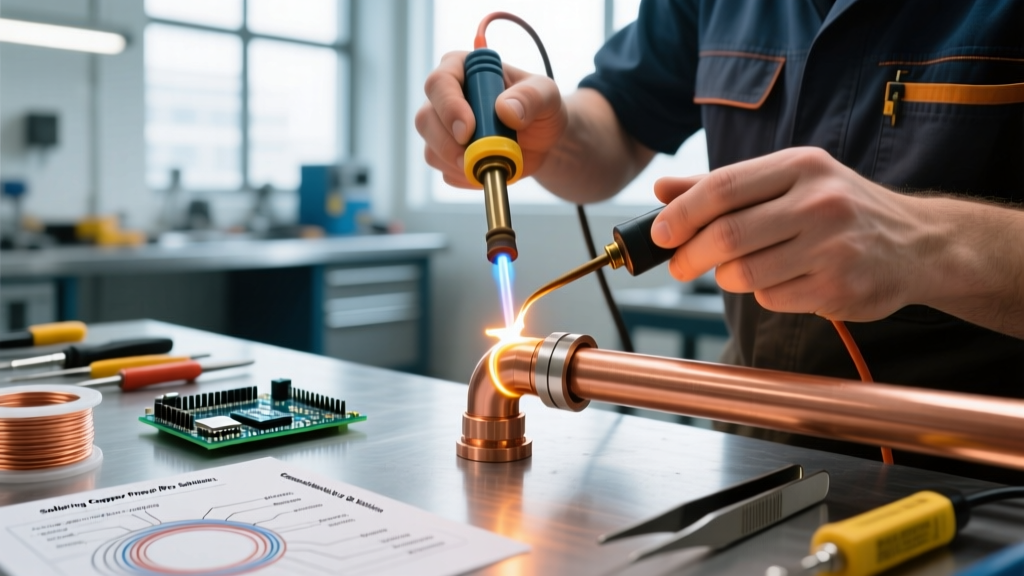

The Metallurgical Divide: Soft Soldering vs. Brazing and Silver Soldering
When transitioning from standard PCB assembly to high-stress structural, HVAC, or heavy-current electrical connections, soft soldering (using Sn63/Pb37 or SAC305 alloys melting below 450°C) is no longer viable. This is where brazing and silver soldering become critical. While many hobbyists use the terms interchangeably, professional fabricators understand the metallurgical nuances that dictate joint integrity under thermal cycling and mechanical vibration.
According to the American Welding Society (AWS), any joining process utilizing a filler metal with a liquidus temperature above 450°C (842°F) but below the solidus temperature of the base metals is classified as brazing. Silver soldering is simply a subcategory of brazing that utilizes silver-bearing alloys (BAg series) to achieve lower flow temperatures and superior capillary action compared to brass or copper-phosphorus rods.
Essential Equipment: Torches and Gas Mixtures
Before selecting your filler metal, you must match your heat source to the thermal mass of the workpiece. For delicate jewelry work or micro-electronics RF shielding, the Smith Little Torch running on Acetylene/Oxygen provides pinpoint precision with flame temperatures up to 5,589°F. For field HVAC repairs where heavy tanks are impractical, a Bernzomatic TS8000 torch head paired with MAP-Pro gas offers a maximum flame temperature of 3,730°F—sufficient for most Sil-Fos copper-to-copper joints, though it struggles with large-diameter steel fittings. For heavy industrial brazing, the Victor Journeyman Oxy/Acetylene setup remains the undisputed standard, offering the high BTU output required to overcome the heat-sink effect of thick brass valve bodies and heavy copper busbars.
Alloy Selection Matrix for Modern Workflows
Selecting the correct AWS-classified filler metal is paramount. The silver content directly influences the melting point, flow characteristics, and cost. Below is a comparison of industry-standard alloys utilized by professionals in 2026.
| Alloy (Brand/Type) | AWS Classification | Silver Content | Melting Range (°F) | Best Application | Approx. 2026 Cost |
|---|---|---|---|---|---|
| Harris Safety-Silv 56 | BAg-7 | 56% | 1145 - 1205 | Stainless steel, carbide, jewelry | $180 / troy oz bundle |
| Harris Safety-Silv 45 | BAg-5 | 45% | 1225 - 1370 | General copper, brass, steel | $110 / troy oz bundle |
| Sil-Fos 15 | BCuP-5 | 15% | 1225 - 1495 | Copper-to-copper (HVAC refrigeration) | $45 / lb spool |
| Harris Cor-Al | N/A (Aluminum Braze) | 0% (Zinc/Aluminum) | 850 - 900 | Aluminum tubing, battery lugs | $35 / lb spool |
Step-by-Step Professional Torch Technique
1. Surface Preparation and Joint Clearance
The most common cause of joint failure in brazing and silver soldering is improper fit-up. For optimal capillary action, the radial clearance between the tube and fitting must be between 0.002" and 0.005" (0.05mm to 0.12mm) at room temperature. Account for thermal expansion: copper expands more than brass, so a copper tube inside a brass fitting requires a slightly tighter room-temperature fit than copper-to-copper. Clean the base metals using a stainless steel wire brush or Scotch-Brite pad. Never use standard sandpaper, as it leaves behind silica particles that will contaminate the braze pool and create micro-fractures under load.
2. Flux Application and Heat Management
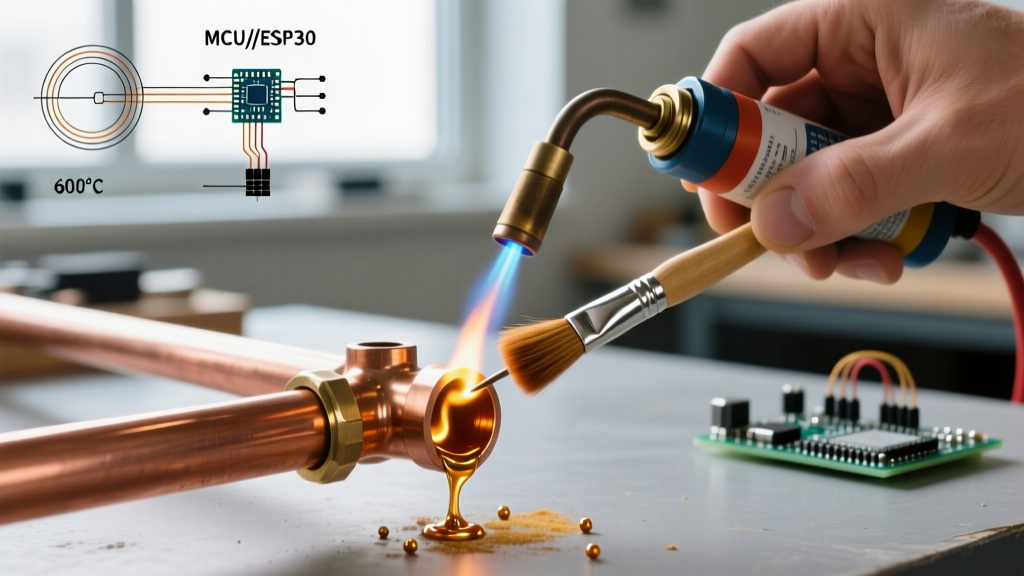
For copper and brass, apply Harris Stay-Silv White Flux (a borax/boric acid blend). For stainless steel or high-temperature applications exceeding 1400°F, switch to Stay-Silv Black Flux, which contains potassium fluoride to dissolve stubborn chromium oxides. Apply a neutral to slightly carburizing flame. Sweep the flame across the entire fitting to bring the base metal up to temperature evenly. Do not focus the flame directly on the filler rod. The heat must be conducted through the base metal to draw the alloy in.
3. The Capillary Draw and Quench
Watch the flux closely. It will first bubble (water boiling off), then turn into a clear, glassy liquid. This phase change indicates the base metal has reached the flow temperature. Touch the silver solder rod to the joint seam, not the torch tip. If the metal is hot enough, capillary action will instantly draw the molten alloy deep into the fitting against gravity. Once a continuous fillet is visible around the entire perimeter, remove the heat and allow the joint to cool naturally. Quenching in water is acceptable for copper only after it has dropped below a dull red heat to prevent thermal shock cracking and stress fractures.
Common Failure Modes and Troubleshooting Edge Cases
- Cold Laps (The "Blob" Effect): The filler metal melts but fails to flow into the joint, instead balling up on the surface like a soft solder blob. Cause: The base metal did not reach the liquidus temperature of the alloy. The torch was likely removed too early, or the flame was too small for the thermal mass of the fitting. Fix: Increase heat input and ensure the flux turns completely clear before applying the rod.
- Burnt Flux (Black Glass Inclusions): The flux turns into a hard, black, crusty shell that prevents the alloy from wetting the metal. Cause: Overheating the joint or using a flux with a temperature rating lower than your operating temperature. Fix: The joint must be completely disassembled, pickled in a warm citric acid or Sparex bath, and re-fluxed. You cannot simply add more flux over burnt residue.
- Oxidation Scaling Inside the Tube: In HVAC refrigeration lines, internal oxidation creates black copper oxide flakes that will destroy compressor valves and clog expansion valves. Cause: Brazing in an ambient oxygen environment. Fix: Always purge the inside of the tubing with Oxygen-Free Dry Nitrogen (OFDN) at a flow rate of 2-3 SCFH during the brazing process.
Safety Standards: The Shift Away from Cadmium
Historically, jewelers and HVAC technicians relied on cadmium-bearing silver solders (like the legacy Easy-Flo series) because cadmium dramatically lowered the melting point and improved flow. However, cadmium vapor is highly toxic and a known carcinogen. As of 2026, professional shops have universally transitioned to cadmium-free alloys like the BAg-7 (Safety-Silv 56) series. Always consult OSHA's Cadmium guidelines and ensure your workspace is equipped with localized fume extraction systems rated for sub-micron particulate filtration. When brazing galvanized steel or brass, be equally vigilant about zinc oxide fumes, which cause acute metal fume fever.
For further reading on capillary joint design and thermal expansion tolerances, refer to the Copper Development Association's technical guidelines on brazing copper tube. Mastering the thermal dynamics of brazing and silver soldering separates temporary field fixes from permanent, aerospace-grade structural bonds.