
The Metallurgical Hurdle: Why Aluminum Resists Soldering
Soldering aluminum to aluminum is notoriously frustrating for both DIY electronics enthusiasts and HVAC professionals. The root cause is not the base metal itself, but the instantaneous formation of aluminum oxide (Al2O3) upon exposure to atmospheric oxygen. While pure aluminum melts at a manageable 660°C (1220°F), its oxide layer boasts a melting point of 2072°C (3762°F), according to elemental data from Jefferson Lab. Standard rosin-based fluxes and common tin-lead or SAC305 alloys simply cannot penetrate this ceramic-like barrier, resulting in cold, balling joints that fail under minimal stress.
To achieve a reliable metallurgical bond, you must pair the correct thermal delivery tool with a specialized filler alloy and, in most cases, an aggressive chemical or mechanical oxide-disruption technique. As of 2026, advancements in ultrasonic soldering and specialized fluoride fluxes have made this process highly repeatable, provided you select the right combination for your specific application.
Tool & Technique Pairing Matrix
The following matrix outlines the three most effective strategies for joining aluminum to aluminum, categorized by joint requirements and tool accessibility.
| Pairing Strategy | Primary Tool | Filler Alloy | Flux Requirement | Best Use Case |
|---|---|---|---|---|
| Ultrasonic (Fluxless) | Ultrasonic Soldering Iron (40kHz) | Zn-Sn (e.g., Indalloy 158) | None (Cavitation) | Delicate electronics, flux-sensitive assemblies |
| Chemical-Mechanical | High-Wattage Station (e.g., Hakko FX-951) | Zn-Al (e.g., Alchemy Series) | Fluoride-based (e.g., Superior #302) | Wire splices, low-stress enclosures, DIY repairs |
| Thermal Brazing | Propane/MAPP Torch (e.g., TS8000) | Al-Si (e.g., Harris Al-Solder) | None or specialized powder | Structural joints, HVAC lines, heavy-gauge busbars |
Pairing 1: The Ultrasonic Approach (Fluxless Soldering)
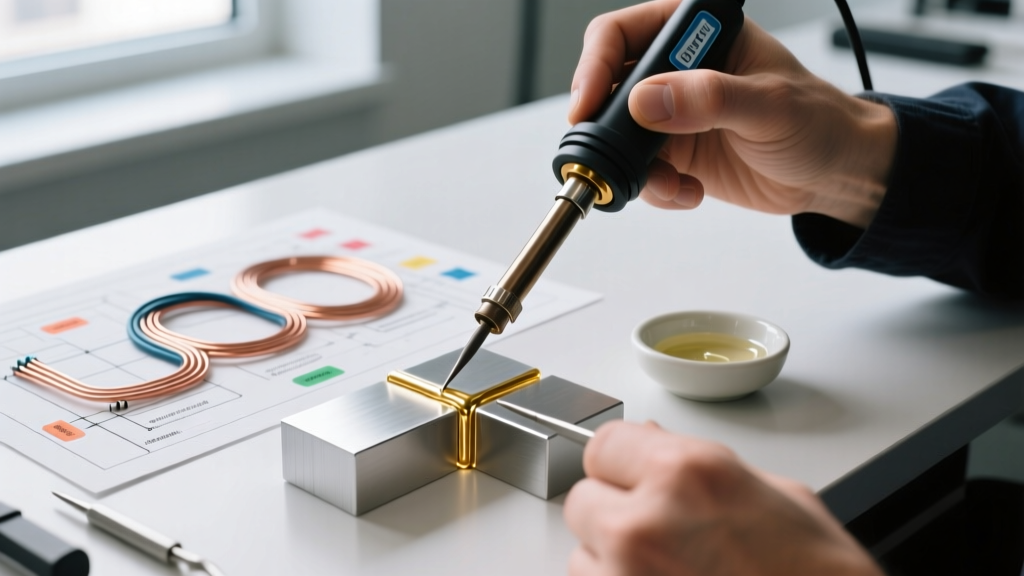
Ultrasonic soldering bypasses the need for chemical fluxes entirely by using high-frequency acoustic waves to create microscopic cavitation bubbles in the molten solder. When these bubbles collapse against the aluminum surface, they generate localized shockwaves that shatter the aluminum oxide layer, allowing the molten zinc-tin alloy to wet the bare base metal instantly.
Recommended Setup & Costs
- Tool: Sunbonder or generic 40kHz Ultrasonic Soldering Iron (Approx. $450 - $700 in 2026).
- Alloy: Indium Corporation's Indalloy 158 (91Sn/9Zn), which melts at a low 199°C. (Approx. $80 per 1lb spool).
- Prep: Isopropyl alcohol (IPA) for degreasing only.
Step-by-Step Execution
- Degrease: Wipe both aluminum surfaces with 99% IPA to remove machining oils.
- Tin the Tip: Feed the Indalloy 158 directly onto the vibrating ultrasonic tip. The acoustic energy will cause the solder to rapidly coat the tip.
- Apply to Joint: Press the vibrating, tinned tip against the aluminum joint. You will hear a distinct high-pitched hiss as the cavitation scrubs the oxide layer.
- Flood the Joint: Once the base metal is tinned (wetted), feed additional solder into the joint interface until capillary action draws it through the seam.
Expert Insight: Never use standard soldering iron tips on an ultrasonic handpiece. The acoustic vibrations will rapidly degrade standard copper-cored tips. Always use the hardened, cavitation-resistant tips provided by the ultrasonic manufacturer.
Pairing 2: High-Thermal Mass Iron & Fluoride Flux
For those without the budget for ultrasonic equipment, the chemical-mechanical method is the industry standard for electrical and low-stress mechanical joints. This relies on a highly corrosive fluoride-based flux to chemically etch the oxide, combined with the physical scraping of a heavy chisel tip to mechanically break the barrier while the joint is at temperature.
Recommended Setup & Costs
- Tool: Hakko FX-951 or Weller WES51 station equipped with a heavy chisel tip (e.g., Hakko T12-D24 or Weller ETA). The high thermal mass prevents the iron from stalling when touching the highly thermally conductive aluminum. (Approx. $150 - $350).
- Flux: Superior Flux & Technology #302 or #304 Aluminum Soldering Flux. Superior Flux's aluminum guidelines explicitly formulate these with organic fluorides to target Al2O3. (Approx. $25 per 2oz jar).
- Alloy: Zinc-Aluminum (Zn-Al) core wire, such as the Alchemy series or generic 95Zn/5Al rods. Melts around 380°C.
The "Scratch" Technique
The secret to this pairing is the "scratch" method. Aluminum soldering requires you to physically scrub the oxide layer while it is submerged under the molten flux and solder pool.
- Apply a generous bead of Superior #302 flux to both mating surfaces.
- Set your soldering station to 380°C (716°F). Allow the heavy chisel tip to fully saturate with heat.
- Press the tip into the fluxed joint and feed the Zn-Al wire. As the solder melts, use the edge of the chisel tip to firmly scratch and scrub the aluminum surface beneath the liquid solder pool.
- The flux prevents new oxygen from reaching the metal, while the mechanical scratching breaks the existing oxide. Once the aluminum is tinned, hold the pieces together and apply more solder to bridge the gap.
Critical Post-Solder Cleaning
Fluoride fluxes are highly corrosive and hygroscopic. If left on the joint, they will absorb atmospheric moisture and rapidly corrode the aluminum, leading to joint failure within weeks. You must neutralize and clean the joint immediately using a specialized saponifier or copious amounts of hot deionized water, followed by an IPA rinse. For detailed flux removal protocols, refer to Indium Corporation's flux engineering resources.
Pairing 3: Torch Brazing for Structural Loads
When soldering aluminum to aluminum for structural applications—such as bicycle frames, automotive radiators, or heavy-gauge electrical busbars—soft soldering (below 450°C) lacks the necessary shear strength. Instead, you must step up to aluminum brazing using a high-BTU torch.
- Tool: Bernzomatic TS8000 (MAPP/Propane) or an Oxy-Acetylene rig with a micro-torch tip. (Approx. $60 for TS8000).
- Alloy: Aluminum-Silicon (Al-Si) brazing rods, such as Harris Safety-Silv or Blue Demon aluminum rods. These melt between 575°C and 590°C.
Technique: Aluminum does not change color as it approaches its melting point, making it incredibly easy to accidentally melt the base workpiece. The technique requires constantly sweeping the torch flame to heat the joint broadly. You test the temperature by occasionally touching the brazing rod to the base metal; when the base metal reaches the correct temperature, the rod will instantly melt and flow via capillary action without the torch flame directly melting the rod.
Common Failure Modes and Troubleshooting
Even with the correct tool pairings, specific aluminum alloys and finishes present unique edge cases:
- Anodized Aluminum: Anodizing is essentially a thick, engineered layer of aluminum oxide. No flux or standard iron will penetrate it. You must mechanically remove the anodized layer via sanding, machining, or media blasting in the joint area before attempting to solder.
- Cast Aluminum Porosity: Sand-cast aluminum parts often contain microscopic gas pockets. When heated with a torch or high-wattage iron, these pockets outgas, blowing bubbles into your solder joint and creating a weak, porous connection. Pre-baking cast parts at 150°C for an hour can help drive out trapped moisture and gases.
- Galvanic Corrosion: If your soldered aluminum joint will be exposed to moisture, the zinc or tin in the filler alloy can create a galvanic cell with the aluminum base metal, leading to rapid sacrificial corrosion. For outdoor or marine applications, seal the completed and cleaned joint with a marine-grade polyurethane or epoxy encapsulant.
Summary of Best Practices
Successfully soldering aluminum to aluminum is less about brute-force heat and more about strategic oxide management. By pairing an ultrasonic iron with Zn-Sn alloys for delicate work, or a high-mass chisel iron with fluoride fluxes for general DIY repairs, you can achieve joints that rival the conductivity and durability of the base metal. Always prioritize joint preparation, respect the thermal conductivity of aluminum, and never skip the post-solder cleaning phase when using chemical fluxes.