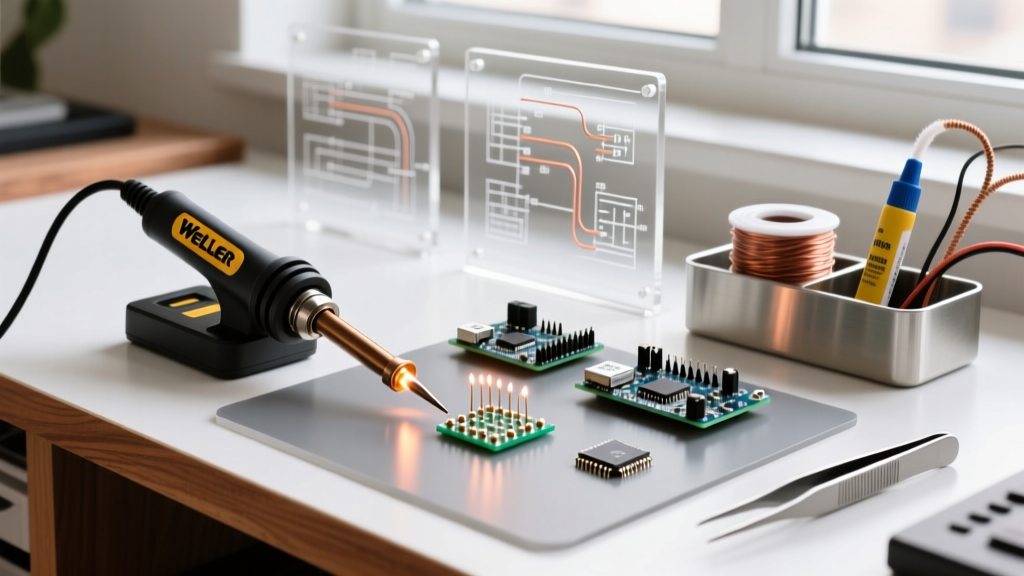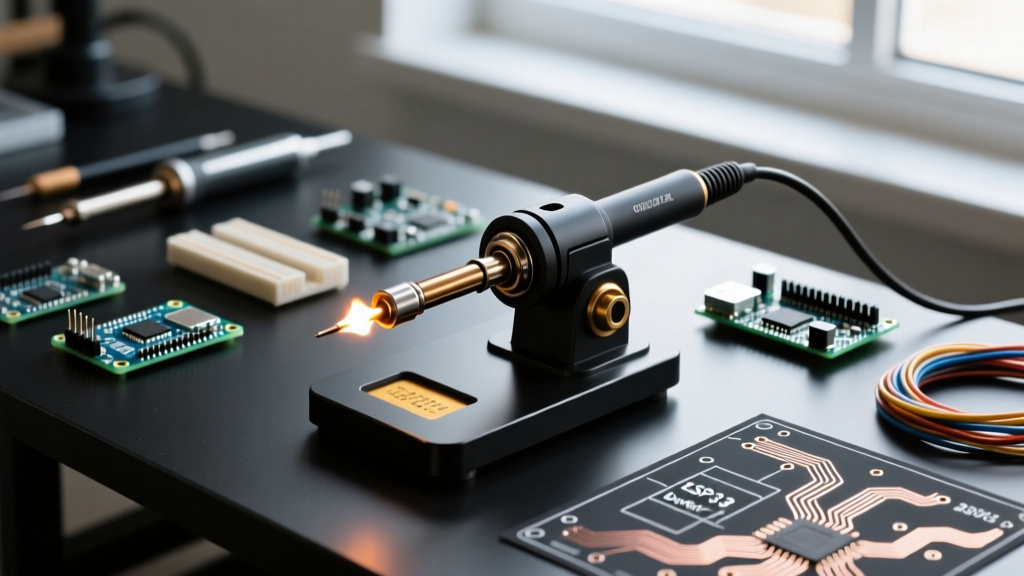

The Hidden Bottleneck in Cordless Soldering
For field technicians working in HVAC, automotive diagnostics, and off-grid telecom repair, cordless butane irons are indispensable. However, the stock accessories included with most kits are designed for generalist hobbyists, not demanding field environments. Upgrading your gas soldering tips is the single most cost-effective way to transform a sluggish, frustrating tool into a high-thermal-mass workhorse capable of meeting IPC J-STD-001 thermal profiles for heavy-gauge wiring.
In 2026, the market for replacement tips has bifurcated into ultra-cheap, poorly machined clones and high-precision OEM upgrades. This guide cuts through the noise, providing exact specifications, compatibility matrices, and upgrade paths for professionals who rely on butane-powered thermal tools.
Catalytic vs. Open Flame: The Chemistry of Upgrading
Before selecting an upgrade, you must understand the fundamental difference between the two primary gas soldering tips architectures. Confusing these will result in destroyed PCBs or inadequate heat transfer.
- Catalytic Heater Tips: These utilize a platinum or palladium-coated ceramic mesh. The butane vapor reacts with the catalyst to produce a flameless, exothermic reaction. The copper tip then screws into this heater unit. Max temperatures are strictly capped around 550°C (1022°F), making them safe for sensitive electronics and heat-shrink tubing.
- Open Flame Tips: These are essentially miniature blowtorches. The butane ignites directly at the tip's aperture. Temperatures can exceed 1300°C (2372°F). They are strictly for heavy mechanical soldering, brazing, or cutting thick synthetic ropes, and will instantly delaminate a printed circuit board.
Expert Insight: Never attempt to use an open flame tip for SMD rework or standard wire splicing. The localized thermal shock will lift pads off FR4 substrates in milliseconds. Reserve flame tips exclusively for heavy-gauge battery lugs and mechanical grounding straps.
2026 Compatibility Matrix: Thread Standards
The most common failure point when buying aftermarket gas soldering tips is thread mismatch. Unlike standard 65W electric irons that largely standardize around specific bayonet or screw mounts, gas irons remain highly proprietary. Below is the definitive compatibility matrix for the most common professional field units.
| Brand / Model | Heater / Tip Architecture | Thread Specification | Cross-Compatibility |
|---|---|---|---|
| Master Appliance UltraTorch (UT-100SI) | Separate Catalytic Heater + Screw-in Tip | 10-32 UNF (Flame tips use direct 10-32) | Accepts standard 10-32 hardware store screws for DIY mods; Master Appliance OEM tips recommended. |
| Weller Portasol PRO | Integrated Catalytic Heater / Push-Fit Collar | Proprietary Threaded Collar | None. Strictly Weller OEM or licensed equivalents. |
| Dremel VersaTip | Integrated Catalytic / Threaded Tip | Proprietary M-Series Metric | Some generic European clones, but highly variable. |
| Generic "eBay" Cordless Irons | Direct Flame or Basic Catalytic | M6 or M7 Metric Coarse | Highly inconsistent; requires caliper measurement before ordering. |
Top Tier Upgrade Recommendations for Field Techs
If you are still using the default 1.0mm conical tip that came with your kit, you are severely limiting your tool's capability. Here are the specific upgrades you should acquire based on your primary field application.
1. High-Thermal-Mass Chisel (For 10-8 AWG Automotive Wiring)
The stock conical tip lacks the surface area and thermal mass to transfer heat into 10 AWG or 8 AWG copper wire, which acts as a massive heat sink. When soldering automotive harnesses, the solder will ball up and refuse to wet the joint.
- The Upgrade: 3/16" (4.8mm) or 1/4" (6.3mm) Chisel Tip.
- Why it Works: The broad, flat face maximizes contact area with the wire strand, while the increased copper mass stores enough thermal energy to overcome the heat-sink effect of thick gauge wire without dropping below the 220°C melting point of SAC305 solder.
- Estimated Cost: $18 - $28 (OEM).
2. The Hot Knife / Deflashing Blade (For Marine & Outdoor Enclosures)
Field work often involves sealing connections with heavy-wall, adhesive-lined heat shrink, or cutting frayed synthetic rigging.
- The Upgrade: Catalytic Hot Knife Blade.
- Why it Works: Running at a steady 450°C, the hot knife slices through Kevlar, nylon, and Dacron while simultaneously melting and sealing the fibers to prevent fraying. It is also the ultimate tool for slicing through thick polyolefin heat-shrink tubing cleanly without pinching the wire inside.
- Estimated Cost: $15 - $22.
3. Micro-Spoon Catalytic Tip (For Telecom & SMD Rework)
When repairing a weather sensor or a remote telecom relay board, you need precision, not brute force.
- The Upgrade: 1.5mm Micro-Spoon (Concave) Tip.
- Why it Works: The concave "spoon" shape holds a small reservoir of molten solder, allowing you to drag-solder SOIC or QFP pins in the field without a traditional electric rework station. The catalytic heater ensures the temperature never spikes and destroys the IC junction.
- Estimated Cost: $25 - $35.
Critical Failure Modes: Why Your Tips Degrade
Even the best Weller Tools or Master Appliance tips will fail prematurely if subjected to improper field maintenance. Understanding these failure modes is crucial for protecting your investment.
- Catalytic Poisoning (The Mercaptan Problem): Standard hardware-store butane contains mercaptans (odorants) and olefins. When these burn on a catalytic mesh, they leave a carbon-sulfur residue that permanently blocks the platinum pores. The tip will struggle to exceed 600°F, and the flame will sputter. Solution: Only use 5x or 7x refined butane (e.g., Colibri or Newport) which is zero-impurity.
- Thermal Shock Cracking: Wiping a 500°C gas tip on a wet cellulose sponge causes immediate micro-fractures in the iron plating, exposing the copper core to rapid oxidation and pitting. Solution: Always use a dry brass wire sponge for gas irons.
- Carbon Scoring from Rich Mixtures: If your iron's gas flow valve is left on maximum when not actively soldering, the unburned butane will crack into hard carbon deposits on the tip's surface. This acts as an insulator, ruining thermal transfer.
Step-by-Step: Flushing a Poisoned Catalytic Heater
If your catalytic heater is struggling to ignite or isn't reaching full temperature, do not throw it away immediately. You can often burn off minor impurities using this field-expedient flushing method:
- Remove the copper tip from the catalytic heater unit to expose the ceramic mesh.
- Purge the iron's fuel tank completely by depressing the fill valve with a small screwdriver until no hiss is heard.
- Fill the tank with high-purity 7x refined butane.
- Ignite the iron and set the gas flow to maximum. Let it run in a well-ventilated area for 4 to 5 minutes. The higher heat and pure fuel will slowly oxidize and clear the carbon/sulfur buildup from the catalyst.
- Turn off the iron, let it cool, and reinstall the copper tip.
The Economics of OEM vs. Aftermarket in 2026
The market is currently flooded with $4 to $8 generic tip multi-packs. While tempting, these aftermarket gas soldering tips suffer from severe quality control issues. The copper alloys used are often highly porous, and the iron cladding is less than 0.1mm thick, leading to pitting within a dozen uses. Furthermore, the thread tolerances on generic 10-32 flame tips are often slightly undersized, causing them to vibrate loose during use—a massive safety hazard when working near fuel lines or live voltage.
The Verdict: Spend the $20-$35 on OEM or verified Tier-1 aftermarket tips. The thermal recovery time, thread safety, and plating longevity will pay for themselves on your very first professional job.
Frequently Asked Questions
Can I use standard electric soldering tips on a gas iron?
No. Electric tips rely on a ceramic heating element sliding inside a hollow copper shaft. Gas soldering tips are solid copper (or brass) machined with specific threads to screw directly into a catalytic heater block or flame nozzle. They are mechanically and thermally incompatible.
How do I know if my catalytic coating is permanently dead?
If you have flushed the unit with 7x refined butane and the mesh still fails to glow a dull cherry red in low light, or if the iron cannot melt 63/37 rosin-core solder within 5 seconds of contact, the platinum/palladium coating has been permanently stripped or fused. The catalytic heater unit must be replaced; the copper tip itself may still be fine if it screws into a new heater.
Is it safe to use a gas soldering iron in an enclosed electrical panel?
While catalytic irons are flameless, they still consume oxygen and emit carbon monoxide and trace aldehydes. Always ensure cross-ventilation when working inside large industrial control panels. Open flame tips should never be used inside an enclosure due to the risk of igniting trapped dust or off-gassing from wire insulation.