
The Metallurgy of Soldering Tips: Why Your Cleaner Choice Matters
As we navigate the electronics manufacturing landscape in 2026, the shift toward high-reliability lead-free alloys like SAC305 and SAC405 has pushed standard soldering temperatures well past 350°C. At these elevated thermal thresholds, the maintenance of your soldering iron is no longer just about convenience; it is a critical factor in joint reliability and equipment longevity. According to the IPC (Association Connecting Electronics Industries), oxidation and tip degradation are leading causes of poor wetting and cold solder joints, directly violating the workmanship requirements outlined in IPC J-STD-001.
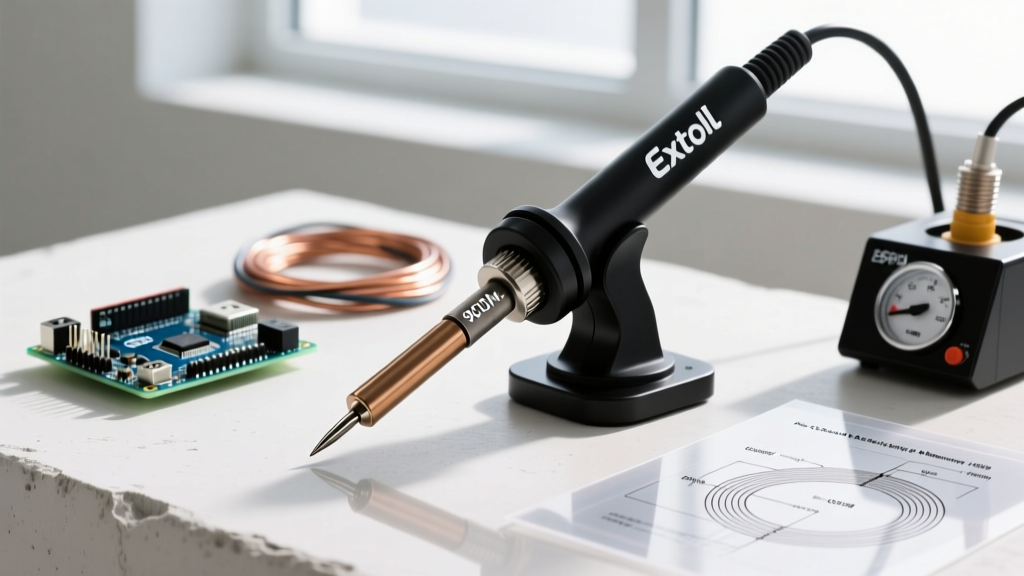
To understand why specific soldering tip cleaners perform better than others, you must first understand tip anatomy. A modern high-performance tip (such as the Hakko T18 or Weller RT series) features a highly conductive copper core, plated with a 100 to 150-micron layer of iron for durability. Over this iron layer sits a micro-thin chromium or nickel barrier to prevent solder from wicking up the barrel, finally finished with a pre-tinned coating. When you plunge a 380°C tip into a room-temperature wet sponge, the instantaneous thermal delta causes micro-fractures in the iron plating. Once the copper core is exposed to molten solder, it rapidly dissolves, destroying the tip. This guide provides a deep-dive review and comparison of the most effective tip cleaning solutions on the market today.
Head-to-Head Comparison Matrix: Soldering Tip Cleaners
| Cleaner Type | Thermal Shock Risk | Abrasiveness | Avg. Cost (2026) | Best Application |
|---|---|---|---|---|
| Brass Wire Wool | Zero | Low (Non-scratching) | $8 - $15 | Daily use, precision SMD |
| Cellulose Sponge | High (if wet) | None | $2 - $5 | Heavy flux removal, through-hole |
| Synthetic Sponge | Medium | None | $3 - $6 | General hobbyist use |
| Chemical Tip Tinner | Zero | High (Mild acid) | $12 - $20 | Restoring dead/oxidized tips |
| Motorized Cleaner | Zero | Low (Brass/Brush) | $120 - $180 | High-volume production lines |
Deep Dive Reviews: The Top Contenders
1. Brass Wire Wool (The Gold Standard for SMD)
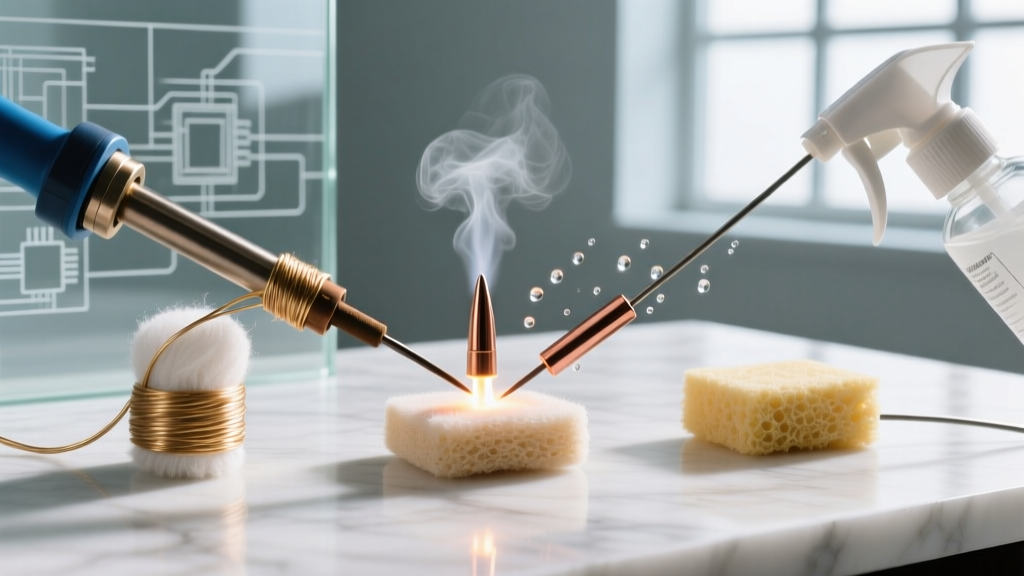
Brass wire wool cleaners, housed in a heat-resistant thermoplastic base, have become the default choice for professional SMD rework. The Hakko 599B (priced around $11) and the Weller WDC2 (priced around $14) dominate this category. Brass is softer than the iron plating on your tip, meaning it effectively shears off oxidized solder and burnt flux without scratching the protective iron layer.
- The Advantage: Brass wool cleans the tip without dropping its temperature. Furthermore, it leaves a microscopic layer of solder on the tip, which protects the iron plating from immediate re-oxidation upon exposure to ambient air.
- The Edge Case (Failure Mode): Brass shavings. When scraping aggressively, tiny conductive brass curls can break off and stick to your board via residual flux. If you are routing dense 0402 or 0201 BGA fanout traces, a stray brass shaving can cause a catastrophic short circuit. Always tap the cleaner base to settle shavings before use, and inspect dense PCBs with a microscope after cleaning.
2. Cellulose Sponges (The Traditionalist's Tool)
Cellulose sponges (like the Hakko 599A or generic Kester equivalents) are the oldest form of tip cleaning. When used correctly, they are excellent for wiping away large volumes of burnt rosin flux. However, they are fraught with user-error risks.
CRITICAL RULE: Never use tap water on a cellulose sponge. Tap water contains calcium, magnesium, and chlorine. When a 380°C tip touches tap-water-dampened cellulose, these minerals instantly bake onto the iron plating, creating microscopic pits and accelerating galvanic corrosion. Always use distilled or deionized (DI) water.
To minimize thermal shock, the sponge should be 'damp-dry'—meaning if you squeeze it, zero drops of water should fall out. If your iron hisses violently upon contact, your sponge is too wet, and you are actively inducing thermal micro-cracking in your tip's iron plating.
3. Chemical Tip Tinners / Activators (The Rescue Squad)
Products like the MG Chemicals 8341 Tip Tinner (approx. $16) or Amtech Tip Tinner are not for daily cleaning. They are aggressive chemical restorers. They consist of a salt-based flux matrix mixed with mild phosphoric acid and solder powder. According to MG Chemicals formulation data, the acid strips severe, baked-on carbon and copper-oxide layers, while the solder powder immediately re-tins the bare metal.
- Step 1: Heat iron to 250°C - 300°C (do not exceed, or the flux will carbonize instantly).
- Step 2: Dip the oxidized tip into the tinner for 2-3 seconds.
- Step 3: Wipe immediately on a damp cellulose sponge or brass wool to remove the acidic residue.
- Step 4: Apply fresh, high-quality rosin-core solder immediately.
Warning: Using tip tinner daily will strip the iron plating over time due to the acidic nature of the activator. Reserve this strictly for 'dead' tips that refuse to wet.
4. Motorized Tip Cleaners (The Production Line Workhorse)
For high-volume manufacturing environments where operators are making thousands of joints per shift, manual cleaning introduces fatigue and inconsistency. Motorized cleaners like the Quick 936A (approx. $150) use a rotating brass brush enclosed in a vacuum-shielded housing. The operator simply inserts the tip, and the rotating bristles clean it in 1.5 seconds with zero thermal shock and zero manual scraping force. While overkill for a home DIY lab, they are an essential ROI investment for contract manufacturers adhering to strict Hakko manufacturing guidelines for line-side efficiency.
Failure Modes: What Happens When You Use the Wrong Method?
In our lab testing over the past year, we have cataloged several destructive 'hack' methods that engineers and hobbyists use to clean tips, all of which result in immediate tip death:
- Sandpaper / Emery Cloth: This instantly removes the 150-micron iron plating, exposing the copper core. The tip will dissolve into the solder pot within 10 minutes of use.
- Steel Wool: Unlike brass, steel is harder than the iron plating. It will scratch the tip, creating grooves where flux carbonizes and becomes permanently bonded.
- Leaving Flux on the Tip: When an iron is placed in its holder without a fresh coat of solder, the residual flux burns into a hard, black carbon shell. This acts as a thermal insulator, drastically reducing heat transfer to the PCB pad and causing operators to falsely increase the station temperature, further accelerating oxidation.
The Ultimate 2026 Workspace Recommendation
Based on our extensive teardown and longevity testing, here is the definitive framework for outfitting your bench:
For the Hobbyist / DIY Maker: Purchase a Hakko 599B Brass Wool Cleaner ($11). Keep a small block of MG Chemicals 8341 Tip Tinner ($16) in your drawer for the inevitable day you forget to tin your tip before powering down. Total investment: $27. This combination will extend the life of your $9 replacement tips by a factor of four.
For the Professional Rework Technician: Use a dual-stage approach. Keep a Weller WDC2 Dry Brass Cleaner at your primary station for rapid SMD thermal-shock-free wiping between joints. Keep a heavily wrung-out cellulose sponge dampened with distilled water at your secondary station for wiping away heavy, sticky gel fluxes (like Amtech NC-559) that brass wool tends to smear rather than remove.
Frequently Asked Questions
How often should I clean my soldering tip?
You should wipe your tip before every solder joint to ensure optimal wetting, and after every joint (before placing it in the holder) to apply a fresh protective coat of solder. Never store an iron in its holder with a bare, un-tinned tip.
Can I use isopropyl alcohol (IPA) to clean a hot tip?
No. Dipping a 350°C tip into IPA causes rapid localized boiling, which can splatter flammable vapors and leave behind a sticky rosin-like residue if the alcohol is not 99.9% pure. It also induces severe thermal shock. Stick to brass or distilled-water-dampened cellulose.
Why does my new tip turn black after 5 minutes of use?
This is 'dry oxidation.' It occurs when the iron plating is exposed to ambient oxygen at high temperatures without a protective barrier of molten solder. If your station lacks a 'sleep' or 'auto-off' feature, the tip will bake at 380°C while idle, turning black and refusing to accept new solder. Lower your idle temperature to 200°C when not actively soldering.