
The Hidden Cost of a Dirty Soldering Iron
In the 2026 electronics market, the shift toward aggressive lead-free alloys like SAC305 (Tin-Silver-Copper) has made soldering tip maintenance more critical than ever. Lead-free solder requires higher operating temperatures—typically between 340°C and 380°C—which drastically accelerates oxidation and iron plating dissolution. If you are using a subpar soldering tip cleaner, you are silently destroying your equipment. A standard premium replacement tip for a Weller or Hakko station costs between $12 and $45; replacing them monthly due to poor cleaning habits is a massive hidden cost.
The debate between budget and premium tip cleaning kits is not just about aesthetics; it is about thermal dynamics, metallurgy, and long-term workspace efficiency. This guide dissects the exact failure modes of cheap cleaning methods and reveals why upgrading your soldering tip cleaner kit is one of the highest-ROI investments you can make for your workbench.
Budget Tier: Cellulose Sponges and Generic Wire
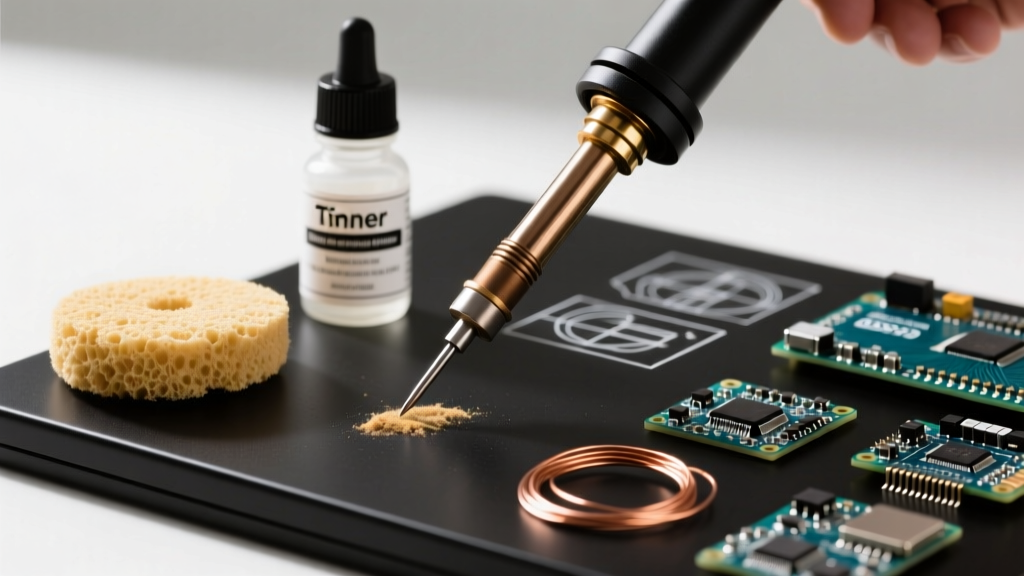
The quintessential budget soldering tip cleaner is the damp cellulose sponge, often included for free in the box with entry-level soldering stations. While technically functional, sponges introduce severe thermal shock to your iron.
The Thermal Shock Problem
Modern soldering tips are constructed with a solid copper core plated with a layer of iron (typically 100 to 250 microns thick) to resist solder erosion, followed by a microscopically thin layer of chromium to prevent the solder from wetting the entire shaft. When you plunge a 350°C tip into a 20°C damp sponge, you create an instantaneous temperature delta of 330°C.
- Micro-Cracking: This rapid contraction causes micro-fractures in the iron plating. Over time, molten solder penetrates these cracks, reaches the copper core, and dissolves it from the inside out.
- Mineral Buildup: Budget users often wet their sponges with tap water. The calcium and magnesium in tap water bake onto the tip upon contact, creating an insulating oxide layer that ruins thermal transfer.
Generic Brass Wool Pitfalls
The next step up in the budget tier is generic brass wool (often sold in $4 multi-packs on Amazon). While it avoids the thermal shock of water, cheap "brass" wool is frequently adulterated with steel or zinc alloys to cut manufacturing costs. Steel is harder than the iron plating on your tip. Scrubbing your tip with steel-contaminated wool acts like sandpaper, stripping the protective iron layer in a matter of weeks.
Mid-Tier Premium: Branded Brass Wool and Tip Tinner
Stepping into the premium DIY and professional tier, we find purpose-built brass wool cleaners and chemical tip tinner. These kits eliminate thermal shock and provide a chemical cleaning action that budget options completely lack.
Branded Brass Wool Cleaners
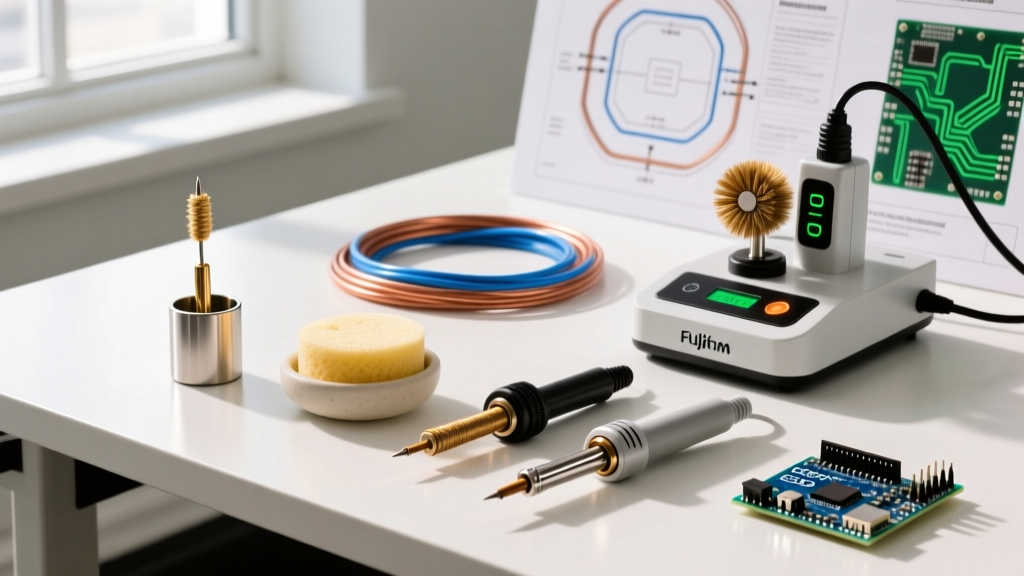
Premium options like the Hakko 599B Tip Cleaner ($13.50) or the Weller WDC2 Dry Tip Cleaner ($14.95) use high-purity, soft brass shavings. Because brass (an alloy of copper and zinc) is softer than the iron plating on your tip, it scrapes away oxidized solder and flux residue without scratching the underlying metal.
Pro Tip: The coil density matters. Premium cleaners pack the brass shavings tightly enough to provide resistance when you plunge the tip, ensuring 360-degree contact. Budget knock-offs often use loose, sparse shavings that fail to clean the flanks of chisel or bevel tips.
The Role of Tip Tinner
A premium cleaning kit is incomplete without tip tinner (e.g., MG Chemicals 4901 or Hakko FS-100, priced around $8 to $12). Tip tinner is a paste composed of mild acids and powdered solder. When a tip becomes heavily oxidized and refuses to wet, you plunge it into the tinner. The acid strips the oxidation, and the powdered solder immediately re-tins the iron plating, sealing it from the air. Budget setups rely on aggressive scrubbing to remove heavy oxidation, which physically damages the tip; premium setups use chemical reduction.
Ultra-Premium: Automated and Motorized Tip Cleaners
For high-volume production environments or specialized micro-soldering labs, manual cleaning introduces too much human error and inconsistency. This is where ultra-premium, automated soldering tip cleaners enter the chat.
Motorized Rotary Cleaners
Units like the Hakko FR-830 (retailing around $460) represent the pinnacle of tip maintenance. These benchtop devices feature motorized, rotating brass brushes enclosed in a fume-extraction-ready housing. The technician simply inserts the iron into the designated slot, and the machine automatically rotates the cleaning media at a precise RPM.
- Consistency: Eliminates the variable pressure applied by human hands, ensuring uniform cleaning without bending delicate micro-tips.
- Integration: Often paired with automated solder dispensers and nitrogen generators to create a fully controlled, oxidation-free soldering ecosystem compliant with strict aerospace and medical manufacturing standards.
While overkill for a hobbyist building Arduino kits, these automated cleaners are mandatory for facilities adhering to stringent IPC Class 3 reliability standards.
Head-to-Head Comparison Matrix
To visualize the trade-offs between budget and premium soldering tip cleaner kits, refer to the comparison matrix below:
| Feature | Budget (Sponge / Generic Wire) | Premium (Branded Brass / Tinner) | Ultra-Premium (Automated Rotary) |
|---|---|---|---|
| Average Cost | $0.50 - $5.00 | $14.00 - $25.00 | $400.00 - $600.00 |
| Thermal Shock Risk | High (Sponges) | None | None |
| Plating Abrasion | High (Steel contamination risk) | Very Low (Soft pure brass) | Minimal (Calibrated RPM) |
| Oxide Removal | Poor (Mechanical only) | Excellent (Chemical + Mechanical) | Excellent (Consistent Mechanical) |
| Target Audience | Beginners, occasional DIY | Prosumers, repair techs, pros | High-volume manufacturing, Class 3 |
Industry Standards and Best Practices
According to the IPC J-STD-001 standard for soldered electrical and electronic assemblies, the integrity of the solder joint is directly tied to the thermal efficiency and cleanliness of the tooling. A pitted or oxidized tip creates cold solder joints, which are a primary cause of field failures in consumer electronics. Furthermore, major tooling manufacturers like Hakko USA and Weller Tools explicitly state in their warranty documentation that tip damage caused by abrasive materials (like steel wool or files) or thermal shock (from excessive water) voids the tip's warranty.
The Verdict: Which Kit Should You Buy?
If you are strictly a weekend hobbyist soldering large through-hole components on breadboards, a damp cellulose sponge (wetted only with distilled water) is acceptable, provided you understand you will need to replace your tips more frequently.
However, if you are working with surface-mount devices (SMD), repairing modern smartphones, or using expensive lead-free profiles, the premium branded brass wool and tip tinner kit is the undisputed winner. The $20 investment in a Hakko 599B and a jar of FS-100 tip tinner will easily extend the life of a $40 chisel tip from three months to over two years. For the professional technician, the math is simple: premium cleaning kits pay for themselves with the first tip they save from the scrap bin.
Frequently Asked Questions
Can I use a kitchen Scotch-Brite pad to clean my soldering tip?
Absolutely not. Kitchen scouring pads contain harsh abrasives and often steel fibers that will instantly strip the microscopic chromium and iron layers off your tip, ruining it permanently.
How often should I use tip tinner?
Tip tinner should not be used for routine cleaning. Use your brass wool for standard wiping. Only plunge your tip into tip tinner when it has become heavily oxidized, blackened, and refuses to accept fresh solder.
Does brass wool wear out?
Yes, over time the brass shavings will become clogged with oxidized solder and flux residue. You should replace the brass wool insert every 6 to 12 months, depending on your soldering volume. Most premium brands sell replacement brass coils for around $5.