
The Cordless Advantage: Why Soldering Torch Tips Dictate Performance
When working on automotive harnesses, off-grid solar setups, or remote field repairs, a cordless butane soldering torch is indispensable. However, the thermal efficiency of these tools is entirely dependent on the quality and design of their soldering torch tips. Unlike standard mains-powered stations that rely on resistive ceramic heaters, butane torches utilize either direct-flame conduction or catalytic mesh technology. In this 2026 review and comparison, we dissect the top replacement tip kits on the market to help you choose the right setup for your specific thermal requirements.
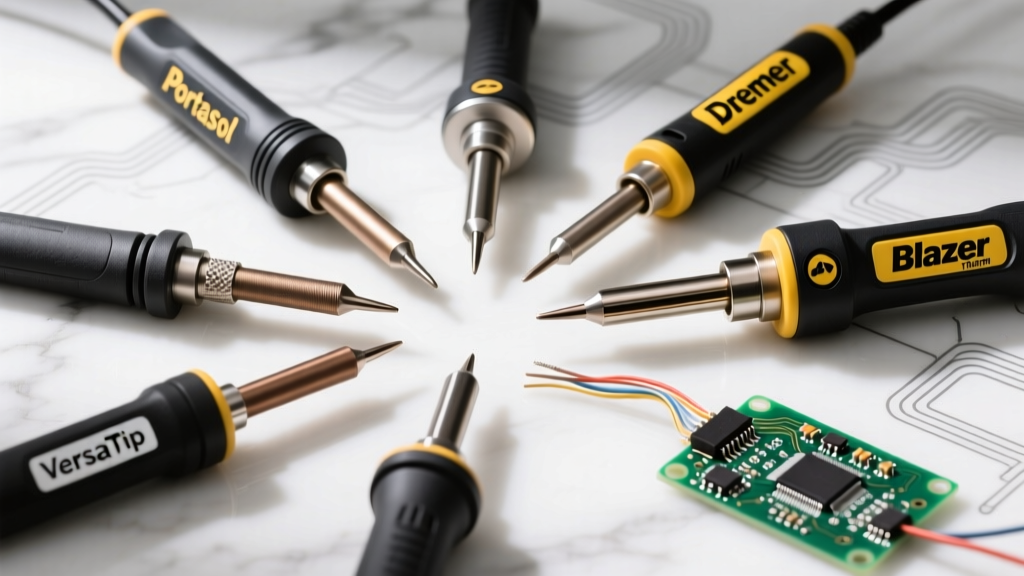
2026 Contender Matrix: Top Torch Tip Kits Compared
| Brand / Kit Model | Heating Mechanism | Max Tip Temp | Avg. Kit Price (2026) | Best Application |
|---|---|---|---|---|
| Weller Portasol (WPB1 / WSK1) | Catalytic Mesh | 850°F - 1000°F | $45 - $55 | Heavy-gauge wire, professional field repair |
| Dremel VersaTip 6-in-1 (2200-01) | Catalytic Mesh | 1050°F (Max) | $40 - $50 | Multi-purpose crafting, light PCB work |
| Blazer Butane Iron (22-1000 / GB2501) | Direct Flame Conduction | 950°F | $20 - $25 | Budget field work, quick splices |
Weller Portasol Tip Kits: The Professional Standard
The Weller Portasol series remains the gold standard for mobile technicians. The replacement tip kits (often bundled in the WSK1 or sold individually as WPB1 equivalents) feature a highly refined catalytic heater. When butane gas passes through the platinum-coated mesh at the base of the tip, it oxidizes without an open flame, transferring intense, localized heat directly into the copper core.
Thermal Recovery and Heavy-Gauge Performance
Where the Weller tips truly shine is thermal recovery. When soldering a 10 AWG wire to a heavy brass lug, the thermal mass of the joint rapidly drains heat from the tip. The Weller chisel tip (typically 2.4mm to 3.2mm) recovers its working temperature of 750°F in approximately 4 to 6 seconds after initial contact. This rapid recovery prevents cold solder joints, a critical factor when adhering to strict IPC standards for electronic and electromechanical assemblies.
Edge Cases and Failure Modes: Catalyst Poisoning
The primary vulnerability of Weller's catalytic soldering torch tips is 'catalyst poisoning.' If molten solder or aggressive rosin flux splatters directly onto the platinum mesh collar (rather than the solid iron tip), the mesh clogs. The tip will fail to ignite or heat unevenly. Pro Tip: Always tin the working end of the tip, never the base, and use a brass wire sponge rather than a wet cellulose sponge, which causes rapid thermal shock and micro-fractures in the catalytic collar.
Dremel VersaTip 6-in-1 Kit: The Hobbyist’s Swiss Army Knife
Dremel’s VersaTip (Model 2200-01) approaches the market not just as a soldering iron, but as a multi-tool. The kit includes a standard soldering tip, a cutting knife, a hot air blower nozzle, a deflector, and a shaping tip.
Versatility vs. Soldering Purity
While the VersaTip is exceptional for heat-shrinking tubing and cutting synthetic ropes, its dedicated soldering tip falls slightly short of the Weller in pure thermal mass. The Dremel conical tip is relatively thin, making it ideal for 20 AWG to 16 AWG wires and basic through-hole PCB components. However, attempting to solder 12 AWG automotive wires with the Dremel conical tip often results in dwell times exceeding 5 seconds. Field repair guidelines echo the NASA Electronic Parts and Packaging (NEPP) Program recommendations regarding thermal dwell times; prolonged heating degrades wire insulation and compromises the metallurgical bond of the solder joint.
Ergonomics and Heat Creep
A notable design flaw in the VersaTip kit emerges during extended 20-minute use sessions. The thermal barrier between the catalytic chamber and the tool's body is minimal, leading to 'heat creep.' Users frequently report the front housing becoming uncomfortably warm, necessitating periodic cooling breaks that disrupt workflow.
Blazer 22-1000 Tip Set: The Direct-Flame Budget Option
Unlike the catalytic systems of Weller and Dremel, the Blazer butane soldering irons utilize a direct micro-flame that licks the base of a solid metal tip shaft. The replacement tips for the Blazer GB2501 and 22-1000 models are significantly cheaper (often under $15 for a multi-pack) because they lack the expensive platinum catalyst mesh.
- Pros: Immune to catalyst poisoning; extremely cheap to replace; robust metal shafts.
- Cons: Requires an open flame (hazardous in volatile environments); soot buildup on the shaft reduces thermal transfer over time; less precise temperature control.
For quick, dirty splices in non-hazardous outdoor environments, the Blazer tips are highly cost-effective. However, the open flame makes them unsuitable for enclosed automotive fuel system repairs or environments with flammable off-gassing.
Thermal Mass, Wetting, and Tip Geometry
Expert Insight: The geometry of your soldering torch tip must match the thermal mass of the joint. Using a fine conical tip on a high-mass joint forces the user to apply excessive pressure and wait longer, accelerating tip oxidation and degrading the catalytic mesh.
When selecting replacement soldering torch tips, prioritize chisel or bevel geometries for wire splicing. The flat surface area of a chisel tip maximizes conductive heat transfer. Conical tips should be strictly reserved for fine-pitch through-hole components or delicate jewelry soldering where precision outweighs the need for rapid thermal recovery.
Maintenance Protocols for Catalytic Torch Tips
To maximize the lifespan of your catalytic soldering torch tips (which typically cost $18 to $25 each in 2026), adhere to this strict maintenance protocol:
- Pre-Heat Purge: Before igniting, open the gas valve for 3 seconds to purge ambient air from the chamber, ensuring a pure butane flow to the catalyst.
- Flame Adjustment: Never run the torch at maximum gas flow. Excess unburnt butane will carbonize the platinum mesh. Run the tool at 60-70% capacity for optimal catalytic reaction.
- Post-Use Tinning: Always leave a thick layer of 63/37 SnPb or SAC305 solder on the working end of the tip before shutting off the gas. This prevents ambient oxygen from oxidizing the iron plating as it cools.
- Shutdown Sequence: Turn off the gas and allow the tool to cool upright. Laying it on its side while the catalyst is still hot can cause residual flux to pool and bake onto the mesh.
Final Verdict: Which Kit Wins?
If your primary focus is reliable, high-heat field soldering for automotive, marine, or solar applications, the Weller Portasol replacement tip kits are the undisputed winner. The thermal recovery and catalytic efficiency justify the premium price tag. Conversely, if you are a maker or hobbyist who needs to alternate between soldering wires, cutting plastics, and shrinking tubing, the Dremel VersaTip 6-in-1 kit offers unmatched versatility, provided you respect its thermal mass limitations. Avoid direct-flame options like the Blazer for any precision electronics work, reserving them strictly for heavy-duty, non-sensitive outdoor splices.