
Architecting the Perfect Bench: Why Soldering Tips Types Matter
When building or upgrading an electronics workspace in 2026, hobbyists and professionals alike often obsess over the soldering station's wattage or the brand of the flux. However, the actual interface between your tool and the printed circuit board (PCB) is the tip. Understanding the various soldering tips types is the most critical factor in achieving reliable, IPC-compliant joints while preventing thermal damage to sensitive components. A well-organized workspace doesn't just feature a high-end iron; it features a curated, indexed arsenal of tip geometries matched to specific thermal mass requirements.
According to the IPC J-STD-001 standards for soldered electrical and electronic assemblies, proper heat transfer is paramount to avoid cold joints or pad delamination. Selecting the correct tip geometry ensures that thermal energy is delivered efficiently, minimizing dwell time on the pad. In this workspace setup guide, we will dissect the core soldering tips types, map them to real-world applications, and outline how to organize and maintain them on your bench.
The Core Soldering Tips Types Every Workspace Needs
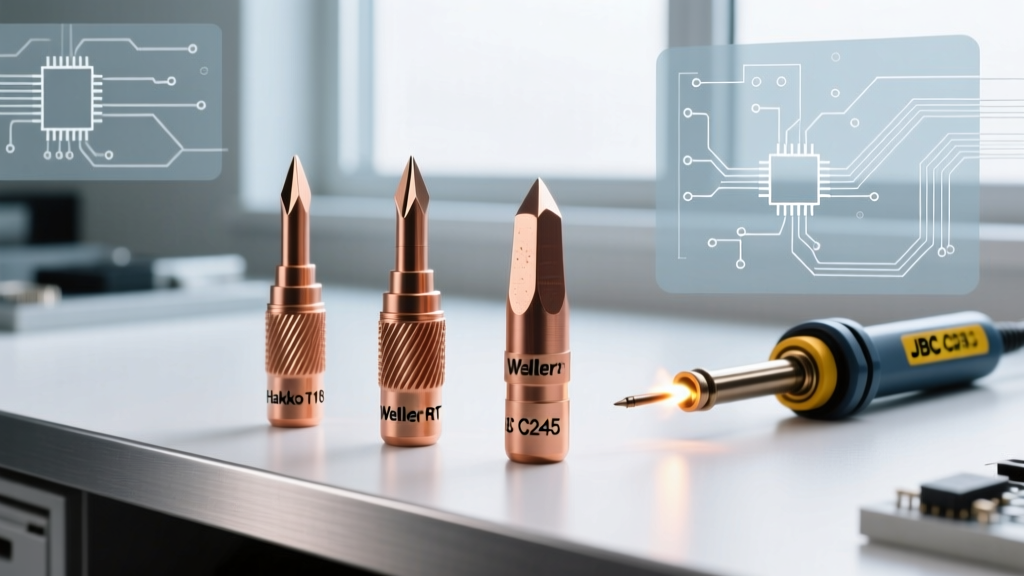
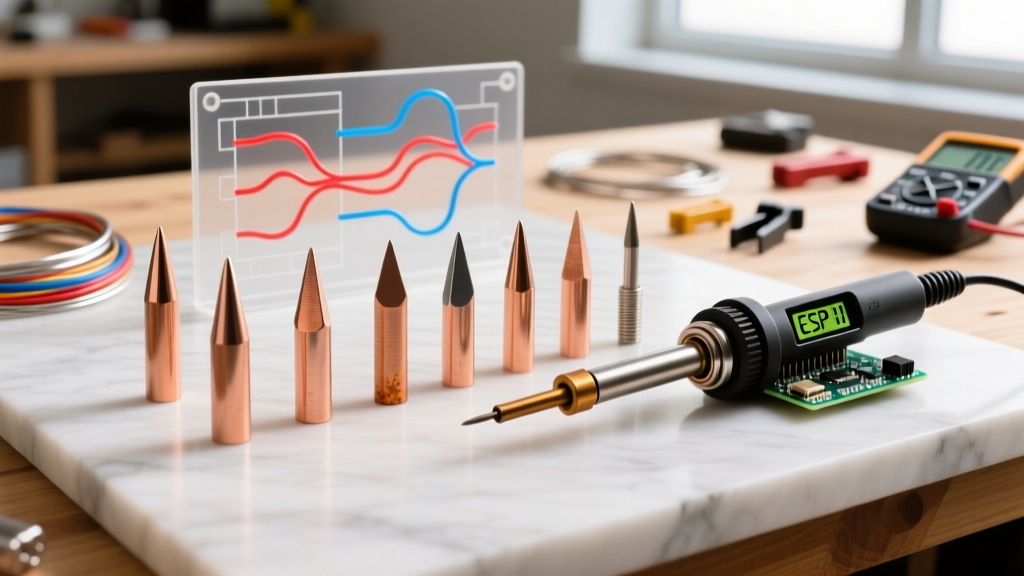
To handle 90% of standard through-hole and surface-mount device (SMD) tasks, your workspace must be equipped with four primary tip geometries. Manufacturers like Hakko (T18 series), Weller (RT series), and Pace (AccuDrive) use standardized naming conventions, but the physical profiles remain universal.
1. Chisel Tips (D-Series)
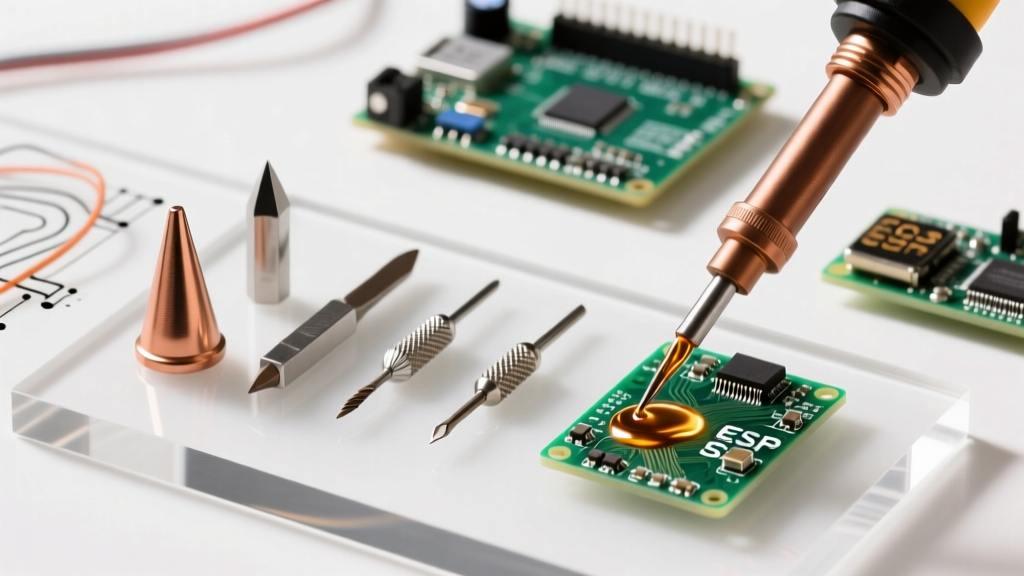
The chisel tip is the undisputed workhorse of any electronics bench. With a flat, elongated surface, it maximizes contact area with component leads and PCB pads. A standard 2.4mm chisel (such as the Hakko T18-D24 or Weller RT3) is ideal for soldering 0.1-inch header pins, DIP ICs, and thick power wires. The broad surface area allows for rapid thermal recovery, making it highly effective for components connected to moderate ground planes.
2. Conical Tips (B-Series)
Often mistakenly included as the default tip in cheap starter kits, the conical tip (e.g., T18-B) is actually highly specialized. Its pointed end is excellent for reaching into tight, congested areas of a densely populated PCB. However, because the point of contact is incredibly small, thermal transfer is poor. It should only be used for fine-pitch SMD work or delicate jumper wire repairs where a chisel tip would accidentally bridge adjacent pads.
3. Bevel Tips (C-Series)
Bevel tips feature an angled, elliptical face that acts like a small spoon. This geometry is explicitly designed for drag soldering fine-pitch SMD ICs (like TQFP or SOIC packages) and scooping excess solder away from pads. A 2mm bevel tip (T18-C2) paired with high-quality liquid flux allows you to pull a clean, continuous bead of solder across 50 pins in seconds without bridging.
4. Knife Tips (K-Series)
The knife tip (T18-K) is a versatile hybrid. By using the sharp point, you can tackle micro-SMD components; by laying the flat blade against a pad, you can drag-solder or transfer heat to larger through-hole joints. It is highly recommended for mixed-technology boards where switching tips constantly would disrupt your workflow.
Thermal Mass Matching Matrix
Choosing the right soldering tips types isn't just about the shape; it is about matching the tip's physical volume to the thermal mass of the joint. If you use a micro-tip on a heavy ground plane, the tip's temperature will plummet, causing the soldering station's sensor to overcompensate and potentially burn out the heating element. Refer to the matrix below when stocking your workspace:
| Tip Geometry | Example Model (Hakko/Weller) | Target Application | Thermal Mass Capacity | Avg. Price (2026) |
|---|---|---|---|---|
| Micro-Conical (0.4mm) | T18-I / RT1 | 0201/0402 SMD, micro-BGA rework | Very Low | $8 - $45 |
| Standard Chisel (2.4mm) | T18-D24 / RT3 | DIP ICs, 0.1" headers, standard wires | Medium | $7 - $45 |
| Heavy Bevel (3.2mm) | T18-C3 / RT7 | Drag soldering QFP, large SMD caps | Medium-High | $9 - $48 |
| Macro Chisel (5.0mm+) | T18-D52 / WDH20 | XT60 connectors, thick ground planes | Very High | $12 - $55 |
Advanced and Micro-Soldering Profiles
As your workspace evolves to handle modern, high-density electronics, you will need to integrate specialized soldering tips types into your inventory.
- J-Hook (J-Series): The J02 tip curves inward like a sickle. It is specifically engineered for reworking QFN (Quad Flat No-leads) packages and reaching under the belly of components to solder hidden thermal pads.
- Gull-Wing: Shaped to match the bent leads of SOIC and SOP ICs, allowing simultaneous heating of the pad and the lead without touching the plastic body of the chip.
- Hot Air Nozzle Equivalents: While not traditional iron tips, integrating micro-pencil hot air attachments (like the Quick 861DW pencil) is essential for BGA rework where contact tips fail.
The Physics of Tip Degradation and Failure Modes
A professional workspace setup includes a protocol for tip maintenance. Modern lead-free solders (like SAC305) require higher melting temperatures (217°C to 225°C) and contain aggressive tin content that actively dissolves the iron plating on your soldering tips. According to the NASA Workmanship Standards for soldering, proper tinning and temperature management are required to prevent premature tip failure.
"Oxidation and iron plating dissolution are the primary failure modes of modern soldering tips. Leaving a station at 380°C while idle will destroy a standard tip's wetting layer in a matter of hours."
Identifying Terminal Failure Modes
- Non-Wetting (Black Tip Syndrome): The tip turns black and solder balls up and rolls off. This is caused by flux carbon buildup and oxidation. It can often be rescued using a brass wool sponge and a specialized tip tinner (e.g., MG Chemicals 871).
- Pitting and Cratering: Visible physical holes in the iron plating. This is caused by using excessive mechanical pressure or abrasive cleaning sponges. Once pitted, the copper core is exposed and the tip must be discarded immediately.
- Core Burnout: The tip physically looks fine, but it fails to melt solder. This indicates the internal copper core has oxidized or separated from the heating element shaft, usually due to running the station at maximum temperature (400°C+) for extended periods.
Workspace Organization: Storing and Indexing Your Arsenal
Throwing loose tips into a plastic drawer is a hallmark of an amateur bench. To maintain an efficient workflow, your workspace must feature dedicated tip storage that protects the delicate iron plating from physical knocks and ambient moisture.
Recommended Storage Solutions
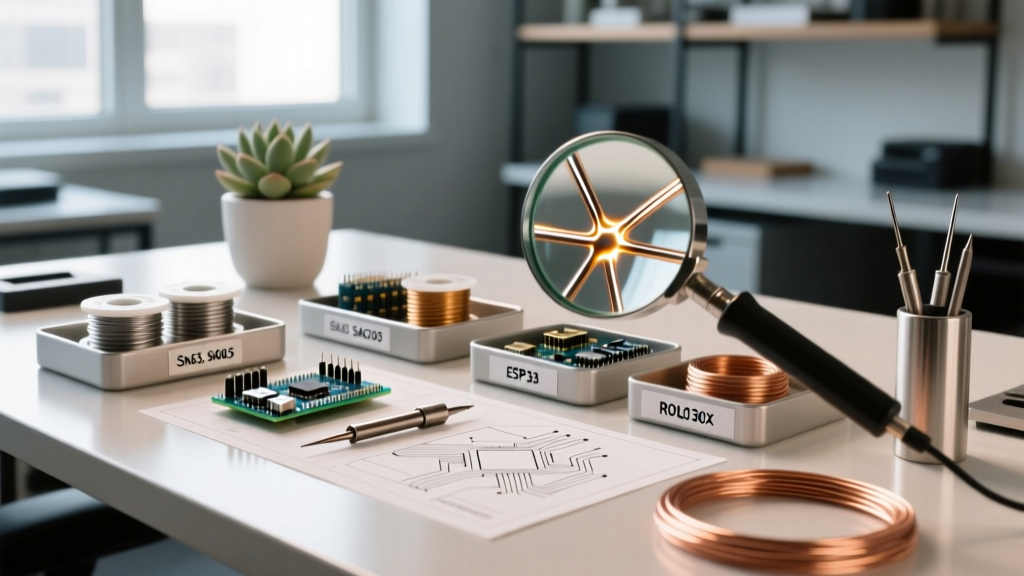
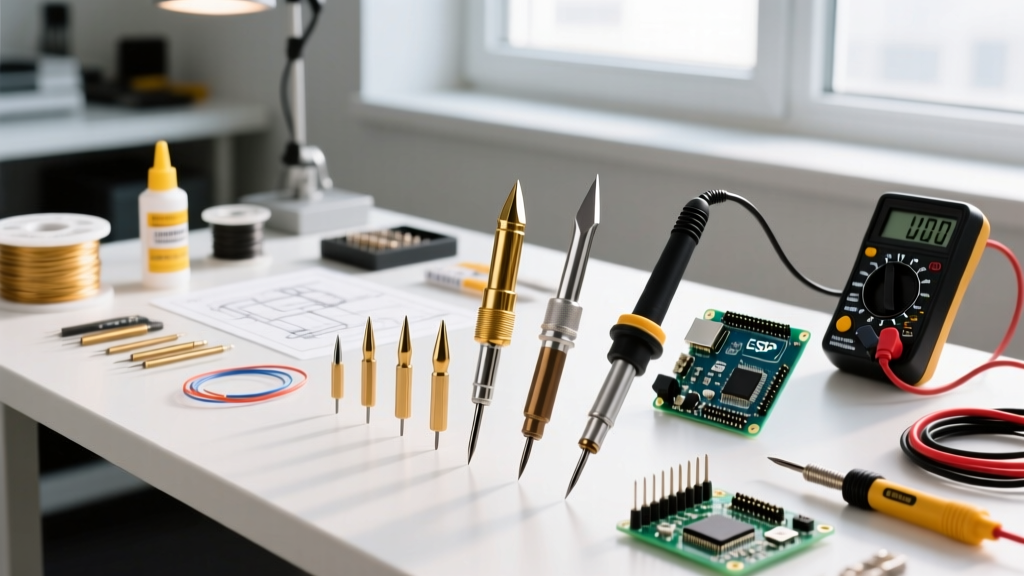
Invest in a tiered tip rack, such as the Hakko 611-1 or the Weller WDH30T safety rest with integrated storage. These units hold 5 to 10 tips securely in individual silicone or metal slots. For labs handling dozens of profiles, consider a segmented, anti-static component organizer. Label each compartment not just by the manufacturer part number, but by the mil-size and geometry (e.g., "Chisel - 2.4mm - General Purpose" or "Bevel - 1.0mm - Drag SMD").
The Cleaning Station Setup
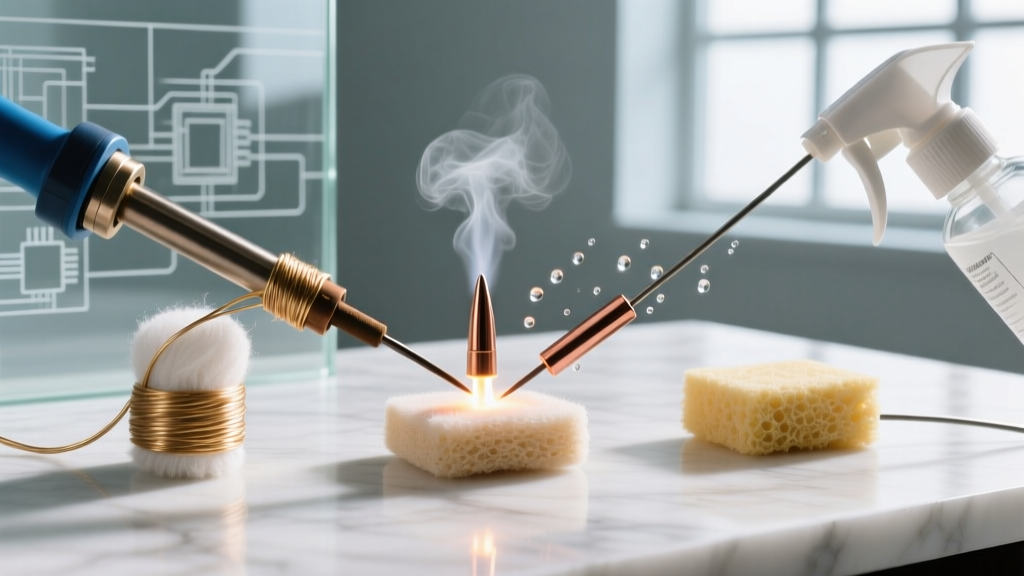
Your immediate soldering zone must include a high-quality brass wire sponge (like the Hakko 599B). Unlike traditional damp cellulose sponges, which cause rapid thermal shock and micro-fractures in the tip's iron plating every time you wipe, brass wool cleans the oxidation mechanically without dropping the tip's temperature. Keep a small jar of SAC305 or Sn63/Pb37 solder wire with a highly activated rosin core (like Kester 245) dedicated solely to "tinning" your tip before you turn the station off for the day. Leaving a thick blob of fresh solder on the tip acts as a sacrificial oxidation layer, ensuring your tip is ready for immediate use the next time you power up your bench.
Final Workspace Audit Checklist
Before you begin your next PCB assembly or repair project, verify your bench against this quick checklist:
- Do I have a minimum of three distinct soldering tips types (Chisel, Bevel, Conical) within arm's reach?
- Is my brass wool sponge clean and free of old, carbonized flux residue?
- Are my micro-SMD tips stored in a protective, anti-static case to prevent bending?
- Is my station set to the correct idle/sleep temperature (below 200°C) to preserve tip life?
By mastering the selection, application, and maintenance of these essential soldering tips types, you transform your workspace from a simple table with a soldering iron into a precision electronics manufacturing environment. For further reading on professional soldering methodologies and acceptable joint criteria, consult the resources provided by Hakko Official Technical Resources and the IPC training guidelines.