
The Standard Kit Tip Roster: A 2026 Breakdown
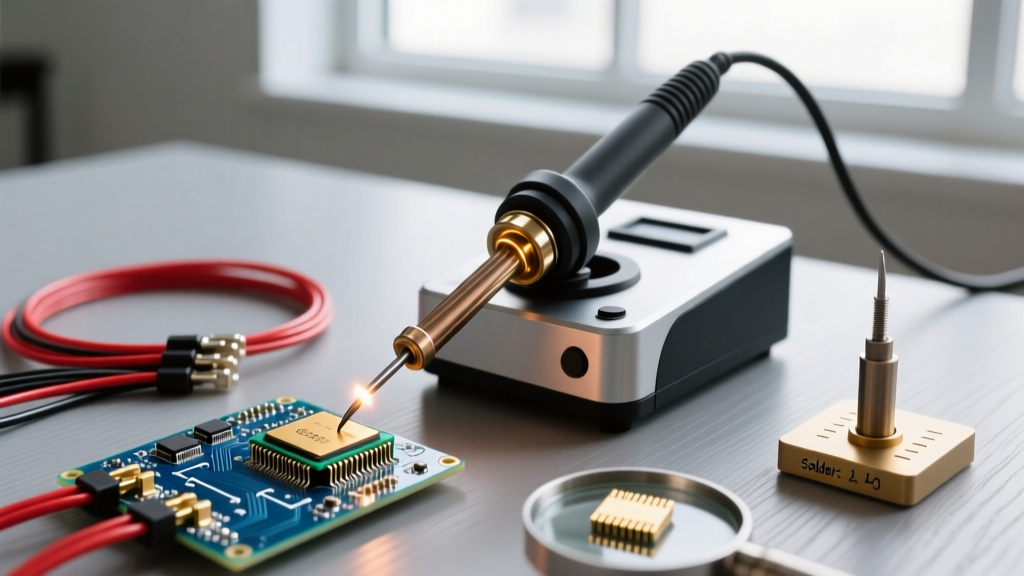
When you unbox a mid-range soldering station in 2026—whether it is a classic Hakko FX-888D bundle, a Weller WLC100 kit, or a modern smart-iron ecosystem like the Pinecil V2 or FNIRSI HS-01—you are typically greeted by a small plastic case containing four to six seemingly identical metal points. For beginners, this assortment of soldering tip sizes is a source of immediate confusion. Which one do you use for a delicate 0805 resistor? Which one handles a thick 14 AWG silicone wire?
Manufacturers include a "generalist" spread of tips designed to cover 80% of basic through-hole and light surface-mount tasks. However, understanding the exact thermal mass, physical dimensions, and edge cases of these included sizes is critical for preventing component damage and ensuring reliable joints. Below is a comprehensive breakdown of the standard soldering tip sizes included in most starter kits, what they actually do, and the crucial upgrades you will eventually need.
What is Actually in the Box? The Standard Inclusion Matrix
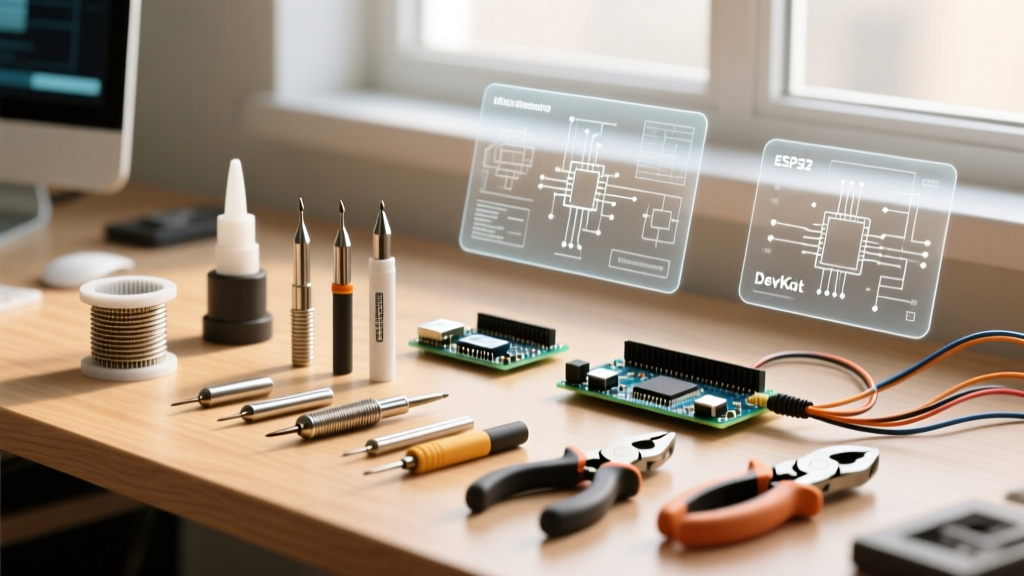
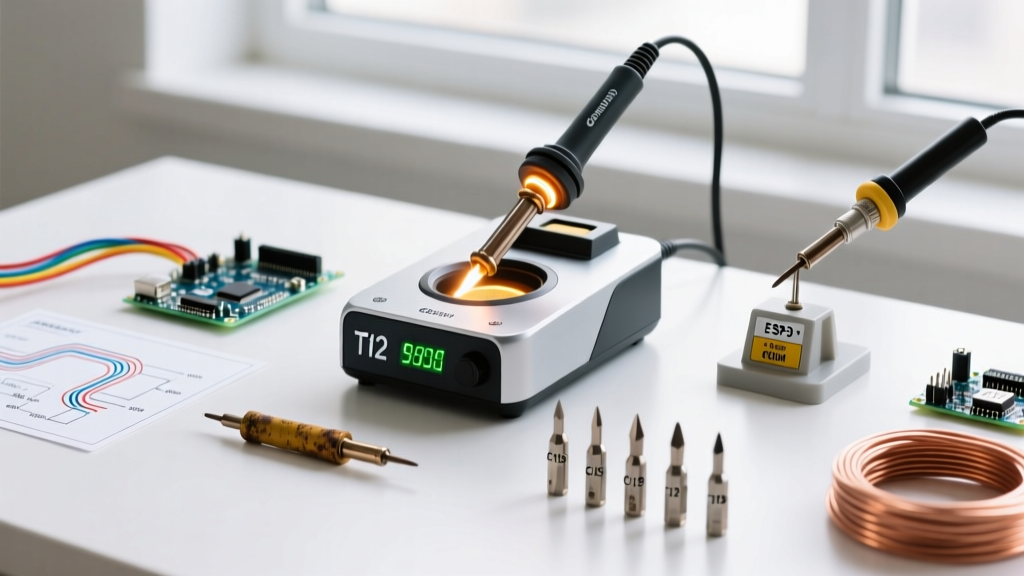
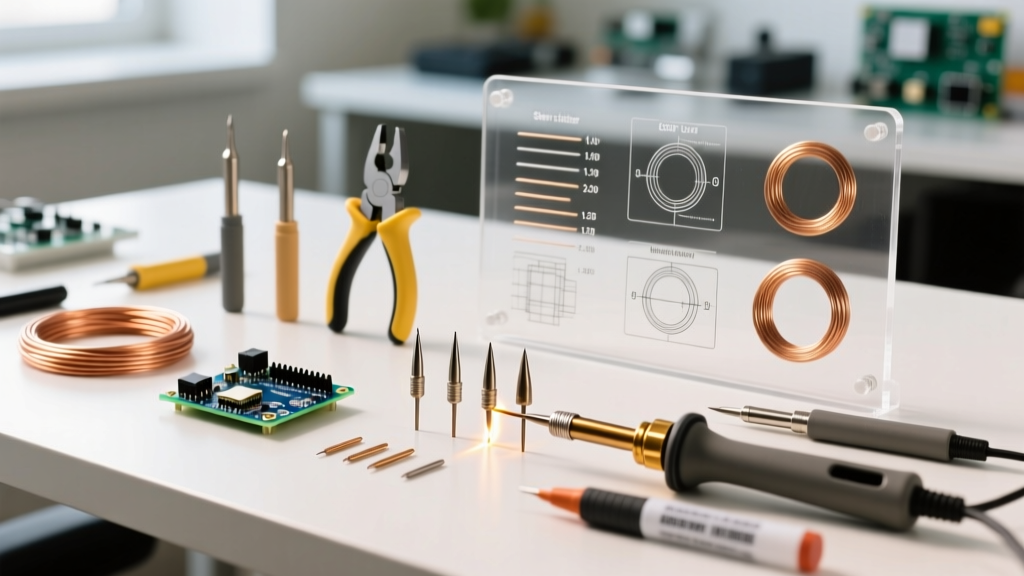
Most $50 to $150 starter kits utilize standardized tip series (such as the Hakko T18 series, Weller ETA series, or generic TS100/Pinecil compatible tips). Here is the exact roster you can expect to find, along with their primary applications.
| Tip Shape | Included Size (mm) | Thermal Mass | Best Application | Kit Inclusion Rate |
|---|---|---|---|---|
| Conical (Needle) | 0.5mm - 0.8mm | Very Low | Fine-pitch ICs, 0603 SMD | 95% of kits |
| Micro-Chisel | 1.0mm - 1.6mm | Low-Medium | 0805 SMD, small through-hole | 85% of kits |
| Standard Chisel | 2.0mm - 2.4mm | Medium | Standard through-hole, 20-22 AWG wire | 100% of kits |
| Bevel (Hoof) | 3.0mm - 3.2mm | Medium-High | Drag soldering, larger wire splices | 70% of kits |
| Broad Chisel / Knife | 4.0mm - 5.2mm | High | Heavy ground planes, XT60 connectors | 40% of kits |
Deep Dive: Anatomy of the Included Sizes
Micro-Tips (0.2mm – 0.8mm): The SMD Specialists and the "Conical Trap"
Almost every kit includes a 0.5mm or 0.8mm conical (needle) tip. While it looks precise, expert technicians often refer to this as the "conical trap." A true conical tip has a very small surface area at the very point of contact. When you press it against a component pad, the heat transfer is highly localized and inefficient, often leading users to press harder and increase the temperature, which accelerates oxidation and pad lifting.
The Expert Alternative: If your kit includes a 1.0mm or 1.6mm micro-chisel (often labeled as a T18-D12 or similar), use it instead of the conical tip for surface-mount work. The flat edge of a micro-chisel provides superior surface area contact, allowing for rapid heat transfer at lower temperatures (typically 300°C to 320°C with 63/37 SnPb solder). According to the Adafruit Guide to Excellent Soldering, maximizing surface contact is the single most important factor in preventing thermal damage to sensitive SMD components.
The Workhorses (1.6mm – 2.4mm): Through-Hole and General Purpose
The 2.0mm to 2.4mm standard chisel is the undisputed workhorse of any kit. This size possesses enough thermal mass to maintain its temperature when touching standard 1/4W resistors, DIP IC pins, and 20-22 AWG stranded wire.
- 1.6mm Chisel: Ideal for tight spaces on perfboards and 2.54mm pitch pin headers.
- 2.4mm Chisel: The default choice for general DIY electronics, Arduino shield assembly, and standard capacitor replacement.
Edge Case Warning: When using a 2.4mm tip on a low-wattage iron (under 40W), attempting to solder a joint connected to a large copper ground plane will result in a "cold joint." The ground plane acts as a massive heat sink, draining thermal energy from the tip faster than the iron's heating element can replenish it.
Heavy Haulers (3.2mm – 6.0mm+): High Thermal Mass Applications
Kits that include a 3.2mm bevel (hoof) or a 4.0mm+ broad chisel are catering to users who work beyond simple PCBs. These large soldering tip sizes are mandatory for high-current applications.
If you are building FPV drones or automotive electronics, you will frequently solder 12 AWG to 14 AWG silicone wires to massive copper pads (like those on ESCs or XT60/XT90 connectors). A standard 2.4mm tip will fail here. You need a 4.0mm to 6.0mm bevel or chisel tip, paired with a high-wattage station (70W to 100W+), running at 350°C to 380°C. The large thermal mass ensures the tip does not drop below the solder's liquidus temperature when it touches the heavy copper.
What Kits Leave Out: The "Missing" Tips
While starter kits provide a good baseline, they universally omit specialized tips required for advanced techniques. As your skills progress into 2026's denser PCB layouts, you will need to purchase these separately (expect to pay $8 to $14 for genuine Hakko/Weller tips, or $1 to $3 for high-quality third-party clones).
- Mini-Wave (Gull-Wing) Tips: Essential for drag-soldering SOIC and QFP ICs. The concave curve holds a small reservoir of molten solder, allowing you to glide across 50+ pins in seconds without creating bridges.
- Ultra-Wide Blade Tips (8mm - 12mm):strong> Used for soldering large copper pours, RF shielding cans, and heavy battery tabs. Standard kits never include these due to their niche application.
- Tweezer Tips: Specialized dual-heater tips that grip 0402 and 0201 components from the sides, heating both pads simultaneously. These require specific dual-channel stations and are never found in basic kits.
Thermal Dynamics and Industry Standards
Understanding soldering tip sizes is not just about physical dimensions; it is about thermal dynamics. The NASA Workmanship Standard (NASA-STD-8739.3) emphasizes that the correct tip size must be selected to achieve the proper solder wetting time—typically between 1.5 and 4 seconds. If your tip is too small, you will dwell on the joint for 8+ seconds, risking delamination of the PCB's internal layers and degradation of the component's internal die.
Pro-Tip on Thermal Recovery: A 2.4mm tip on a 75W smart iron (like the Pinecil V2 running PD 65W) will recover its heat in under 1.5 seconds after touching a ground plane. That exact same 2.4mm tip on a 40W analog transformer-based station may take 6+ seconds to recover, fundamentally changing how you must approach the soldering sequence.
Furthermore, the IPC J-STD-001 standard dictates strict criteria for solder fillet formation and wetting angles. Using an undersized tip often results in a convex, disturbed, or cold solder joint because the flux in the solder core burns off before the base metals reach the necessary activation temperature for proper metallurgical bonding.
Maintenance Protocols by Tip Size
Different soldering tip sizes require vastly different maintenance routines to prevent oxidation and pitting, especially when using aggressive lead-free alloys like SAC305.
Caring for Micro-Tips (Under 1.0mm)
- Temperature Limit: Never exceed 320°C. High heat destroys the iron plating on micro-tips within hours.
- Solder Choice: Use heavily fluxed 63/37 SnPb (leaded) solder. Lead-free solder requires higher temperatures that will rapidly oxidize the tiny surface area of a 0.5mm tip.
- Tinning: Always leave a generous blob of fresh solder on the tip when returning it to the holder. Never wipe a micro-tip completely clean on a brass sponge; the sudden thermal shock and exposure to oxygen will cause instant blackening.
Caring for Heavy Haulers (Over 3.0mm)
- Temperature Limit: Can safely operate at 350°C to 380°C.
- Flux Management: Because these tips are used for large joints that require extra solder, flux residue builds up rapidly. Use a damp cellulose sponge (not just a brass coil) to wipe the broad flat surfaces clean before re-tinning.
- Pitting Prevention: If you are soldering thick wires with high-rosin flux cores, the acidic activators can eat into the iron plating of large bevel tips. Neutralize by applying a dedicated tip-tinner compound (a mix of SAC305 powder and mild reducing agents) at the end of every session.
Final Verdict: Upgrading Your Arsenal
The soldering tip sizes included in your starter kit are merely a baseline. The 2.4mm chisel will carry you through your first year of DIY electronics, Arduino builds, and basic repairs. However, as you transition to modern, dense SMD layouts or high-current robotics, you must intentionally curate your tip collection. Invest in a 1.2mm micro-chisel for precision SMD work, and a 4.0mm+ bevel for heavy-gauge wiring. By matching the exact physical dimensions and thermal mass of your tip to the specific joint requirements, you will achieve professional-grade, IPC-compliant solder joints every single time.