
The Unsung Hero of the Workbench: Gifting Soldering Tip Maintenance
Finding the perfect gift for an electrical engineer, DIY hobbyist, or PCB designer is notoriously difficult. Multimeters are deeply personal, oscilloscopes are prohibitively expensive, and buying soldering stations requires knowing the exact ecosystem they already use. However, there is a universal, highly practical, and incredibly thoughtful gift category that every maker desperately needs but rarely buys for themselves: premium soldering tip maintenance and cleaning kits.
In 2026, with the industry-wide shift toward higher-temperature lead-free solders (like SAC305) becoming the absolute standard even in hobbyist spaces, tip degradation is happening faster than ever. If you want to give a gift that genuinely improves their daily workflow, teaching them how to clean soldering tip oxidation through high-quality accessories is the way to go. This guide breaks down the metallurgy of tip degradation, the exact methodologies for restoration, and the best maintenance kits to gift this year.
The Metallurgy of Oxidation: Why Tips Degrade
To understand why a maintenance kit is such a valuable gift, you must understand what happens at the business end of a soldering iron. A standard soldering tip is not solid iron. It is a complex metallurgical sandwich:
- Copper Core: Provides rapid thermal conductivity from the heating element.
- Iron Plating: A microscopic layer (usually 100 to 250 microns thick) that protects the soft copper from dissolving into molten solder.
- Chrome Barrier: A non-wetting layer on the upper shaft to prevent solder from creeping up the iron.
When the iron plating is exposed to oxygen at high temperatures (especially above 350°C / 662°F), it rapidly forms iron oxide. This oxide layer acts as a severe thermal barrier. According to Hakko's Official Soldering Tip Care Guidelines, an oxidized tip will not transfer heat, leading the user to falsely believe the iron is broken, or worse, they will crank up the temperature, accelerating the destruction of the tip.
Step-by-Step: How to Clean Soldering Tip Properly
When gifting a cleaning kit, it helps to include a small printed card or share the knowledge of how to use them. Here are the three professional methods for tip maintenance.
Method 1: The Brass Wire Sponge (Daily Maintenance)
The brass sponge is the gold standard for daily cleaning. Unlike wet sponges, brass wire does not cause a rapid temperature drop.
- Heat the iron to working temperature (e.g., 320°C for Sn63/Pb37 or 360°C for SAC305).
- Apply a small amount of flux-cored solder to the tip to create a molten bridge.
- Plunge the tip into the brass coils and twist gently 2-3 times.
- Withdraw and immediately re-tin with fresh solder to protect against flash oxidation.
Method 2: Damp Cellulose Sponges (The Traditional Route)
While falling out of favor for high-precision work, cellulose sponges are still standard in many kits. The critical mistake makers make is using tap water (which leaves mineral deposits) and soaking the sponge. As noted in Adafruit's Excellent Soldering Guide, the sponge must be dampened with distilled water and wrung out until it is barely moist. Wiping a 380°C tip on a soaking wet sponge causes thermal shock, leading to micro-fractures in the iron plating that will eventually cause the tip to pit and fail.
Method 3: Chemical Tip Tinners (The Resurrection Method)
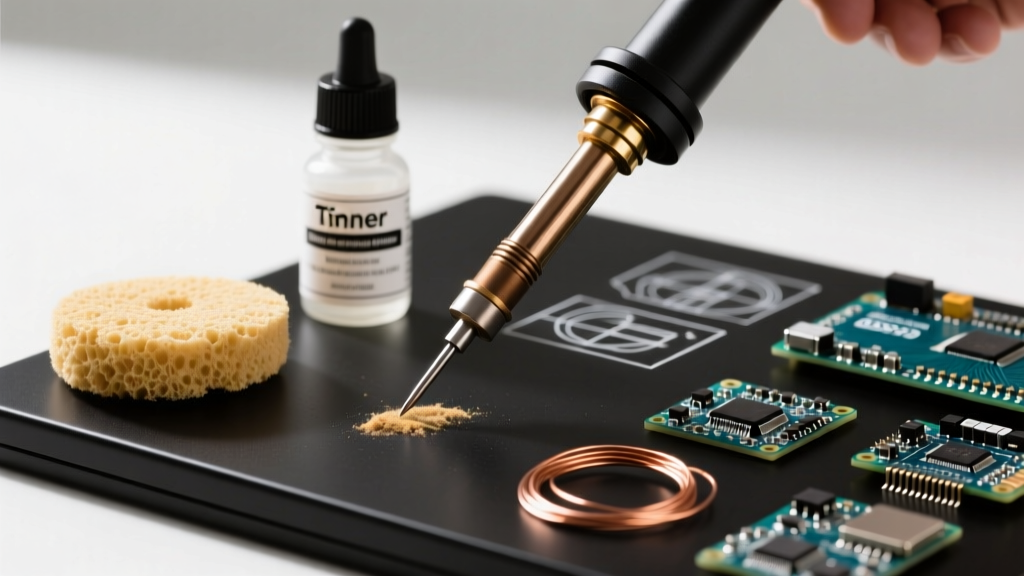
If a recipient has completely blackened, oxidized tips that brass won't clean, a chemical tip tinner is the ultimate rescue tool. These are solid blocks of aggressive flux mixed with fine solder powder and mild abrasives. The user simply dabs the hot, oxidized tip into the solid paste for 2-3 seconds, wipes it on a brass sponge, and the tip emerges shining and perfectly tinned.
2026 Gift Matrix: Top Soldering Tip Cleaning Accessories
Here is a curated matrix of the best tip-cleaning accessories to gift in 2026, categorized by use case and budget.
| Product / SKU | Est. Price | Best For | The Expert 'Why' |
|---|---|---|---|
| Hakko 599B-01 Brass Sponge | $14 - $18 | Everyday Hobbyist | Features a specialized 'pop-up' coil design that prevents the tip from hitting the bottom of the metal dish, avoiding temperature sinks and physical damage to the tip apex. |
| Weller WDC2 Dry Tip Cleaner | $28 - $35 | Pro / Lead-Free Users | Uses a specialized abrasive dry-cleaning compound designed specifically to strip the stubborn, glassy oxides created by high-temperature lead-free SAC alloys without thermal shock. |
| MG Chemicals 8341 Tip Tinner | $15 - $22 | Tip Resurrection | An aggressive chemical paste. Essential for reviving tips that have been left on and dry for hours. Contains Sn/Pb powder and rosin flux to re-wet dead iron plating. |
| Edsyn ST-1 Sponge Station | $10 - $14 | Travel / Field Techs | A sealed, compact cellulose sponge holder that prevents water evaporation on the bench and keeps the workspace dry. Great for cramped desk setups. |
Catastrophic Failure Modes: What NEVER to Gift (or Do)
Part of being an expert in IPC soldering standards and workmanship is knowing what destroys equipment. If you are putting together a DIY gift basket, ensure you exclude the following items, as they will instantly ruin a soldering tip:
- Sandpaper or Emery Cloth: Never gift these for tip cleaning. The iron plating is less than 0.25mm thick. Sandpaper will strip the iron layer in seconds, exposing the copper core, which will dissolve into the solder and ruin both the tip and the joint.
- Steel Files: Similar to sandpaper, filing a tip removes the protective plating. (Note: Files are only for cleaning the outside of the heating element shaft, never the tip itself).
- Quenching in Water: Some older tutorials suggest dipping a hot tip in water to clean it. This causes immediate thermal shock, cracking the microscopic iron layer and allowing solder to eat through to the copper core.
- Flux Pens (for cleaning): While flux is necessary for soldering, using highly acidic plumbing flux (like zinc chloride) on an iron tip will corrode the plating rapidly. Only use electronics-grade rosin (RMA) or no-clean flux.
The Ultimate 2026 Soldering Maintenance Bundle
If you want to create the ultimate 'Tip Care' gift basket, do not just hand them a single sponge. Build a comprehensive maintenance bundle. Here is the exact recipe for a $75 bundle that any engineer will rave about:
- The Base: Hakko 599B-01 Brass Sponge ($15).
- The Rescuer: MG Chemicals 8341 Tip Tinner ($18).
- The Consumable: A spool of Kester 245 No-Clean Solder (0.031" diameter). Kester 245 has a highly active flux core that naturally helps keep the tip clean during use, reducing the need for aggressive mechanical wiping ($30).
- The Storage: A small, heat-resistant silicone mat or a dedicated tip storage tube to prevent the tip from rolling off the desk and denting the delicate apex.
Expert Gifting Tip: If your recipient uses a modern portable iron like the Pine64 Pinecil V2 or the FNIRSI HS-02, they are likely using standard T12 or TS101 tips. These tips have the heating element integrated directly into the tip body. Because they heat up in under 3 seconds, they are incredibly prone to 'dry oxidation' if left on the stand without a solder coating. Gifting a brass sponge and a tip tinner is practically mandatory for portable iron users in 2026.
Conclusion: The Gift of Longevity
Teaching a maker how to clean soldering tip properly isn't just about bench hygiene; it's about saving them hundreds of dollars a year in replacement tips and preventing the frustration of cold solder joints. By gifting a high-quality brass sponge, a chemical tinner, and the right knowledge, you are giving them the gift of reliability. In the fast-paced world of electronics prototyping, a perfectly tinned, responsive soldering tip is the ultimate luxury, and it all starts with the right maintenance kit under the tree.