
The Hidden Cost of Dirty Soldering Tips
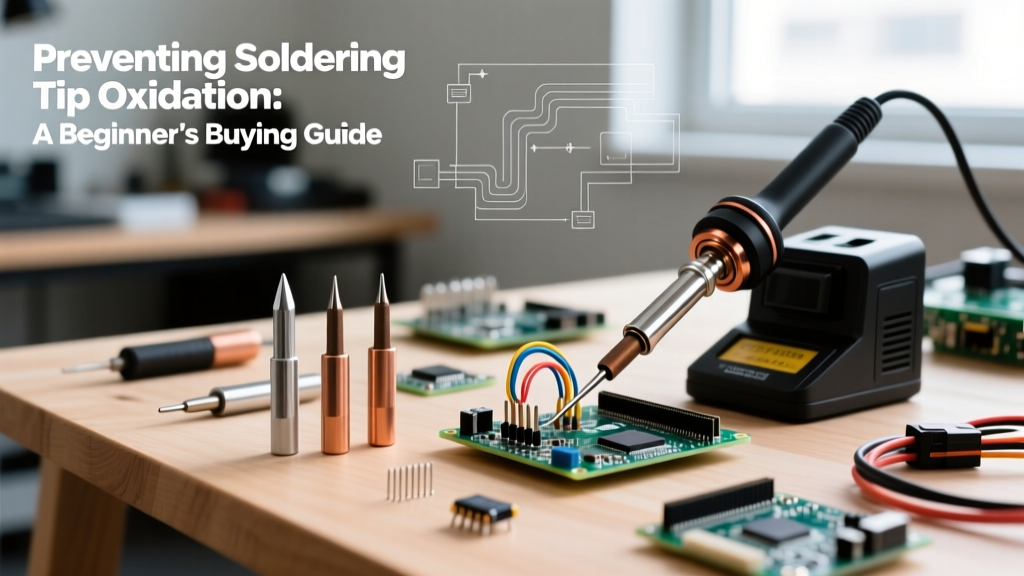
If you have ever touched a 350°C soldering iron to a joint only to watch the solder ball up and refuse to flow, you have experienced the frustration of tip oxidation. For beginners entering the world of electronics DIY in 2026, understanding how to maintain your equipment is just as critical as learning how to make a joint. At the heart of this maintenance is a seemingly simple accessory: the soldering tip cleaning sponge.
However, not all sponges are created equal. Choosing the wrong cleaning medium—or using it incorrectly—can destroy a $40 replacement tip in a matter of weeks. This guide breaks down the metallurgy of soldering tips, compares the two dominant cleaning methods (cellulose sponges vs. brass wire sponges), and provides a definitive protocol to maximize your equipment's lifespan.
The Metallurgy of Modern Soldering Tips
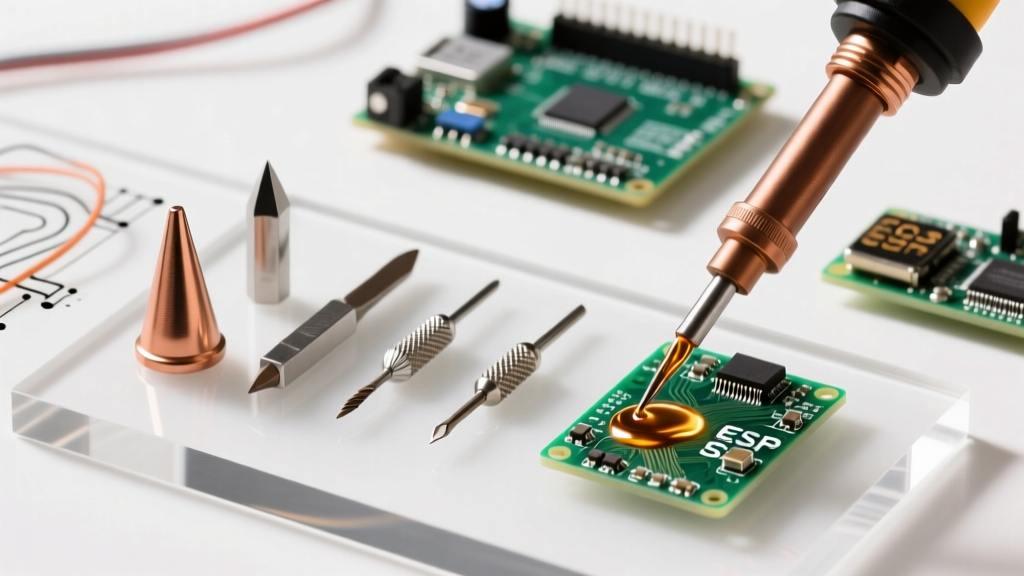
To understand why cleaning matters, you must understand what a soldering tip actually is. A common beginner misconception is that tips are made of solid copper. In reality, modern tips consist of a highly conductive copper core plated with a microscopically thin layer of iron (typically 100 to 150 microns thick), followed by a chromium barrier and a final tinning layer.
When you use lead-free alloys like SAC305 (Tin-Silver-Copper), which require higher operating temperatures (340°C to 380°C), the flux burns off rapidly, and the molten solder reacts with the iron plating. This creates oxidation and intermetallic compounds that act as thermal insulators. According to workmanship standards outlined by IPC (Association Connecting Electronics Industries), a properly maintained tip is essential for achieving reliable, void-free solder joints that meet modern reliability criteria. If the iron plating is compromised, the underlying copper core is exposed and will dissolve into the solder within minutes, pitting the tip and rendering it useless.
Cellulose Sponges: The Traditional Standard
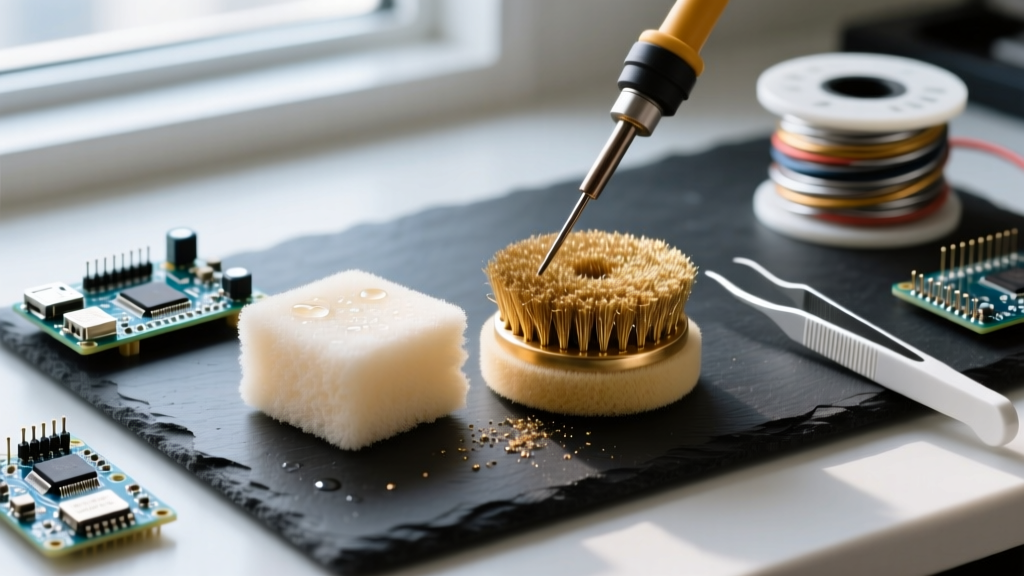
The traditional wet sponge has been a staple on workbenches for decades. However, you must strictly use 100% natural cellulose sponges (like the Hakko B500 or generic equivalents). Synthetic sponges made from polyurethane or polyester will instantly melt onto your hot iron, releasing toxic fumes and ruining the tip.
The Thermal Shock Danger
The primary drawback of the wet cellulose sponge is thermal shock. When a 350°C iron tip touches a room-temperature wet sponge, the surface temperature drops by hundreds of degrees in milliseconds. Over time, this rapid expansion and contraction causes micro-fissures in the iron plating. Once these microscopic cracks reach the copper core, the tip is doomed.
Hydration Best Practices
If you prefer the tactile feedback and aggressive cleaning power of a wet sponge, proper hydration is non-negotiable:
- Use Distilled Water Only: Tap water contains dissolved minerals like calcium and magnesium. When the water evaporates on the hot tip, these minerals bake into a hard, insulating scale that ruins thermal transfer.
- The Squeeze Test: Submerge the sponge, then squeeze it tightly. It should feel damp, but not a single drop of water should fall. If water pools in the sponge tray, it is too wet and will cause severe thermal shock.
- Cost: A 10-pack of high-quality cellulose sponges typically costs between $4 and $6 in 2026, making them highly economical.
Brass Wire Sponges: The Modern Favorite
Brass wire sponges (often called brass wool or curly brass) have become the gold standard for modern workbenches. Products like the Hakko 599B or Weller WDC2 consist of tightly coiled brass shavings housed in a metal or high-temp silicone tray.
Why Brass and Not Steel?
Beginners often ask why they cannot simply use standard steel wool from the hardware store. The answer lies in the Mohs hardness scale. Steel is harder than the iron plating on your soldering tip. Scrubbing a tip with steel wool will physically scratch away the protective iron layer, exposing the copper core to instant destruction. Brass, however, is softer than the iron plating but harder than the solder and oxidation. It scrapes away the oxidized solder without damaging the underlying tip geometry.
Temperature Preservation
The greatest advantage of a brass wire sponge is the elimination of thermal shock. Because it is used dry, the tip retains its core temperature during the cleaning process. This is especially critical when working with large ground planes or heavy-gauge wires that require maximum thermal recovery. Furthermore, brass sponges require zero maintenance—no soaking, no distilled water, and no mineral buildup.
- Lifespan: A single brass sponge can last 1 to 2 years for a hobbyist, compared to cellulose sponges which degrade, tear, and harbor dried flux residue within weeks.
- Cost: A quality brass sponge with a weighted base ranges from $8 to $14.
Head-to-Head Comparison Matrix
| Feature | Cellulose Sponge (Wet) | Brass Wire Sponge (Dry) |
|---|---|---|
| Thermal Shock Risk | High (causes micro-cracking) | None (maintains tip temp) |
| Cleaning Aggressiveness | High (removes heavy carbon buildup) | Medium (ideal for routine oxidation) |
| Maintenance | Requires distilled water & squeezing | Zero maintenance |
| Mineral Buildup Risk | High (if tap water is used) | None |
| Average Cost (2026) | $4 - $6 (10-pack) | $8 - $14 (single unit with tray) |
| Best For | Heavy flux residue, leaded solder | Lead-free (SAC305), SMD, daily use |
The 2026 Beginner's Cleaning Protocol
According to reliability guidelines referenced by the NASA Electronic Parts and Packaging (NEPP) Program, proper tip care during operation is vital for preventing cold joints and ensuring consistent heat transfer. Follow this step-by-step protocol for optimal results:
- Pre-Tin Before Power Down: Never leave your iron idle with a clean, bare tip. Always melt a generous blob of fresh solder onto the tip before turning off the station. This sacrificial layer oxidizes instead of the iron plating.
- The Figure-8 Wipe: When cleaning during active soldering, do not stab the sponge or brass. Use a gentle 'figure-8' or twisting motion. This cleans all sides of the tip evenly without bending the delicate internal heating element (especially in cartridge-style irons).
- Timing is Everything: Wipe the tip, wait exactly 1 to 2 seconds for the temperature to recover, and then apply fresh solder to the joint. Wiping and immediately touching a cold pad will result in a cold, grainy joint.
- Rotate Your Brass: Every few months, use tweezers to pull the top layer of brass shavings upward, exposing fresh, clean wire that hasn't been clogged with old carbonized flux.
Beyond the Sponge: Tip Tinner and Activators
Sometimes, a beginner will leave their iron on for an hour, returning to find the tip coated in a thick, black, crusty oxide that neither a cellulose sponge nor a brass wire sponge can remove. Do not scrape this off with a knife or sandpaper.
Instead, invest in a Tip Tinner/Activator (such as the Chemtronics Solder Tip Tinner or Hakko FS-100). These are small tins containing a mixture of mild acids, powdered solder, and flux. To use it, simply heat the iron to 300°C and plunge the blackened tip into the powder for 3 to 5 seconds. The chemical reaction strips the oxidation and instantly re-tins the tip in one motion. Wipe the excess on your brass sponge, and the tip will look brand new. A $7 tin of activator can resurrect dozens of 'dead' tips, saving hundreds of dollars in replacement costs.
Frequently Asked Questions
Can I use a damp paper towel instead of a sponge?
In an absolute emergency, a folded, damp (not wet) paper towel can work. However, paper towels contain bleaching agents, sizing chemicals, and synthetic fibers that can leave a carbonized residue on your tip when exposed to 350°C. It is highly recommended to stick to proper cellulose or brass.
Why does my brass sponge turn black?
The black residue in your brass sponge is carbonized flux and oxidized solder. It is completely normal. As long as the brass wire itself hasn't melted into a solid clump, it is still functional. You can clean a heavily soiled brass sponge by washing it in an ultrasonic cleaner with isopropyl alcohol, or simply replace the $5 brass refill coil.
Is it better to use a sponge or a brass cleaner for SMD work?
For Surface Mount Device (SMD) work, a brass wire sponge is vastly superior. SMD components require precise temperature control and delicate handling. The thermal shock from a wet sponge can drop the tip temperature below the melting point of SAC305 (217°C), causing the tip to drag and potentially rip delicate SMD pads off the PCB.
Final Thoughts for Beginners
Mastering the soldering tip cleaning sponge is your first step toward professional-grade electronics assembly. While the wet cellulose sponge remains a viable tool for specific heavy-duty cleaning tasks, the dry brass wire sponge is the undisputed champion for everyday DIY, micro-soldering, and lead-free applications. Equip your bench with a weighted brass cleaner, a tin of tip activator, and the discipline to pre-tin before powering down. Your tips will last for years, and your solder joints will consistently shine with the smooth, concave fillets that define excellent craftsmanship. For further reading on foundational electronics assembly, the Adafruit Guide to Excellent Soldering remains an invaluable visual resource for beginners refining their technique.