
The Truth About the Conical Soldering Tip
When you unbox your very first soldering starter kit, you will almost certainly find a conical soldering tip pre-installed on the iron. Shaped like a tiny pencil point, it seems intuitively perfect for the precise nature of electronics work. However, a common trap for beginners is assuming that because it came in the box, it is the ultimate all-rounder for every joint. In reality, the conical tip is a highly specialized tool with distinct advantages and frustrating limitations.
In this 2026 beginner buying guide, we will dismantle the myths surrounding the conical soldering tip, explore the physics of its thermal transfer, and help you decide exactly when to use it—and when to swap it out for a chisel or bevel tip. Whether you are repairing vintage audio gear or assembling modern 0402 SMD components, understanding tip geometry is the fastest way to elevate your soldering from messy blobs to factory-grade joints.
The Physics of the Conical Soldering Tip
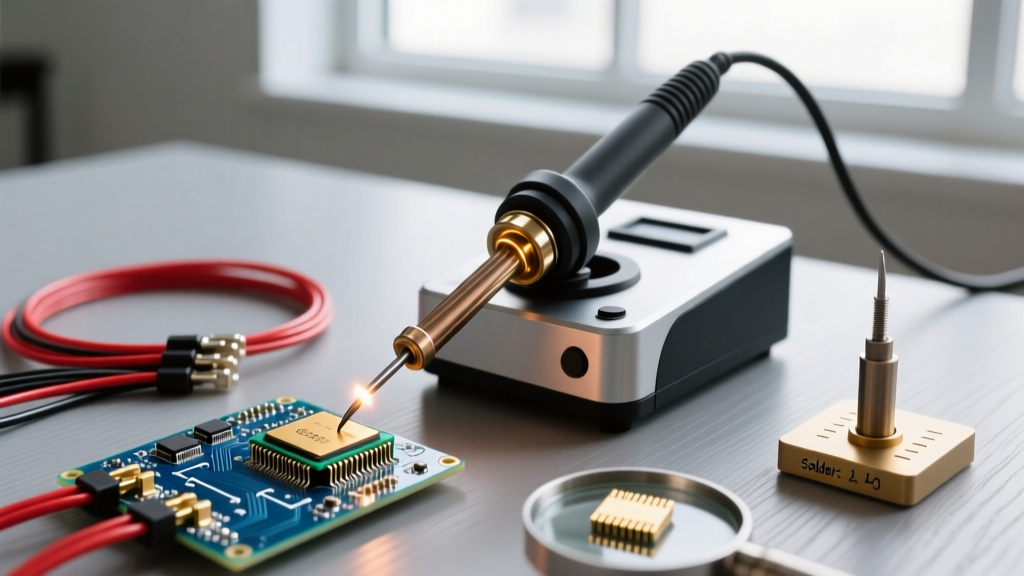
A conical tip features a round, tapering cross-section that ends in a precise point. From a thermal dynamics perspective, this geometry presents a unique challenge. Heat travels from the station’s heating element, down the copper core of the tip, and into the solder joint. The efficiency of this transfer relies heavily on surface area contact.
Because a conical tip meets a flat PCB pad at a single, tiny tangent point, the thermal resistance at the joint is exceptionally high. According to the principles outlined in SparkFun's comprehensive soldering guide, maximizing surface area between the tip and the workpiece is critical for rapid heat transfer. When you try to solder a large ground plane or a thick 14AWG wire with a standard conical tip, the heat dissipates into the surrounding copper faster than the tiny point can replenish it, resulting in cold, grainy solder joints.
Comparison Matrix: Tip Shapes and Applications
| Tip Geometry | Contact Area | Best Use Case | Worst Use Case |
|---|---|---|---|
| Conical (Straight) | Very Small (Point) | Tight DIP pins, micro SMD, rework | Ground planes, thick wires |
| Bent Conical (MiniWave) | Small to Medium | Drag soldering, 0402/0603 SMD | Heavy through-hole terminals |
| Chisel | Large (Flat) | General through-hole, large pads | Dense SOIC/QFP SMD pins |
| Bevel (Hoof) | Medium (Angled Flat) | Dragging, scooping excess solder | Reaching into deep vias |
Sizing Your Conical Tip for 2026 Component Trends
As consumer electronics continue to shrink, the demand for micro-soldering skills has surged. Modern USB-C PD soldering irons like the Pinecil V2 and FNIRSI HS-01 have made high-precision, fast-heating stations accessible to beginners for under $30. However, pairing these advanced irons with the wrong tip size will ruin your experience. Here is how to select the correct diameter for your conical tip:
- 0.2mm to 0.5mm (Micro Conical): Reserved exclusively for micro-SMD work (0201 and 01005 packages) and ultra-fine pitch BGA rework. Warning: These tips have virtually zero thermal mass and will oxidize rapidly if left untinned at high temperatures.
- 0.8mm to 1.0mm (Standard Conical): The sweet spot for hobbyists working with 0603/0805 SMD components, TQFP microcontrollers, and dense through-hole protoboards where pad spacing is under 2.54mm.
- 1.6mm to 2.4mm (Macro Conical): Generally not recommended. If you need a tip this large, the thermal inefficiency of the conical shape becomes a major liability. Switch to a 2.4mm chisel tip instead for vastly superior heat transfer on standard through-hole components.
Expert Insight: If you frequently solder surface-mount ICs, abandon the straight conical tip in favor of a Bent Conical (often labeled as 'J-series' or 'MiniWave'). The 40-degree bend allows you to rest your hand comfortably on the desk while maintaining the optimal 45-degree wetting angle against the PCB pad, keeping the hot iron shaft away from delicate plastic connectors.
Top Beginner-Friendly Conical Tips to Buy
Navigating the aftermarket tip ecosystem can be overwhelming. Below are the most reliable, high-performing conical tips for the most popular beginner soldering stations available in 2026.
1. Hakko T18-B (1.0mm Straight Conical)
- Compatibility: Hakko FX-888D, FX-601
- Price: ~$8.50 USD
- Verdict: The undisputed king of entry-level stations. The T18-B offers a perfect 1.0mm point that is robust enough to survive beginner mistakes while being fine enough for basic Arduino shield assembly. Beware of $2 counterfeit packs on Amazon; always buy from authorized distributors like Digi-Key or Mouser.
2. Pine64 Pinecil C4 (0.4mm Bent Conical)
- Compatibility: Pinecil V1/V2, Sequr S60/S60P
- Price: ~$6.00 USD
- Verdict: An absolute necessity if you are diving into SMD soldering. The C4 bent conical tip pairs beautifully with the Pinecil’s rapid 65W heating cycle, allowing for effortless drag-soldering across SOIC-8 chips.
3. Weller ET-B (0.8mm Conical)
- Compatibility: Weller WLC100, SP40N
- Price: ~$7.00 USD
- Verdict: Weller’s ET series uses a threaded screw-on design rather than a slip-in cartridge. The ET-B provides excellent thermal recovery for its price bracket, though it requires a small flathead screwdriver or coin to swap, making mid-project changes tedious.
Preventing the "Black Death" on Pointed Tips
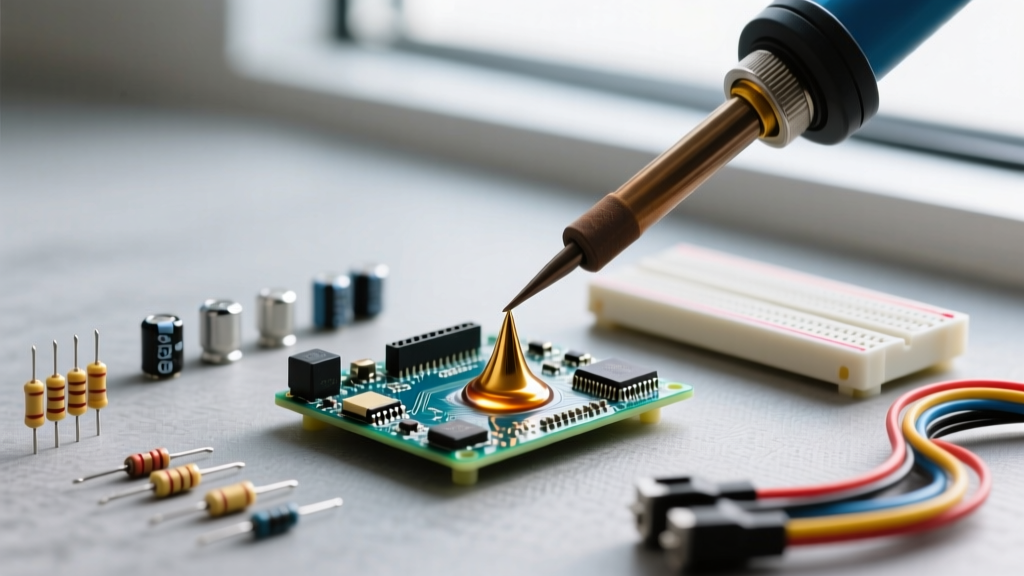
The most common failure mode for a conical soldering tip is rapid oxidation at the very point, a phenomenon hobbyists grimly call the "Black Death." Because the tip of a cone has such low thermal mass, flux burns off almost instantly upon contact, leaving bare, superheated iron exposed to the air. This creates a layer of black iron oxide that solder will absolutely refuse to wet.
As detailed in the Hakko Tip Selection and Maintenance Guide, proper tinning is your only defense. Follow this strict maintenance protocol to extend the life of your conical tips from a few weeks to several years:
- The Pre-Heat Dip: Before turning on your station, dip the cold conical tip into a pot of high-quality tacky flux (e.g., Amtech NC-559-V2-TF).
- Controlled Heating: Turn the station on to a moderate 300°C (572°F). As the iron heats, the flux will melt and coat the tip, shielding the iron plating from oxygen during the critical heating phase.
- Immediate Tinning: The second the solder melts, feed a generous amount of 63/37 rosin-core wire solder directly onto the point until it is encased in a shiny silver bulb.
- The Wipe-and-Retain Rule: When wiping the tip on your brass wool sponge to clean it before a joint, never wipe it completely bare. Always leave a small bead of solder on the point, make your joint, and immediately re-apply fresh solder before returning the iron to its holder.
Frequently Asked Questions
Can I use a conical tip for drag soldering?
A straight conical tip is terrible for drag soldering because it lacks a flat edge to hold a molten solder bead via surface tension. However, a bent conical tip (MiniWave) is exceptional for drag soldering fine-pitch SMD ICs, as the bend creates a small "pocket" that holds just enough solder to flow smoothly across adjacent pins without bridging.
Why does my solder keep balling up on the tip and not sticking to the pad?
This is a classic symptom of using a conical tip on a pad that is too large. The pad is acting as a massive heat sink, pulling thermal energy away from the joint faster than the tiny conical point can deliver it. The solder melts on the tip (which is hot) but instantly cools and solidifies when it touches the cold, massive pad. Switch to a wider chisel tip to increase thermal transfer.
Are silicone tip covers worth buying for conical tips?
In 2026, silicone thermal barriers (like those made by Kapton or generic heat-shield sleeves) are highly recommended if you are working near plastic JST connectors or delicate ribbon cables. Because conical tips are often used for precision rework in tight spaces, a silicone sleeve slipped over the metal shaft prevents accidental melting of adjacent components if your hand slips.
Final Verdict: Should You Buy a Conical Tip?
If your DIY projects primarily involve through-hole resistors, capacitors, and standard 2.54mm header pins, do not rely on a conical tip. A 2.0mm chisel tip will save you hours of frustration and yield vastly superior, shiny fillets. However, if you are repairing smartphones, building custom mechanical keyboards with SMD diodes, or experimenting with bare ESP32 modules, investing in a high-quality 0.8mm to 1.0mm conical (or bent conical) tip is an absolute necessity. Match the tip to the specific pad geometry, respect the thermal limits, and keep that point heavily tinned.