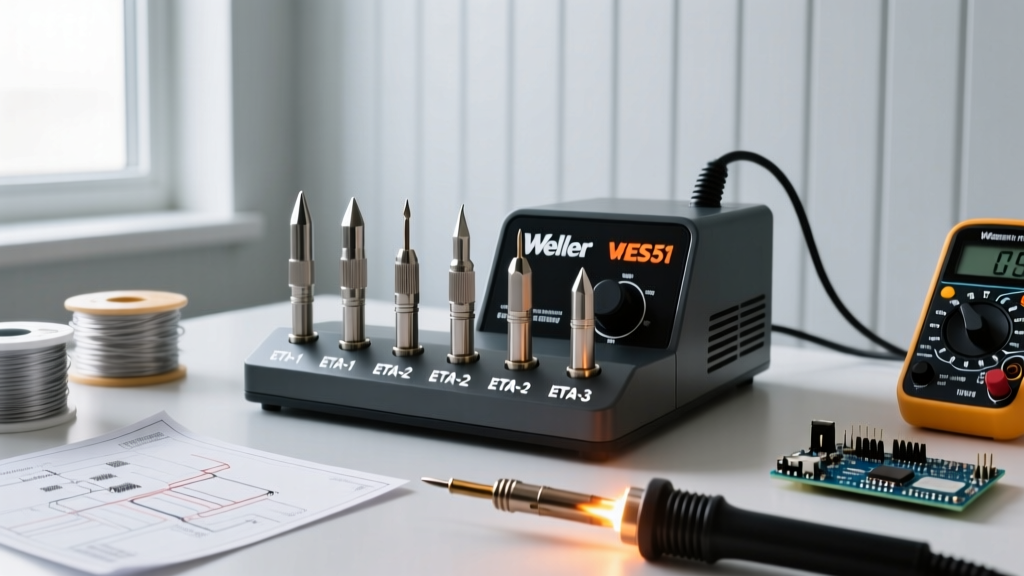

Introduction to the Weller WES51 Ecosystem
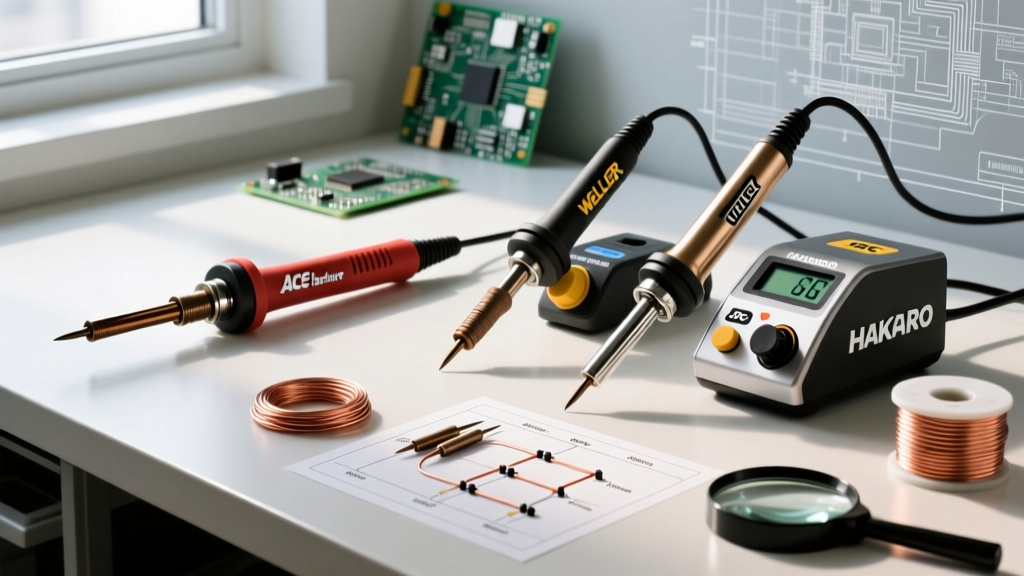
Even in 2026, amidst a market saturated with USB-C PD smart irons and digital JBC clones, the Weller WES51 remains a legendary analog workhorse on university lab benches and professional repair stations. Its 50-watt ceramic heating element and rugged closed-loop analog temperature control offer unmatched reliability. However, a soldering station is only as capable as the interface between the heater and the PCB. For beginners, navigating the world of Weller WES51 soldering iron tips can be surprisingly daunting. Choosing the wrong tip profile doesn't just make your work frustrating; it can lead to cold solder joints, lifted PCB pads, and destroyed components.
This comprehensive beginner's guide will demystify the Weller ETA tip ecosystem, explain why the default tip in your kit might be sabotaging your progress, and provide actionable frameworks for selecting, maintaining, and troubleshooting your tips according to modern industry standards.
The Anatomy of the PES51 Handpiece and ETA Series
The Weller WES51 station utilizes the PES51 soldering pencil. This handpiece houses a nichrome heating element and a separate thermocouple that continuously feeds temperature data back to the analog control circuit. The tips designed specifically for the PES51 are the ETA series.
A common beginner mistake is purchasing older, discontinued ET series tips (designed for vintage Weller irons like the SP23) or RT series tips (designed for the digital WESD51 ZeroWatt station). The ETA series features a specific barrel diameter and internal threading that ensures optimal thermal coupling with the PES51's ceramic heater. When shopping for Weller WES51 soldering iron tips, you must exclusively look for the ETA prefix to guarantee physical and thermal compatibility.
The Beginner's Trap: Why You Must Avoid Conical Tips
When most beginners unbox a new WES51, they immediately gravitate toward the conical (pencil-point) tip. The logic seems sound: a sharper point must equal more precision. In reality, conical tips are a thermal disaster for general-purpose electronics work.
Soldering is an exercise in thermodynamics, specifically Fourier's Law of Heat Conduction. Heat transfer is directly proportional to the surface area in contact with the workpiece. A conical tip only touches a component lead and a PCB pad at a single, microscopic geometric point. This results in massive thermal resistance. To compensate, beginners press harder (which damages the tip's iron plating) and hold the iron in place longer. Prolonged dwell times boil the flux, oxidize the pad, and frequently delaminate the copper trace from the FR4 fiberglass substrate.
According to the IPC J-STD-001 requirements for soldered electrical assemblies, minimizing thermal dwell time is critical to preventing latent defects in solder joints. For 95% of through-hole and surface-mount (SMD) tasks, a chisel or bevel tip is vastly superior because the flat edge maximizes surface area contact, transferring heat in a fraction of the time.
Weller WES51 Soldering Iron Tips: The Complete Selection Matrix
To help you build a versatile arsenal, here is a detailed breakdown of the most common genuine Weller ETA tips, their exact dimensions, and their ideal applications.
| Tip Model | Profile Shape | Dimensions | Best Application |
|---|---|---|---|
| ETD | Chisel / Screwdriver | 1/16" (1.6mm) | The ultimate workhorse. Ideal for 0805 SMD, standard DIP ICs, and general through-hole components. |
| ETB | Conical | 0.062" (1.6mm) | General purpose, but suffers from poor thermal transfer. Only use when physical clearance around tall components is restricted. |
| ETA | Fine Conical | 0.031" (0.8mm) | Fine-pitch SMD work. Requires a steady hand and a microscope. Not recommended for beginners. |
| ETK | Spoon / Gull Wing | 0.062" (1.6mm) Scoop | Drag soldering SOIC and TQFP microchips. The concave scoop holds a small reservoir of molten solder. |
| ETW | Heavy Chisel | 1/8" (3.2mm) | Thick wires (12-14 AWG), large ground planes, and heavy-duty connectors requiring high thermal mass. |
Analog Dial vs. Real Temperature: Calibrating Expectations
The WES51 features an analog dial calibrated from 350°F to 850°F (177°C to 454°C). Because it is an analog system, the dial represents a target setpoint, not a perfect digital readout. Furthermore, the tip temperature will drop under heavy thermal loads (like soldering to a massive copper ground plane) before the 50W heater can catch up.
For standard 63/37 leaded rosin-core solder, set your WES51 dial to approximately 600°F (315°C). If you are working with modern SAC305 lead-free solder—which is now the standard in commercial manufacturing and requires higher melting points—bump the dial to 700°F (370°C). However, running lead-free solder at high temperatures drastically accelerates tip degradation, making proper maintenance non-negotiable.
Step-by-Step Maintenance for 2026 Lead-Free Standards
Modern lead-free solders are highly aggressive. The tin-silver-copper (SAC) alloys actively leach the iron plating off your ETA tips, a process known as copper pitting. To maximize the lifespan of your Weller WES51 soldering iron tips, follow this strict maintenance protocol:
- Ditch the Damp Sponge: Traditional wet cellulose sponges cause rapid thermal shock every time you wipe the tip. This micro-fractures the protective iron plating, exposing the copper core to corrosive flux. Switch to a dry brass wire sponge (like the Weller W101).
- The 'Blob' Rule: Never power down your WES51 with a clean tip. Before turning off the station, melt a large blob of cheap, heavily fluxed 63/37 solder over the entire working surface of the tip. This sacrificial layer will oxidize instead of the tip's plating while it cools.
- Flux is Your Friend: As highlighted in the SparkFun through-hole soldering tutorial, applying extra liquid or paste flux to the joint reduces the required dwell time, saving your tip from prolonged heat exposure.
Troubleshooting Common ETA Tip Failures
Even with meticulous care, Weller WES51 soldering iron tips will eventually exhibit failure modes. Recognizing these early can save your PCB from permanent damage.
1. Severe Oxidation and 'Non-Wetting'
If molten solder balls up and rolls off the tip like water on a hot skillet, your tip has suffered severe oxidation. The burnt rosin flux has formed a crust over the iron plating. Never use sandpaper, a file, or a knife to scrape the tip. This will instantly destroy the microscopic iron layer and ruin the tip. Instead, use a specialized 'Tip Tinner' compound. Dip the hot, oxidized tip into the tinner, swirl it gently, and wipe it on your brass wool. The mild abrasives and fresh solder in the tinner will chemically strip the oxidation and re-tin the surface.
2. Copper Pitting and Cratering
If you inspect your ETD chisel tip and notice rough, crater-like divots in the working surface, the lead-free solder has eaten through the iron plating and dissolved the underlying copper. Once a tip is pitted, it cannot be repaired. The thermal transfer becomes uneven, and the rough surface will physically snag and lift delicate SMD pads. Pitted tips must be discarded and replaced.
CRITICAL WARNING: The Counterfeit Tip Epidemic
In 2026, online marketplaces are flooded with 10-packs of 'Genuine Weller ETA Tips' selling for $15 to $20. These are dangerous counterfeits. A single, authentic Weller ETA tip costs between $7.50 and $9.50 from authorized distributors like Digi-Key or Mouser. Counterfeit tips use low-grade steel or aluminum cores with a microscopic flash of plating. They will pit and fail within hours of touching SAC305 solder, and their poor thermal conductivity will force you to overheat your PCBs. Always buy from authorized industrial suppliers.
Final Thoughts on Mastering the WES51
The Weller WES51 is a precision instrument that rewards proper technique and respect for materials science. By abandoning the flawed conical tip in favor of the versatile ETD chisel, utilizing a brass sponge to prevent thermal shock, and strictly adhering to the tinning protocols outlined by organizations like NASA's Workmanship Standards (NASA-STD-8739.3), you will transform your soldering experience. Invest in genuine ETA tips, let the thermal mass do the work, and your solder joints will consistently achieve that perfect, shiny, concave fillet.