
The Hakko FX-601 vs. FX-600: Clearing Up the Voltage Confusion
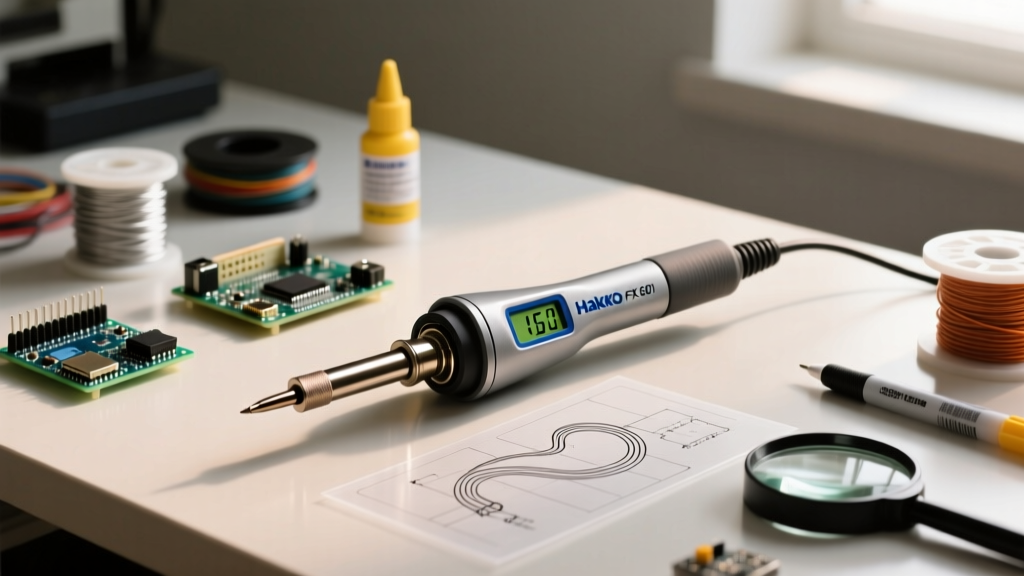
When sourcing authentic Japanese electronics tools, the Hakko FX-601 soldering iron frequently appears on import sites like Amazon Japan, eBay, and specialized proxy services. However, a massive point of confusion exists in the global DIY and professional electronics community regarding the difference between the FX-601 and the vastly more common FX-600. Before you click 'buy' on an imported FX-601, you must understand the voltage architecture. The Hakko FX-601 is a Japanese Domestic Market (JDM) model engineered specifically for Japan's 100V AC mains. It outputs 50W of power to its ceramic heating element. In contrast, the Hakko FX-600 is the global export version, designed for 120V (North America) or 220-240V (Europe/Asia) mains, outputting 67W to 75W respectively.
Plugging a 100V FX-601 directly into a standard 120V US outlet without a proper step-down transformer will result in catastrophic failure. The 20% overvoltage will push the ceramic heater past its thermal limits, instantly frying the internal heating element and potentially melting the internal PCB traces. Conversely, using a cheap, unregulated travel adapter will not step down the voltage; you need a dedicated, copper-wound step-down transformer. For EU users on 230V mains, the risk is even more severe, requiring a heavy-duty 230V-to-100V transformer. Because of this hardware limitation, the FX-601 is a niche tool in 2026, primarily sought after by purists, JDM tool collectors, or engineers working in regions with native 100V grids.
Step-Down Transformer Selection for US and EU Users
If you are committed to running the Hakko FX-601 soldering iron outside of Japan, your power delivery chain is only as strong as your transformer. Do not use solid-state voltage converters or cheap 'travel adapters' marketed for hair dryers. Soldering stations utilize analog dials and zero-cross detection circuits that are highly sensitive to the modified sine waves or phase-chopped AC signals produced by cheap solid-state converters. You must purchase a pure copper-wound, toroidal or laminated core step-down transformer rated for at least 150W (to provide a 3x safety margin over the iron's 50W draw). Brands like Krieger or Rockstone Power offer reliable 200W step-down units (typically priced between $45 and $65 USD) that provide a clean, pure sine wave, ensuring the FX-601's analog temperature dial operates without introducing AC noise or thermal jitter.
Deep Dive: Hakko FX-601 Specifications & Real-World Performance
Despite the voltage hurdles, the FX-601 remains a masterclass in analog ergonomic design. It features a thumb-operated temperature dial directly on the handle, allowing for on-the-fly adjustments between 250°C and 430°C without looking away from your workbench. Below is a technical comparison matrix evaluating the FX-601 against its global sibling and modern smart-iron alternatives.
| Feature | Hakko FX-601 (JDM) | Hakko FX-600 (Global) | Pinecil V2 (Smart Iron) |
|---|---|---|---|
| Input Voltage | 100V AC | 120V / 220-240V AC | 12-24V DC / USB-C PD |
| Power Output | 50W | 67W (120V) / 75W (240V) | 65W (via 24V DC) |
| Tip Compatibility | Hakko T19 Series | Hakko T19 Series | Pine64 Short Tips |
| Temp Control | Analog Handle Dial | Analog Handle Dial | Digital OLED / Buttons |
| Thermal Recovery | ~5 seconds (10°C drop) | ~3.5 seconds (10°C drop) | ~2 seconds (10°C drop) |
| Avg. 2026 Price | $45 + $50 Transformer | $85 USD | $28 USD |
As the data illustrates, the FX-601's 50W ceiling means its thermal recovery on heavy ground planes is slightly slower than the 67W FX-600. When soldering a 14-pin DIP IC to a standard 1.6mm FR4 substrate with standard copper weight, the FX-601 performs flawlessly. However, if you attempt to solder large XT60 battery connectors or thick 12AWG silicone wire, the 50W element will struggle to maintain the IPC J-STD-001 recommended thermal profiles, leading to cold joints or excessive dwell times that degrade the board's copper pads.
Best T19 Tip Configurations for the FX-601
The FX-601 utilizes the legendary Hakko T19 series tips. These tips feature a ceramic heater core that slides directly into the tip sleeve, offering superior thermal transfer compared to older wire-wound elements. Selecting the correct geometry is critical for maximizing the 50W output. According to Hakko's official tip geometry guide, matching the tip's thermal mass to the joint is the secret to analog soldering success.
- T19-I (0.2mm Conical): Best for precision 0603 and 0805 SMD passives. The low thermal mass prevents overheating delicate components, though it is useless for through-hole work.
- T19-D24 (2.4mm Chisel): The ultimate workhorse. The flat 2.4mm face provides excellent surface area contact for standard 0.1-inch header pins, DIP ICs, and general-purpose through-hole soldering. This should be your default installed tip.
- T19-K (Knife): Ideal for drag-soldering SOIC and TQFP surface-mount ICs. The edge can be used for precision work, while the flat side can carry a bead of solder for drag techniques.
- T19-D32 (3.2mm Chisel): Necessary for heavier joints like DC barrel jacks or large potentiometers. The extra mass compensates for the FX-601's 50W limit by storing more thermal energy between joints.
2026 Market Alternatives: Is the FX-601 Still Worth Importing?
In 2026, the soldering market is dominated by portable, RISC-V powered smart irons like the Pinecil V2 and the FNIRSI HS-01. These irons boot in two seconds, support USB-C Power Delivery, and offer PID-tuned temperature stability that rivals $300 benchtop stations. So, why would an engineer spend over $100 combined on an imported Hakko FX-601 and a step-down transformer?
The answer lies in analog reliability and electromagnetic compatibility (EMC). Smart irons utilize high-frequency switching buck converters and microcontrollers that can, in rare edge cases, introduce high-frequency noise into highly sensitive RF or audio circuits during probing. The Hakko FX-601 is a purely analog, closed-loop system. There is no firmware to crash, no OLED screen to burn in, and no software bugs to patch. For audio engineers building tube amplifiers or RF technicians repairing ham radio transceivers, the electrically 'quiet' nature of the FX-601's analog dial and simple triac-based heating circuit makes it a highly desirable, specialized tool.
Maintenance, Failure Modes, and the IMC Layer
The most common failure mode of the FX-601 is not the heater element, but user-induced tip destruction. The T19 tips are plated with a microscopically thin layer of iron over a copper core to prevent solder leaching. When users clean their tips on a wet cellulose sponge, the sudden 50°C temperature drop causes micro-fractures in the iron plating. Once the copper core is exposed, the molten solder dissolves the copper, creating a pitted, unusable tip within weeks.
Expert Insight: Always use dry brass wool for tip cleaning. It removes oxidized flux and excess solder without dropping the tip temperature, preserving the iron plating and ensuring consistent formation of the intermetallic compound (IMC) layer at the solder joint.
Furthermore, leaving the FX-601 on its holder at 400°C for extended periods without tinning will cause rapid oxidation. Always dial the temperature down to 250°C when stepping away from the bench, and apply a generous blob of 63/37 rosin-core solder to the tip before powering down to create an oxygen barrier.
Final Verdict: Who Should Buy the Hakko FX-601?
The Hakko FX-601 soldering iron is not a practical recommendation for the average hobbyist or beginner in North America or Europe; the FX-600 or a modern USB-C smart iron offers vastly superior convenience and thermal headroom for the price. However, for JDM tool enthusiasts, engineers operating in 100V regions, and analog audio purists who demand an electrically silent, firmware-free soldering experience, the FX-601 remains an exceptional piece of precision hardware. By pairing it with the correct step-down transformer and a curated selection of T19 tips, you secure a reliable, ergonomic station that will easily outlast its digital competitors. For verified purchasing and part numbers, always cross-reference with authorized industrial distributors like TEquipment to avoid the influx of counterfeit heating elements flooding secondary marketplaces.