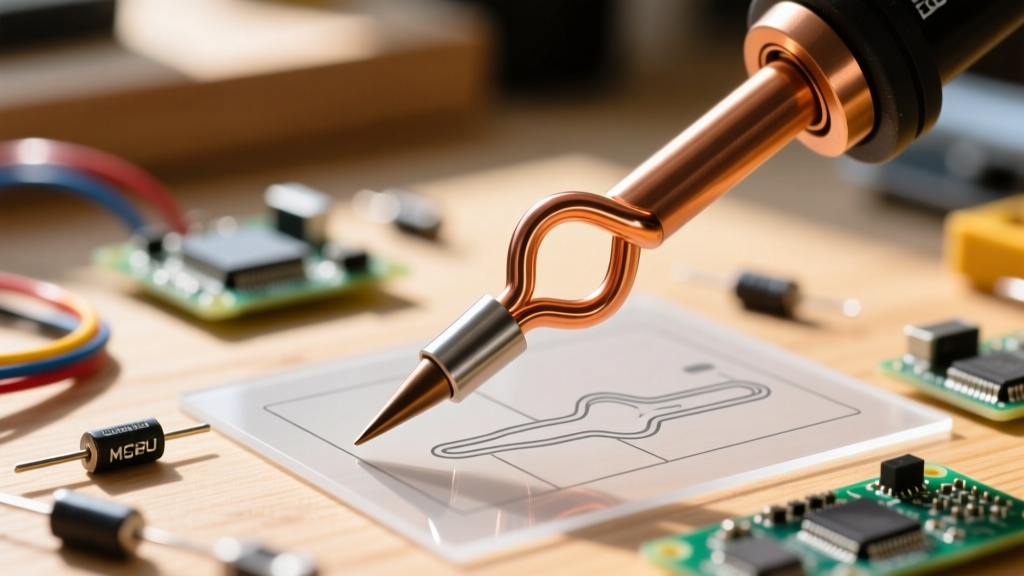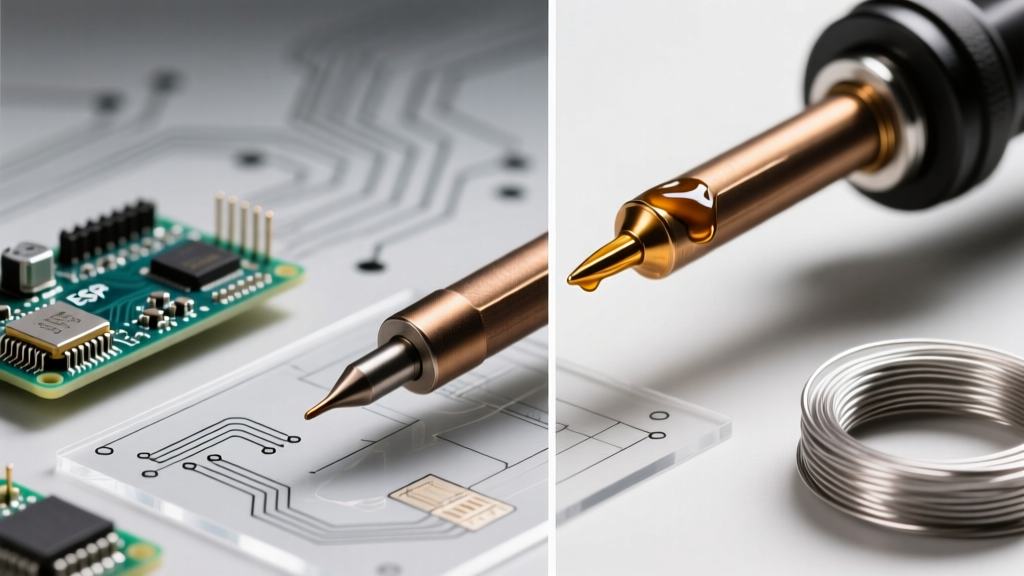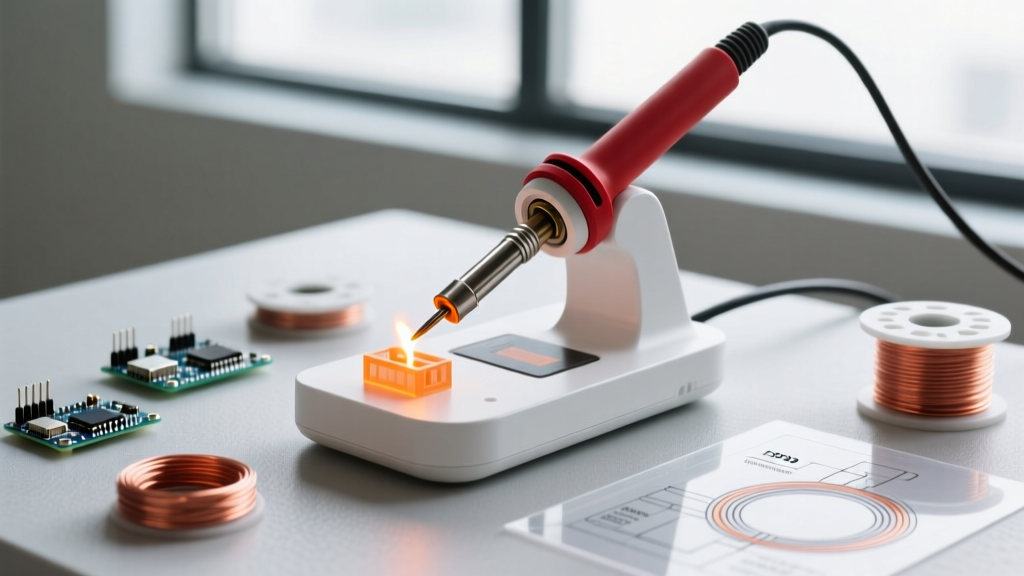

The Reality of Welding Plastic with a Soldering Iron
When makers, automotive technicians, and DIYers search for methods on welding plastic with a soldering iron, they often encounter a wall of frustration. Standard electronics soldering relies on a metallic filler (solder wire) to join copper pads via capillary action. Plastic welding, however, is a process of thermal fusion. You are melting the base thermoplastic and a donor rod of the exact same polymer to create a continuous molecular chain. Using a standard conical pencil tip meant for 63/37 tin-lead solder will result in localized burning, poor adhesion, and a structural mess.
To successfully weld plastics like ABS, Polypropylene (PP), or High-Density Polyethylene (HDPE) using a soldering iron, you need three things: precise temperature control, high thermal mass, and a specialized flat-blade or spade tip. In this 2026 best-of comparison, we evaluate the top soldering stations and portable irons that excel at plastic thermal fusion, breaking down the exact tip geometries and thermal profiles required for structural repairs.
Polymer Thermal Properties & Target Temperatures
Unlike solder, which has a distinct melting point, thermoplastics have a glass transition temperature and a broad melting range. If your iron runs too hot, you will degrade the polymer chains, releasing toxic monomers and creating a brittle, burnt joint. If it runs too cold, the donor rod will sit on top of the base material without achieving molecular interlocking. According to data compiled by the British Plastics Federation, understanding these thermal thresholds is critical before you even power on your station.
| Polymer Type | Common Applications | Approx. Melt Temp | Iron Target Temp | Fume Hazard Level |
|---|---|---|---|---|
| ABS | Automotive trim, 3D prints, enclosures | 210°C - 240°C | 270°C - 290°C | High (Styrene) |
| Polypropylene (PP) | Bumpers, living hinges, fluid tanks | 160°C - 170°C | 220°C - 240°C | Low |
| HDPE | Pipes, cutting boards, kayaks | 130°C - 145°C | 190°C - 210°C | Low |
| PVC | Pipes, wire insulation | 100°C - 260°C | DO NOT WELD | Extreme (HCl Gas) |
Note: Never attempt to weld PVC or Polyurethane (PU) with a hot iron. Thermal degradation of PVC releases hydrogen chloride gas, which is highly corrosive and toxic.
Top 3 Soldering Irons for Plastic Welding in 2026
1. Hakko FX-601 (Best Overall for Precision Plastic Repair)
The Hakko FX-601 remains a powerhouse for thermal fusion tasks. While often categorized as a heavy-duty electronics iron, its 67W ceramic heating element and compatibility with the 900M series tips make it a secret weapon for plastic welders. The key to using the FX-601 for plastic is swapping the standard chisel tip for the Hakko 900M-T-FL (Flat Blade) or a third-party copper spatula tip.
- Price Range: $75 - $85 (Station + Tip)
- Thermal Recovery: Excellent; maintains 280°C even when dragging through thick 4mm ABS sheets.
- Best For: Drone chassis repairs, RC car bodies, and small appliance enclosure cracks.
- Failure Mode to Avoid: The 900M-T-FL tip has a large surface area. If left stationary on thin PP (under 2mm), it will melt through the substrate in under 3 seconds. Keep the iron moving at a rate of 1 inch per 2 seconds.
2. Weller WE1010NA (Best for Heavy-Duty Automotive ABS)
When you are welding thick automotive ABS plastics—such as a cracked dashboard subframe or a heavy-duty battery tray—you need massive thermal inertia. The Weller WE1010NA delivers 70W of power and features a highly aggressive PID temperature control loop. For plastic welding, outfit this station with a Weller ETA (Chisel/Spade) or a custom-machined flat copper wedge.
- Price Range: $105 - $120
- Thermal Recovery: Industry-leading. The 70W heater core instantly compensates for the massive heat-sink effect of cold automotive plastics.
- Best For: Structural automotive repairs, thick-walled HDPE water tanks, and industrial enclosure fabrication.
- Pro-Tip: Set the WE1010NA to 285°C for ABS. Use a brass wire brush to clean the spade tip every 4 inches of weld bead; carbonized plastic buildup on the tip acts as an insulator and will cause cold-joint failures.
3. Pinecil V2 (Best Portable Option for Field Repairs)
Not all plastic welding happens at a bench. If you are repairing a cracked kayak on the beach or fixing an agricultural drip-line in the field, the Pinecil V2 is unmatched. Powered via USB-C Power Delivery (PD) at up to 65W, this RISC-V driven iron heats up in seconds. Equip it with the TS100-K (Mini Hot Knife) or a flat blade tip designed for the Pine64 ecosystem.
- Price Range: $26 (Iron only) + $15 (Tip) + PD Power Bank
- Thermal Recovery: Good for thin-to-medium gauge plastics (up to 3mm). Struggles with thick structural HDPE due to the thermal limits of the micro-heater.
- Best For: On-the-go repairs, agricultural tubing, drone field repairs, and hobbyist hot-knife cutting.
- Edge Case: When running off a 65W laptop charger, the Pinecil V2 can sustain 240°C indefinitely. However, if running off a standard 18W USB battery bank, the iron will throttle and fail to melt the donor rod, resulting in a weak mechanical bond rather than a true molecular weld.
Tip Geometry: Why Conical Tips Fail
The most common mistake beginners make when welding plastic with a soldering iron is using a standard conical (B-type) or fine chisel tip. Conical tips are designed to transfer heat into a microscopic point for surface-mount pads. When applied to plastic, they act like a hot needle, piercing the material and creating a trench rather than a weld pool. Furthermore, the narrow profile offers zero surface area to simultaneously melt the base material and the donor rod.
The Spade/Blade Rule: Effective plastic welding requires a flat, spatula-like tip with a width of at least 4mm to 6mm. This geometry allows you to press the donor rod into the V-groove while the flat face of the tip simultaneously melts the rod and the base substrate, ensuring a homogenous melt pool.
Step-by-Step: The V-Groove Thermal Fusion Method
Achieving a structural weld on cracked plastic requires proper joint preparation. Simply melting a rod over a hairline crack will result in a superficial scab that will snap under torsional stress.
- Identify the Polymer: Check the recycling stamp (e.g., '2' for HDPE, '5' for PP). If unmarked, perform a burn test on a scrap piece. ABS burns with a yellow flame, black smoke, and a sweet/styrene odor. PE burns with a blue-tipped yellow flame and smells like paraffin wax.
- Prep the V-Groove: Use a rotary tool (Dremel) with a V-shaped burr bit to carve a 60-degree chamfer along the entire crack. This creates a valley for the filler rod to sit in, maximizing surface area contact.
- Tack the Joint: Before adding filler, use the corner of your flat-blade iron to melt small 'tack' welds every 2 inches across the crack to prevent thermal warping and misalignment.
- Feed and Drag: Hold the iron at a 45-degree angle. Place the donor rod into the V-groove. Press the flat tip against both the rod and the base material simultaneously. Drag the iron backward at a steady rate (approx. 1 inch per 3 seconds), pushing the molten plastic into the groove.
- Cool and Sand: Allow the weld to cool naturally. Do not use compressed air or water to quench the plastic, as rapid cooling induces internal crystallization stresses and micro-fractures. Once cool, sand flush with 120-grit, then 400-grit sandpaper.
Fume Extraction & Toxicity Warnings
Melting polymers is inherently more hazardous than melting rosin-core solder. When ABS reaches 280°C, it begins to off-gas styrene monomers and trace amounts of hydrogen cyanide. Polyamides (Nylon) can release caprolactam vapor. According to guidelines published by the Occupational Safety and Health Administration (OSHA), thermal degradation of plastics requires stringent ventilation controls to prevent acute respiratory irritation and long-term neurological impacts.
Furthermore, the CDC NIOSH emphasizes that local exhaust ventilation (LEV) must be placed within 4 to 6 inches of the thermal source. A standard desktop fan blowing across your workspace is insufficient; it merely disperses the toxic monomers into the ambient room air. For any indoor plastic welding setup in 2026, you must utilize a HEPA/Carbon fume extractor (such as the Hakko FA-400 or a dedicated laser-welding fume extractor with an activated carbon bed) positioned directly above the weld pool.
Frequently Asked Questions
Can I use standard solder wire as a filler for plastic?
No. Solder is a metallic alloy (tin/lead or tin/copper) and will not chemically bond to thermoplastic polymers. It will simply sit inside the groove as a heavy, disconnected inclusion. You must use a donor rod made of the exact same base polymer (e.g., PP rod for a PP bumper).
Why is my plastic weld snapping when I bend it?
Snap failures usually indicate a 'cold weld.' This happens when the iron temperature is too low, or you are moving too fast. The donor rod melts, but the base material remains below its glass transition temperature. The result is a mechanical bond (glue-like) rather than a molecular fusion. Increase your iron temp by 15°C and slow your drag rate.
Is it safe to weld Teflon (PTFE) with a soldering iron?
Absolutely not. PTFE does not melt and flow like standard thermoplastics; it degrades. Heating PTFE above 260°C releases highly toxic perfluoroisobutene gas, which can cause severe polymer fume fever. Never attempt to thermal-weld PTFE.