
The 'M12 Soldering Gun' Misconception: Iron vs. Gun
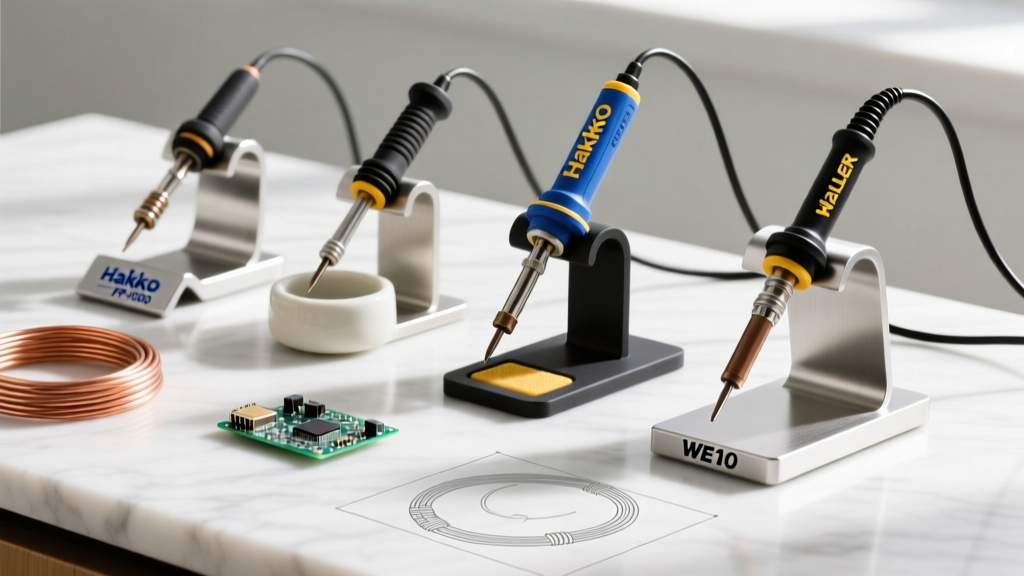
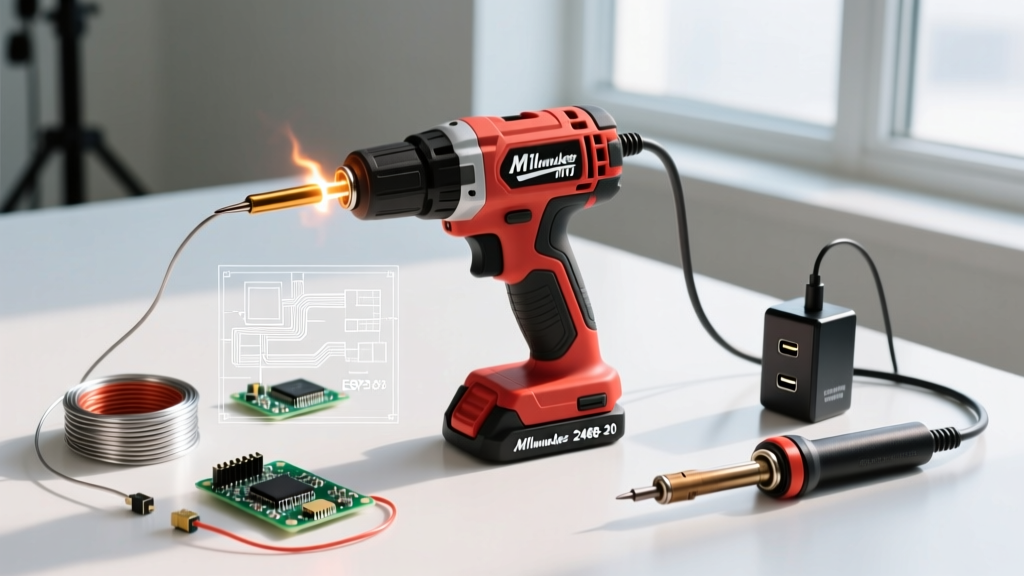
When field technicians, automotive electricians, and HVAC specialists search for an m12 soldering gun, they are almost universally looking for Milwaukee’s flagship cordless soldering tool. However, from a strict metallurgical and electrical engineering perspective, the Milwaukee 2488-20 is a soldering iron, not a soldering gun. Traditional soldering guns (like the classic Weller 8200PK) utilize a step-down transformer to push massive alternating current through a resistive wire loop, generating instant, localized heat triggered by a pistol-grip switch. The Milwaukee M12, conversely, uses a ceramic heating element powered by a 12V DC lithium-ion battery in a pencil-style form factor.
Understanding this distinction is critical for managing your expectations in 2026. If you need a heavy-duty, trigger-activated tool for occasional thick-gauge grounding straps, a traditional 120V AC gun is superior. But if you need sustained, temperature-controlled heat for splicing 14-16 AWG automotive wiring, repairing field sensors, or assembling off-grid solar harnesses, the M12 Soldering Iron is the undisputed king of the cordless hill. In this comprehensive comparison, we pit the Milwaukee M12 against traditional butane irons and modern USB-C PD smart irons to determine which cordless solution deserves a spot in your tool bag.
Milwaukee 2488-20 M12 Soldering Iron: Deep Dive Specifications
Before comparing the M12 to alternative cordless methods, we must establish its baseline performance metrics. The 2488-20 is engineered to replicate the thermal output of a 75W to 100W corded bench station, a bold claim for a 12V tool. According to Milwaukee Tool, the unit achieves a maximum temperature of 750°F (400°C) in under three minutes.
| Specification | Milwaukee M12 (2488-20) | Field Notes & Real-World Data |
|---|---|---|
| Max Temperature | 750°F (400°C) | Fixed temperature; relies on thermal mass rather than closed-loop digital feedback. |
| Heat-Up Time | < 3 Minutes | Tests with a CP2.0Ah battery show ~2 min 15 sec to melt 63/37 rosin-core solder. |
| Tip Compatibility | 1/4" (6.35mm) Shank | Cross-compatible with Hakko 900M series tips (massive cost savings). |
| Weight (Bare Tool) | 0.75 lbs | Increases to ~1.5 lbs when equipped with an XC4.0Ah battery. |
| Runtime (CP2.0Ah) | ~45-60 Minutes | Active soldering time; intermittent use extends battery life significantly. |
| Price (2026 Est.) | $129 (Bare) / $199 (Kit) | Requires investment in the M12 battery ecosystem if not already adopted. |
Head-to-Head: M12 vs. Butane vs. USB-C PD Smart Irons
The cordless soldering market has fractured into three distinct camps: Lithium-Ion (Milwaukee M12), Combustion (Butane), and USB-C Power Delivery (PD). Here is how the M12 stacks up against the Weller Portasol (Butane) and the Pinecil V2 (USB-C PD).
1. The Butane Alternative (e.g., Weller Portasol WP60)
Butane irons have been the field standard for decades. They offer extreme portability and high peak temperatures (up to 950°F). However, combustion introduces severe drawbacks. Burning butane emits water vapor and carbon dioxide, which can cause rapid oxidation on sensitive PCB pads if flux is not applied aggressively. Furthermore, using an open flame or catalytic butane heater in confined spaces—such as automotive interiors, HVAC closets, or near flammable solvents—is a severe safety violation on most commercial job sites. The M12 eliminates combustion risks entirely while providing a built-in LED worklight for dark enclosures.
2. The USB-C PD Alternative (e.g., Pinecil V2 / TS101)
Smart irons like the Pinecil V2 are darlings of the maker community. Powered by a 65W+ USB-C PD power bank, they feature closed-loop temperature control, OLED screens, and 15-second heat-up times. So why choose the M12? Ruggedness and ecosystem integration. Smart irons are fragile; dropping a Pinecil on a concrete shop floor will likely shatter the OLED screen or bend the DC barrel jack. The Milwaukee M12 is built with a reinforced polymer housing designed to survive drops from a ladder or the bed of a truck. Additionally, field techs already carry M12 batteries for impact drivers and multimeters, eliminating the need to manage separate, easily-lost USB-C PD power banks that often suffer from auto-shutoff features when current draw fluctuates.
Thermal Recovery and IPC-A-610 Compliance
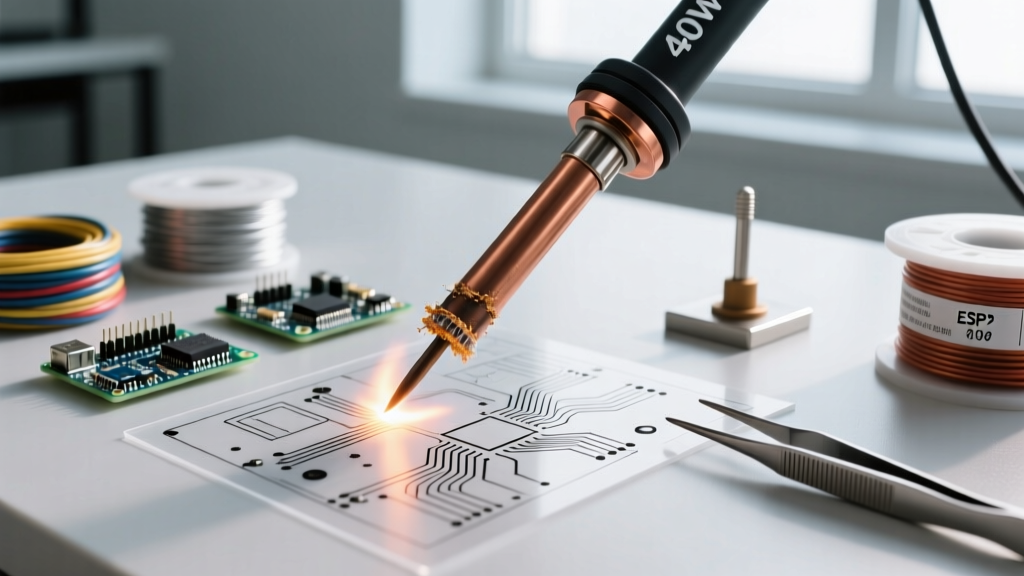
When evaluating any soldering tool, thermal recovery is the true measure of quality. Thermal recovery refers to how quickly the tip returns to its set temperature after touching a cold, heat-sinking surface (like a thick copper wire or a multilayer PCB ground plane).
According to the solder joint acceptability requirements outlined in IPC-A-610 standards, a proper solder joint must exhibit smooth, shiny wetting with a concave fillet. If a tool lacks thermal mass or recovery speed, the solder cools too rapidly, resulting in a 'cold joint'—characterized by a dull, grainy appearance and high electrical resistance. This is a critical failure point in automotive and aerospace wiring where vibration will quickly fracture a brittle cold joint.
Expert Insight: The Milwaukee M12 excels at soldering 14 to 20 AWG stranded wire and standard through-hole components. However, if you are attempting to solder heavy-gauge battery lugs (2/0 AWG) or large ground planes on Class 3 aerospace PCBs, the M12 will struggle with thermal drain. For those specific edge cases, a high-wattage corded station or a specialized resistance-soldering system is mandatory.
Battery Ecosystem: Voltage Sag and Ergonomics
The most common complaint from new M12 soldering iron users is temperature fluctuation under heavy load. This is not a defect of the iron, but a characteristic of lithium-ion chemistry and Battery Management Systems (BMS).
- CP2.0Ah (Compact): Offers the best ergonomic balance, making the tool feel like a standard corded pencil iron. However, when touching a large copper pour, the current spike causes voltage sag. The BMS may temporarily restrict output to protect the cells, leading to a noticeable drop in tip temperature.
- XC4.0Ah / HD5.0Ah (Extended): Provides massive thermal reserves and over 90 minutes of continuous runtime. The higher cell count mitigates voltage sag, ensuring rock-solid thermal recovery on thick wires. The trade-off is weight; the tool becomes rear-heavy, which can cause wrist fatigue during intricate, hour-long PCB repair sessions.
Recommendation: Keep a CP2.0 in the tool for delicate harness work and general splicing, but keep an XC4.0 charged in your bag for heavy automotive ground strap repairs.
Tip Ecosystem: The Hakko Advantage
One of the most underrated financial benefits of the Milwaukee M12 is its tip shank size. By utilizing a standard 1/4" (6.35mm) shank, Milwaukee ensured compatibility with the ubiquitous Hakko 900M series tips. As noted by industry suppliers like Weller Tools and various authorized distributors, proprietary cordless tips often cost between $15 and $25 each. In contrast, genuine Hakko tips (such as the B2 conical or D24 chisel) can be sourced for $5 to $8, and high-quality third-party clones are available in bulk for pennies on the dollar. This cross-compatibility drastically reduces the long-term operational cost for high-volume field technicians.
Pros, Cons, and Edge Cases
Pros
- True Cordless Freedom: No butane refills, no fragile USB-C cables, no combustion gases.
- Ecosystem Synergy: Shares batteries with hundreds of M12 trade tools.
- Cost-Effective Consumables: Hakko 900M tip compatibility keeps maintenance cheap.
- Integrated Worklight: Essential for peering into dark junction boxes and dashboards.
- Lock-On Button: Allows for continuous operation without maintaining a trigger squeeze.
Cons
- Fixed Temperature: Lacks the digital dial of a bench station; you cannot drop the temp to 600°F for delicate surface-mount work.
- Heat-Up Time: At ~2.5 minutes, it is slower than a 100W bench station or a 65W USB-C PD iron.
- Weight Imbalance: Attaching larger batteries ruins the center of gravity.
Final Verdict: Who Should Buy the M12?
If you are a bench technician repairing motherboards, the M12 is the wrong tool; you need the closed-loop precision of a Hakko FX-888D or Weller WE1010. If you are a hobbyist who solders once a month, a cheap USB-C PD iron is more cost-effective.
However, if you are an automotive diagnostician, marine electrician, HVAC controls tech, or off-grid solar installer, the Milwaukee M12 Soldering Iron is a revelation. It bridges the gap between the raw power required for 12V/24V field harnesses and the safety requirements of modern job sites. By ditching the 'soldering gun' search intent and embracing the reality of this high-performance cordless iron, field professionals can finally achieve IPC-compliant, bombproof solder joints anywhere the job takes them.