
The Metallurgy of Soldering Iron Flat Tip Degradation
When executing drag-soldering on QFP packages or wetting heavy ground planes on multi-layer PCBs, the soldering iron flat tip (commonly referred to as a chisel or bevel tip) is an indispensable geometry. Its broad surface area maximizes thermal transfer via capillary action and surface tension. However, flat tips are uniquely susceptible to thermal throttling, localized oxidation, and iron plating erosion. Understanding the metallurgical failure modes of your tip is the first step in restoring optimal heat transfer.
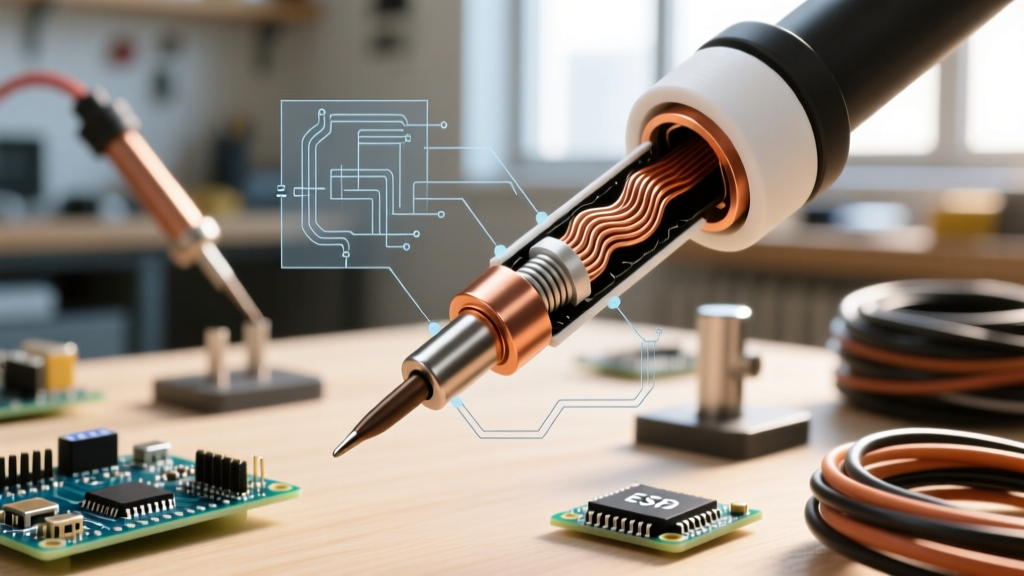
Modern high-performance tips, such as the Hakko T18-B or the JBC C245-900, are not solid copper. They feature a copper core for rapid thermal conductivity, plated with a 100 to 150-micron layer of iron to resist solder erosion, and finally finished with a micro-layer of chromium to prevent solder from creeping up the shaft. When this iron plating is compromised—either through chemical corrosion from aggressive fluxes or mechanical abrasion—the underlying copper rapidly dissolves into the molten solder alloy, creating microscopic craters known as pitting.
According to the NASA Workmanship Standards (NASA-STD-8739.3), soldering iron tips must be regularly inspected for pitting, non-wetting, and oxidation to ensure compliant, high-reliability solder joints in aerospace and high-density electronics.
Diagnostic Matrix: Identifying Your Flat Tip Failure Mode
Before attempting to clean or replace your tip, accurately diagnose the failure mode. Misdiagnosing a breached iron plating as simple oxidation will lead to wasted time and ruined PCB pads. Use the following diagnostic matrix to troubleshoot your soldering iron flat tip performance issues.
| Visual Symptom | Thermal Behavior | Root Cause | Corrective Action |
|---|---|---|---|
| Dull, black, crusty layer on the working face | Solder melts slowly; joints appear dull and grainy | Severe Oxidation (Iron oxide layer insulating the tip) | Chemical reduction using brass wool and RMA flux paste |
| Microscopic craters or rough, sandpaper-like texture | Uneven heat distribution; solder pools in divots | Flux Corrosion / Copper Leaching | Immediate replacement; switch to milder No-Clean flux |
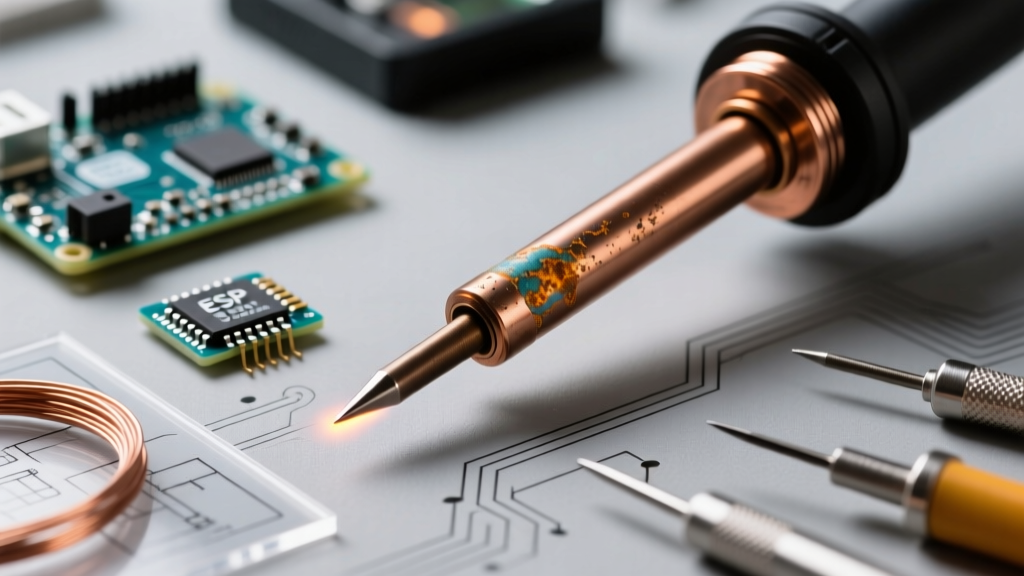
| Tip shaft turns blue, purple, or dark gold | Rapid oxidation upon cooling; poor wetting on edges | Chronic Overheating (Running above 380°C / 716°F) | Lower idle temperature; enable station sleep mode |
| Solder balls up and rolls off the flat face | Station reads target temp, but joint remains cold | Non-wetting (Iron plating breach or silicone contamination) | Tip is unrepairable; discard and clean heating element |
Step-by-Step Restoration Protocol for Oxidized Flat Tips
If your flat tip is suffering from severe oxidation (the black crust layer), never use sandpaper, files, or steel wool. Abrasives will instantly strip the protective iron plating, destroying the tip. Instead, follow this chemical and mechanical restoration protocol recommended by industry experts and detailed in the IPC J-STD-001 soldering requirements.
- Reduce Temperature: Drop your soldering station temperature to 150°C (302°F). High heat accelerates oxidation and burns flux instantly, preventing chemical reduction.
- Apply Activated Flux: Coat the entire flat face of the tip with a generous amount of Rosin Mildly Activated (RMA) flux paste, such as Kester 186. The mild activators will chemically break down the iron oxide.
- Introduce Sacrificial Solder: Apply a thick layer of 63/37 Sn/Pb (or SAC305 for lead-free environments) directly over the fluxed tip. The flux will bubble and clean the surface as the solder melts.
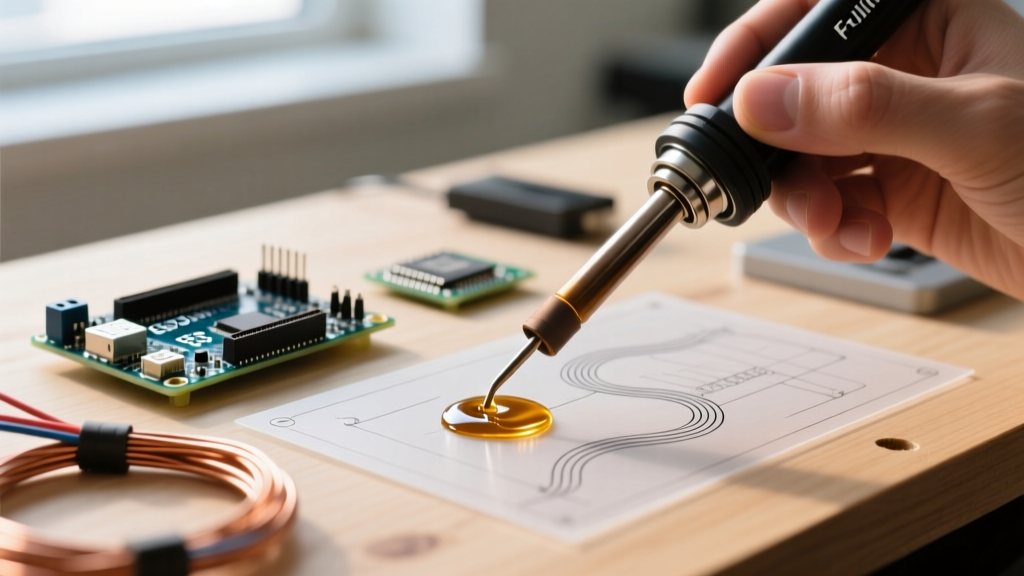
- Brass Wool Agitation: While the tip is wet with molten solder and flux, gently wipe it in a figure-eight motion through a brass wire sponge (e.g., Hakko 599B). The brass is softer than the iron plating but harder than the oxidation crust.
- Re-Tin and Inspect: Wipe the tip on a damp (not soaking) cellulose sponge, then immediately apply a fresh coat of high-quality solder to protect the newly exposed iron layer from ambient oxygen.
Case Study: Hakko T18-B vs. JBC C245-900 Recovery
When troubleshooting cold joints on heavy copper pours, the issue is often thermal recovery rather than tip degradation. The Hakko T18-B (a standard 1.6mm chisel) relies on a traditional ceramic heater wrapped around the tip base, resulting in a 12 to 15-second thermal recovery time after hitting a ground plane. Conversely, the JBC C245-900 flat tip integrates the heating element directly inside the tip cartridge, achieving a 2-second recovery. If your flat tip appears to be 'failing' on large pads, verify your station's thermal mass delivery before discarding the tip.
Preventative Maintenance: Maximizing Flat Tip Lifespan
Replacing tips is a recurring operational expense. As of 2026, genuine Hakko T18 series tips cost approximately $9.50 each, while JBC C245 cartridges command upwards of $45.00. Implementing strict preventative maintenance can extend tip life by 300%.
- Eliminate Water-Soluble Fluxes for Hand Soldering: Water-soluble (Organic Acid) fluxes are highly corrosive. When left on a hot flat tip, they eat through the iron plating in a matter of hours. Stick to No-Clean or RMA rosin fluxes for manual PCB assembly.
- Mandate Sleep Mode Usage: Leaving a flat tip at 350°C (662°F) while idle accelerates oxidation exponentially. Use stations with auto-sleep features that drop the temperature to 150°C when the handpiece is holstered.
- Keep the Face Tinned: Never leave a flat tip bare. Before turning off your station, melt a large blob of solder over the working face. This 'sacrificial tinning' will oxidize instead of the tip's iron plating while the tool cools down.
- Avoid Excessive Wiping: Wiping a hot tip on a wet cellulose sponge causes rapid thermal shock. Over time, this micro-cracks the iron plating, allowing molten solder to penetrate and dissolve the copper core. Switch to dry brass wool.
When to Retire the Tip: Micro-Pitting and Iron Plating Failure
No amount of chemical cleaning can reverse a breached iron plating. If you inspect your soldering iron flat tip under a 10x loupe and observe deep pitting, or if solder consistently refuses to wet a specific localized spot on the chisel face (creating a 'dead zone'), the tip has reached the end of its operational life. Continuing to use a pitted tip will result in uneven heat transfer, leading to cold solder joints, excessive dwell times, and potential thermal damage to surface-mount components and PCB laminates.
For comprehensive visual inspection guidelines and acceptable solder joint criteria, technicians should refer to the SparkFun Electronics soldering tutorials and IPC visual inspection standards to ensure their tools are capable of producing reliable, high-yield connections.
Frequently Asked Questions
Why does my flat tip turn black immediately after cleaning?
Instant re-oxidation occurs when the tip temperature is too high (above 380°C) or the ambient environment lacks a protective flux barrier. Always lower the temperature to 250°C during cleaning, and immediately apply a thick layer of rosin-core solder to seal the iron plating from oxygen.
Can I use a flat tip for drag soldering fine-pitch SMD components?
Yes, but geometry matters. A standard wide chisel (like the Weller RT4) will bridge 0.5mm pitch pins. For fine-pitch drag soldering, use a micro-chisel or a 'gull-wing' flat tip (such as the JBC C245-945) which features a recessed cavity that holds molten solder via capillary action without bridging adjacent pads.
Is it safe to use flux-core solder to clean the tip?
Yes, feeding standard 63/37 rosin-core solder onto the tip and wiping it away is the safest daily maintenance routine. The internal flux activates precisely at the melting point, providing continuous, mild chemical cleaning without the aggressive corrosion associated with liquid or paste fluxes.