
The Reality of Farm-Grade Soldering Tools
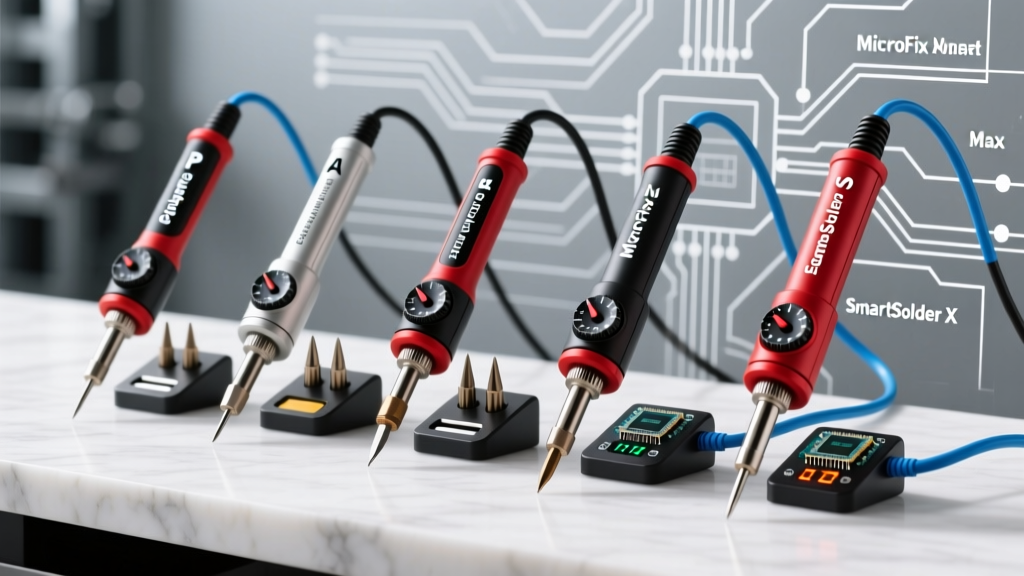
Tractor Supply Co. (TSC) is a go-to destination for rural DIYers, ranchers, and automotive enthusiasts needing quick, reliable tools for field repairs. When it comes to soldering, TSC primarily stocks heavy-duty, budget-friendly models from brands like Performance Tool and Bernzomatic. These irons are not designed for precision surface-mount device (SMD) micro-soldering; instead, they are built for splicing 12-gauge electric fence wires, repairing trailer lighting harnesses, and basic plumbing. However, because they are often used in harsh, dusty, and unregulated environments like barns and workshops, they are highly susceptible to specific failure modes. Understanding how to troubleshoot and maintain your Tractor Supply soldering iron will save you from unnecessary replacements and ensure your electrical splices meet basic safety requirements.
Diagnostic Matrix: Tractor Supply Iron Failures
Before tearing your iron apart, use this diagnostic matrix to isolate the root cause of your tool's malfunction. This applies primarily to the AC-powered Performance Tool models (such as the 100W W115 or 40W W100).
| Symptom | Probable Cause | Diagnostic Action | Solution |
|---|---|---|---|
| Iron fails to heat entirely | Snapped Nichrome heating element or broken cord | Test cord continuity and element resistance with a multimeter | Replace cord or heating element core |
| Heats up but solder won't melt | Severe tip oxidation or loose set screw | Visual inspection of tip shaft and barrel connection | Tighten set screw; chemically clean tip |
| Intermittent heating during use | Strain relief failure at the handle base | Wiggle cord at handle base while monitoring continuity | Solder internal wire joints and reinforce strain relief |
| Tip degrades rapidly (pitting) | Using solid copper tip with lead-free solder | Check tip material and solder alloy composition | Switch to iron-plated tips; lower operating temp |
Step-by-Step Heating Element Verification
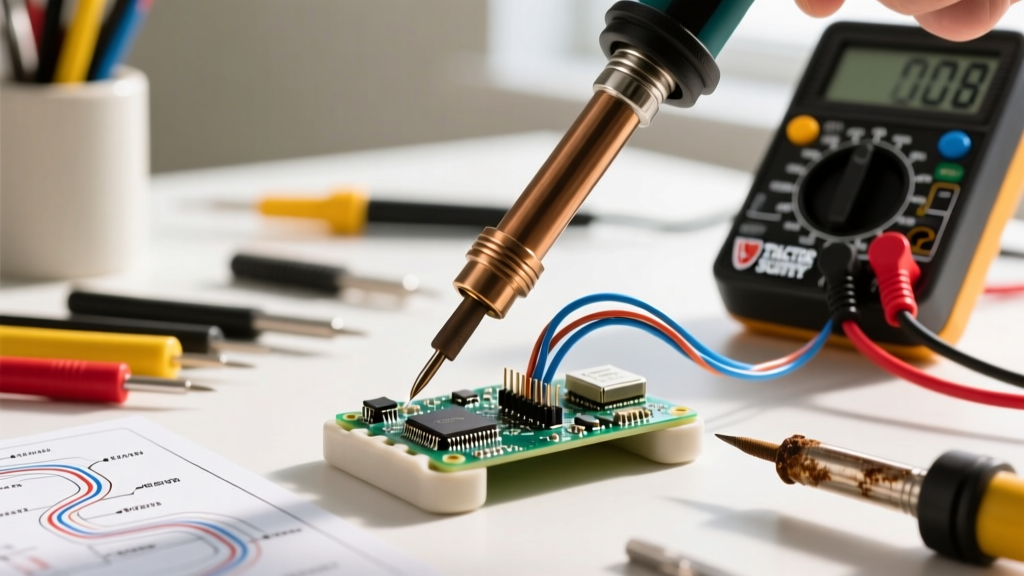
The most common reason a Tractor Supply soldering iron stops working is a fractured Nichrome heating wire. This often happens when the iron is dropped on a concrete barn floor while hot, causing the brittle wire to snap. To verify the element, you need a digital multimeter. According to Fluke's guide on testing continuity, ensuring your meter is properly zeroed is the first step in accurate diagnostics.
Calculating Target Resistance
You must know what resistance reading to expect. Using Ohm's Law and the power formula (R = V² / P), we can calculate the target resistance for standard 120V AC irons sold at TSC:
- Performance Tool W100 (40W): 120² / 40 = 360 Ohms
- Performance Tool W115 (100W): 120² / 100 = 144 Ohms
Set your multimeter to the Ohms (Ω) setting. Insert the probes into the two prongs of the iron's AC plug. If your reading is within 10% of the target resistance, the heating element is intact, and your issue lies in the power cord or plug. If the meter reads 'OL' (Open Loop) or infinite resistance, the Nichrome wire is severed, and the heating core must be replaced.
Field Maintenance: Combating Oxidation in the Barn
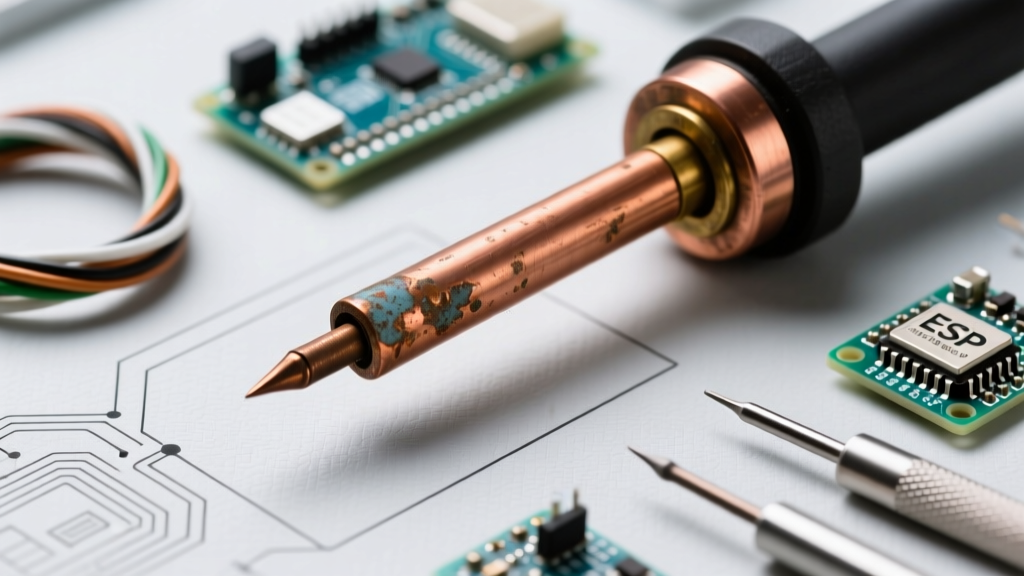
Agricultural environments are humid and dusty, creating the perfect storm for rapid tip oxidation. When a soldering iron tip turns black and crusty, it loses its thermal transfer capability. Solder will ball up and roll off rather than wetting the joint.
The Danger of Mechanical Abrasion
A common mistake among farm hobbyists is taking a metal file or sandpaper to a blackened tip. The tips sold at Tractor Supply for the Performance Tool line are not solid copper; they are copper cores plated with a thin layer of iron to prevent dissolution. Filing the tip removes this iron plating, exposing the copper. Once exposed, the molten solder will rapidly dissolve the copper core, ruining the tip in a matter of hours. Adhering to IPC soldering standards regarding tip care dictates that mechanical abrasion should never be used on plated tips.
Proper Tinning and Cleaning Protocol
- Use Brass Wool, Not Sponges: Wet cellulose sponges cause rapid thermal shock, which can micro-fracture the iron plating. Use a dry brass wire sponge to gently scrub oxidation.
- Chemical Tip Cleaners: For severe blackening, use a rosin-based tip activator paste. Dip the hot tip into the paste, wipe on the brass wool, and immediately apply fresh 60/40 rosin-core solder.
- Always Leave a Solder Blob: Before turning off your iron, melt a large blob of solder over the entire working surface of the tip. This sacrificial layer will oxidize instead of the iron plating while the tool cools in your workshop.
Troubleshooting Butane Irons: The Bernzomatic ST2200T
For fence line repairs where AC power is unavailable, the Bernzomatic ST2200T butane soldering iron is a Tractor Supply staple. Troubleshooting a catalytic butane iron requires a completely different approach than an electric model.
Safety Warning: Never attempt to disassemble the catalytic heater mesh of a butane iron while it is filled with fuel. Always purge the tank in a well-ventilated outdoor area before maintenance.
Failure Mode: Flint sparks, gas flows, but no ignition.
This usually indicates that the catalytic mesh is clogged with carbon buildup or that the flint wheel is worn. If you are using low-grade butane, impurities will clog the mesh. To fix this, remove the catalytic tip and soak it in high-purity isopropyl alcohol (99%) for 30 minutes, then let it air dry completely. If the flint wheel spins without producing sparks, the flint stick is depleted or the spring tension has failed; both are easily replaced with standard lighter repair kits.
Repair vs. Replace: The 2026 Cost Breakdown
Given the low entry cost of Tractor Supply soldering irons, you must evaluate whether a repair is economically viable in 2026. Here is a realistic cost-benefit analysis:
- Replacement Cord (DIY Splice): $4.00. Highly recommended if the element tests good.
- Replacement Heating Core: $8.00 - $12.00. Worth it for the 100W W115 model, as high-wattage cores are more expensive elsewhere.
- Replacement Iron-Plated Tips: $5.00 each. Always keep spares; they are consumables.
However, if your Tractor Supply iron requires a new handle, cord, and element simultaneously, you are approaching $25 in parts. At this price point, it is highly recommended to upgrade to a modern, temperature-controlled alternative like the $55 Pinecil V2 (powered by USB-C PD) or a used Hakko FX-888D. These offer vastly superior thermal recovery, which is critical when soldering thick 10-gauge battery cables that act as massive heat sinks.
Frequently Asked Questions
Can I use Tractor Supply soldering irons for circuit boards?
While you physically can, it is not recommended. The 100W Performance Tool irons lack temperature regulation and will easily lift copper pads off standard FR-4 printed circuit boards. Reserve TSC irons for heavy-gauge wire splicing, automotive harnesses, and plumbing.
Why does my tip turn black immediately after turning it on?
This is caused by running the iron at maximum heat without applying solder. Even on budget irons, never let the tip sit bare and hot. Apply rosin-core solder the moment it reaches melting temperature to create a protective barrier against oxygen.
Is the 100W or 40W model better for electric fences?
The 100W model (W115) is vastly superior for electric fences and agricultural wiring. Farm environments often require soldering 12-gauge or 10-gauge galvanized or copper-clad steel wires. These thick wires act as heat sinks, drawing thermal energy away from the joint. A 40W iron will stall and create a cold, brittle solder joint, whereas the 100W iron maintains the thermal mass required for a proper metallurgical bond.