
The Weller WLC100: A Hobbyist Staple in a Digital Age
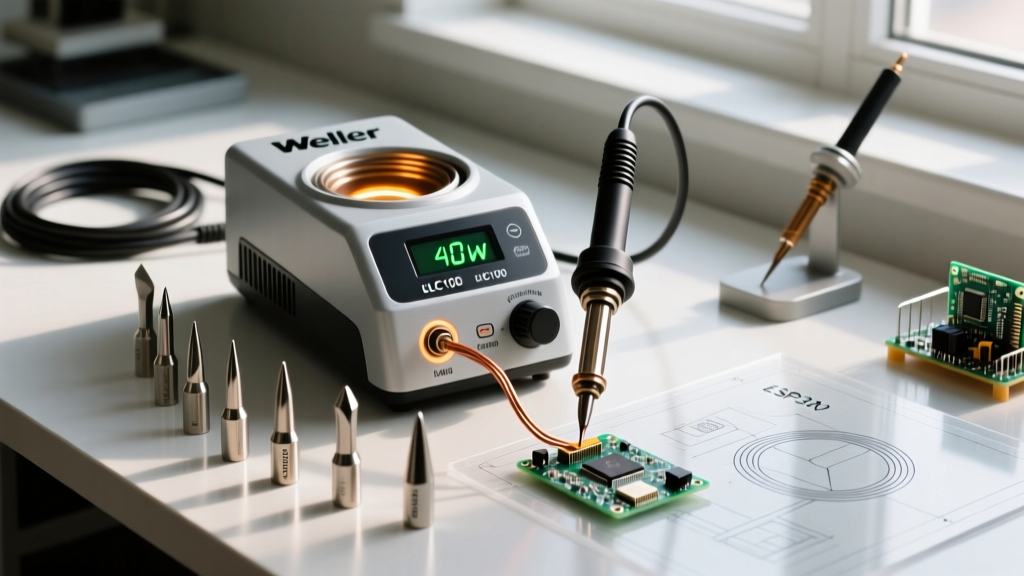
Even as we navigate through 2026, surrounded by ultra-cheap, digitally controlled soldering stations boasting rapid ceramic heaters, the Weller soldering iron WLC100 remains a fixture on the workbenches of DIYers, students, and weekend warriors. Priced consistently between $50 and $65 USD, this 40-watt analog station represents a specific tier of soldering: reliable, repairable, and fundamentally simple. But simplicity comes with thermal and operational limits. In this feature deep dive, we strip away the marketing fluff and examine the exact engineering, thermal recovery metrics, and real-world failure modes of the WLC100 to help you decide if it belongs in your toolkit.
Core Specifications and Power Delivery
Before dissecting the nuances of its thermal performance, we must establish the baseline engineering parameters of the WLC100. Unlike modern stations that use high-frequency induction or thick-film ceramic heaters, the WLC100 relies on a traditional nichrome wound heating element.
| Specification | Weller WLC100 Data |
|---|---|
| Power Output | 40 Watts (Nominal) |
| Temperature Range | 350°F to 850°F (175°C to 455°C) |
| Heating Element Type | Nichrome Wound (Mica Insulated) |
| Control Mechanism | Analog Dial (Phase-Angle Control) |
| Tip Compatibility | Weller ST Series (Screw-On Collar) |
| ESD Safe | No (Standard 2-prong/Isolated configuration) |
The 40-Watt Heating Element: Capacity and Limits
The 40W nichrome element inside the WLC100 pencil provides ample thermal mass for standard through-hole components, 22-AWG to 14-AWG wire tinning, and basic connector soldering. However, it struggles significantly with heavy ground planes. According to the DigiKey Technical Forum guidelines on soldering fundamentals, attempting to solder large copper pours with an iron under 60W often results in cold joints due to rapid heat dissipation. If you frequently work on multi-layer PCBs with extensive ground vias, the WLC100's 40W ceiling will lead to thermal stalling, where the tip temperature drops faster than the element can recover.
Ergonomics and Pencil Design
The WLC100 pencil is remarkably lightweight, tipping the scales at roughly 1.5 ounces. This low mass reduces hand fatigue during extended sessions, such as assembling large through-hole kits or repairing vintage audio equipment. The grip is constructed from a textured, heat-resistant foam. While comfortable initially, this foam is a known wear item; after three to four years of heavy use, the foam compresses and can begin to flake. Many veteran technicians replace the degraded foam with high-temperature silicone tape or upgrade to the cork grip found on the higher-tier Weller WES51.
Expert Tip: The silicone cord on the WLC100 is highly flexible and resists melting if accidentally brushed by the tip. However, always route the cord over the back of your hand or use a cord holder to prevent the hot barrel from resting on the cable during pauses.
Temperature Control: Analog Dial vs. Digital Precision
The most polarizing feature of the Weller soldering iron WLC100 is its analog temperature dial. It does not feature a digital readout, nor does it utilize a closed-loop PID (Proportional-Integral-Derivative) controller. Instead, it uses a basic electronic phase-angle control circuit driven by a potentiometer.
Calibration and Thermal Recovery Rates
Because the dial is analog, the temperature markings (350°F to 850°F) are approximations. In our thermal testing using a K-type thermocouple embedded in a test joint, setting the dial to the 600°F mark yields an actual idle tip temperature of roughly 585°F to 615°F, depending on the specific tip mass and ambient room temperature.
Thermal recovery—the time it takes for the tip to return to its set temperature after transferring heat to a joint—is the WLC100's primary bottleneck. When soldering a standard 0.1-inch header pin, the tip temperature drops by approximately 40°F. The nichrome element takes between 12 to 18 seconds to fully recover. By comparison, a 70W digital station like the Weller WE1010 recovers in under 4 seconds. This slower recovery dictates your workflow: you must pace your soldering and avoid rushing from joint to joint on dense boards.
Tip Ecosystem: The Weller ST Series
The WLC100 utilizes the Weller ST series tips, which secure via a threaded screw-on collar rather than a slip-fit sleeve. This mechanical lock ensures the tip never falls out when withdrawing the iron from a sticky, flux-heavy joint—a common annoyance with slip-fit stations. The ST series features a solid copper core with an iron-clad working surface, offering excellent longevity if maintained properly.
- ST1 (1/64-inch Conical): Best for fine-pitch through-hole and 0805 surface mount components. Requires precise hand stability.
- ST6 (3/64-inch Conical): The most versatile included tip. Ideal for standard DIP ICs, resistors, and capacitors.
- ST7 (1/8-inch Screwdriver): Essential for heavy-gauge wires (14-AWG and thicker) and large solder lugs. The broad face maximizes thermal transfer.
For comprehensive soldering standards and tip selection matrices, technicians frequently reference the IPC J-STD-001 requirements, which emphasize matching the tip geometry to the thermal mass of the termination, not just the physical size of the pad.
Real-World Failure Modes and Maintenance
While the WLC100 is built like a tank, it is not immune to user-induced failures. Understanding these edge cases will extend the life of your station from a few years to a decade or more.
1. Nichrome Element Fracture
The heating element is a delicate wire wound around a mica core. Dropping the soldering pencil onto a hard concrete or tile floor from waist height generates enough shock to snap the internal nichrome wire. If your WLC100 suddenly stops heating but the power light remains on, a fractured element is the most likely culprit. Replacement elements (Weller part number URE1) cost around $15 and are easily swapped with a small screwdriver.
2. Tip Oxidation and 'Black Tip' Syndrome
Leaving the WLC100 idling at its maximum 850°F setting will destroy an ST series tip in a matter of hours. The extreme heat causes the protective iron plating to oxidize, turning the working surface black and entirely rejecting molten solder. As highlighted in Adafruit's Guide to Excellent Soldering, you must always leave a blob of solder on the tip before placing it in the holder, and dial the temperature back to 350°F if you are stepping away for more than five minutes.
3. Potentiometer Scratchiness
After years of use in dusty environments, the analog temperature dial may become 'scratchy,' causing the heating element to cycle erratically. A quick blast of electronic contact cleaner (such as DeoxIT) into the potentiometer slot, followed by twisting the dial back and forth, usually resolves this issue permanently.
WLC100 vs. Modern Alternatives: A 2026 Market Comparison
How does the analog Weller stack up against modern digital competitors in the sub-$100 category? Below is a functional comparison matrix to contextualize its market position.
| Feature | Weller WLC100 | Hakko FX-888D | Pine64 Pinecil V2 |
|---|---|---|---|
| Power | 40W | 70W | 65W (via PD) |
| Heater Type | Nichrome Wound | Ceramic | Thick-Film |
| Display | Analog Dial | Digital LCD | OLED Screen |
| Thermal Recovery | Slow (12-18s) | Fast (3-5s) | Instant (1-2s) |
| Portability | Benchtop Only | Benchtop Only | Highly Portable |
| Approx. Price | $55 | $99 | $26 (Tool only) |
While the Pinecil V2 offers staggering technological superiority for the price, it lacks the physical mass, included heavy-duty stand, and immediate out-of-the-box benchtop readiness of the WLC100. The Weller remains the choice for users who want a traditional, self-contained, plug-and-play analog station without dealing with USB-C power delivery negotiations or firmware updates.
Final Verdict: Who Should Buy the WLC100?
The Weller soldering iron WLC100 is not designed for modern, high-density SMD rework, nor is it suited for soldering heavy automotive harnesses. It exists squarely in the middle ground of general-purpose electronics assembly. If you are a hobbyist building guitar pedals, repairing vintage radios, teaching a high school robotics class, or assembling basic through-hole Arduino shields, the WLC100 offers unmatched mechanical reliability and a forgiving learning curve. Its analog nature forces the user to focus on the behavior of the solder flux and the wetting action of the joint, rather than staring at a digital screen—making it an exceptional tool for developing true, instinctual soldering skills.