
The Truth About "Soldering Iron Paste"
When your soldering iron tip turns black, loses its thermal transfer efficiency, and causes fresh solder to bead up and roll off, you are experiencing severe oxidation. In the electronics repair and manufacturing industry, the term soldering iron paste almost exclusively refers to tip tinning paste (or tip tinner)—a specialized maintenance compound designed to strip black oxide layers and re-tin the iron plating.
Critical Clarification: Do not confuse tip tinning paste with solder paste (a thixotropic mixture of microscopic solder spheres and flux used for SMD stencil reflow). Attempting to clean your soldering iron with SMD reflow paste will ruin the tip, degrade the heating element, and leave a sticky, carbonized mess on your workstation. This guide focuses strictly on using proper tip tinning compounds for troubleshooting and restoring dead soldering tips.
Anatomy of a Soldering Tip and the Oxidation Failure Mode
To understand why soldering iron paste works, you must understand tip construction. Modern soldering tips are not solid copper. They feature a tellurium-copper core for rapid thermal conductivity, wrapped in an electroplated iron layer (typically 100 to 150 microns thick) to resist solder leaching, and finished with a micro-thin chromium barrier at the base to prevent corrosion.
When the working face of the iron plating is exposed to high heat (above 350°C) and ambient oxygen, it forms iron oxide (Fe2O3). This black crust acts as a severe thermal insulator. Even if your station's thermocouple reads 380°C, the actual surface of the oxidized tip may only be transferring 180°C to the solder joint, resulting in cold solder joints and prolonged dwell times that damage PCB pads. According to the IPC soldering standards, a tip must maintain proper wetting to ensure reliable metallurgical bonds; an oxidized tip fundamentally violates this requirement.
Diagnosing the "Dead Tip" Syndrome
Before reaching for the soldering iron paste, confirm that your tip is actually oxidized and not suffering from mechanical damage or internal heater failure. Look for these specific symptoms:
- Non-Wetting Surface: Solder melts but immediately balls up and rolls off the tip rather than coating it.
- Black or Blue Crust: A visible layer of dark scale on the working face that cannot be wiped away with standard brass wool.
- Pitting or Cavitation: If the tip has deep craters, the iron plating has been breached, and the copper core is dissolving into the molten solder. Note: Soldering iron paste cannot fix pitted tips; they must be replaced.
- Thermal Lag: The iron takes significantly longer to melt rosin-core wire solder than it did when new.
Step-by-Step: Restoring a Tip with Soldering Iron Paste
Using tip tinner incorrectly can permanently destroy the iron plating. Follow this precise thermal and mechanical procedure to safely restore your tip.
Step 1: Dial Down the Temperature
Never use soldering iron paste at your standard working temperature (often 380°C+ for lead-free). High heat will instantly flash-off the rosin flux carriers in the paste, leaving behind dry, abrasive particulates that will scratch the iron plating. Set your soldering station to 250°C - 275°C (482°F - 527°F). This is hot enough to melt the solder powder in the paste but cool enough to keep the flux active.
Step 2: The Dwell and Rotation
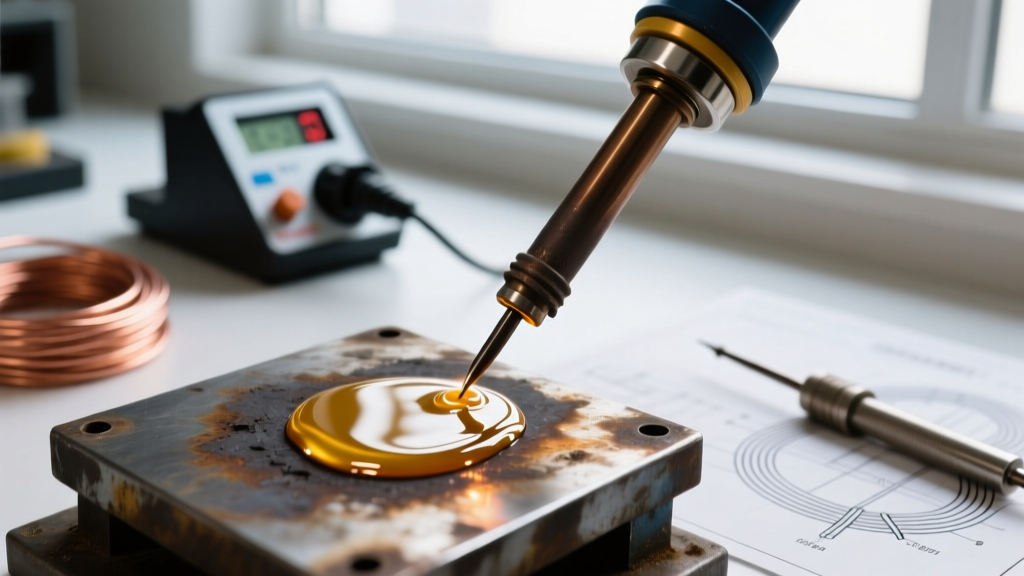
Plunge the oxidized tip directly into the soldering iron paste. You will hear a distinct sizzle and see smoke as the mild phosphoric acid and rosin flux activate. Hold the tip in the paste for exactly 3 to 5 seconds, rotating it slightly to ensure the entire working face is submerged in the chemical reaction. Do not exceed 5 seconds.
Step 3: Mechanical Agitation (Brass Wool Only)
Withdraw the tip and immediately plunge it into a dry brass wire sponge (never use a wet cellulose sponge, which causes thermal shock and micro-fractures in the iron plating, a phenomenon well-documented in NASA's high-reliability soldering guidelines). Twist the tip in the brass wool to strip away the dissolved oxide sludge.
Step 4: Immediate Capping
The tip is now bare and highly reactive. Within 3 seconds of wiping it, apply a generous amount of fresh, high-quality rosin-core wire solder (63/37 leaded or SAC305 lead-free) to completely coat the working face. This "caps" the tip, preventing immediate re-oxidation.
Product Comparison: Top Tip Tinning Pastes
Not all soldering iron pastes are formulated equally. Some use aggressive acids for heavily neglected tips, while others use mild no-clean fluxes for daily maintenance. Here is a breakdown of the industry-standard compounds available in 2026:
| Product Model | Flux / Acid Type | Aggressiveness | Best Use Case | Est. Price |
|---|---|---|---|---|
| Hakko 599B | Rosin / Mild Phosphoric | Low-Medium | Routine maintenance, lead-free tips | $9 - $12 |
| Weller WDC1 | Zero-Halogen Activated | High | Severely oxidized, neglected tips | $15 - $18 |
| Kester 245NC | No-Clean Organic Acid | Medium | Cleanroom / medical PCB environments | $14 - $17 |
Preventative Maintenance: Keeping Oxidation at Bay
Troubleshooting with soldering iron paste should be a last resort, not a daily habit. The chemical etchants in the paste slowly degrade the 150-micron iron plating over time. To maximize tip lifespan and maintain optimal thermal transfer, implement the following maintenance protocols:
The Golden Rule of Shutdown: Never turn off your soldering station without first melting a large, visible blob of fresh solder onto the tip. As the iron cools from 350°C down to room temperature, this sacrificial solder blob will oxidize instead of your iron plating. When you power on the station next, simply wipe the blob away and apply fresh solder.
Avoid the Damp Sponge Trap
Many beginners use a wet cellulose sponge to clean their tips. As noted by experts at Adafruit's comprehensive soldering guide, the rapid temperature drop from 380°C to 100°C causes microscopic cracking in the iron plating. Solder then seeps into these cracks, dissolving the copper core from the inside out. Always use dry brass wool or copper curls for routine cleaning.
Match Your Temperature to the Task
Oxidation accelerates exponentially above 350°C. If you are soldering standard through-hole components or 0805 SMDs with flux-cored wire, a temperature of 300°C to 320°C is more than sufficient. Reserve the 380°C+ settings for heavy ground planes and large gauge wires, and drop the temperature back down immediately after completing the high-mass joint.
Never Use Mechanical Abrasives
Under no circumstances should you use sandpaper, a file, or a Dremel tool to remove stubborn oxidation. These methods will instantly strip through the iron plating, exposing the soft copper core. Once the copper is exposed, the molten solder will dissolve the tip in a matter of hours, resulting in catastrophic cavitation and requiring a total tip replacement.
Summary
Soldering iron paste is an essential, highly effective chemical restorative for oxidized tips when used with precise thermal control. By understanding the difference between tip tinner and SMD solder paste, lowering your station temperature during the cleaning process, and capping the tip immediately after restoration, you can rescue seemingly dead tips and maintain the strict wetting standards required for professional electronics assembly.