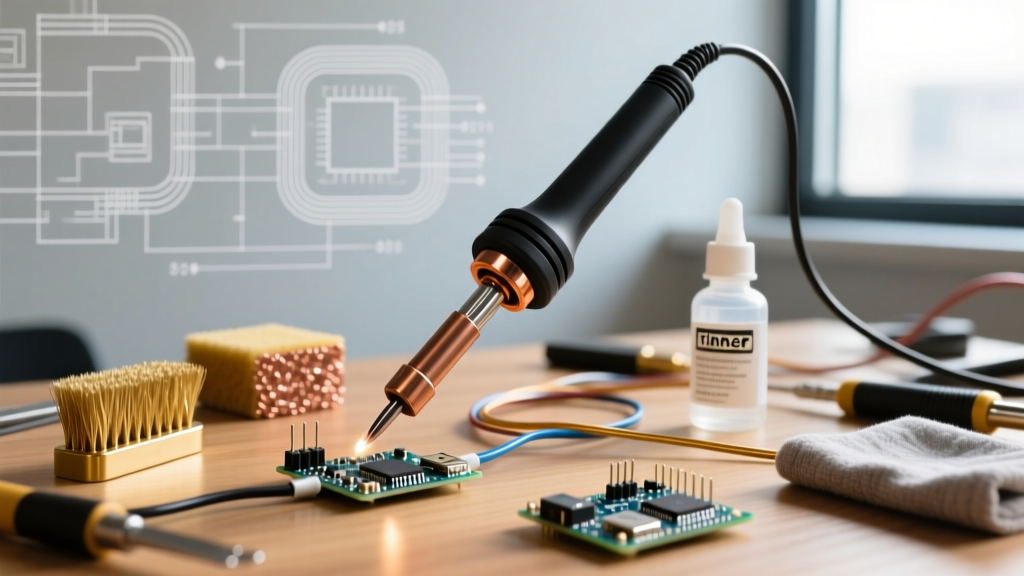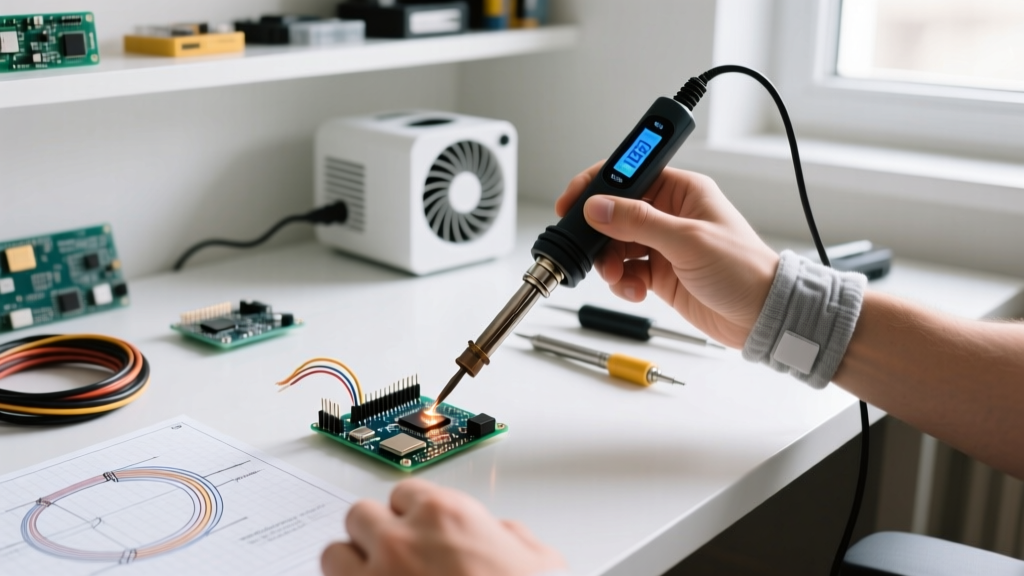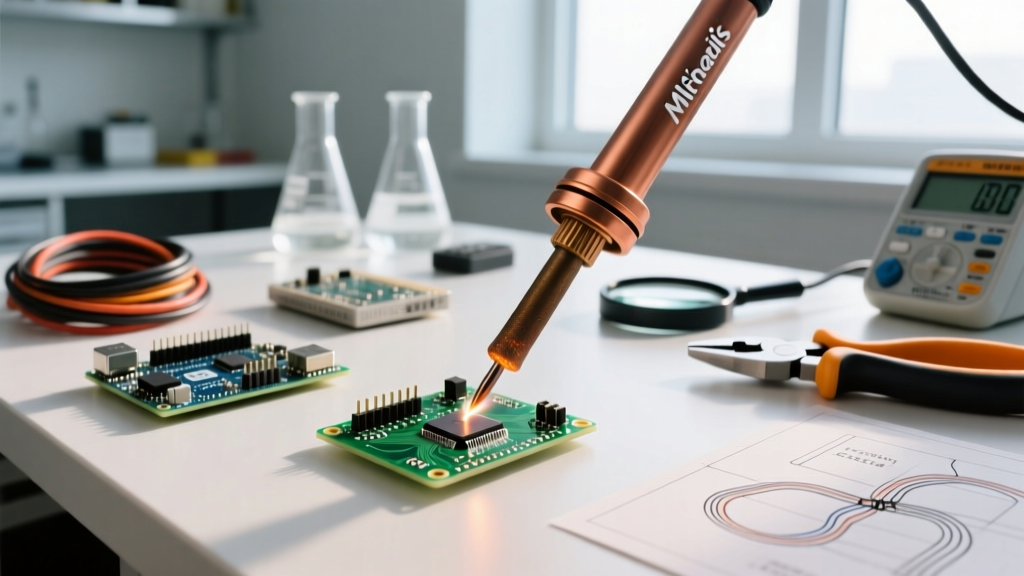

The Michaels Soldering Iron: Crafting Staple or Electronics Hazard?
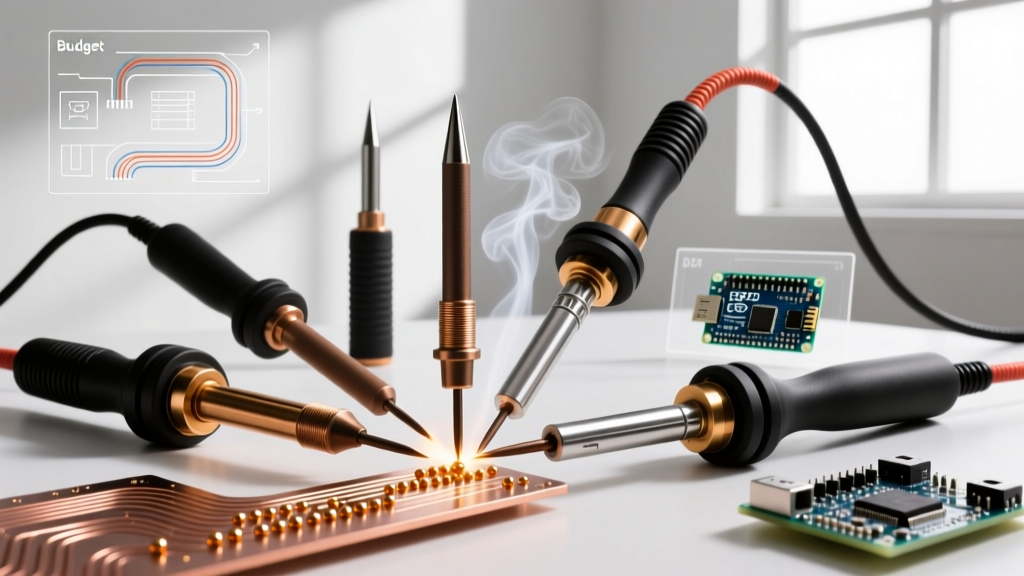
Walk into any Michaels craft store in 2026, and you will inevitably find a blister-packaged soldering iron in the jewelry or stained glass aisle. Usually branded under the store's proprietary labels like Make It Market or ArtMinds, the typical Michaels soldering iron retails between $14.99 and $24.99. For hobbyists building their first toolkit, the accessibility and low price point are incredibly tempting. But as any seasoned electrical engineer will tell you, a tool designed for fusing copper foil on a Tiffany lamp behaves very differently when applied to a multi-layer printed circuit board (PCB).
In this feature deep dive, we strip away the craft-store marketing to examine the thermal physics, tip metallurgy, and electrical safety of the Michaels soldering iron. We will determine exactly where this tool shines, where it fails, and whether it poses a lethal threat to your sensitive microcontrollers.
Hardware Teardown: Nichrome Elements and Thermal Mass
Unlike modern electronics-grade stations that utilize rapid-heating ceramic cores, the standard 40W to 60W Michaels craft iron relies on a traditional nichrome wire-wound heating element. This element is wrapped around a mica insulator, which in turn surrounds a solid copper or iron-plated copper tip.
The Physics of Slow Thermal Recovery
When you apply a 40W craft iron to a heavy ground plane on a PCB, the copper acts as a massive heat sink. The iron's tip temperature plummets. In a high-end station, a thermocouple detects this drop and the PID controller floods the ceramic heater with current, recovering the heat in under three seconds. The Michaels iron, however, relies on the slow thermal conduction through the mica insulator and the physical mass of the nichrome coil. Thermal recovery from a 10°C drop on a ground plane can take upwards of 45 seconds. This prolonged heat exposure is a primary cause of lifted pads and delaminated PCB traces.
Specification Matrix: Craft Iron vs. Electronics Standards
To understand the performance gap, we tested the baseline Michaels 40W craft iron against modern entry-level and professional electronics stations.
| Feature | Michaels 40W Craft Iron | Pinecil V2 (Entry Pro) | Hakko FX-888D (Bench Standard) |
|---|---|---|---|
| Heating Element | Nichrome Wound | Ceramic (RISC-V Controlled) | Ceramic (T18 Composite) |
| Thermal Recovery (10°C drop) | ~45 seconds | ~2.5 seconds | ~8 seconds |
| ESD Grounding | No (2-prong plug) | Yes (via DC ground) | Yes (3-prong grounded) |
| Temperature Control | Fixed / Bimetallic Dial | Digital PID (Sleep/Wake) | Digital PID |
| Typical 2026 Pricing | $14.99 - $24.99 | $26.00 | $110.00+ |
The Bimetallic Thermostat Illusion
Some higher-end craft irons sold at Michaels feature a built-in dial, claiming adjustable temperature control. It is vital to understand the engineering behind this dial. Unlike a digital PID controller that uses a thermocouple for real-time feedback, these dials typically control a simple bimetallic strip located near the heating element, not at the tip. When the strip heats up, it bends and breaks the circuit. This results in massive temperature hysteresis. The tip might be reading 400°F when the element cuts off, but by the time the strip cools and re-engages the power, the tip has plummeted to 250°F. This wild 150°F swing makes consistent wetting on delicate PCB pads virtually impossible, leading to the dreaded cold solder joint that looks dull and grainy.
The Hidden Danger: ESD and Stray Voltage
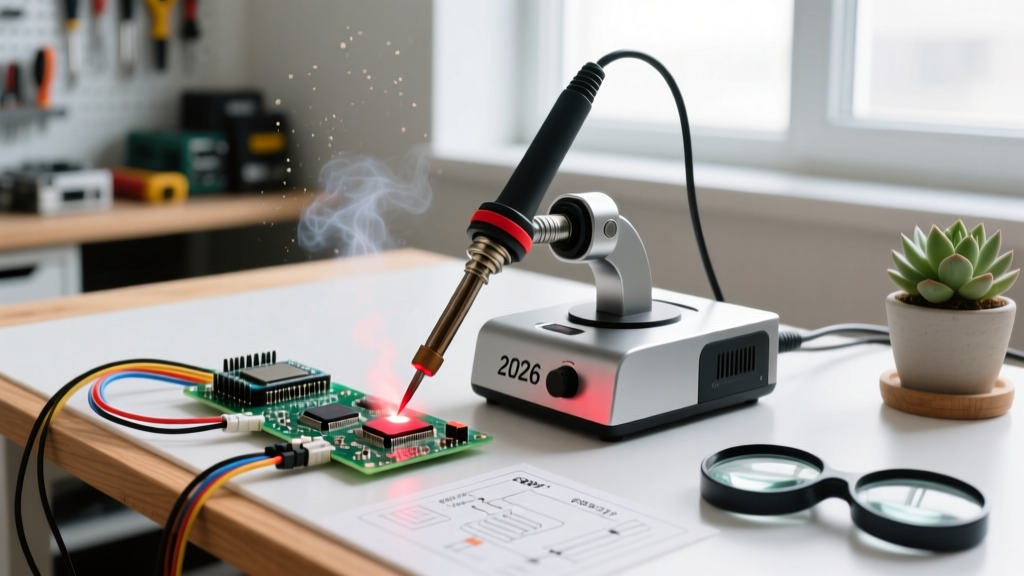
The most critical failure of the Michaels soldering iron for electronics work is not its slow heating—it is the lack of Electrostatic Discharge (ESD) safety. The iron utilizes a standard 2-prong ungrounded plug. According to the ESD Association, ungrounded tools can accumulate static charges or act as antennas for electromagnetic interference, transferring lethal voltage spikes directly into the gates of CMOS components.
If you are soldering a rugged through-hole resistor, this is irrelevant. If you are soldering an ESP32, a bare MOSFET, or a sensitive sensor module, the stray AC leakage from the ungrounded nichrome element can instantly destroy the silicon die. Professional environments mandate grounded tips to safely bleed off static, a feature entirely absent in craft aisle tools.
Tip Metallurgy and the Flux Chemistry Problem
Crafters and electronics engineers use fundamentally different chemical fluxes. Stained glass and jewelry makers rely on zinc chloride or oleic acid-based fluxes to clean heavy oxidation from copper foil. Electronics assemblers use rosin-based (RMA) or no-clean fluxes.
Galvanic Corrosion and Tip Pitting
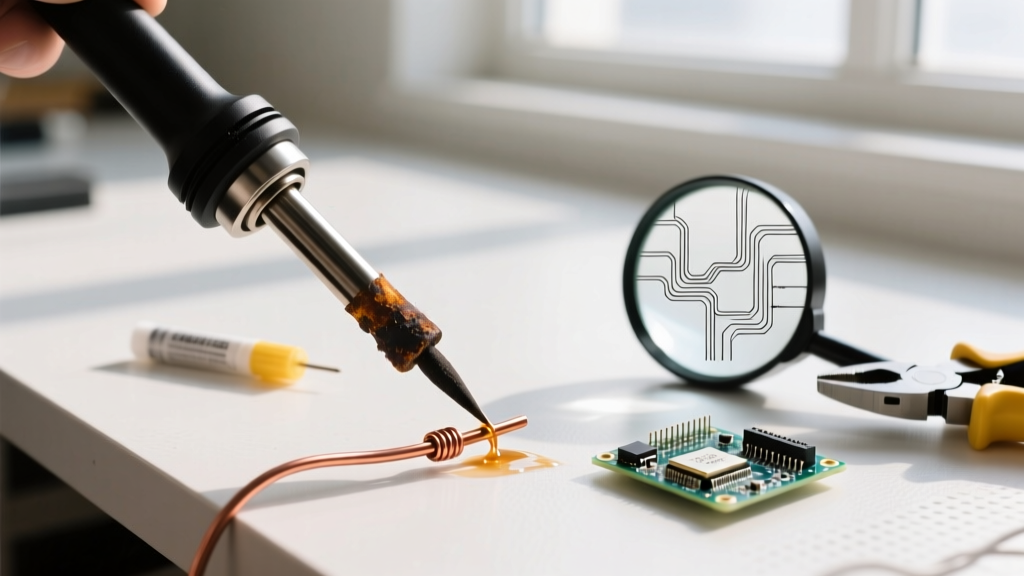
The tips included with the Michaels soldering iron are often basic solid copper or feature a very thin, low-grade iron plating. When exposed to the high temperatures required for stained glass (often exceeding 700°F / 370°C) and highly acidic craft fluxes, this plating rapidly degrades. As noted in Hakko's technical documentation on tip maintenance, once the iron plating is compromised, the underlying copper dissolves into the tin-lead or lead-free solder alloy, causing severe pitting and catastrophic failure of the tip's wetting ability.
Furthermore, replacement tips for Michaels-branded irons are notoriously difficult to source, often forcing users to buy entirely new units when the tip oxidizes beyond repair.
Where the Michaels Iron Actually Excels
Despite its severe limitations in PCB assembly, it would be unfair to label the Michaels soldering iron as pure e-waste. It has a specific, valid operational envelope:
- Stained Glass & Copper Foil: The heavy thermal mass of the solid copper tip is actually beneficial for running long, continuous beads of 60/40 solder along stained glass copper foil.
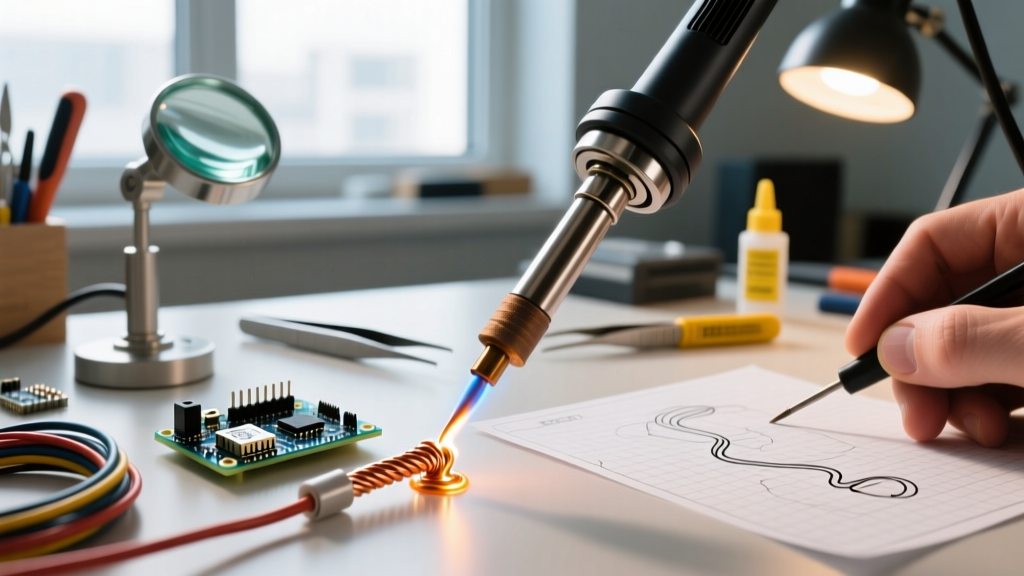
- Heavy Gauge Wire Tinning: For tinning 12AWG to 14AWG silicone wires for RC cars or automotive DIY, the 60W variants provide sufficient brute-force heat to melt thick rosin-core solder.
- Heat Shrink & Plastic Welding: With a modified tip (or an old, ruined one), the iron serves as an excellent makeshift hot knife for cutting synthetic webbing or sealing nylon ropes.
Adhering to Workmanship Standards
For those attempting to use the Michaels iron for actual electronics repair, achieving acceptable solder joints is an uphill battle. Industry benchmarks, such as those outlined by the NASA Electronic Parts and Packaging (NEPP) Program and IPC-A-610 standards, require precise thermal profiles to ensure proper intermetallic compound (IMC) formation without damaging the substrate. The unpredictable temperature swings and slow recovery of a craft iron frequently result in cold, grainy solder joints or heat-stressed component leads, failing basic visual inspection criteria.
Final Verdict: Keep It in the Craft Room
The Bottom Line: The Michaels soldering iron is a perfectly adequate thermal tool for stained glass, heavy wire tinning, and basic jewelry crafting. However, it is fundamentally unsuited for modern electronics assembly. The lack of ESD grounding, slow thermal recovery, and incompatible tip metallurgy make it a liability for PCB work. If your goal is to solder microcontrollers or surface-mount components, bypass the craft aisle and invest the extra $10 into a entry-level smart iron like the Pinecil.