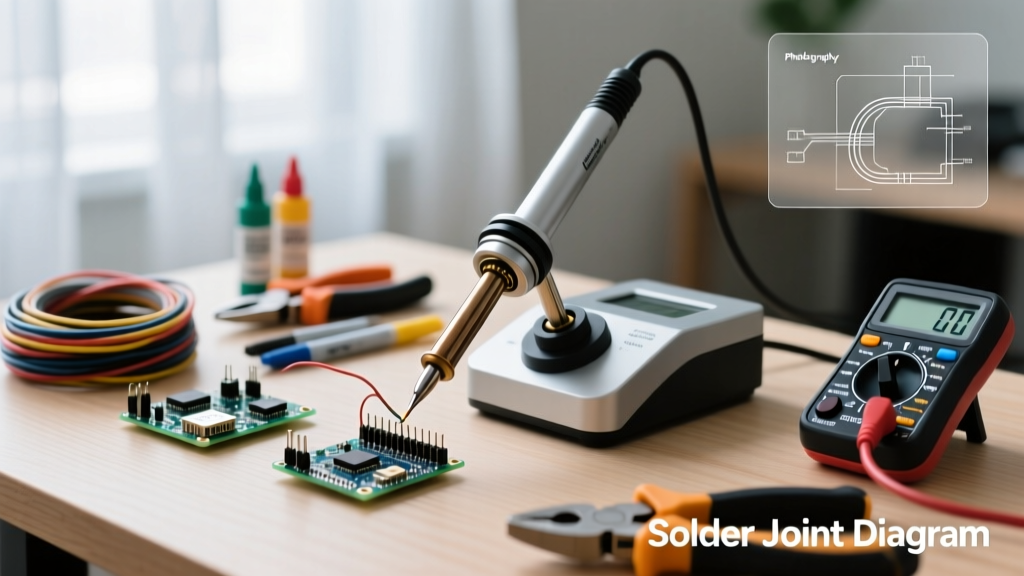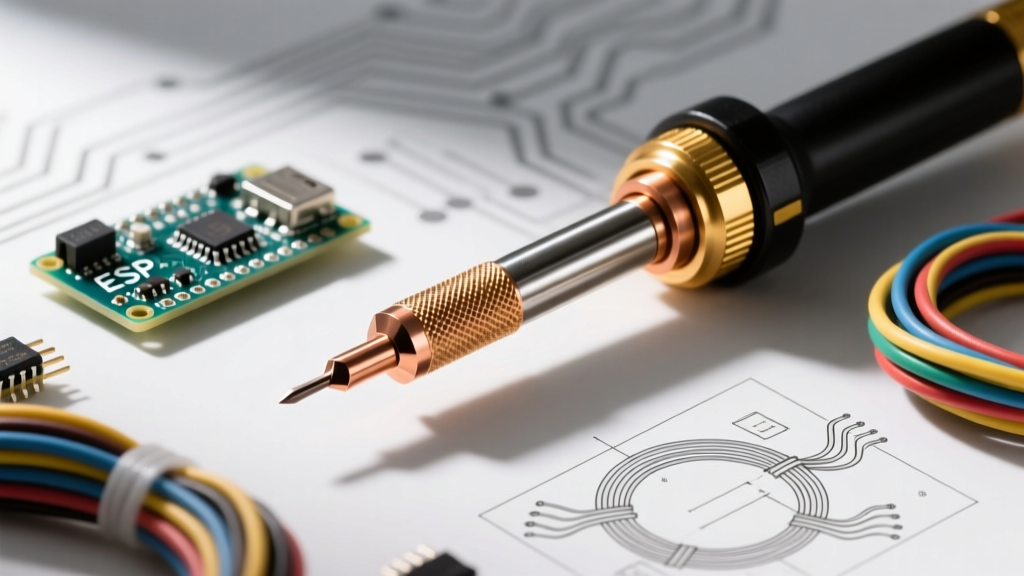

The Engineering Behind Soldering Iron Internal Tip Technology
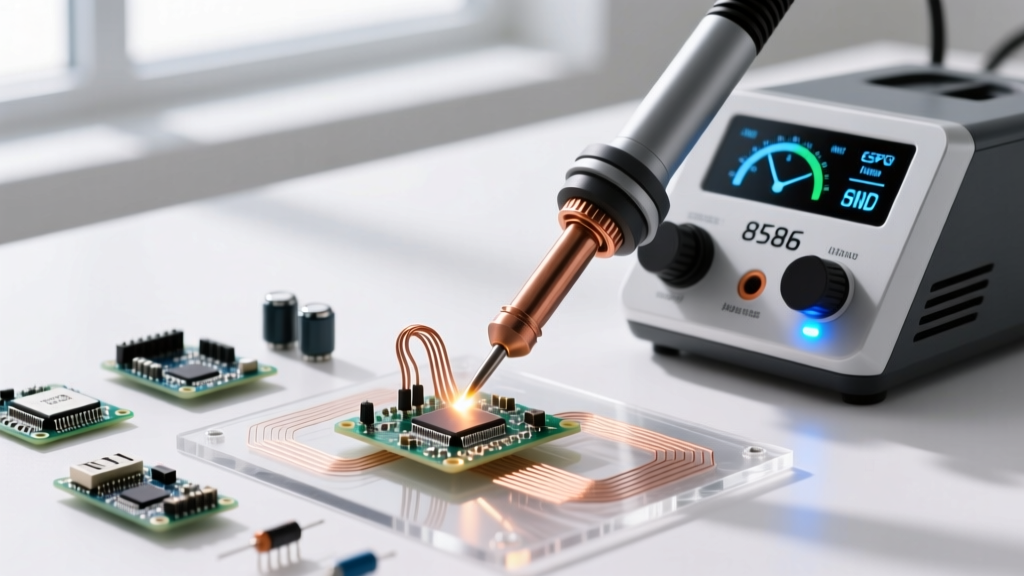
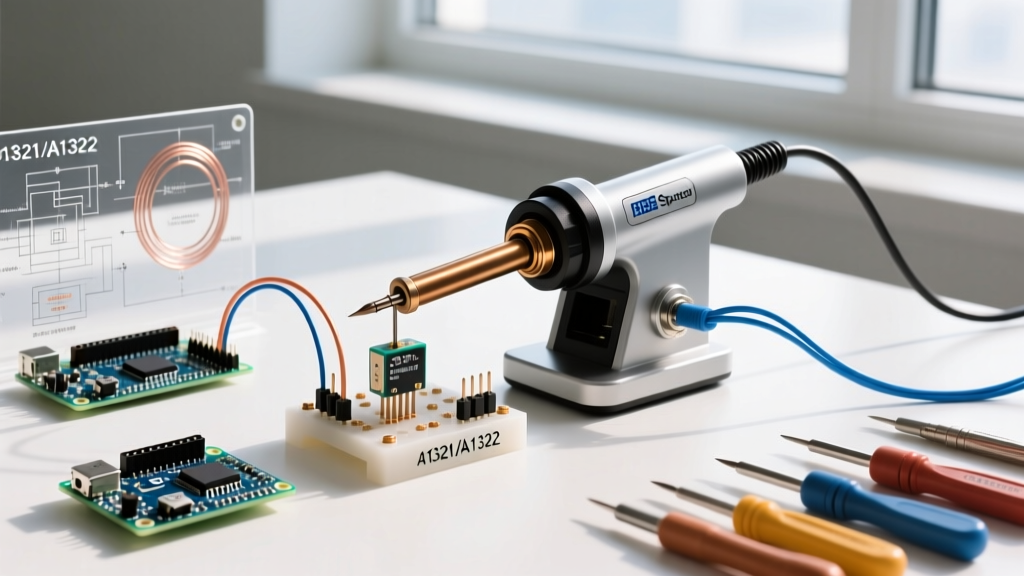
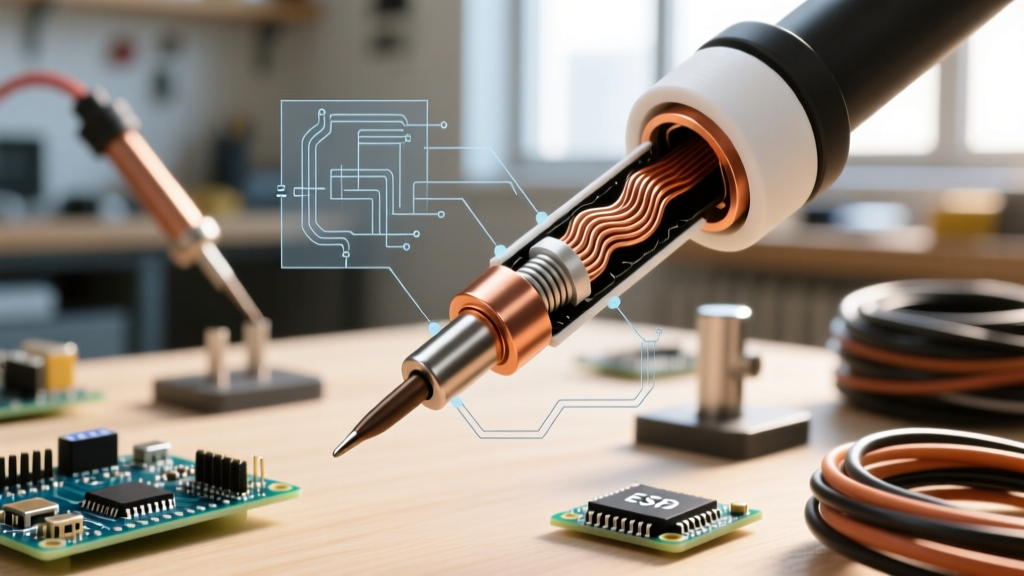
When precision electronics engineers and master technicians discuss a soldering iron internal tip, they are referring to cartridge-style soldering technology where the heating element and thermocouple are fully integrated inside the copper core of the tip itself. This architecture represents a massive leap forward from legacy external heating systems, fundamentally changing thermal recovery, power efficiency, and tip longevity.
In traditional external heating stations (such as the classic Hakko FX-888D utilizing T18 tips), a separate ceramic heating rod is inserted into the hollow back of the tip. This physical separation creates an unavoidable air gap. Because air is a poor thermal conductor, the station must run the ceramic element significantly hotter than the target tip temperature to push heat across that gap. By contrast, an internal cartridge tip embeds the Joule heating coil and the temperature sensor mere millimeters from the work surface, eliminating the air gap entirely.
Thermal Mass and Sensor Proximity
The defining characteristic of a premium soldering iron internal tip is sensor proximity. In a JBC C245 cartridge or a Hakko T15/T12 cartridge, the thermocouple is positioned approximately 2mm to 4mm from the very edge of the tip. When the tip touches a high-thermal-mass ground plane, the sensor detects the temperature drop almost instantaneously. The station's microcontroller then dumps high current into the internal heater, recovering the lost heat before the solder joint can cool below the liquidus threshold.
According to the IPC J-STD-001 requirements for soldered electrical and electronic assemblies, maintaining proper wetting and avoiding cold joints requires strict thermal management. Internal tip architectures excel here by providing high wattage density exactly where it is needed, preventing the thermal starvation that plagues external tip designs on multi-layer PCBs.
Comparative Analysis: Internal Cartridge vs. External Ceramic
To understand why upgrading to an internal heating system is the standard for professional workbenches in 2026, review the empirical data comparing the two architectures:
| Feature | External Tip (e.g., Hakko T18) | Internal Cartridge Tip (e.g., JBC C245, Hakko T12) |
|---|---|---|
| Heater Location | Ceramic rod inserted into tip | Integrated into tip copper core |
| Sensor Distance | ~15mm from work surface | ~2mm from work surface |
| Thermal Recovery | 15 - 25 seconds | 1 - 3 seconds |
| Idle Temperature Stability | Oscillates ±10°C | Holds ±1.5°C |
| Average Cost (2026) | $8 - $12 per tip | $35 - $55 per tip |
Three Critical Failure Modes of Internal Heater Tips
Despite their superior performance, internal cartridge tips are精密 (precision) instruments. Mishandling them will destroy the internal substrate. Here are the three most common failure modes observed in professional repair labs.
1. Thermal Shock Micro-Fractures
The most common way technicians destroy a soldering iron internal tip is by cleaning it on a wet cellulose sponge. When a 350°C copper cartridge touches a room-temperature wet sponge, the surface temperature drops by over 150°C in a fraction of a second. This rapid thermal contraction induces severe mechanical stress on the internal ceramic substrate housing the heater coil. Over time, this causes micro-fractures, leading to an open circuit and a dead tip. Always use dry brass wool (curly copper/brass shavings) to clean internal tips.
2. Galvanic Corrosion from Flux Halides
Modern no-clean and water-soluble fluxes contain activators (often halides or organic acids) designed to strip oxidation. If left on the tip, these chemicals will eat through the protective iron plating. Once the flux breaches the iron layer, it attacks the underlying copper core, creating pits and hollows. Because the heater is embedded inside this core, copper dissolution quickly ruins the tip's structural integrity.
3. Iron Plating Depletion (Dry Burning)
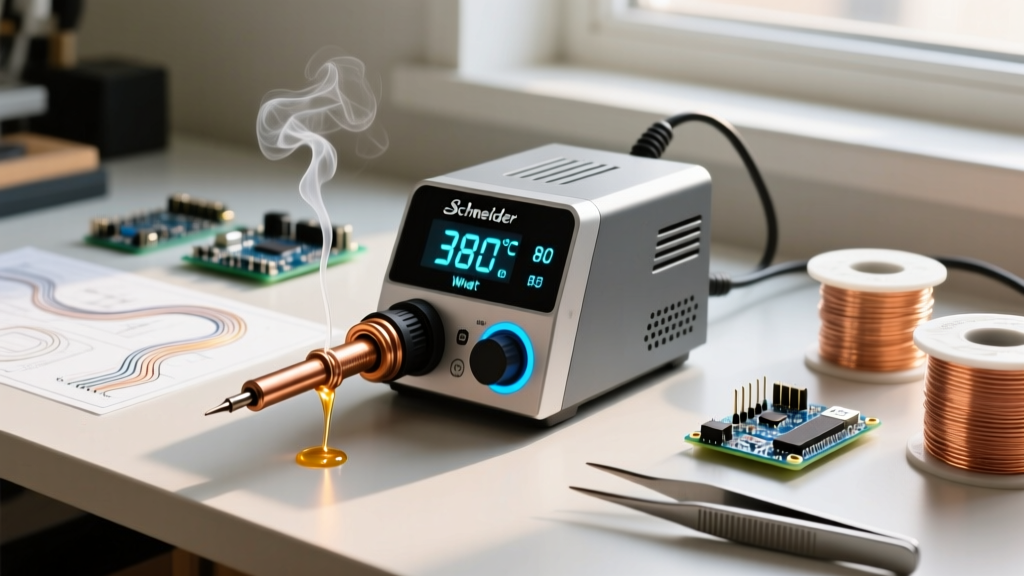
A soldering iron internal tip is plated with a layer of pure iron (typically 100 to 150 microns thick) to prevent the solder from dissolving the copper core. If you leave the station powered on at 380°C without a protective blob of solder, the iron rapidly oxidizes, forming a thick, black crust of iron oxide (Fe3O4). Solder will not wet to iron oxide. Attempting to scrape this oxidation off with a knife or abrasive file will permanently remove the iron plating, destroying the tip instantly.
Expert Warning: Never use a file, sandpaper, or stainless steel wool on an internal cartridge tip. The NASA Workmanship Standards explicitly mandate that soldering iron tips must be cleaned using non-abrasive methods and kept continuously tinned to preserve the microscopic iron plating layer.
The 2026 Expert Maintenance Protocol
To maximize the lifespan of your premium internal tips—which can cost upwards of $50 each for genuine JBC or Pace cartridges—implement this strict workbench protocol:
- Utilize Smart Sleep Modes: Never leave an internal tip idling at working temperature. Configure your station (e.g., JBC CD-2BQE or Hakko FX-951) to drop to standby (150°C - 180°C) after 5 minutes of inactivity, and auto-shutoff after 30 minutes.
- The 'Sacrificial Solder' Shutdown: Before powering down the station, melt a large bead of heavily fluxed 63/37 SnPb or SAC305 solder onto the working end of the tip. This creates an oxygen barrier that prevents oxidation while the tip cools down.
- Brass Wool Cleaning Technique: When wiping the tip during use, plunge it into brass wool at a 45-degree angle and twist gently. This removes carbonized flux without dropping the tip temperature drastically.
- Use Tip Tinner for Oxidation Recovery: If the tip develops a dull, grayish hue and solder refuses to wet, do not increase the temperature. Instead, dip the warm (250°C) tip into a pot of commercial tip tinner (a mixture of phosphoric acid and solder powder) for 3 seconds, then wipe on brass wool. This chemically reduces the oxidation and re-tins the surface simultaneously.
Cost-Benefit Breakdown: Production vs. Hobbyist Benches
Is the investment in an internal heating ecosystem worth it? The answer depends entirely on your throughput requirements and the thermal mass of your target assemblies.
- High-Volume Production & Heavy Ground Planes: If you are soldering 14AWG wires to thick copper pours or working with lead-free SAC305 alloys (which require higher liquidus temperatures of 217°C+), an internal tip system like the Pace ADS200 or JBC JNA is mandatory. The rapid thermal recovery prevents operators from lingering on joints, thereby reducing thermal damage to sensitive SMD components and increasing hourly yield.
- Prototyping & Micro-Soldering: For 0402 components and fine-pitch QFPs, the precise temperature stability (±1.5°C) of an internal tip prevents accidental bridging and pad lifting. The higher upfront cost of the cartridges ($35-$55) is offset by the reduction in scrapped PCBs and damaged ICs.
- Occasional Hobbyist Use: If you only solder through-hole kits or basic wire harnesses once a month, a $12 external tip on a budget station is perfectly adequate. The thermal lag will not negatively impact simple, low-mass joints.
Expert Troubleshooting FAQ
Why does my brand new internal cartridge tip show a 'Sensor Error'?
Internal tips rely on electrical contacts at the base of the cartridge to communicate with the handpiece. If you inserted the tip while the station was powered on, or if the handpiece connector is dirty, the station may fail to read the internal thermocouple. Power down the station completely, remove the tip, wipe the gold contacts on the cartridge base with isopropyl alcohol (IPA), reseat it firmly, and power the station back on.
Can I use third-party clone tips in my premium internal station?
While the market is flooded with $4 clone T12 and C245 cartridges, they often suffer from poor internal potting and inaccurate thermocouple calibration. A clone tip might read 320°C on the display while the actual working end is sitting at 380°C, leading to rapid tip degradation and damaged PCB pads. For mission-critical work, always verify the IPC-A-610 acceptability standards by using genuine OEM cartridges to ensure true thermal accuracy.
What is the best solder alloy for tinning internal tips?
For pure tip maintenance, traditional 63/37 Tin-Lead (SnPb) eutectic solder is superior because it melts at a lower temperature (183°C) and flows beautifully, providing an excellent oxidation barrier. However, if your facility is strictly RoHS compliant and lead-free only, use a SAC305 (Tin/Silver/Copper) alloy with a high-activity rosin flux core to ensure proper wetting on the iron plating.