
The Shift to Integrated Rework Benches in 2026
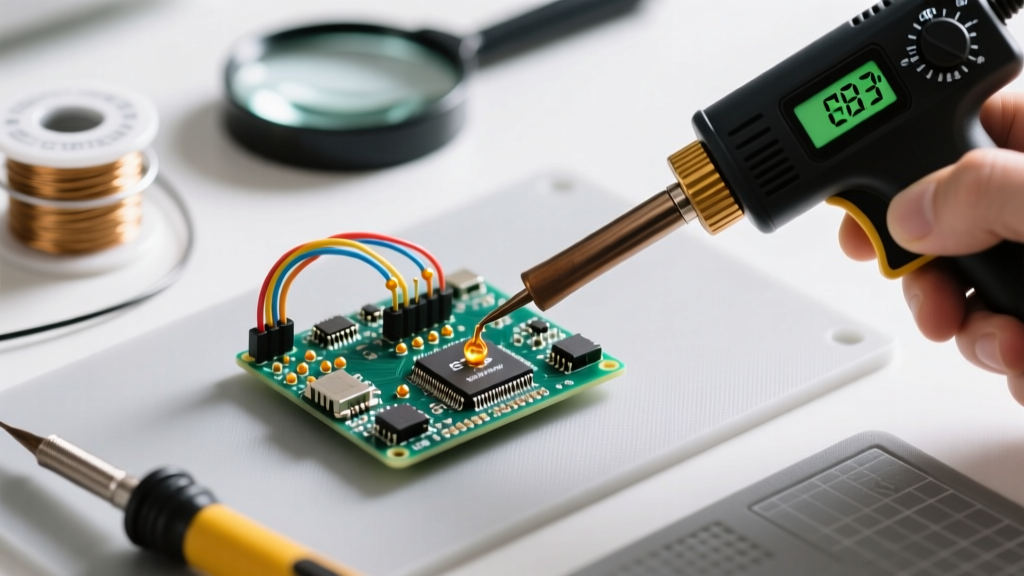
As surface-mount device (SMD) miniaturization pushes into the 01005 and 008004 imperial component era, the modern electronics workbench demands more than just a basic conductive heater. Evaluating a combined soldering iron and hot air rework station is no longer a luxury for hobbyists; it is a strict requirement for professionals tackling BGA reballing, QFN reflow, and precision microsoldering. In 2026, integrated 2-in-1 chassis designs dominate the market, offering shared ESD grounding planes, unified power transformers, and significant bench space conservation.
However, not all combo units are engineered equally. The thermal recovery rates, brushless fan longevity, and cartridge compatibility vary wildly across price tiers. This guide dissects the top three soldering iron and hot air station combos currently available, analyzing their real-world failure modes, tip ecosystems, and compliance with industry standards.
Head-to-Head Comparison Matrix
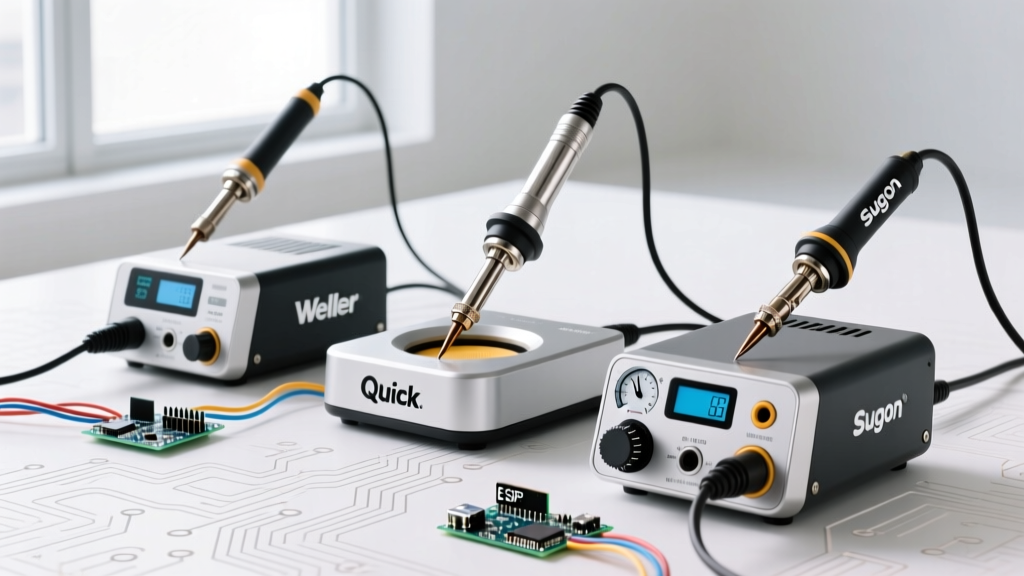
| Model | Iron Wattage / Type | Hot Air Wattage / Flow | Temp Stability (±) | 2026 Street Price |
|---|---|---|---|---|
| Weller WXD2020N | 200W (WX1 Pen) | 200W / 20 L/min | ± 1.5°C | $1,180 - $1,250 |
| Quick 957DW+ | 130W (Ceramic Core) | 500W / 120 L/min | ± 2.0°C | $210 - $240 |
| Sugon 8620DX | 120W (JBC C245 Clone) | 800W / 100 L/min | ± 1.0°C | $320 - $360 |
Deep-Dive Reviews: The Top Contenders
1. Weller WXD2020N: The Professional Microsoldering Powerhouse
The Weller WXD2020N remains the gold standard for high-reliability repair labs and aerospace manufacturing environments. Unlike traditional combo units that use a standard wand for hot air, the WXD2020N utilizes the WXHAP 200 hot air iron—a pen-style tool that offers unparalleled precision for localized reflow without disturbing adjacent components.
Technical Strengths & Ecosystem
- Tip Ecosystem: The WX1 soldering pen accepts the Weller RT series. These micro-tips feature integrated heating elements and thermocouples at the very apex of the tip, ensuring near-instantaneous thermal feedback.
- Power Management: The WXD2M base station dynamically allocates its 255W total capacity. If the hot air iron is active, it intelligently throttles the soldering pen to prevent transformer overload.
- Ergonomics: The pen-style hot air tool reduces hand fatigue during extended 45-minute BGA reflow profiles compared to bulky traditional wands.
Known Failure Modes
The primary vulnerability of the WXD2020N is the WXHAP 200 heating element. Because the heating core is situated extremely close to the nozzle tip, dropping the pen on a hard surface can fracture the internal ceramic housing, leading to an open-circuit error (Error Code E04). Replacement heating cores cost upwards of $180, making careful tool handling mandatory.
2. Quick 957DW+: The Mid-Range Workhorse
For independent repair shops and advanced hobbyists, the Quick 957DW+ offers an unbeatable balance of performance and affordability. Quick has dominated the mid-tier space for over a decade, and the 957DW+ iteration refines their digital brushless motor technology.
Technical Strengths & Ecosystem
- Airflow Dynamics: The brushless diaphragm pump generates up to 120 L/min of airflow. Crucially, it operates at a significantly lower decibel level than older vibrating piston pumps, reducing bench noise pollution.
- Thermal Capacity: The 500W hot air heater core can sustain 380°C at the nozzle tip even at high airflow rates, which is critical for reflowing large ground-plane connectors on multi-layer PCBs.
- Auto-Sleep Safety: The hot air wand features a magnetic reed switch. Placing the wand in the cradle instantly cuts power to the heating element while keeping the fan running at 15% to cool the core, extending heater lifespan.
Known Failure Modes
The most common issue with the 957DW+ is the degradation of the wand's internal PTFE air tube. Over years of exposure to 350°C+ heat, the Teflon tubing can become brittle and crack near the handle junction, resulting in a loss of air pressure. Fortunately, this is a $5 DIY fix requiring only a replacement tube and a small flathead screwdriver.
3. Sugon 8620DX: The High-Performance Value Contender
The Sugon 8620DX has disrupted the market by offering JBC-style cartridge technology at a fraction of the cost of Spanish-made originals. It is heavily favored by the right-to-repair community and mobile device microsoldering technicians.
Technical Strengths & Ecosystem
- Cartridge Technology: The soldering handle uses C245-compatible cartridges. The heater, sensor, and tip are a single integrated unit, achieving a cold-to-350°C heat-up time of just 2.2 seconds.
- Hot Air Calibration: The 8620DX features a digital closed-loop airflow sensor. If you attach a narrow 3mm nozzle, the station automatically detects the backpressure and adjusts the pump RPM to maintain the user-defined volumetric flow rate.
- Channel Independence: Unlike the Weller, the Sugon utilizes separate internal power circuits for the iron and the hot air, ensuring zero thermal throttling when both tools are used simultaneously.
Known Failure Modes
While the station itself is robust, the third-party C245 clone tips vary wildly in quality. Cheap batches often suffer from poor thermocouple calibration, leading to a 15°C offset between the display and the actual tip temperature. Technicians must verify tip temperatures using a dedicated soldering tip thermometer (e.g., Hakko FG-100B) upon purchasing new cartridge batches.
Critical Bench Standards: ESD and Fume Management
When operating a combined soldering iron and hot air unit, environmental and safety compliance cannot be overlooked. The high-velocity airflow from rework stations aerosolizes flux chemicals far more aggressively than standard conduction soldering.
Expert Insight: According to the ESD Association, maintaining a continuous common-point ground is vital when handling Class 0 ESD-sensitive components. Ensure your combo station's grounding lug is bonded to your bench mat with a 1-megohm current-limiting resistor to prevent catastrophic gate oxide rupture in MOSFETs.
Furthermore, hot air rework generates significant colophony and synthetic resin fumes. The OSHA Permissible Exposure Limits (PEL) strictly regulate airborne contaminants in the workspace. A 2-in-1 station's aggressive airflow mandates the use of a localized HEPA/Activated Carbon fume extractor positioned within 6 inches of the rework zone to capture aerosolized flux before it reaches the operator's breathing zone.
Real-World Troubleshooting: Combo Station Pitfalls
Even premium stations experience operational anomalies. Here is a structured diagnostic flow for the most common combo station issues encountered in 2026:
Diagnostic 1: Hot Air Component 'Blow-Off'
Symptom: Small 0402 resistors and SOT-23 transistors are physically blown off the PCB pad before the solder reaches liquidus.
- Check Airflow vs. Temperature: You are likely using excessive airflow (e.g., 80 L/min) at a low temperature (280°C), forcing you to hold the wand too close for too long.
- Adjust Profile: Increase temperature to 360°C and drop airflow to 30 L/min. This allows the thermal mass of the component to reach reflow temperature via radiant and convective heat before the kinetic force of the air exceeds the surface tension of the molten solder.
- Use Flux: Apply high-tack, no-clean gel flux. The viscosity of the unheated flux acts as a temporary mechanical adhesive, holding the component in place during the initial heating phase.
Diagnostic 2: Soldering Iron Thermal Lag on Ground Planes
Symptom: The station reads 380°C, but the solder refuses to flow on multi-layer board ground vias.
- Verify Tip Mass: You are likely using a micro-pencil tip (e.g., RT1) which lacks the thermal mass to overcome the heat dissipation of a 4-layer PCB ground plane.
- Switch Geometry: Swap to a chisel or bevel tip (e.g., RT4 or RT7). The increased surface area maximizes conductive heat transfer.
- Preheat the PCB: If the station supports an auxiliary preheater port, or if you have a separate IR preheater, elevate the ambient board temperature to 120°C. This reduces the thermal delta the soldering iron must overcome, strictly aligning with the thermal profiling guidelines outlined in IPC J-STD-001 for high-mass assemblies.
Expert Verdict: Which Combo Should You Buy?
The decision ultimately hinges on your specific repair volume and component scale. If your daily workflow involves aerospace, medical devices, or high-end server boards where absolute temperature logging and ESD compliance are audited, the Weller WXD2020N is a non-negotiable capital investment. Its pen-style hot air tool is a masterclass in ergonomic precision.
For the bustling independent repair shop handling everything from smartphone FPC connectors to laptop DC jack replacements, the Sugon 8620DX provides the rapid thermal recovery of JBC cartridges without the exorbitant consumable costs. Finally, the Quick 957DW+ remains the undisputed champion for general-purpose through-hole and standard SMD rework, offering bulletproof reliability on a strict budget. Choose the platform that aligns with your most demanding thermal challenges, and invest heavily in high-quality flux and localized extraction to protect both your boards and your lungs.