
The Thermal Mass Dilemma: Defining the Copper Soldering Iron in 2026
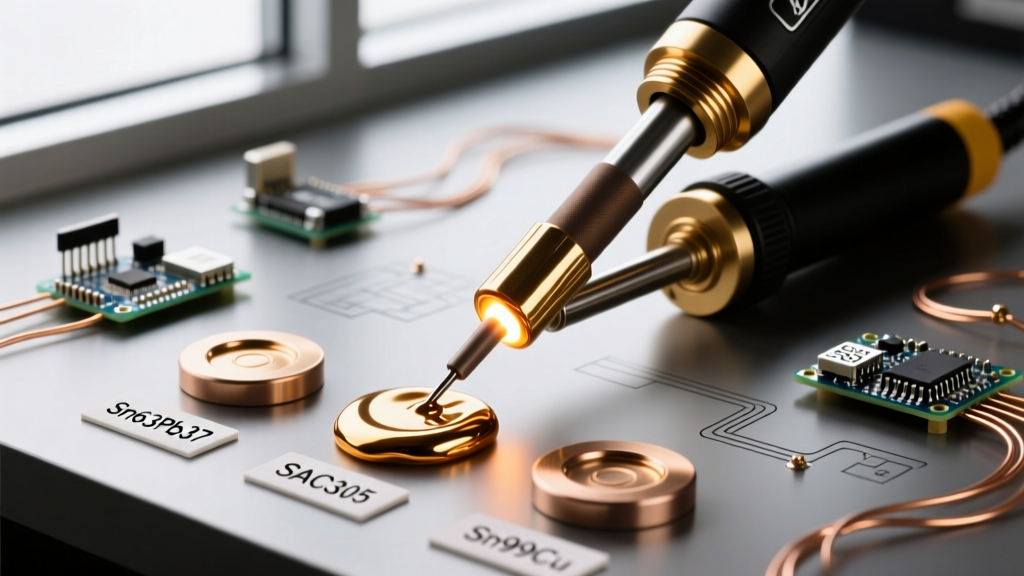
When professionals and advanced DIYers search for a copper soldering iron, they are usually trying to solve a specific physics problem: thermal droop. Whether you are soldering 8 AWG automotive wire, 1/2-inch copper plumbing pipes, or heavy stained glass foils, high-thermal-mass joints act as massive heat sinks. If your tool cannot deliver and sustain heat, the solder alloy (especially modern lead-free SAC305, which melts at 217°C) will freeze prematurely, resulting in catastrophic cold joints.
However, the terminology in 2026 can be highly misleading. A 'copper soldering iron' historically referred to traditional, solid-copper-core irons heated by external elements or heavy internal resistance wires. Today, the market is dominated by advanced ceramic-core stations that utilize massive, iron-plated copper tips. Understanding the metallurgical and electrical differences between these two architectures is critical for selecting the right tool for high-demand applications.
2026 Heavy-Duty Tool Comparison Matrix
Below is a direct comparison of the three dominant architectures for heavy thermal mass soldering available on the market this year.
| Feature | American Beauty 3158 (Solid Copper) | Hakko FX-601 (Ceramic + Heavy Copper Tip) | Weller WSP80 (Ceramic + Active Sensor) |
|---|---|---|---|
| Core Architecture | Solid machined copper | Ceramic heater with T19 copper-core tip | Ceramic heater with integrated thermocouple |
| Wattage Output | 250W (Continuous) | 50W - 72W (Dynamic) | 80W (Dynamic) |
| Thermal Recovery (350°C to 250°C drop) | Slow (Relies on pure mass, ~18s) | Fast (Sensor-driven, ~4s) | Ultra-Fast (Active feedback, ~2.5s) |
| 2026 Street Price | $135 - $150 | $80 - $95 | $115 - $130 |
| Oxidation Resistance | Poor (Requires constant tinning) | Excellent (Iron-plated tip) | Excellent (Iron-plated tip) |
| Best Application | Stained glass, heavy plumbing | Automotive wire, RC batteries, PCB ground planes | Multi-layer PCBs, aerospace wiring |
Deep Dive: Traditional Solid Copper Soldering Irons
The Old Guard: American Beauty and Wahl
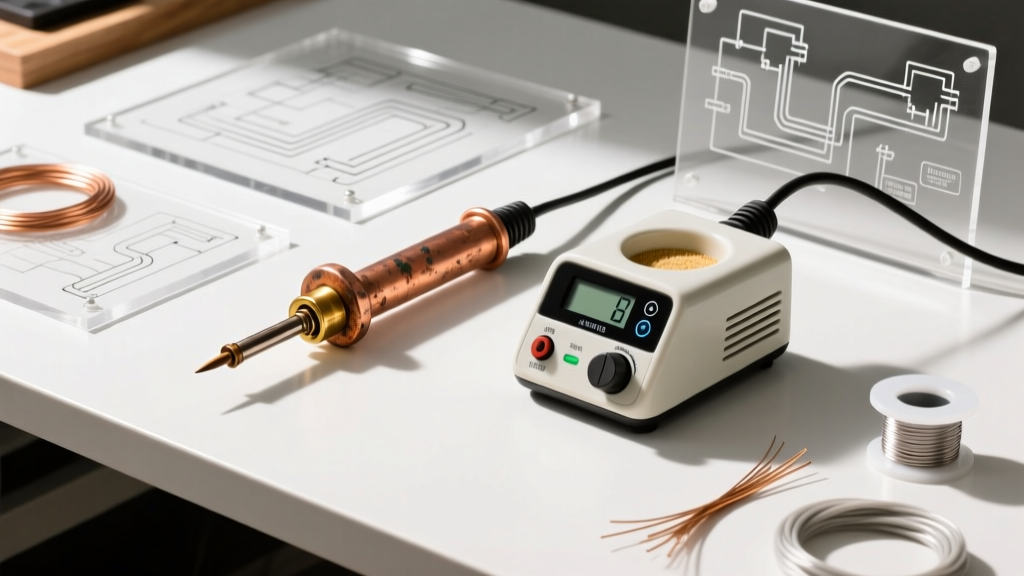
Traditional heavy-duty irons, such as the American Beauty 3158-00 or the classic Wahl industrial models, utilize a massive, solid piece of machined copper as the tip and core. The heating element is wrapped around the base of this copper block. The primary advantage here is raw, unadulterated thermal mass. A solid copper tip weighing 200+ grams can store an immense amount of thermal energy. When you touch it to a thick copper pipe or a heavy gauge wire lug, the stored heat transfers immediately, preventing the temperature at the joint interface from dropping below the liquidus line of the solder.
The Drawbacks: Pure copper dissolves rapidly into molten solder (a process known as leaching or pitting). To combat this, these irons require aggressive, continuous maintenance. If you leave a solid copper tip untinned for even five minutes at 400°C, it will oxidize, turning black and completely refusing to transfer heat. Furthermore, because they lack modern closed-loop temperature sensors, they can easily overheat when idle, burning flux and accelerating tip degradation.
Deep Dive: Modern Ceramic Stations with Heavy Copper Tips
The Modern Standard: Hakko FX-601 and Weller WSP80
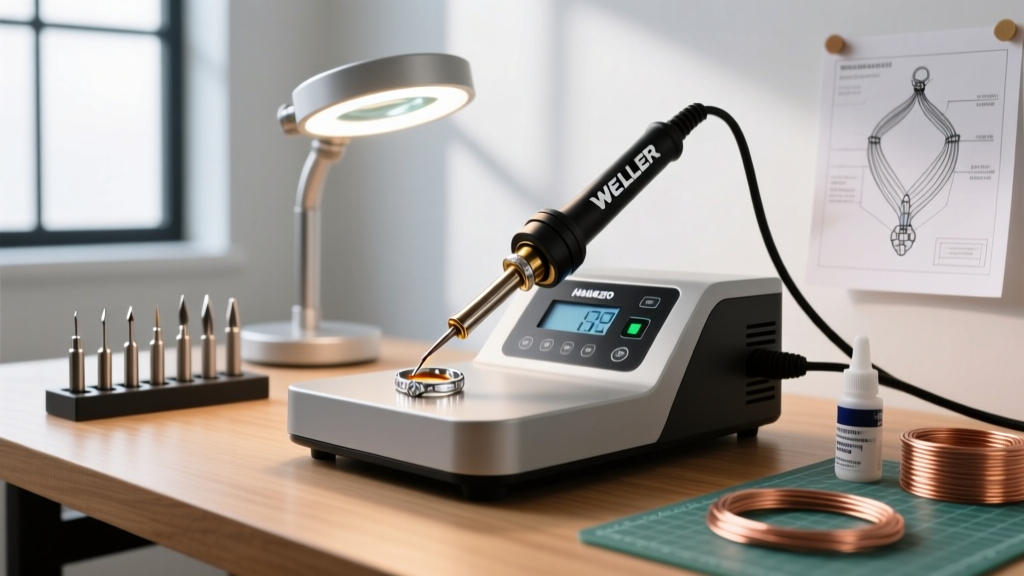
In 2026, the industry standard for high-thermal-mass work relies on a hybrid approach: a low-mass, high-efficiency ceramic heating element paired with a tip that features a massive internal copper core, encased in a protective iron plating.
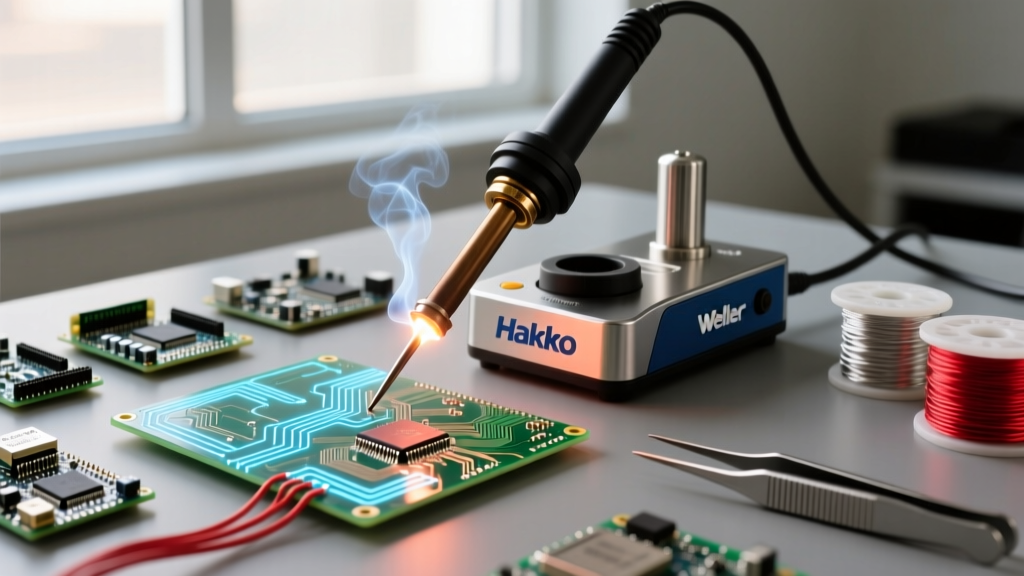
The Hakko FX-601 is the undisputed king of this category for independent technicians. While rated nominally at 50W, its ceramic heater and specialized T19-D24 or T19-D32 tips (which feature a thick copper core extending deep into the heating zone) allow it to punch far above its weight class. The integrated thermistor sits millimeters from the tip surface, detecting thermal droop instantly and driving the ceramic element to a 72W peak to recover the heat.
The Weller WSP80 (often paired with the WE1010NA station) takes this a step further. Its RT30 tip architecture places the heater, sensor, and copper core in a single unified cartridge. This eliminates the thermal lag caused by air gaps between the heater and the tip, resulting in near-instantaneous thermal recovery that easily handles 10 AWG wire and heavy ground planes without exceeding safe dwell times.
Expert Insight: According to the IPC-J-STD-001 standard for soldered electrical assemblies, excessive dwell time on a joint can cause insulation meltback and pad lifting. Modern ceramic-copper hybrids allow technicians to complete high-mass joints in under 3 seconds, maintaining IPC Class 3 compliance, whereas solid copper irons often require 5-8 seconds of dwell time to achieve proper wetting.
The Metallurgy of Thermal Transfer and Failure Modes
To understand why tip construction matters, we must look at the specific heat capacity and thermal conductivity of the materials involved. Copper has a thermal conductivity of roughly 400 W/(m·K), making it one of the best heat transfer metals available. However, pure copper is highly susceptible to flux corrosion and solder leaching.
Common Failure Modes in Heavy-Duty Soldering
- Iron Layer Dissolution: On modern iron-plated copper tips, using highly active (RA or water-soluble) fluxes at temperatures above 400°C will eat through the microscopic iron layer. Once the iron is breached, the underlying copper core will pit and dissolve within hours, ruining a $15 tip. Always use RMA (Rosin Mildly Activated) or no-clean fluxes for high-temperature heavy copper work.
- Thermal Shock Cracking: Solid copper tips are prone to micro-fractures if quenched in wet sponges. In 2026, the universal best practice—endorsed by Hakko Tip Maintenance Guidelines—is to use brass wool (curly brass shavings) for cleaning. Brass is softer than the iron plating and does not drop the tip temperature drastically, preventing thermal shock.
- Heater Oxidation (Solid Copper Models): On traditional irons, the air gap between the heating element and the copper core can accumulate oxidation scale over time. This acts as a thermal insulator, causing the iron to draw maximum wattage while the tip remains stubbornly cool. Periodic disassembly and application of high-temperature thermal paste (like those used in CPU cooling, rated for 400°C) is required.
Decision Framework: Which Architecture Should You Buy?
Choosing the right copper soldering iron configuration depends entirely on your specific workflow, budget, and the materials you are joining.
Scenario A: Stained Glass and Artistic Copper Foil
Winner: Traditional Solid Copper (e.g., American Beauty 100W-250W).
Why: Stained glass artists use massive 60/40 tin/lead solder beads that require continuous, rolling heat along long seams. The slow thermal recovery of a solid copper iron is actually a benefit here, as it prevents the artisan from accidentally melting through the delicate copper foil tape. The sheer thermal mass keeps the solder flowing like liquid glass.
Scenario B: Automotive Wiring, RC Batteries, and Drones
Winner: Ceramic Core with Heavy Copper Tips (e.g., Hakko FX-601).
Why: When soldering XT90 connectors, 12 AWG silicone wire, or automotive ground lugs, you need rapid heat injection and immediate shut-off to prevent melting the surrounding PVC or silicone insulation. The FX-601 with a T19-D24 chisel tip delivers a massive spike of heat via its copper core, melts the SAC305 or 63/37 solder instantly, and the ceramic sensor cuts the power before the heat wicks too far down the wire.
Scenario C: Heavy Industrial and Plumbing
Winner: Propane Torch or High-Wattage Solid Copper.
Why: For 1/2-inch or 3/4-inch copper water pipes, even a 250W electric iron is often insufficient for 50/50 tin/zinc plumbing solder. Most plumbers rely on MAP gas torches. However, for specialized electronics plumbing (like heavy busbars in solar installations), a 250W solid copper iron with a custom concave tip is necessary to wrap the heat around the cylindrical joint.
Maintenance Protocols for High-Mass Copper Tips
Regardless of whether you choose a solid copper core or an iron-plated copper core, heavy-duty soldering demands strict maintenance to ensure longevity. Follow these Weller Soldering Knowledge protocols to maximize your investment:
- The 'Always Tinned' Rule: Never power down your station without applying a thick layer of sacrificial solder (preferably a cheap 63/37 leaded alloy, even if you work lead-free) to the tip. This layer takes the brunt of the oxidation while the tool cools.
- Temperature Discipline: Do not exceed 380°C (716°F) unless absolutely necessary. For every 10°C increase above 350°C, the oxidation rate of the tip doubles, and the iron plating degrades exponentially.
- Flux Selection: Avoid water-soluble (OA) fluxes on high-mass tips. The aggressive activators will strip the protective layers. Stick to high-quality rosin-based gels or liquid fluxes designed for heavy thermal joints.
Final Verdict
The term copper soldering iron encompasses a wide spectrum of tools in 2026. If your work involves continuous, long-bead soldering on non-electronic materials like stained glass, the raw thermal mass of a traditional solid copper iron remains unbeatable. However, for 95% of modern electrical, automotive, and heavy-PCB applications, a high-wattage ceramic station equipped with a thick, iron-plated copper core tip (like the Hakko FX-601 or Weller WSP80) is the superior choice. It provides the necessary thermal mass to overcome heavy heat sinks while utilizing modern sensor technology to protect your components, your wire insulation, and your wallet from the costs of premature tip failure.