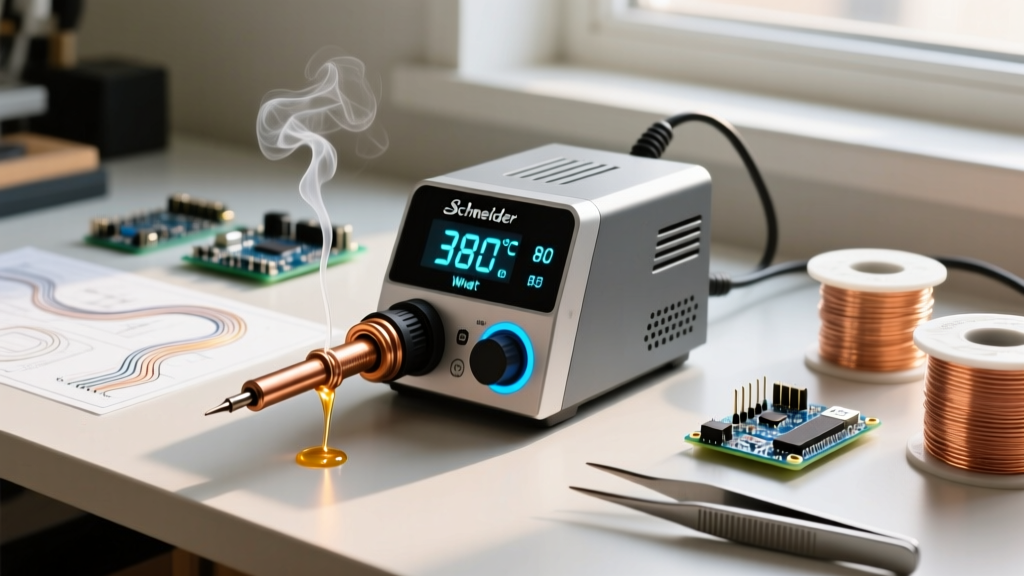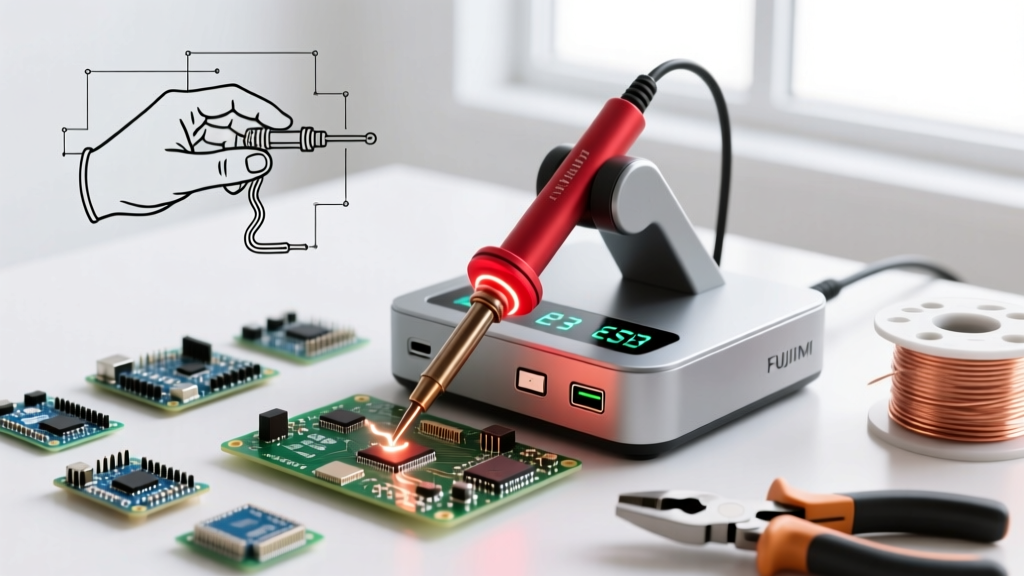

The 2026 Soldering Iron Landscape: What Actually Matters?
If you are still using a cheap, dial-adjusted 60W pencil iron from a decade ago, you are fighting a losing battle against thermal drop-off and oxidized tips. The soldering iron market has undergone a massive shift by 2026. The rise of USB-C Power Delivery (PD 3.1) protocols and RISC-V microcontrollers has turned $30 portable irons into precision instruments that rival $200 benchtop stations. Meanwhile, legacy benchtop manufacturers have refined their digital thermal recovery algorithms to handle the high-thermal-mass demands of modern multi-layer PCBs and heavy-gauge automotive wiring.
Whether you are reworking 0402 SMD components, building custom mechanical keyboards, or soldering 10 AWG silicone wires for drone builds, choosing the right tool is about understanding thermal mass versus raw wattage. In this guide, we break down the best soldering irons for 2026, complete with real-world thermal recovery metrics, tip pricing, and edge-case failure modes.
Top 3 Soldering Irons Reviewed for 2026
1. Pinecil V2: The USB-C PD Powerhouse (Best Portable)
The Pinecil V2 completely disrupted the market, and in 2026, it remains the undisputed king of portable soldering. Powered by a Bouffalo Lab BL706 RISC-V MCU, it negotiates up to 65W via USB-C PD. If you plug it into a standard 18W phone brick, it acts like a weak 18W iron. Plug it into a 100W GaN laptop charger, and it hits 320°C in roughly 8 seconds.
- Price: $26 - $32 (Base unit, tips sold separately)
- Thermal Recovery: Exceptional for SMD; struggles slightly with large ground planes unless paired with a 100W+ PSU.
- Standout Feature: BLE (Bluetooth Low Energy) support allows you to monitor tip temperature and calibrate tip resistance via a smartphone app, ensuring the thermocouple readings are perfectly accurate.
- Edge Case: Using non-PD QC 3.0 chargers will limit the voltage to 12V/24W. Always verify your power brick supports the PD 20V/3.25A profile.
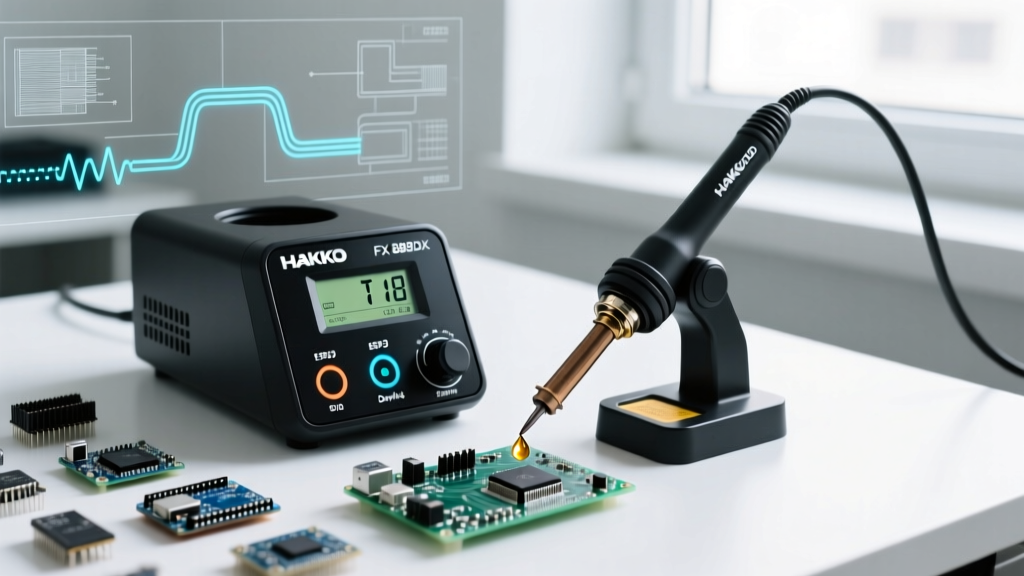
2. Hakko FX-888D: The Industry Standard Benchtop (Best Mid-Range)
The Hakko FX-888D has been a staple on workbenches for years, and its 2026 production runs continue to offer unmatched reliability for the price. It delivers 70W to the T18 tip series. While it lacks the flashy OLED screens of modern portables, its heavy-duty transformer and robust analog-to-digital thermal feedback loop make it a workhorse for continuous through-hole soldering.
- Price: $105 - $125
- Thermal Recovery: ~20 seconds to 350°C. Excellent thermal retention on mid-sized pads.
- Standout Feature: The CH1/CH2 digital preset buttons allow you to instantly switch between 300°C for delicate SMD work and 380°C for heavy wire tinning without fumbling with menus.
- Edge Case: The T18-B (conical) tip is largely useless for modern PCB work due to poor thermal transfer. Always swap it immediately for a T18-D24 (chisel) or T18-K (knife) tip.
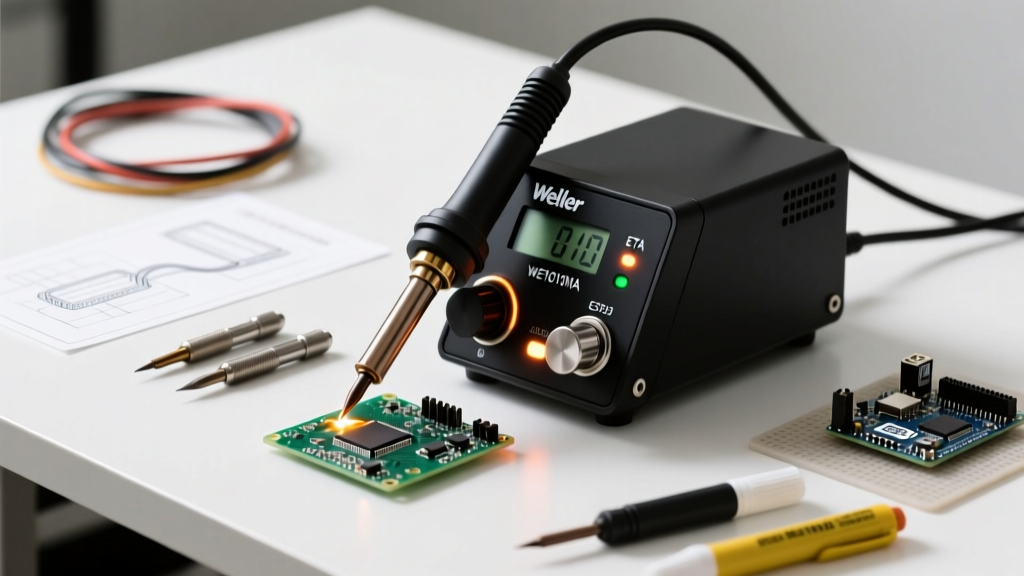
3. Weller WE1010NA: High Thermal Mass Precision (Best Professional)
For production-level rework and heavy-duty connectors, the Weller WE1010NA provides 70W of highly regulated power to the ETA tip series. The handpiece features a premium silicone jacket that remains cool to the touch even after hours of use at 400°C. The digital interface provides a real-time wattage draw indicator, letting you visually confirm when the iron is struggling against a massive ground plane.
- Price: $115 - $135
- Thermal Recovery: Rapid heat-up (under 15 seconds) with aggressive thermal compensation.
- Standout Feature: The ETA tips feature a thicker copper core compared to Hakko's T18 series, providing superior heat soaking for multi-layer boards with internal copper pours.
- Edge Case: The handpiece cord is notably stiff. In cold workshop environments, the cord stiffness can cause hand fatigue during intricate 0402 rework.
Comparative Matrix: Thermal Recovery & Ecosystem Costs
| Feature | Pinecil V2 | Hakko FX-888D | Weller WE1010NA |
|---|---|---|---|
| Max Wattage | 65W (Requires 100W PD PSU) | 70W | 70W |
| Heat-up Time (to 320°C) | ~8 Seconds | ~22 Seconds | ~14 Seconds |
| Tip Ecosystem | TS100 / Pine64 Compatible | Hakko T18 Series | Weller ETA Series |
| Avg. Replacement Tip Cost | $5.00 - $7.00 | $6.50 - $9.00 | $9.00 - $12.00 |
| Best Use Case | Field repair, SMD, Drones | General DIY, Through-hole | Production, Heavy Wiring |
Decision Framework: Wattage vs. Thermal Mass
A common misconception among beginners is that higher wattage automatically equals a better soldering iron. In reality, thermal mass dictates performance. A 40W iron with a solid copper core will outperform a 60W iron with a thin, hollow plated tip when soldering a thick ground plane. The hollow tip simply lacks the physical mass to store and transfer heat quickly enough, leading to cold joints and prolonged dwell times that damage PCB pads.
Matching Tip Geometry to the Task
According to the IPC J-STD-001 Standard for soldered electrical assemblies, proper wetting and fillet formation require the tip to match the pad geometry. Never use a conical tip for flat pads; the contact area is microscopic, resulting in poor thermal transfer.
- Chisel (D-Series): The universal workhorse. The flat edge maximizes surface area contact for 0805 SMD components and standard through-hole DIP pins.
- Bevel (C-Series): Ideal for drag-soldering SOIC and TQFP ICs. The concave shape holds a small pool of molten solder, aiding in surface tension drag techniques.
- Knife (K-Series): Essential for precision rework. Use the sharp point for 0402 jumpers and the flat blade edge for larger pads.
Troubleshooting Edge Cases: Preventing Oxidation and Cold Joints
Even the best soldering iron will fail if maintenance protocols are ignored. The primary killer of soldering tips is black oxide buildup, which acts as a thermal insulator. When a tip turns black, solder will ball up and roll off, refusing to wet the surface.
Expert Protocol for Tip Recovery:
Never use abrasive sandpaper or a steel file on a modern iron-clad tip. You will strip the iron plating and expose the copper core, destroying the tip instantly. Instead, use a damp cellulose sponge or brass wire cleaner, and apply a high-rosin flux (like Kester 186) to chemically reduce the oxidation before tinning with fresh 63/37 eutectic solder.
For high-reliability aerospace or automotive applications, technicians often refer to the NASA Workmanship Training Standards to ensure solder joints meet strict fillet and wetting angle requirements. A dull, grainy joint indicates a cold solder connection, usually caused by moving the component before the eutectic solder has fully crystallized (the plastic phase).
Frequently Asked Questions (FAQ)
Is lead-free solder harder on my soldering iron tips?
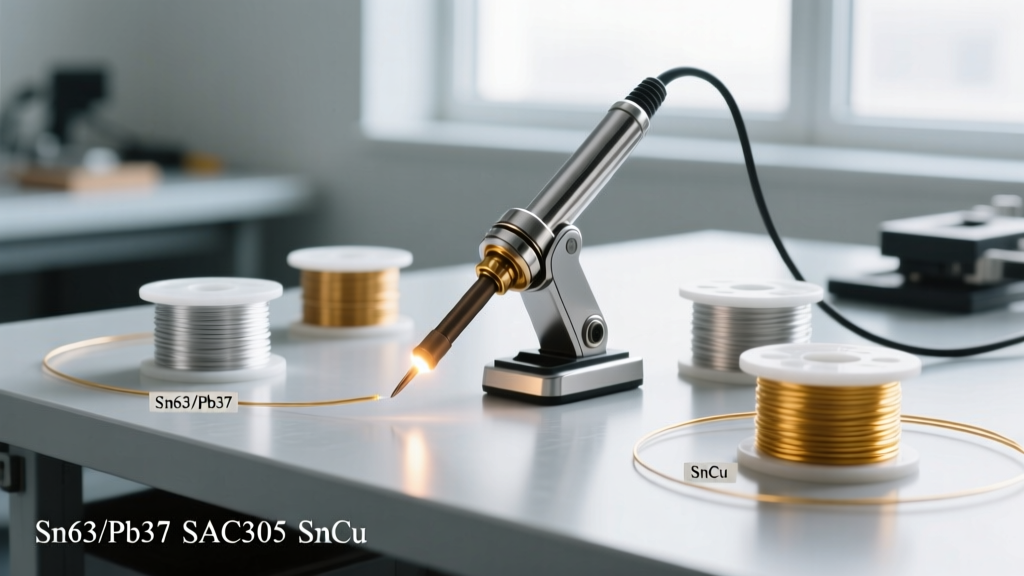
Yes. Lead-free alloys (like SAC305) require higher melting temperatures (typically 217°C to 225°C compared to 183°C for 63/37 leaded solder). Running your iron at 380°C+ to compensate for lead-free solder accelerates tip erosion and oxidation. If you are a hobbyist not bound by RoHS commercial regulations, stick to 63/37 eutectic solder to double your tip lifespan.
Can I use a butane soldering iron for PCB electronics?
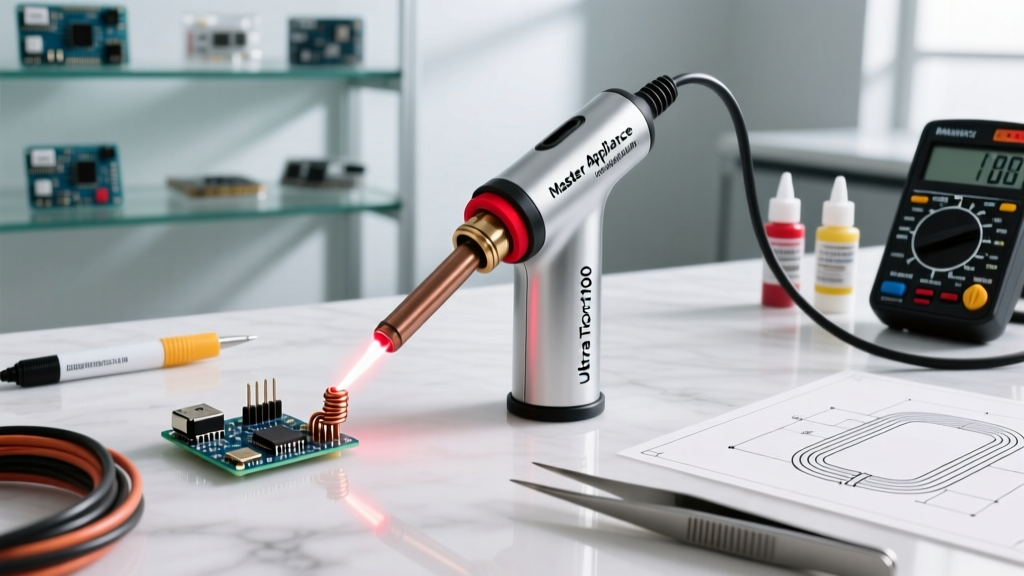
Butane irons (like the Master Appliance Pro Series) are excellent for plumbing, automotive wire splicing, and field repairs where electricity is unavailable. However, they lack precise closed-loop temperature control. The tip temperature can easily exceed 450°C, which will delaminate FR4 fiberglass PCBs and lift copper pads. Reserve butane irons for heavy-gauge wire soldering and heat-shrink tubing.
How often should I recalibrate my digital soldering station?
For standard DIY and prototyping, factory calibration is sufficient for years. However, if you are doing IPC-certified production work, you should verify the tip temperature using a digital thermocouple tester (like a Hakko FG-100B) every 3 to 6 months. Tip degradation and internal heating element resistance changes can cause a 10°C to 15°C drift over time.
Final Verdict
The definition of a reliable soldering iron has evolved. For 90% of hobbyists, drone builders, and field technicians, the Pinecil V2 paired with a 100W GaN charger is the most cost-effective and technically advanced choice in 2026. For dedicated benchtop environments where continuous through-hole soldering and heavy wire tinning are the norm, the Weller WE1010NA provides the thermal mass and ergonomic durability required for all-day production work. Choose your tool based on your specific thermal mass requirements, and always prioritize tip geometry over raw wattage.