
The Hakko FX601 02 Soldering Iron in 2026: An Analog Heavyweight
In a 2026 market saturated with RISC-V powered smart irons and Bluetooth-enabled soldering stations, the Hakko FX601 02 soldering iron stands out as a deliberate throwback to analog reliability. Designed for users who need high thermal mass and portable wattage without relying on USB-C Power Delivery negotiation, the FX601-02 remains a staple for stained glass artists, automotive wire harnessers, and heavy-duty DIY electronics enthusiasts. But does a corded, dial-controlled 67W iron still hold up against modern competition? In this best-of comparison, we put the FX601-02 head-to-head against its closest market rivals to determine exactly where it excels—and where it falls short.
Core Specifications & Real-World Performance
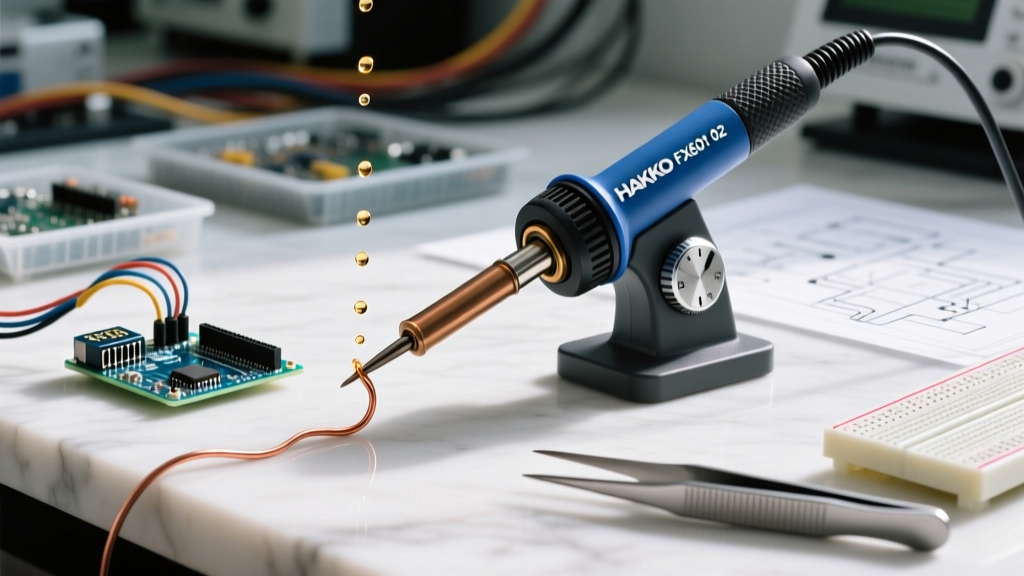
At the heart of the FX601-02 is a 67W ceramic heating element paired with Hakko’s T19 tip series. Unlike standard 40W portable irons that stall when hitting large ground planes, the 67W output provides the thermal headroom necessary to solder 10 AWG silicone wires or XT90 connectors without aggressive temperature droop. The temperature is adjusted via a physical dial located on the handle, offering a range of 200°C to 500°C (392°F to 932°F).
Expert Insight: While the dial offers quick on-the-fly adjustments, it lacks the digital precision of a PID-controlled station. When soldering sensitive SMD components, you must verify the actual tip temperature with a K-type thermocouple, as the analog dial can drift by ±15°C depending on ambient room temperature and input voltage fluctuations.
Pros and Cons of the FX601-02
- Pros: High 67W thermal recovery; no external power bricks required; robust T19 tip ecosystem; excellent for off-grid or field repairs where USB-C PD chargers aren't available.
- Cons: Stiff PVC cord can cause fatigue during precision SMD work; analog dial is prone to accidental bumping; lacks sleep mode or auto-shutoff features.
Head-to-Head Comparison Matrix
| Feature | Hakko FX601-02 | Weller SP80NUS | Pinecil V2 | Hakko FX888D |
|---|---|---|---|---|
| Max Wattage | 67W | 80W | 65W (via PD) | 70W |
| Temp Control | Analog Handle Dial | Fixed / Basic Thermostat | Digital PID (RISC-V) | Digital Station Dial |
| Tip Series | T19 | CT6 | TS100 / Pine64 | T18 |
| Heat-Up Time | ~45 seconds | ~90 seconds | ~6 seconds | ~30 seconds |
| 2026 Est. Price | $85 - $95 | $60 - $70 | $26 - $30 | $110 - $125 |
The Matchups: FX601-02 vs. The Competition
1. Hakko FX601-02 vs. Weller SP80NUS (The Heavyweight Clash)
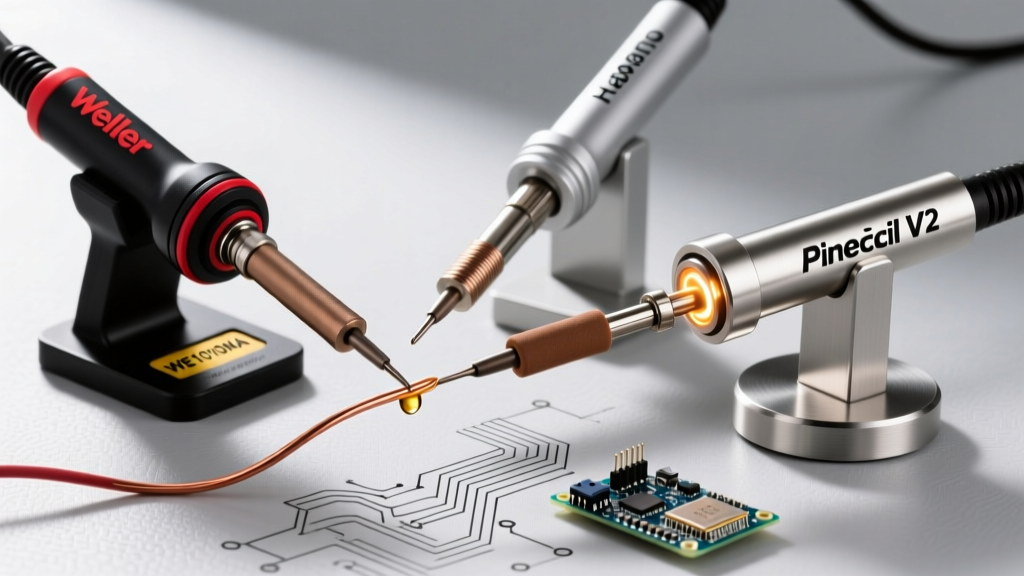
The Weller SP80NUS is an 80W behemoth often used for plumbing, heavy automotive grounds, and stained glass. However, the SP80NUS relies on an older resistive heating topology that takes over a minute to reach optimal IPC J-STD-001 compliant soldering temperatures. The Hakko FX601 02 soldering iron utilizes a ceramic heater that cuts heat-up time in half and offers active temperature feedback. If you are soldering 14 AWG or thicker, the Weller’s sheer thermal mass wins. But for 18 AWG to 12 AWG electronics and RC hobbyist work, the FX601-02’s active regulation prevents the scorched flux and lifted pads that the unregulated Weller often causes.
2. Hakko FX601-02 vs. Pinecil V2 (Analog Reliability vs. Smart Tech)
Pine64’s Pinecil V2 has completely disrupted the portable soldering market. At under $30, it offers a digital screen, custom firmware, and 65W heating via USB-C. Why buy the $90 Hakko? The answer lies in power infrastructure. The Pinecil requires a high-quality 65W GaN PD charger to reach its full potential; if you plug it into a standard 15W USB brick, it throttles to a useless 15W. The Hakko FX601-02 plugs directly into a 120V/230V wall outlet, guaranteeing 67W of continuous power regardless of your USB charger ecosystem. For field technicians working in older buildings or off-grid solar setups with pure sine wave inverters, the Hakko’s simple AC-DC internal conversion is vastly more reliable than negotiating PD handshakes with cheap power banks.
3. Hakko FX601-02 vs. Hakko FX888D (Portable vs. Benchtop)
Many buyers cross-shop the FX601-02 with the legendary FX888D benchtop station. The FX888D offers superior ergonomics, a digital display, and the massive T18 tip library. However, the FX601-02 uses the T19 series, which features a thicker copper core designed specifically to resist the corrosive effects of lead-free solder and high-temperature fluxes used in stained glass work. If your work is strictly confined to a well-ventilated bench, buy the FX888D. If you need to carry your iron in a toolbox to job sites, the FX601-02’s integrated, drop-resistant design is the clear winner.
Optimizing the T19 Tip Ecosystem
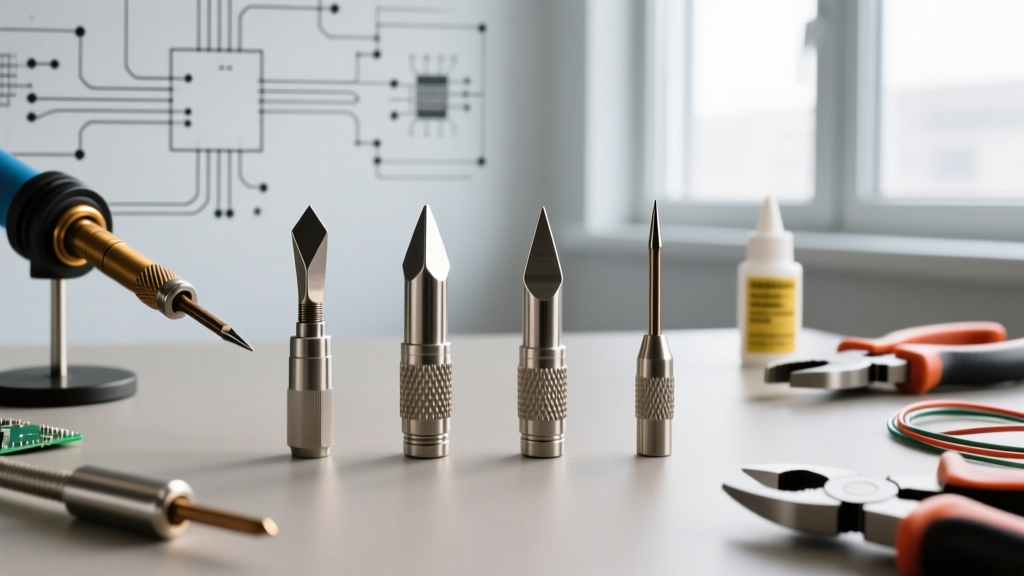
The performance of the Hakko FX601 02 soldering iron is entirely dependent on selecting the correct T19 tip geometry for your thermal load. In 2026, lead-free SAC305 alloys remain the industry standard, requiring higher tip temperatures (350°C - 380°C) compared to traditional 63/37 Sn/Pb eutectic solders.
- T19-B (Conical): Avoid for heavy work. The narrow point lacks the thermal mass to transfer 67W efficiently, leading to rapid oxidation and cold joints on anything larger than 0805 SMD pads.
- T19-D24 (Chisel 2.4mm): The workhorse. Ideal for through-hole components, 16 AWG wires, and general DIY PCB assembly. The flat surface area maximizes thermal transfer while allowing enough precision for 0.1-inch header pins.
- T19-K (Knife): The secret weapon for stained glass and RC batteries. The knife edge allows you to use the very tip for precision drag-soldering, or lay the entire flat blade across a copper foil seam or XT60 connector pad to dump heat rapidly into the joint.
Real-World Failure Modes & Maintenance
While Hakko builds exceptionally durable tools, the FX601-02 is not immune to wear. The most common failure mode reported by heavy users is cord fatigue at the strain relief. Because the iron lacks a flexible silicone cord (opting instead for standard PVC to keep costs down), the cable stiffens when exposed to repetitive heat cycles and flux fumes. To mitigate this, hang the iron using a third-hand tool or a dedicated holster rather than letting the cord drape over the hot barrel.
Additionally, the internal potentiometer that controls the temperature dial can accumulate carbon dust over years of use, resulting in 'dead zones' where the heater fails to engage. If your iron struggles to maintain heat at the 300°C mark but works fine at 400°C, opening the handle and applying a micro-drop of DeoxIT D5 to the potentiometer track will usually restore flawless analog control.
Expert Verdict: Who Should Buy the FX601-02?
The Hakko FX601 02 soldering iron is not the right tool for a micro-soldering technician working on 0201 smartphone components, nor is it the most cost-effective entry point for a beginner who would be better served by a Pinecil V2. However, for the stained glass artisan, the automotive electrician, and the field repair technician who demands high thermal mass, zero reliance on USB-C protocols, and decades-long analog reliability, the FX601-02 remains an unbeatable workhorse in 2026. It bridges the gap between cheap, underpowered corded irons and expensive, fragile benchtop stations, earning its place as a specialized, heavy-duty portable champion.