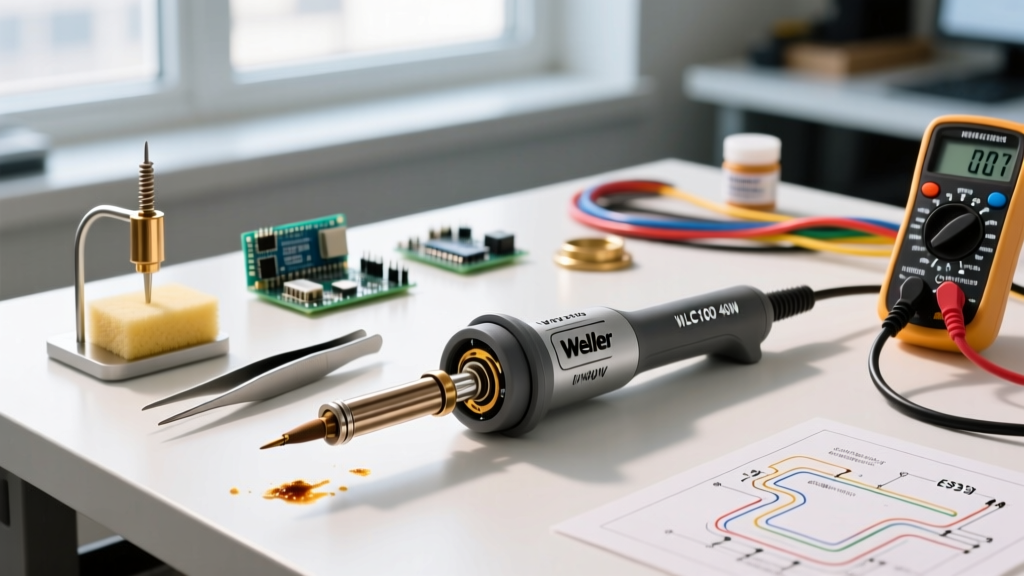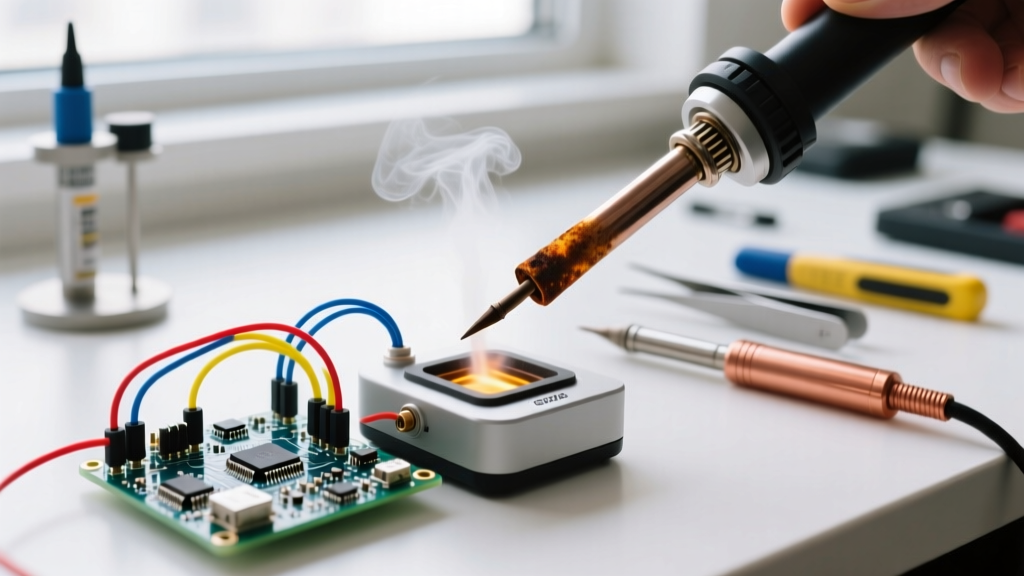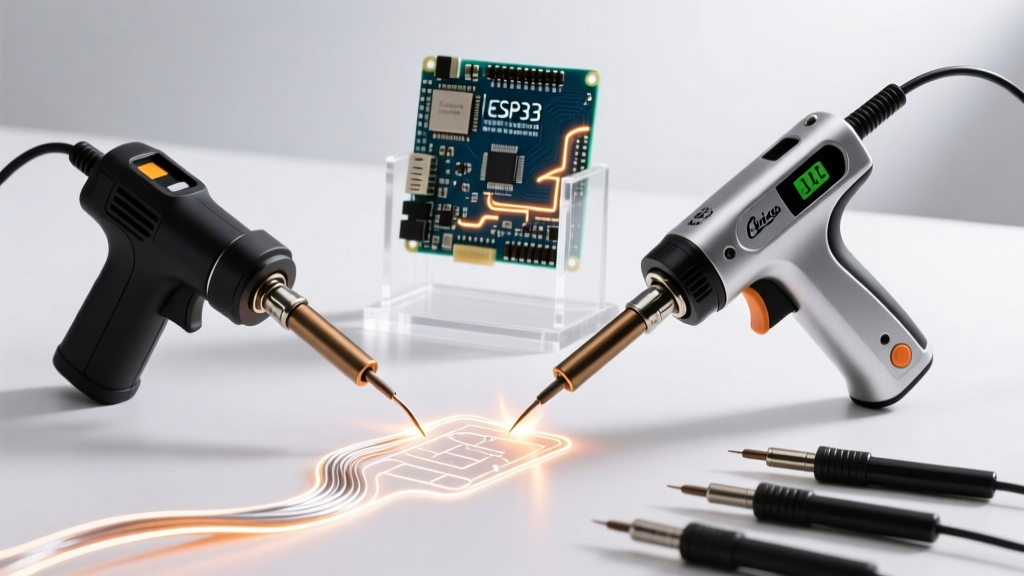

The Evolution of the Automatic Soldering Gun in 2026
In the landscape of electronics assembly and heavy-duty wiring, the automatic soldering gun has transitioned from a niche industrial novelty to a mainstream benchtop staple. By integrating a motorized wire-feed mechanism directly into the handpiece or station, these tools free the operator's second hand for component placement, wire stripping, or tweezer manipulation. However, as we navigate the 2026 market, a massive performance chasm exists between sub-$50 consumer auto-feeders and $400+ precision stations. This analysis dissects the engineering, thermal dynamics, and real-world failure modes of budget versus premium automatic soldering systems.
Expert Insight: Freeing your non-dominant hand isn't just about comfort; it directly impacts joint quality. According to the IPC J-STD-001 standards for soldered electrical assemblies, maintaining simultaneous contact between the heat source, the component lead, and the solder wire within a precise 2-3 second window is critical for proper intermetallic compound (IMC) formation. An automatic feed mechanism standardizes this delivery.
How Auto-Feed Mechanisms Actually Work
Before evaluating specific models, it is vital to understand the mechanical constraints of feeding solid or rosin-core solder wire. An automatic soldering gun relies on three core components:
- Drive Motor: Pushes the wire. Budget models use brushed DC motors with simple gearboxes, while premium units utilize high-torque bipolar stepper motors with micro-stepping drivers.
- Pinch Rollers: Usually made of knurled brass or silicone. They grip the solder wire without deforming it.
- PTFE Guide Tube: A Teflon-lined tube that routes the wire from the motor assembly down to the rear of the heating element, terminating exactly 2mm to 3mm behind the tip shoulder.
The Budget Tier: ZD-915 and Generic Clones
The budget segment is dominated by the ZD-915 Auto-Feed Soldering Iron and its myriad white-label clones, typically retailing between $25 and $35. These handheld, pistol-grip units integrate a 60W nichrome heating element and a simple DC motor powered by an external 24V brick.
Where the Budget Tier Succeeds
For thick-gauge through-hole components, RC battery connectors (XT60/XT90), and basic plumbing or stained-glass work using 0.8mm to 1.2mm 63/37 SnPb wire, the ZD-915 is remarkably capable. The continuous feed trigger allows for long, uninterrupted solder beads on ground planes.
Critical Limitations and Edge Cases
The ZD-915 lacks true PID (Proportional-Integral-Derivative) temperature control. It uses a basic dial that modulates average voltage, not actual tip temperature. When soldering large thermal masses, the tip temperature can drop below 190°C, leading to cold, grainy joints that violate basic reliability standards documented by NASA's Electronic Parts and Packaging (NEPP) program. Furthermore, the DC motor's pinch rollers physically crush wire diameters smaller than 0.6mm, making this tier entirely unsuitable for modern fine-pitch PCB work.
The Premium Tier: Quick 376 and Industrial Auto-Feeders
At the opposite end of the spectrum sits the Quick 376 Automatic Solder Feed Station, priced around $420 to $480 in 2026. Instead of a bulky pistol grip, the Quick 376 uses a lightweight, pencil-style handpiece connected via a flexible umbilical to a base station that houses a 70W ceramic heater (Quick 2008) and a precision stepper motor.
Engineering Advantages
The Quick 376 employs closed-loop PID control via a thermocouple embedded directly in the tip's ceramic core. This yields a thermal recovery time of under 2 seconds, even when touching heavy copper pours. The stepper motor allows for infinitely adjustable feed rates from 2mm/s to 20mm/s, controllable via a foot pedal or base station dial. Crucially, the micro-stepping driver ensures that ultra-thin 0.3mm and 0.4mm solder wires are fed smoothly without buckling or crushing.
Head-to-Head Comparison Matrix
| Specification | Budget (ZD-915 / Clones) | Premium (Quick 376) |
|---|---|---|
| Average Price (2026) | $28 - $35 | $420 - $480 |
| Heating Element | 60W Nichrome Coil | 70W Ceramic (Core Heater) |
| Temperature Control | Analog Dial (Open Loop) | Digital PID (Closed Loop) |
| Drive Motor | Brushed DC + Plastic Gears | Bipolar Stepper + Metal Gears |
| Wire Diameter Range | 0.8mm - 1.2mm | 0.3mm - 1.0mm |
| Feed Rate Control | 2-Speed Toggle (On/Off) | Variable 2-20mm/s (Dial/Foot Pedal) |
| Thermal Recovery | 15 - 25 seconds | < 2 seconds |
Critical Failure Modes: Flux Creep and Thermal Degradation
As teardowns and long-term bench tests frequently highlight on platforms like Hackaday, automatic feeders are uniquely susceptible to mechanical binding caused by flux vaporization. Understanding these failure modes is essential for maximizing the lifespan of your equipment.
1. Flux Creep and Capillary Action
When rosin-based flux (such as RMA) hits a 350°C tip, it vaporizes. In an automatic soldering gun, this vapor travels backward up the PTFE guide tube via capillary action and condenses in cooler zones. Over weeks of use, this creates a sticky, tar-like residue. In budget guns, this increased friction causes the weak DC motor to stall, ultimately stripping the plastic drive gears. In premium stepper-motor units, the driver will detect the resistance and audibly 'skip' steps, alerting the operator before mechanical damage occurs.
2. PTFE Tube Melting and Carbon Scoring
PTFE (Teflon) is chemically inert but begins to degrade structurally at continuous temperatures exceeding 260°C. If the guide tube is trimmed incorrectly and extends too close to the tip's heating zone, the tube will melt, fusing the solder wire to the inner wall. Furthermore, if the wire retracts while molten, it can score the inside of the tube with carbonized flux, creating permanent friction points.
Maintenance and Troubleshooting Protocol
To maintain optimal feed tension and prevent the failure modes outlined above, implement the following maintenance schedule:
- Monthly IPA Flush: Disconnect the PTFE tube from the handpiece. Use a syringe to flush 99% Isopropyl Alcohol (IPA) through the tube to dissolve rosin buildup. Allow to dry completely before re-threading.
- Tube Replacement: PTFE tubing is inexpensive. Keep a spool of 2mm OD / 1mm ID PTFE tubing on hand. Replace the guide tube every 6 months in heavy-use environments, or immediately if feed resistance increases.
- Roller Cleaning: Use a fiberglass scratch pen or stiff brass brush to clean the knurled drive rollers. Solder dust and flux will fill the knurling patterns, causing the rollers to slip against the wire rather than grip it.
- Tip Shoulder Verification: When changing tips, ensure the PTFE tube terminates exactly 3mm behind the rear shoulder of the soldering tip. Use flush cutters to trim the tube squarely.
Final Verdict: Which Should You Buy?
The choice between a budget and premium automatic soldering gun hinges entirely on your wire diameter requirements and thermal mass targets. If you are a hobbyist primarily soldering thick silicone wires for drones, RC cars, or basic audio cables using 1.0mm 63/37 solder, the $30 ZD-915 offers undeniable utility and a fast ROI. It removes the need for a third hand and speeds up heavy-tinning tasks.
However, if your work involves modern PCB assembly, fine-pitch SMD pads, or lead-free SAC305 alloys (which require strict thermal profiles to prevent component delamination), the budget tier will actively damage your boards and waste expensive wire. In these scenarios, the Quick 376 is not just a luxury; it is a mandatory precision instrument. Its stepper-motor accuracy, PID stability, and 0.3mm wire compatibility make it an indispensable asset for professional labs and serious production environments in 2026.