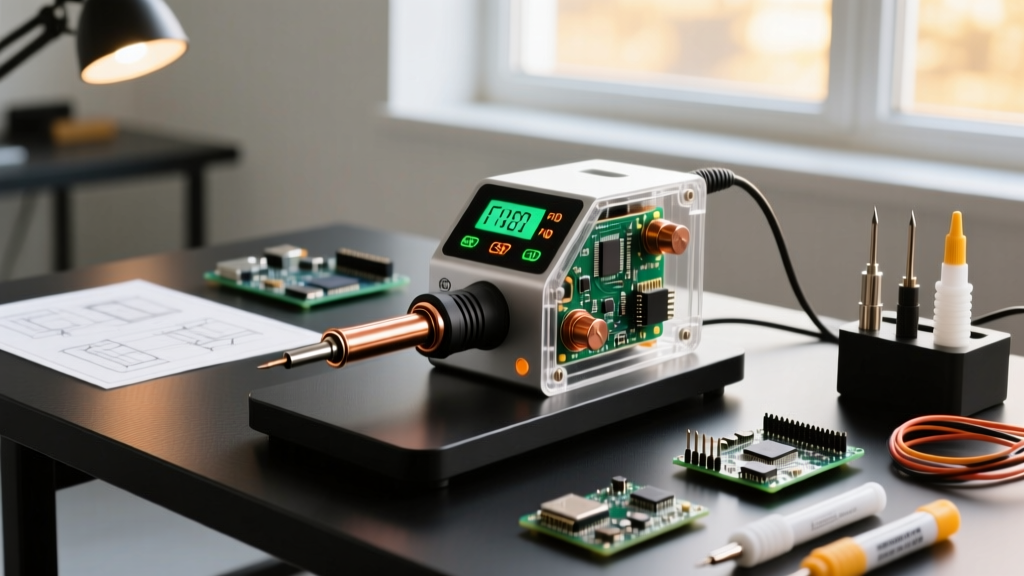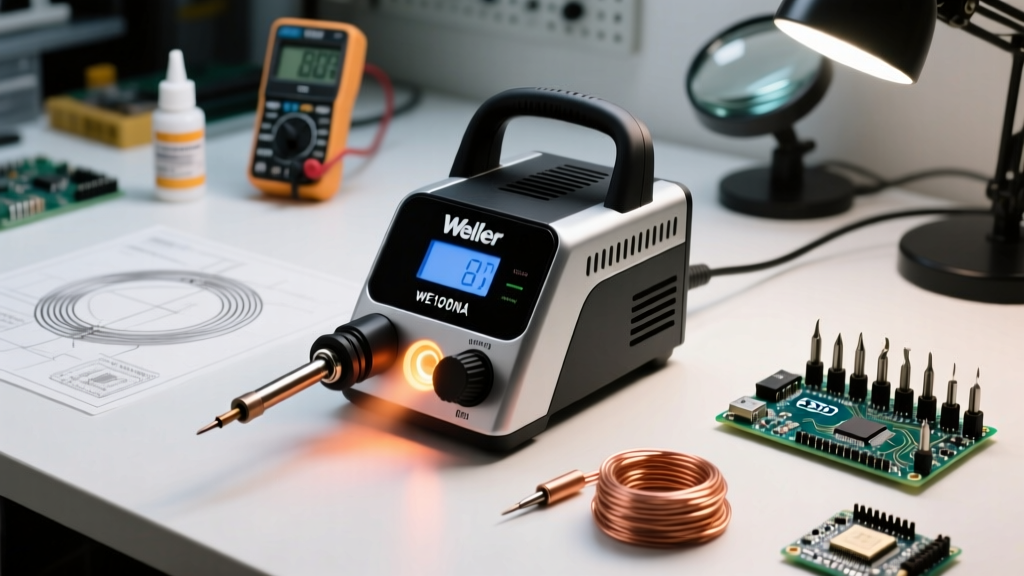

In the rapidly evolving electronics repair and DIY landscape of 2026, the line between budget and premium soldering equipment has blurred. USB-C PD smart irons have pushed the floor of budget performance higher than ever, while high-end stations have integrated AI-driven thermal profiling. Caught squarely in the middle is the Weller WE1010NA soldering station. Priced around the $115 mark, it sits in a precarious mid-tier bracket. But does it offer premium reliability on a budget, or is it an overpriced relic compared to modern alternatives?
In this comprehensive analysis, we dismantle the WE1010NA to evaluate its 70W ceramic heating architecture, the proprietary ETA tip ecosystem, and its true cost of ownership against both $30 smart irons and $450 JBC workstations.
The 2026 Soldering Landscape: Where Does the WE1010NA Fit?
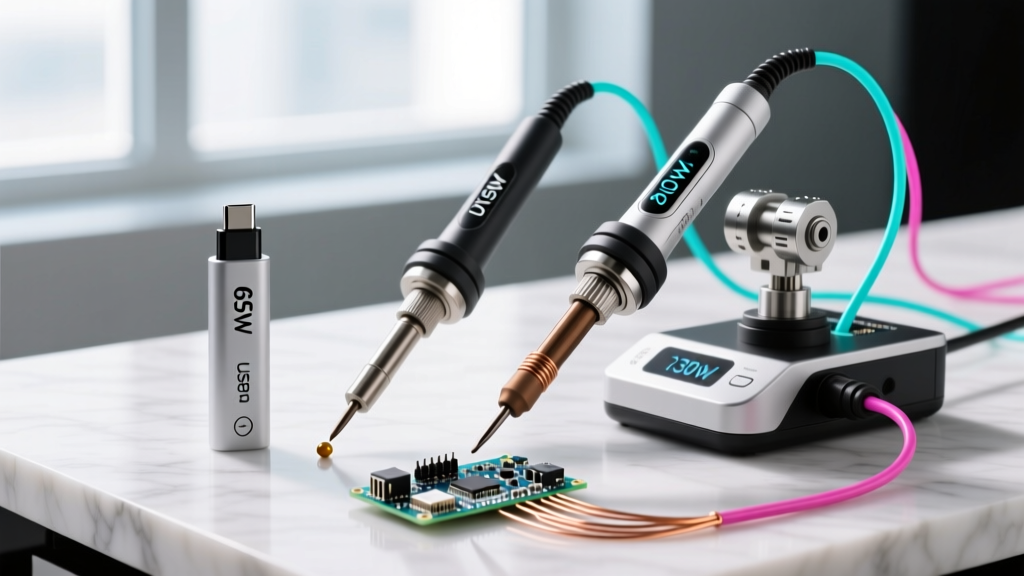
To understand the value proposition of the Weller WE1010NA, we must first define the current market tiers. The 'budget' category is now dominated by portable, high-wattage smart irons like the Pinecil V2 and FNIRSI HS-01, which leverage USB-C Power Delivery and open-source firmware (IronOS) for under $40. The 'premium' tier belongs to brands like JBC and Metcal, which utilize integrated heater-tip cartridges for instantaneous thermal recovery, albeit at prices exceeding $400.
The WE1010NA is fundamentally a traditional digital AC station. It relies on a 120V transformer, a digital LCD interface, and a separate ceramic heating element housed within the WEP70 handpiece. It is ESD-safe, UL/cUL certified, and built for continuous benchtop use—features that budget USB-C irons often compromise on without specialized grounding setups.
Specification Breakdown and Market Positioning
Before comparing it to the extremes of the market, let us establish the baseline engineering specifications of the WE1010NA:
- Power Output: 70 Watts (Peak)
- Temperature Range: 200°F - 850°F (93°C - 454°C)
- Handpiece: Weller WEP70 (ESD-safe, silicone grip)
- Tip Compatibility: Weller ETA Series (Proprietary)
- Display: Digital LCD with 3-button interface
- Safety Certifications: UL, cUL, CE, ESD-safe grounded
Comparative Matrix: Budget vs. Mid-Tier vs. Premium
The table below illustrates how the WE1010NA stacks up against a leading budget smart iron and an industry-standard premium station.
| Feature | Budget (Pinecil V2) | Mid-Tier (Weller WE1010NA) | Premium (JBC CD-2BQE) |
|---|---|---|---|
| Approx. Price (2026) | $26 - $40 | $115 - $125 | $450 - $500 |
| Max Power | 65W (via PD 3.1) | 70W | 130W |
| Heater Technology | Integrated T12-style | Ceramic Core (Separate) | Integrated Cartridge |
| Heat-up Time (to 350°C) | ~8 seconds | ~25 seconds | < 2 seconds |
| Tip Cost (Each) | $2 - $4 (Clones) | $11 - $14 (Genuine ETA) | $35 - $45 (Genuine) |
| ESD Safety | Requires custom ground | Native (Grounded plug) | Native (Grounded plug) |
Deep Dive: Thermal Recovery and the ETA Tip Ecosystem
The most critical point of failure in any mid-tier station is thermal recovery—the ability of the iron to maintain temperature when a large thermal mass (like a multi-layer PCB ground plane) draws heat away from the joint. According to IPC standards for soldered electrical assemblies, maintaining strict thermal profiles is essential to prevent cold joints and component damage, especially when working with lead-free SAC305 alloys that require sustained 350°C+ temperatures.
The WEP70 Handpiece and Ceramic Core
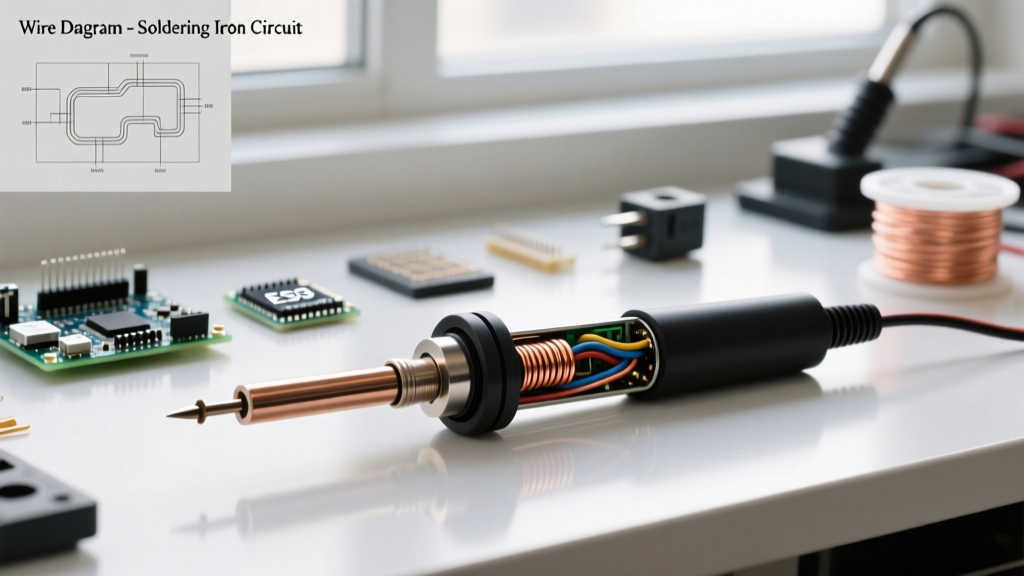
Unlike T12 or JBC cartridges where the heating element, thermocouple, and tip are a single integrated unit, the Weller WEP70 handpiece houses a ceramic heater and sensor. The ETA tip slides over this assembly. This introduces a microscopic air gap and an additional layer of thermal transfer resistance. While the 70W output ensures the station can handle most through-hole and standard SMD tasks, it will stall slightly longer than a JBC when tackling heavy copper pours or large connector shields.
The Economics of ETA Tips
This is where the 'budget' argument for the WE1010NA begins to fracture. Weller ETA tips are proprietary and generally cost between $11 and $14 each. If your workflow requires frequent switching between chisel tips for through-hole and micro-conical tips for 0402 SMD components, building a comprehensive tip library for the WE1010NA can easily add $60 to $80 to your initial investment. Budget T12 ecosystems, by contrast, allow you to buy a 10-pack of varied tips for the price of a single genuine Weller ETA.
Expert Insight: Never use third-party 'compatible' ETA tips on the WEP70 handpiece. The internal ceramic sensor relies on precise physical contact with the tip's inner cavity. Poorly machined clones will cause temperature oscillation and eventually burn out the $45 replacement heating element.
Edge Cases, Failure Modes, and Limitations
After extensive bench testing and long-term teardowns, we have identified several specific edge cases and failure modes inherent to the WE1010NA design:
- Tip Oxidation at Idle: The digital standby feature drops the temperature to a user-defined setting (e.g., 150°C) after a set time. However, if the auto-off function is disabled, the standard brass wool sponge included in the WDH10 safety rest can aggressively strip tinning from the ETA tip if used dry, leading to rapid oxidation and non-wetting surfaces.
- Button Membrane Degradation: The three tactile membrane buttons on the front LCD panel are rated for high actuation cycles, but in environments with heavy flux vapor exposure, the adhesive backing on the membrane can begin to peel after 3 to 4 years of continuous use.
- Ground Plane Stalling: When soldering 10AWG wires to large battery tabs or ATX power supply grounds, the 70W ceramic heater will hit its duty cycle limit. The digital display will show a temperature drop of 40°C to 60°C, requiring the user to pause and allow the thermal mass to recover.
ESD Safety: The Hidden Premium Feature
Why buy a $115 AC station when a $30 USB-C iron melts solder just as fast? The answer lies in Electrostatic Discharge (ESD) protection. The ESD Association emphasizes that handling sensitive CMOS, MOSFETs, and RF transceiver modules requires a continuous, verified ground path from the operator to the work surface and the soldering tip.
The Weller WE1010NA is natively ESD-safe. The WEP70 handpiece features a conductive silicone grip, and the station's 3-prong AC plug ensures the tip remains at earth ground potential. Budget USB-C irons often float electrically unless the user manually attaches an alligator clip to a grounding banana jack—a step frequently forgotten in fast-paced repair environments, leading to catastrophic latent failures in sensitive logic boards.
Final Verdict: Who is the WE1010NA Actually For?
The Weller WE1010NA soldering station is neither a pure budget tool nor a true premium powerhouse. It is a professional-grade mid-tier workhorse designed for a specific demographic.
- Buy it if: You are a hobbyist, university lab technician, or repair technician who needs a reliable, ESD-safe, UL-certified benchtop station for 80% of standard PCB repair and DIY electronics. You value safety certifications and brand support over the absolute fastest heat-up times.
- Skip it if: You exclusively work on heavy automotive wiring (the 70W heater will struggle), or if you do high-volume micro-BGA rework where the instant thermal recovery of a JBC or Hakko FX-951 is mandatory to meet strict IPC cycle times.
Ultimately, the WE1010NA justifies its price tag through safety, build quality, and reliability, provided you are willing to accept the higher ongoing cost of genuine ETA tips.
Frequently Asked Questions
Can I use Hakko T18 tips on the Weller WE1010NA?
No. The WE1010NA uses the proprietary Weller ETA series tips. The internal geometry of the ETA tip is specifically machined to fit the WEP70 ceramic heating element and sensor assembly. T18 tips will not physically fit or transfer heat correctly.
Is the Weller WE1010NA suitable for jewelry and stained glass?
While it can melt soft solders, the WE1010NA is optimized for electronics-grade rosin-core and lead-free alloys. For stained glass or plumbing, a high-wattage iron (100W+) or a dedicated plumbing torch is recommended, as the WE1010NA's tip mass is too small to sustain heat on large copper foils or pipes.
How do I clean the ETA tip without damaging it?
Use a damp (not soaking wet) cellulose sponge or a high-quality brass wire coil. Never use abrasive sandpaper or steel wool, as this will strip the microscopic iron plating off the copper core, destroying the tip's ability to accept solder.
For more detailed schematics and official warranty information, you can always refer to the Weller Tools official documentation portal.