
The Physics of Micro-Soldering: Why Standard Irons Fail
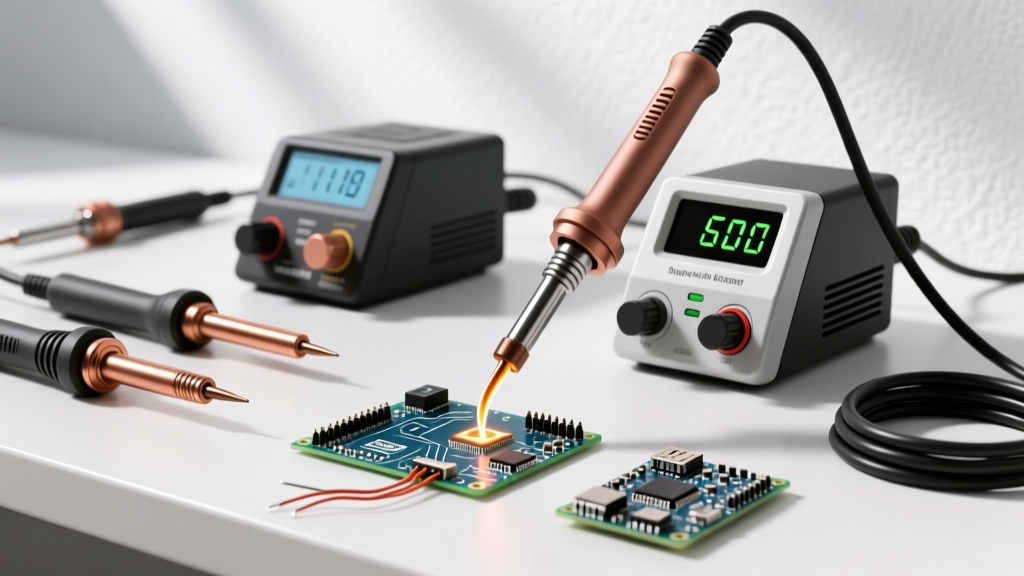
As surface mount technology (SMT) continues to shrink, with 01005 (0.4mm x 0.2mm) components becoming standard in high-density 2026 PCB designs, the thermal requirements for hand soldering have fundamentally shifted. A standard 60W soldering iron with a traditional ceramic heating element and a separate copper tip suffers from massive thermal lag. When the tip touches a ground plane or a multi-layer PCB via, the temperature drops instantly. The station's PID controller panics, overshoots the target temperature, and subsequently melts the component's internal die or lifts the ENIG pad.
To successfully solder micro-SMD components, you need an SMD soldering iron that prioritizes thermal recovery time over raw wattage, and features ultra-low thermal mass tips. In this 2026 comparison, we evaluate the top-tier and budget-disruptor SMD soldering stations based on tip geometry, cartridge technology, and real-world rework performance on 4-layer FR4 boards.
2026 SMD Soldering Iron Comparison Matrix
| Model / Station | Heating Technology | Tip Series | Recovery Time | Est. Price (2026) | Best Application |
|---|---|---|---|---|---|
| JBC CD-2BQE | Integrated Cartridge | C245 | < 2 seconds | $585 | 01005 & Micro-BGA |
| Hakko FX-951 | Composite Sensor | T18 | ~ 6 seconds | $265 | 0402 & QFP Drag |
| Pine64 Pinecil V2 | Direct DC Injection | TS-B2 (Short) | ~ 4 seconds | $28 | 0603 / Field Repair |
| Weller WXMP | Inductive / Curie | RT3 | ~ 3 seconds | $475 | ESD-Sensitive RF |
Top Contenders Evaluated for Precision PCB Work
1. JBC CD-2BQE (The Professional Benchmark)
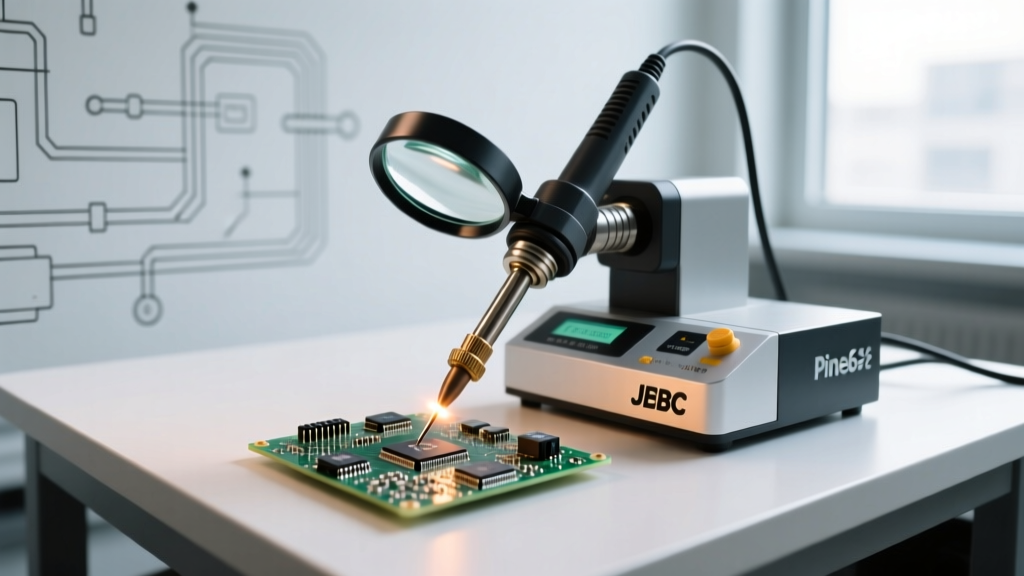
The JBC CD-2BQE remains the undisputed king of professional SMD rework. The secret lies in the C245 cartridge system. Unlike traditional irons where the heater, sensor, and tip are three separate pieces bolted together, JBC integrates the heating element and thermocouple directly inside the tip's copper core. This reduces the thermal resistance path to near zero.
- Tip Geometry: For 0201 and 01005 components, the C245-116 (0.3mm conical) and C245-903 (micro-blade) are mandatory. The micro-blade allows you to heat both pads of a 0201 capacitor simultaneously, preventing tombstoning.
- Thermal Performance: Dropping the tip on a heavy copper pour causes a momentary 15°C dip, but the 130W transformer recovers the 340°C setpoint in under 1.5 seconds.
- The Drawback: The $585 entry price and $35+ per tip cartridge cost make it prohibitive for casual hobbyists.
2. Hakko FX-951 (The Reliable Workhorse)
Hakko's FX-951 utilizes the T18 tip series, which features a composite heater where the temperature sensor is embedded at the very base of the tip. While not as instantaneous as JBC's internal cartridge, it is a massive leap over older ceramic wand designs. Priced around $265, it is the standard for mid-tier production lines and serious home labs.
- Tip Selection: The T18-I (micro-pencil) is excellent for 0402 resistors. However, for tight-pitch QFPs (0.5mm pitch), you must switch to the T18-D12 (mini-blade) to facilitate drag soldering with copious amounts of RMA flux.
- Edge Case: The FX-951 struggles with 01005 components. The thermal mass of the T18 tip base is simply too large for the microscopic pads, increasing the risk of bridging or pad lifting if dwell time exceeds 2 seconds.
3. Pine64 Pinecil V2 (The Budget Disruptor)
The Pine64 Pinecil V2 shattered the market by packing a RISC-V microcontroller and 65W USB-C Power Delivery into a $28 stick. For field engineers and hobbyists, it is a revelation. By using short-tipped TS-B2 variants, the thermal path is shortened, allowing surprisingly capable micro-soldering.
Pro-Tip for Pinecil Users: To achieve stable thermal recovery on 4-layer boards, you must pair the V2 with a 100W+ GaN charger supporting PD 3.1. Running it off a standard 65W laptop brick will cause voltage sag during high-thermal-mass SMD joints.
- Limitations: The Pinecil lacks the physical mass and transformer overhead to sustain continuous drag-soldering on 100-pin QFPs without the tip temperature drooping by 20-30°C. It is best reserved for discrete 0402/0603 passives and SOIC-8 ICs.
4. Weller WXMP (The ESD-Safe Micro Specialist)
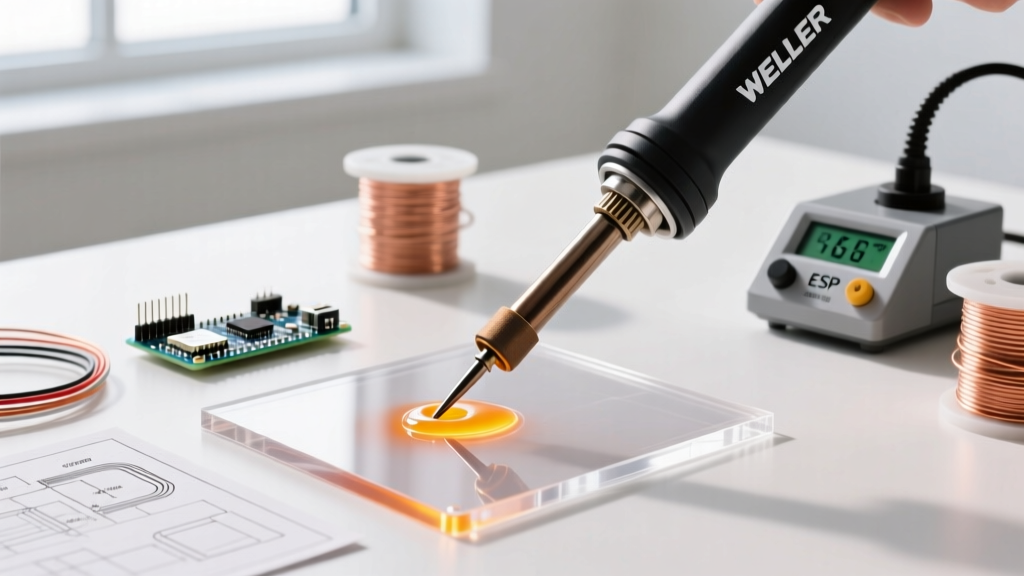
Weller's WXMP micro-soldering iron uses the RT3 tip series and relies on high-frequency inductive heating. The tip itself is a ferromagnetic alloy that heats via eddy currents until it reaches its Curie point, at which it becomes non-magnetic and stops heating. This provides inherently stable temperature control without complex PID tuning.
- Ergonomics: The WXMP handle is pencil-thin (under 10mm diameter), offering unparalleled visibility under a stereo microscope when routing 0.1mm wire or placing 0201 components.
- Compliance: It meets strict IPC Standards for ESD safety and grounding impedance, making it mandatory for aerospace or medical PCB rework where static discharge could destroy a $500 RF transceiver.
Edge Cases & Failure Modes in SMD Rework
Even with a $600 JBC station, poor technique will destroy a modern PCB. Based on NASA's Electronic Parts and Packaging (NEPP) workmanship guidelines, here are the most common SMD failure modes and how to solve them with your iron:
1. Tombstoning (Drawbridging)
The Cause: Uneven heating of the two pads on a discrete component (like a 0402 capacitor). The solder paste on the hotter pad melts first, and the surface tension of the liquid solder pulls the component upright, standing it on its end.
The Fix: Never heat one pad at a time. Use a micro-blade tip (like the JBC C245-903) to bridge and heat both pads simultaneously. Alternatively, use a PCB preheater set to 150°C to bring the entire board close to the solder's liquidus point before applying the iron.
2. Pad Lifting and Delamination
The Cause: Dwell times exceeding 3-4 seconds on HASL or ENIG finishes. The FR4 substrate's Tg (glass transition temperature) is exceeded, causing the copper trace to delaminate from the fiberglass.
The Fix: If a joint isn't flowing within 2 seconds, remove the iron. You are likely dealing with an oxidized pad or insufficient flux. Apply fresh liquid RMA flux, let it activate, and try again. Never press harder; pressure does not transfer heat, it crushes pads.
3. Flux Burn-Off and Non-Wetting
The Cause: Setting your SMD soldering iron to 380°C+ to 'melt lead-free solder faster.' At these temperatures, the rosin and activators in no-clean flux vaporize instantly before the solder alloy can wet the copper, leaving a dull, grainy, cold joint.
The Fix: For SAC305 (lead-free), set your station to 340°C - 350°C. For Sn63Pb37 (leaded), set it to 300°C - 320°C. Let the thermal mass of a high-quality cartridge tip do the work, not extreme temperatures.
Final Verdict: Which SMD Iron Should You Buy?
If you are running a professional repair business, dealing with micro-BGA, 01005 passives, or high-layer-count server boards, the JBC CD-2BQE is a non-negotiable investment. The time saved on rework and the elimination of pad damage pays for the station within a month.
For university labs, production line workers doing 0402 and QFP assembly, the Hakko FX-951 offers the perfect balance of durability, tip availability, and cost. Finally, for field technicians, students, and hobbyists building custom drones or synthesizers, the Pine64 Pinecil V2 paired with a 100W GaN charger is an absolute triumph of modern engineering, proving that precision SMD soldering no longer requires a $500 bench footprint.