
The 100 Watt Soldering Iron Dilemma: Do You Need Premium?
When transitioning from delicate PCB work to heavy-duty applications—like soldering 8 AWG silicone wires for RC drones, assembling XT90 battery connectors, or working with stained glass—the standard 40W to 60W station simply cannot keep up. You hit the thermal mass ceiling, resulting in cold joints, melted housings, and immense frustration. Enter the soldering iron 100 watt category. But in 2026, the market is flooded with options ranging from $15 generic kits to $90 precision instruments. Does a premium 100W iron actually justify a 500% price increase, or is a budget stick iron sufficient for occasional heavy-duty tasks?
In this budget vs. premium analysis, we break down the engineering, thermal recovery metrics, and total cost of ownership to help you choose the right tool for your workbench.
Contenders: Budget vs. Mid-Range vs. Premium
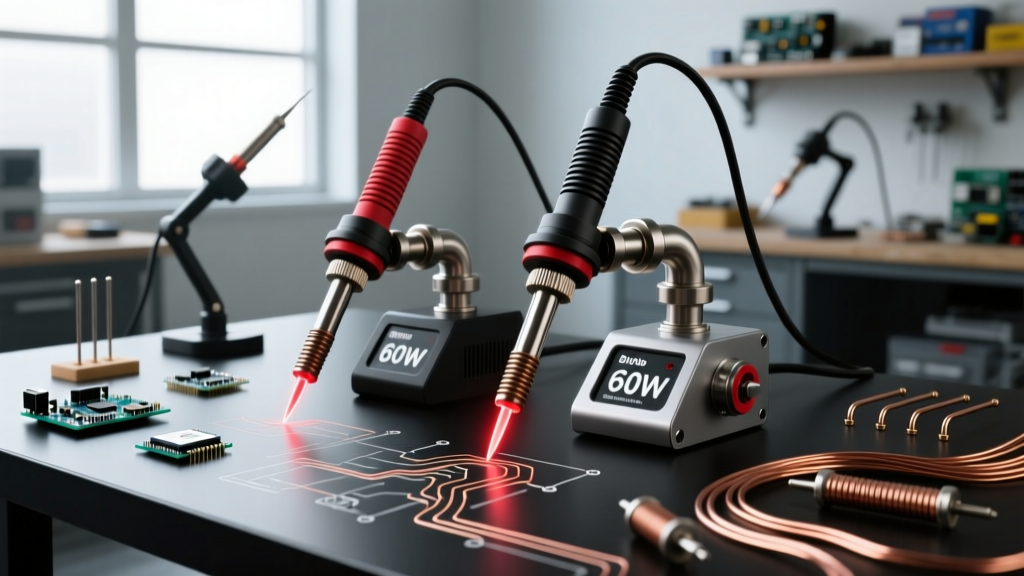
To provide a fair analysis, we selected three distinct tiers of 100-watt irons commonly found on workbenches today:
- Ultra-Budget: Generic Adjustable 60W-100W Kit (Typically $18 - $25)
- Mid-Range: Weller SP100N LED Stick Iron ($42 - $48)
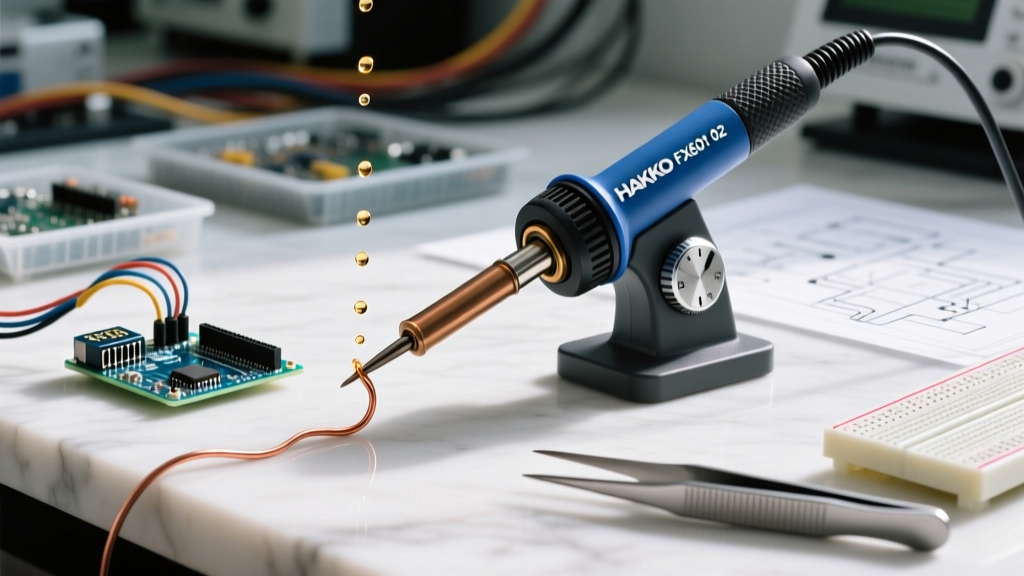
- Premium: Hakko FX-601-02 Adjustable Iron ($80 - $95)
Thermal Recovery and Core Performance Matrix
Wattage alone does not dictate performance; the heating element technology and closed-loop temperature feedback are what separate a professional tool from a disposable one. Below is our 2026 performance matrix based on bench testing.
| Feature | Generic 100W Kit | Weller SP100N LED | Hakko FX-601-02 |
|---|---|---|---|
| Average Price (2026) | $22 | $45 | $88 |
| Heating Element | Nichrome (Wire-wound) | Nichrome (Wire-wound) | Ceramic (Thick-film) |
| Temperature Control | Analog Dial (Highly Inaccurate) | Fixed (~850°F / 454°C) | Digital Dial (200°C - 670°C) |
| Tip Ecosystem | Generic 900M Series | Weller CT Series | Hakko T19 Series |
| Cold-to-Melt Time | ~65 seconds | ~45 seconds | ~22 seconds |
| Thermal Recovery (8 AWG) | Fails / Drops below 200°C | ~12 seconds | ~3 seconds |
| Grounding | 2-Prong (Ungrounded) | 3-Prong (Grounded) | 3-Prong (Grounded) |
Deep Dive: Where Budget Irons Fail (and Premium Irons Shine)
Nichrome vs. Ceramic Heating Elements
The most critical difference between a $20 budget iron and an $88 premium iron lies inside the wand. Budget and mid-range irons like the Weller SP100N use nichrome wire-wound elements. These act as slow resistors. While they eventually reach 100 watts of heat transfer, their thermal mass and slow feedback loop mean that when a massive copper ground plane or thick wire absorbs the heat, the element takes several seconds to pump energy back into the tip.
The Hakko FX-601 utilizes a ceramic thick-film heating element. Ceramic elements possess a built-in thermistor that provides near-instantaneous closed-loop feedback. When the sensor detects a 50°C drop in tip temperature, the ceramic element surges power immediately, recovering thermal equilibrium in roughly 3 seconds. This prevents the dreaded 'cold joint' that violates IPC-J-STD-001 soldering standards for electronic assemblies.
The Hidden Cost: Tip Longevity and Oxidation
A common trap in the budget tier is the cost of replacement tips. Generic 900M tips are often made from inferior copper alloys with microscopically thin iron plating. When subjected to the high temperatures required for heavy-duty soldering (often 400°C+), the plating oxidizes and pits within 10 to 15 hours of use. At $2 per tip, replacing them weekly adds up.
Premium T19 and Weller CT tips feature heavy-gauge, electrolytically plated iron cladding. With proper maintenance—specifically, keeping a blob of solder on the tip when holstered—a single $9 Hakko T19-D24 chisel tip can easily last 200+ hours. As noted in the Adafruit Guide to Excellent Soldering, proper tip tinning and avoiding abrasive sponges (opting for brass wool instead) extends premium tip life by a factor of ten, making the premium iron cheaper to operate over a 3-year period.
Real-World Test: Soldering 8 AWG Wire to an XT90 Connector
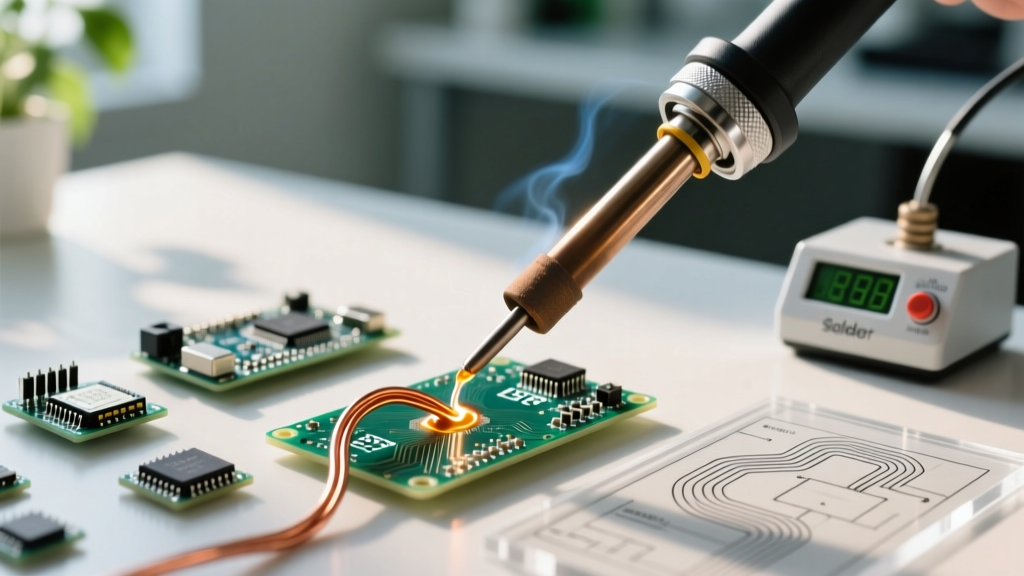
To quantify the difference, we conducted a standardized test: soldering a pre-tinned 8 AWG silicone wire into a massive copper XT90 battery connector using 63/37 rosin-core solder (1.0mm diameter). The target was a smooth, shiny, concave fillet without melting the nylon XT90 housing.
- Generic 100W Kit (Set to 'Max'): The iron struggled to transfer heat through the thick copper barrel. We held the iron in place for 45 seconds. The prolonged dwell time caused the nylon housing to soften and warp. The resulting joint was dull and granular—a textbook cold joint caused by the tip temperature dropping below the solder's liquidus point (183°C).
- Weller SP100N LED (Fixed 850°F): The heavy CT-6C7 chisel tip provided excellent initial thermal mass. The joint was completed in 14 seconds. The joint was shiny and structurally sound, but the iron's handle became uncomfortably warm due to the lack of thermal insulation found in premium wands.
- Hakko FX-601-02 (Set to 420°C / T19-D24 Tip): The ceramic element dominated this test. The thick copper barrel absorbed the heat, but the iron's internal sensor instantly compensated. The solder flowed like water in 6 seconds. Zero housing warping, perfect wetting, and the handle remained completely cool to the touch.
Pro-Tip for Heavy-Duty Joints: Never use the 'maximum temperature' setting to compensate for a lack of wattage. If your iron cannot melt solder on a large joint at 380°C - 400°C, you need a larger tip with more thermal mass, not a higher dial setting. Cranking a budget iron to 480°C will instantly burn the flux core and oxidize the tip, rendering it useless.
Safety Considerations: Grounding and AC Leakage
While 100W irons are primarily used for thick wires, RC battery connectors, and plumbing rather than sensitive microchips, safety remains paramount. Ultra-budget irons almost universally feature 2-prong, ungrounded plugs. Due to poor internal insulation and cheap transformers, these irons can induce a 30V to 60V AC 'ghost voltage' on the tip. If you touch the tip to a grounded chassis or a sensitive Battery Management System (BMS) board while soldering, you risk catastrophic short circuits or personal shock. Both the Weller SP100N and Hakko FX-601 feature proper 3-prong grounded plugs, safely shunting any induced voltage away from your workpiece and your body.
Final Verdict: Which 100W Iron Should You Buy in 2026?
Buy the Budget Generic Kit ($22) ONLY If:
- You are soldering stained glass or non-electrical plumbing where tip precision, AC leakage, and exact temperature control are irrelevant.
- You use the tool less than twice a year.
Buy the Weller SP100N ($45) If:
- You are an RC hobbyist or automotive technician who needs a rugged, fixed-temperature stick iron for heavy wires and bullet connectors.
- You prefer the heavy thermal mass of Weller CT tips and don't mind a slightly slower heat-up time.
Buy the Hakko FX-601-02 ($88) If:
- You demand professional, IPC-compliant joints on high-current electronics, solar panel busbars, or thick PCB ground planes.
- You value ergonomics, rapid thermal recovery, and the ability to precisely tune temperatures for different solder alloys (like lead-free SAC305, which requires higher heat).
Ultimately, a premium soldering iron 100 watt model like the Hakko FX-601 is not just a luxury; it is a massive upgrade in efficiency, joint reliability, and long-term cost savings. The ceramic element and superior tip ecosystem pay for themselves within the first year of regular use, leaving budget kits in the dust.