
The Metallurgical Challenge of Soldering Brass
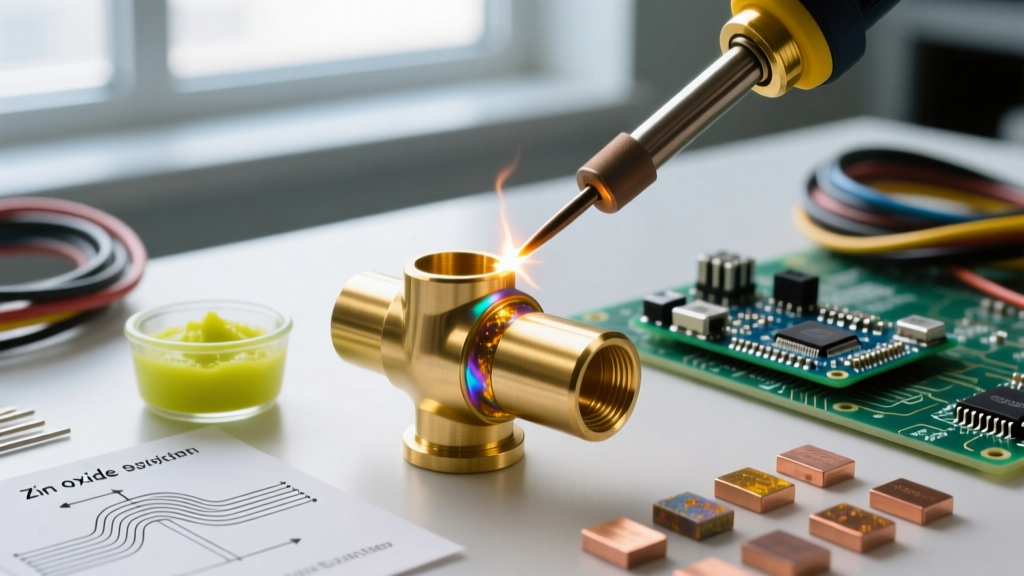
Soldering brass presents a unique set of metallurgical hurdles that routinely defeat standard rosin-based fluxes. Brass is fundamentally an alloy of copper and zinc. While copper is highly receptive to solder, zinc is notoriously problematic. When exposed to heat, zinc rapidly oxidizes, forming a tough, impermeable layer of zinc oxide that prevents molten solder from wetting the base metal. Furthermore, if the thermal profile exceeds 350°C (662°F), the zinc can begin to vaporize—a destructive process known as dezincification—which leaves the joint porous, brittle, and structurally compromised.
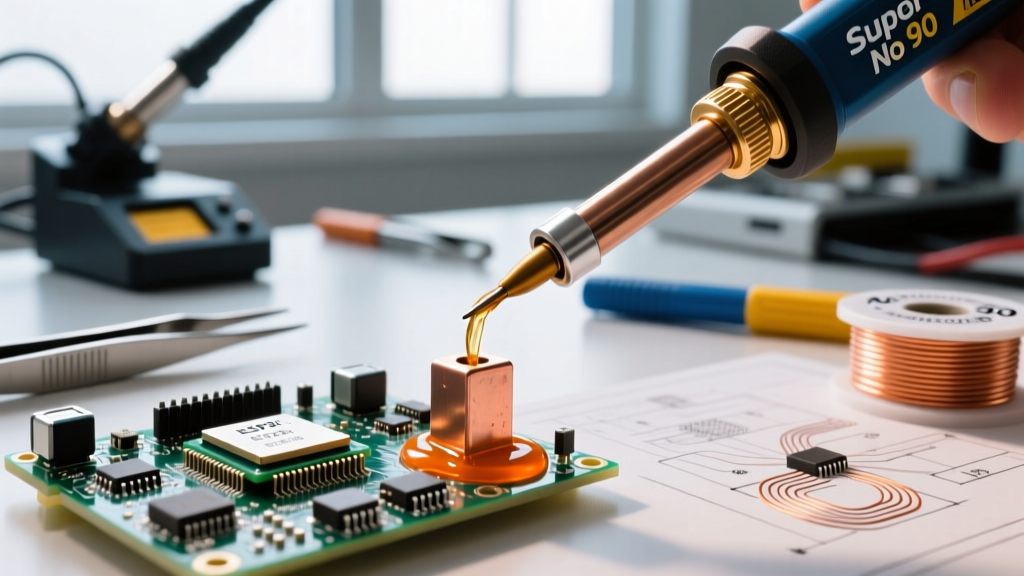
To overcome this, professionals require a highly active, thermally stable flux capable of dissolving zinc oxides without requiring excessive heat. This is precisely where Superior No 90 brass soldering flux earns its reputation in advanced DIY and industrial applications. Formulated as a high-activity paste, it bridges the gap between mild electronics fluxes and aggressive, highly corrosive plumbing acids, offering a controlled rheology that stays exactly where you apply it.
Why Experts Choose Superior No 90 Brass Soldering Flux
Superior No. 90 is engineered with a specialized organic-inorganic hybrid activator package. Unlike liquid zinc-chloride fluxes that run off vertical joints and cause widespread collateral corrosion, No. 90 features a thixotropic paste base. This means it remains viscous at room temperature, liquefies slightly upon heating to penetrate micro-crevices, and forms a protective blanket over the brass surface to prevent secondary oxidation during the soldering process.
Expert Insight: A standard 4 oz (113g) jar of Superior No. 90 typically retails between $19.50 and $24.00 in 2026. While this represents a premium over generic liquid fluxes, the reduction in scrapped brass components and the elimination of post-solder rework makes it highly cost-effective for high-stakes fabrication, musical instrument repair, and precision RC model engineering.
Step-by-Step Expert Application Protocol
Achieving a flawless, mirror-finish solder joint on brass requires strict adherence to thermal and chemical preparation protocols. Follow this optimized sequence for optimal capillary action and wetting.
- Mechanical Surface Preparation: Begin by abrading the brass mating surfaces with 400-grit silicon carbide paper. Do not use steel wool, as embedded iron particles will cause galvanic corrosion later. The goal is to remove macro-oxidation and create a microscopic surface profile for mechanical interlocking.
- Chemical Degreasing: Wipe the abraded area with 99% isopropyl alcohol (IPA) using a lint-free wipe. This removes machining oils and finger oils that would otherwise cause the flux to bead up and de-wet.
- Flux Deposition: Apply a uniform 1.5mm to 2mm bead of Superior No 90 brass soldering flux over the joint area, extending roughly 3mm beyond the intended solder boundary. The paste will act as a thermal conductor and an oxygen barrier.
- Thermal Profiling: Apply heat using a high-wattage iron (minimum 65W for small brass parts, or a micro-torch for heavy gauge brass). Use a temperature-indicating stick (such as a Tempilstik rated at 204°C / 400°F) on the periphery of the joint. Once the stick melts, the base metal is at the optimal activation temperature for the flux.
- Filler Metal Introduction: Touch your chosen solder alloy directly to the brass joint, not to the iron tip. The flux should be fully activated and clear; if it turns black and crusty, you have burned the flux and must clean and restart.
Optimal Alloy Pairing Matrix for 2026
Superior No. 90 is versatile, but its performance is maximized when paired with the correct solder alloy for your specific mechanical and electrical requirements. Below is our recommended pairing matrix based on current 2026 metallurgical standards.
| Alloy Designation | Composition | Melt Temp (°C) | Best Use Case with No. 90 Flux |
|---|---|---|---|
| Sn63/Pb37 | 63% Tin, 37% Lead | 183°C | General electronics, low-stress mechanical joints, vintage audio repair. |
| SAC305 | 96.5% Sn, 3% Ag, 0.5% Cu | 217°C | Lead-free compliance, high-reliability electrical connections, moderate shear strength. |
| Sn95/Sb5 | 95% Tin, 5% Antimony | 235°C | High-temperature structural brass joints, plumbing fixtures, high-vibration environments. |
| Sn96.5/Ag3.5 | 96.5% Tin, 3.5% Silver | 221°C | Precision RC components, high-conductivity requirements, aerospace prototyping. |
Analyzing the Matrix
For heavy structural brass work, the Sn95/Sb5 alloy is the undisputed champion when used with Superior No 90. The antimony addition significantly increases the tensile strength and creep resistance of the joint, which is critical when soldering brass gears or load-bearing RC chassis components. However, because Sn95/Sb5 requires a higher thermal input (235°C liquidus), you must ensure your soldering station can deliver sustained heat without triggering thermal shutdown or oxidizing the iron tip prematurely.
Post-Solder Cleanup and Passivation
Because Superior No 90 brass soldering flux utilizes active organic and mild inorganic salts to penetrate zinc oxide, leaving the residue on the workpiece will eventually lead to micro-corrosion, especially in high-humidity environments. Proper cleanup is non-negotiable for long-term joint integrity.
- Initial Rinse: While the joint is still warm (but below 60°C to prevent thermal shock), rinse the assembly with Deionized (DI) water heated to roughly 50°C (122°F). The warm DI water effectively dissolves the water-soluble activator residues.
- Neutralization: For mission-critical applications, follow the DI water rinse with a mild alkaline bath. A 1% sodium bicarbonate (baking soda) solution will neutralize any microscopic acidic residues trapped in the joint's capillary gaps.
- Final Drying: Use compressed air to blow out trapped moisture from blind holes, followed by a 10-minute bake in a convection oven at 80°C to ensure absolute dryness before applying any conformal coating or clear coat.
Fume Management and Safety Standards
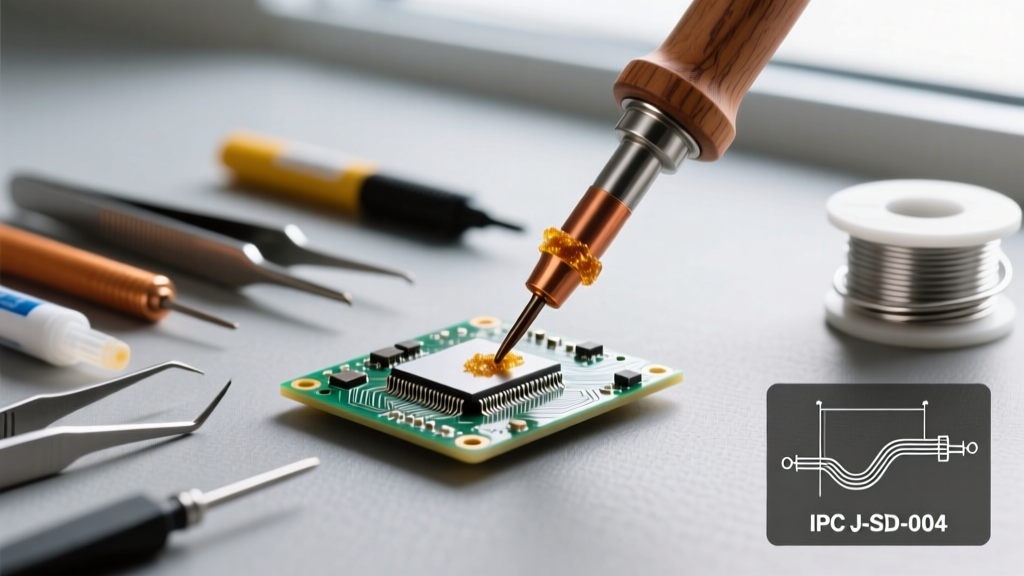
Soldering brass with high-activity fluxes generates aerosolized particulates and volatile organic compounds (VOCs). According to the National Institute for Occupational Safety and Health (NIOSH), prolonged exposure to soldering fumes can lead to occupational asthma and respiratory sensitization. Furthermore, the IPC J-STD-004 standard outlines strict classifications for flux residues and their corrosive potential, emphasizing the need for proper handling.
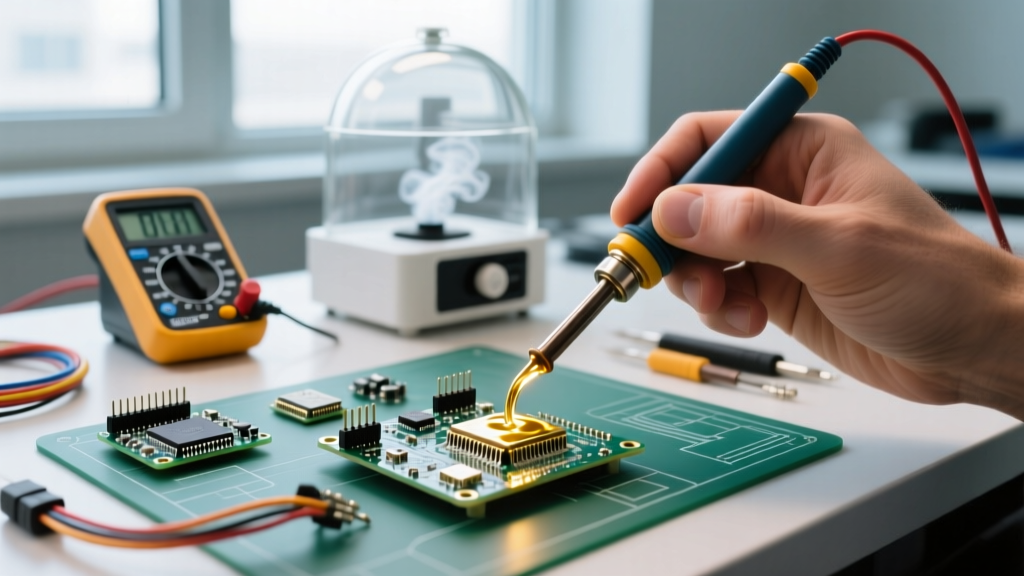
When using Superior No 90, always operate a localized fume extraction system with a HEPA and activated carbon filter combination. The carbon filter is essential for adsorbing the VOCs released by the flux's organic carriers, while the HEPA filter captures metallic particulates. Never rely on a standard desk fan, which merely disperses hazardous aerosols across your workspace.
Advanced Troubleshooting: Failure Modes and Edge Cases
Even with premium consumables, brass soldering can fail if environmental or thermal variables are mismanaged. Here is how to diagnose and correct the most common edge cases encountered with this specific flux.
- Failure Mode: Solder De-wetting (Balling Up)
Diagnosis: The brass surface was not heated sufficiently before the solder was applied, causing the flux to pool and burn rather than activate. Alternatively, the brass part acted as a massive heat sink, dropping the localized temperature below the solder's liquidus point.
Correction: Increase your iron's dwell time. Pre-heat the entire brass assembly with a hot air gun to 100°C before applying the iron and flux. Use a broader chisel tip to maximize thermal transfer surface area. - Failure Mode: Spongy or Porous Joint Appearance
Diagnosis: Dezincification. The localized temperature exceeded 350°C, causing the zinc in the brass to vaporize and create gas pockets within the molten solder pool.
Correction: Reduce your soldering station temperature. Switch to a lower-melting-point alloy like Sn63/Pb37 or Sn42/Bi58 if the mechanical strength requirements allow, ensuring the base metal never reaches the zinc vaporization threshold. - Failure Mode: Flux Charring (Black Crust)
Diagnosis: The flux was exposed to the heat source for too long without the introduction of filler metal, exhausting its chemical activators.
Correction: Clean the charred residue with a brass wire brush and IPA. Re-apply a fresh layer of Superior No. 90 and introduce the solder wire simultaneously as the flux begins to bubble and clear.
Mastering brass soldering requires respecting the metallurgy of the base metal and the chemical boundaries of your consumables. By leveraging the aggressive yet controlled chemistry of Superior No 90 brass soldering flux, maintaining strict thermal discipline, and executing thorough post-solder passivation, you can achieve joints that are both electrically flawless and mechanically indestructible. For further reading on advanced brazing and soldering techniques, the American Welding Society (AWS) provides extensive technical literature on non-ferrous metal joining.