
The Metallurgical Reality: Why Soldering with Flux is Non-Negotiable
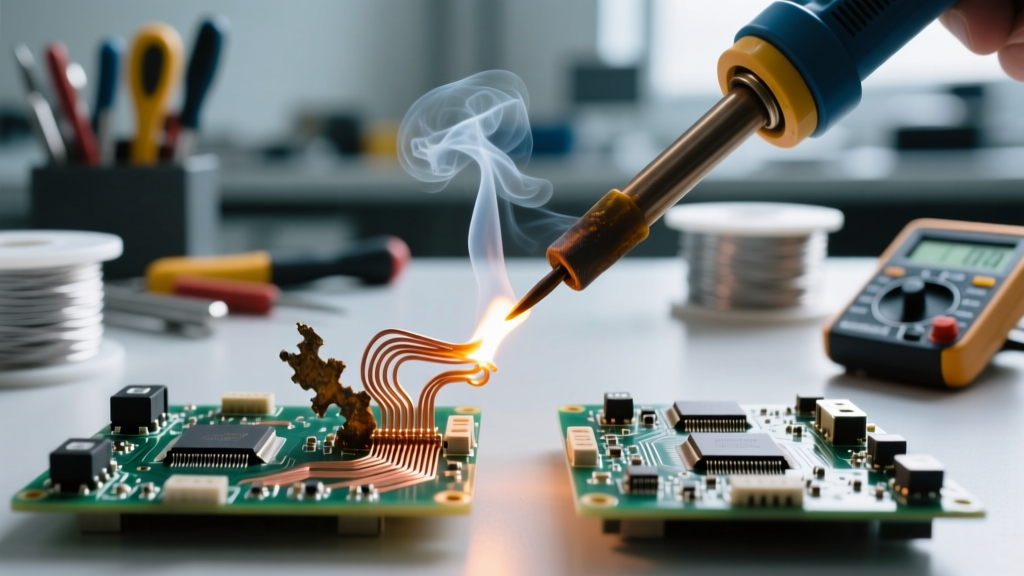
At the microscopic level, soldering is not merely melting metal; it is a controlled metallurgical reaction where molten solder dissolves a fraction of the base metal to form an intermetallic compound (IMC). However, this reaction is entirely blocked by oxidation. When copper pads and component leads are exposed to ambient air and heated to typical soldering temperatures (250°C to 380°C), copper oxide (CuO and Cu2O) forms in milliseconds. This oxide layer acts as an impenetrable barrier, causing molten solder to bead up and roll off—a phenomenon known as poor wetting.
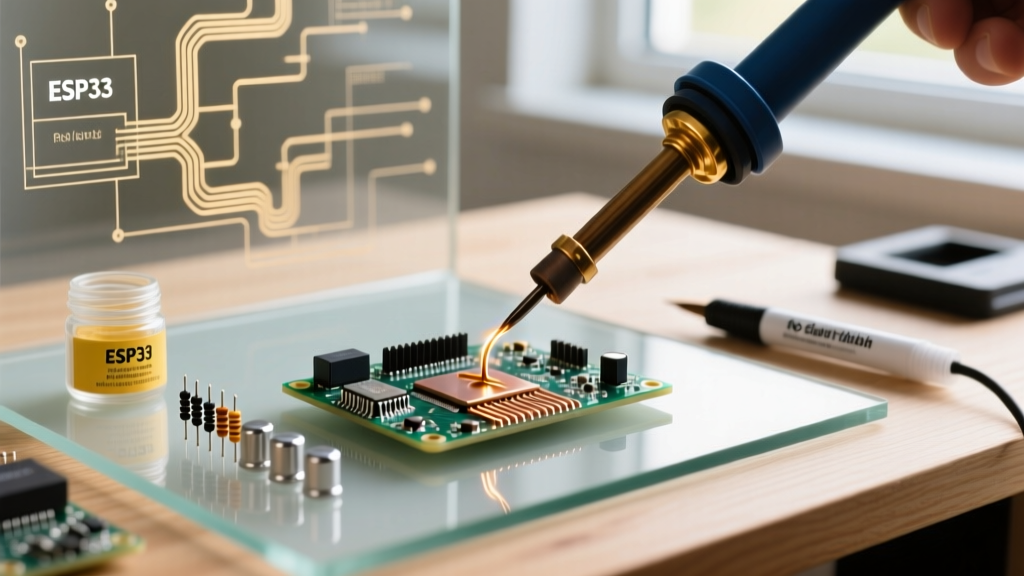
This is where the science of soldering with flux becomes the single most critical variable in your assembly process. Flux is a chemical reducing agent designed to strip away metallic oxides at elevated temperatures, prevent re-oxidation during the liquidus phase, and lower the surface tension of the molten alloy. As of 2026, with the industry heavily transitioning to ultra-fine-pitch components like 01005 passives and high-density BGAs, selecting the exact right flux chemistry is the difference between a reliable, aerospace-grade joint and a catastrophic field failure.
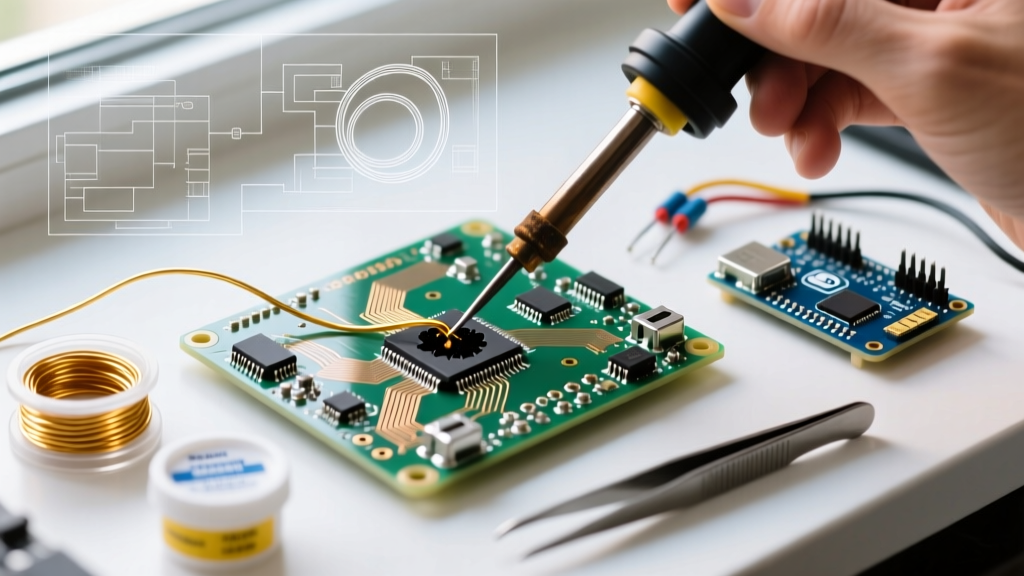
Expert Insight: Never rely solely on the flux core inside your solder wire for complex rework or drag-soldering. The volumetric ratio of flux-to-alloy in standard 2.2% to 3.3% core wire is insufficient to maintain oxide reduction over prolonged thermal exposure on multi-layer boards with high thermal mass. Supplemental external flux is mandatory for reliable SMD rework.
Decoding IPC J-STD-004B: The Universal Flux Taxonomy
To select the right chemistry, you must understand how the industry classifies it. The IPC J-STD-004B standard categorizes fluxes by their base material, activator type, and halide content. Understanding this nomenclature prevents disastrous mismatches, such as using a highly active organic acid flux on a high-impedance RF circuit where ionic residues would cause signal degradation.
| IPC Code | Base Material | Activator / Halide Level | Cleaning Required? | Best Application Scenario |
|---|---|---|---|---|
| ROL0 / ROL1 | Rosin (Natural Pine) | Low (L0 = <0.5%, L1 = 0.5-2.0%) | Optional (but recommended for L1) | General through-hole, DIY, and standard SMD assembly where mild activity is sufficient. |
| ROM0 / ROM1 | Rosin (Natural Pine) | Medium / High Halides | Mandatory | Heavily oxidized legacy boards, aerospace through-hole, and difficult-to-solder alloys. |
| ORL0 / ORL1 | Organic Acid (Water-Soluble) | Low / Medium | Mandatory (DI Water) | High-volume wave soldering, automotive PCBs where automated aqueous washing is standard. |
| REL0 | Synthetic Resin (No-Clean) | Low / Zero Halides | No | Modern SMD, BGA rework, medical devices, and high-frequency RF boards. |
Form Factors and 2026 Market Leaders
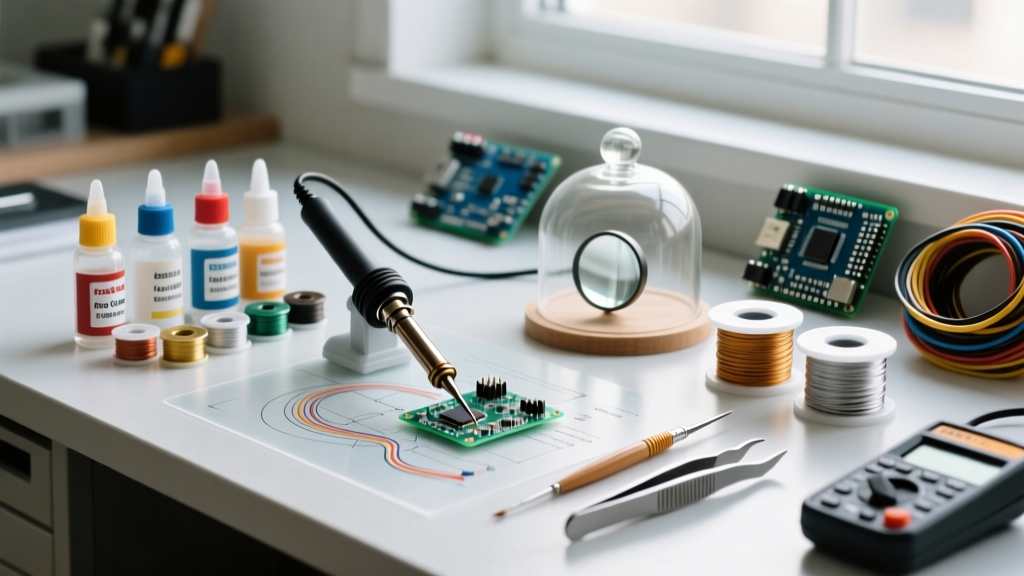
Once you have identified the required IPC chemistry, you must choose the physical delivery method. The viscosity and solvent carrier dictate how the flux behaves under the heat of a soldering iron or hot air rework station.
1. Tacky Flux (Syringe and Jar)
Tacky fluxes are thixotropic gels suspended in high-boiling-point solvents. They are designed to hold SMD components in place via surface tension before the solder melts.
- Top Pick: Amtech NC-559-V2-TF (No-Clean, REL0). Priced around $25 for a 10cc syringe, this is the undisputed king of BGA reballing and fine-pitch QFN drag-soldering. Its high-tack formulation prevents component floating during hot-air reflow.
- Alternative: Chip Quik SMD291AX10 (Rosin-based). Excellent for general SMD rework, though it leaves a slightly more visible amber residue compared to the Amtech.
2. Liquid Flux (Bottles and Gallons)
Liquid fluxes use highly volatile solvents (like isopropyl alcohol or specialized glycol ethers) that flash off rapidly. They penetrate tight spaces via capillary action, making them ideal for through-hole vias and wave soldering.
- Top Pick: Kester 186 Mildly Activated Rosin Liquid. A legacy standard that meets RMA (Rosin Mildly Activated) profiles. At roughly $15 to $20 per quart, it is highly economical for large-scale through-hole tinning and wire splicing.
- Pro Tip: Never use standard liquid flux for BGA rework; the rapid solvent boil-off will cause the BGA to 'dance' and misalign on its pads.
3. Precision Flux Pens
Flux pens utilize a valve-action tip to deliver a controlled stream of low-residue no-clean flux. They are essential for targeted touch-ups without flooding adjacent components.
- Top Pick: MG Chemicals 8341 No-Clean Flux Pen. Features a replaceable felt tip and a zero-halide synthetic resin formula. Ideal for quick SMD touch-ups on 0402 and 0201 passives.
The 4-Step Selection Framework for Engineers and Makers
Stop guessing and apply this systematic framework to your next assembly or rework project:
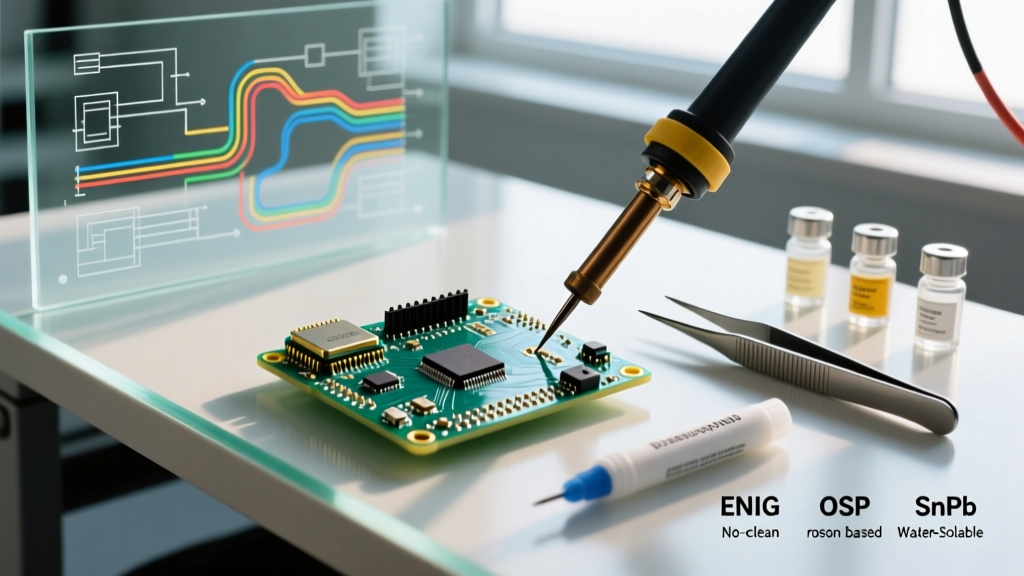
- Assess the Base Metal Oxidation: Are you soldering fresh, gold-plated ENIG pads, or heavily tarnished tin-lead legacy boards? For ENIG and OSP, a low-activity no-clean (REL0) is perfect. For tarnished boards, step up to a mildly activated rosin (ROL1) or organic acid.
- Evaluate the Post-Solder Cleaning Capability: If your workspace lacks an ultrasonic bath or heated deionized water wash system, you must use a No-Clean (RE) or pure Rosin (RO) flux. Using water-soluble (OR) flux without proper washing guarantees electrochemical migration.
- Match the Thermal Profile: If you are using a high-temperature lead-free alloy (like SAC305, melting at 217°C) and require prolonged dwell times, select a flux with a high thermal stability threshold to prevent the activators from charring before wetting occurs.
- Consider the Operating Environment: For high-impedance analog circuits or RF antennas, even 'no-clean' residues can introduce parasitic capacitance or leakage currents. In these edge cases, use a zero-residue VOC-free liquid flux and follow up with an isopropyl alcohol (IPA) scrub.
Advanced Failure Modes and Edge Cases
Even with premium consumables, incorrect application techniques lead to distinct failure modes. The NASA Workmanship Standards (NASA-STD-8739.3) provide rigorous guidelines on avoiding these defects, but understanding the root cause is key to troubleshooting.
- Dendrite Growth (Electrochemical Migration): Cause: Leaving halide-activated water-soluble flux residues on the board in a humid environment. Result: Microscopic metallic trees grow between pads, causing short circuits. Fix: Implement a mandatory 60°C DI water wash and bake-out cycle, or switch to a halide-free REL0 no-clean flux.
- Tombstoning on 0201 Passives: Cause: Uneven flux outgassing or asymmetric flux volume on the two pads of a tiny capacitor. The rapid vaporization on one side creates a kinetic force that pulls the component upright. Fix: Use a low-volatile tacky flux applied via a micro-stencil or precision needle, ensuring perfectly symmetrical volume.
- Charred Residue and Voiding: Cause: Applying excessive liquid flux directly under a BGA and hitting it with 400°C hot air. The solvents boil violently, creating massive vapor pockets (voids) in the solder joints and carbonizing the flux activators. Fix: Apply a micro-thin layer of high-boiling-point tacky flux and utilize a pre-heater (set to 130°C) to gently evaporate solvents before applying top-side convective heat.
Mastering the art of soldering with flux requires moving beyond the 'one-size-fits-all' mentality. By aligning your IPC chemistry requirements, physical form factor, and thermal profile, you elevate your workmanship from amateur assembly to professional-grade electronic manufacturing.