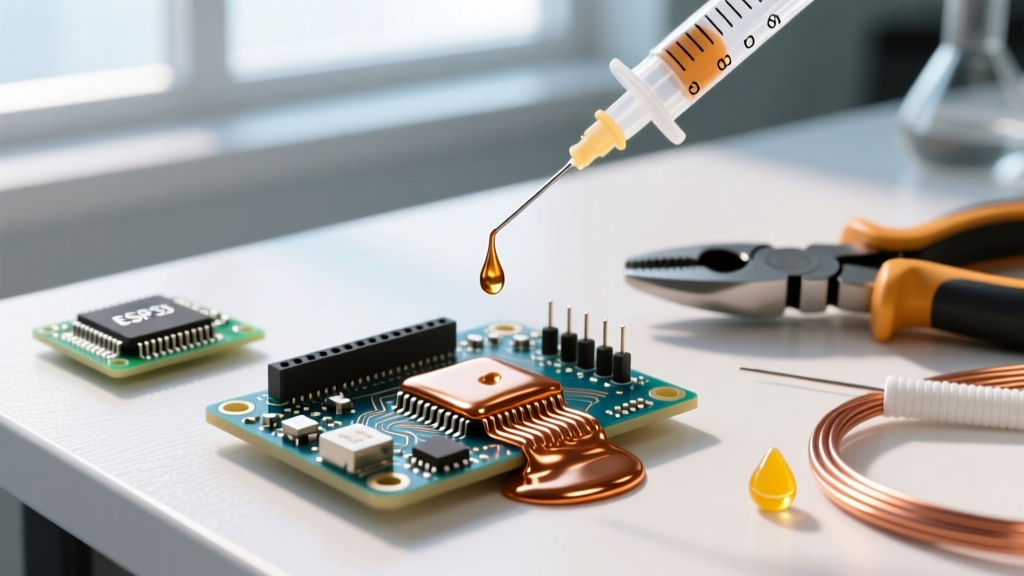

The Thermodynamics of Solder Wetting and Oxidation
In the electronics assembly and DIY repair community, the search for a substitute for soldering flux is a persistent myth. Makers and hobbyists frequently turn to household items—petroleum jelly, lemon juice, or even crushed aspirin—in an attempt to save a few dollars or salvage a joint in a pinch. However, from a material science perspective, soldering is not merely a mechanical bonding process; it is a complex thermodynamic event governed by surface energy, interfacial tension, and reduction-oxidation (redox) chemistry.
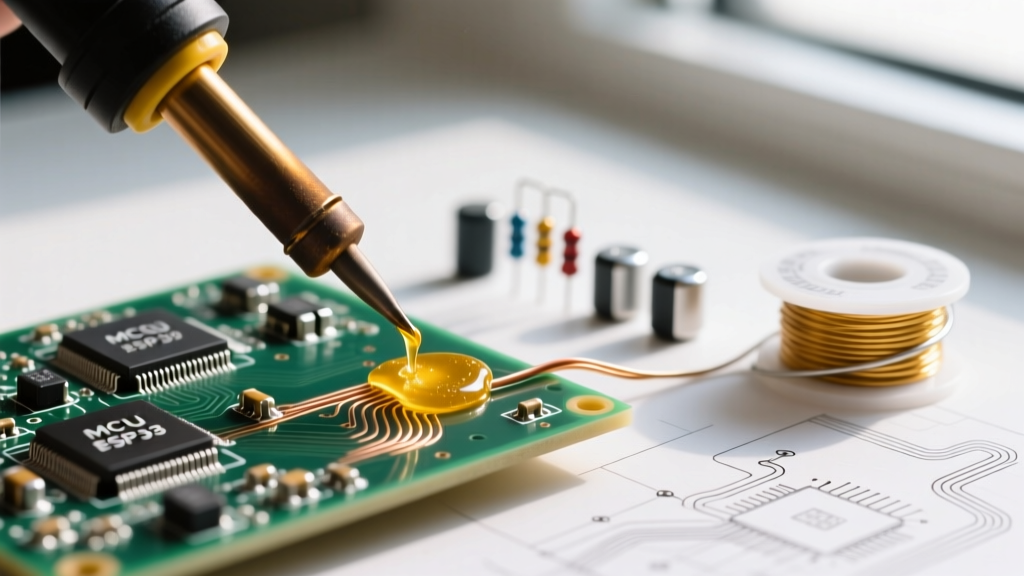
To understand why almost every kitchen-based substitute for soldering flux fails, we must first look at metallurgical flux chemistry. When copper or gold pads are exposed to ambient air, they rapidly form a microscopic layer of metal oxides. Molten solder, such as standard Sn63/Pb37 (melting at 183°C) or lead-free SAC305 (melting at 217°C), possesses high surface tension (approximately 0.5 N/m). According to Young's equation, for a liquid to 'wet' a solid surface, the interfacial energy must be lower than the surface energy of the solid. Metal oxides drastically lower the surface energy of the pad, causing the molten solder to bead up (a high contact angle) rather than flow and form an intermetallic compound (IMC) layer.
Flux is not a glue; it is a chemical reducing agent. Its primary job is to strip away these oxides at elevated temperatures and temporarily lower the surface tension of the molten alloy, allowing capillary action to pull the solder into the joint.
Debunking Common Household 'Flux Hacks'
Let us evaluate the most commonly suggested household substitutes for soldering flux through the lens of organic chemistry and thermal degradation.
1. Petroleum Jelly (Vaseline)
Petroleum jelly is a mixture of long-chain hydrocarbons. While it melts at around 40°C to 60°C and can temporarily shield a copper pad from ambient oxygen, it possesses zero reducing capability. It cannot break the chemical bonds of copper oxide (CuO or Cu2O). Furthermore, when exposed to a 350°C soldering iron tip, the hydrocarbons do not cleanly volatilize; they carbonize, leaving an insulating carbon sludge that actively prevents the formation of the crucial copper-tin intermetallic layer.
2. Citric Acid (Lemon Juice)
Citric acid (C6H8O7) is a weak organic acid that can technically dissolve copper oxide at room temperature. However, as a substitute for soldering flux, it is a catastrophic choice for electronics. Commercial fluxes are carefully buffered to become inert after soldering. Citric acid leaves behind highly conductive, hygroscopic (water-absorbing) salts. In the presence of ambient humidity and an applied voltage, this residue will trigger electromigration, causing microscopic tin or copper dendrites to grow across the PCB traces, inevitably resulting in a short circuit.
3. Acetylsalicylic Acid (Crushed Aspirin)
Aspirin decomposes at approximately 136°C, well below standard soldering temperatures. When hit with a soldering iron, it sublimates into acetic acid and salicylic acid vapors. While the acetic acid can strip oxides, the vapor is highly corrosive to the iron plating of your soldering tip and poses a severe respiratory hazard. The resulting residue is highly acidic and will eat through thin PCB copper traces over a period of weeks.
Material Comparison Matrix: Commercial vs. Substitutes
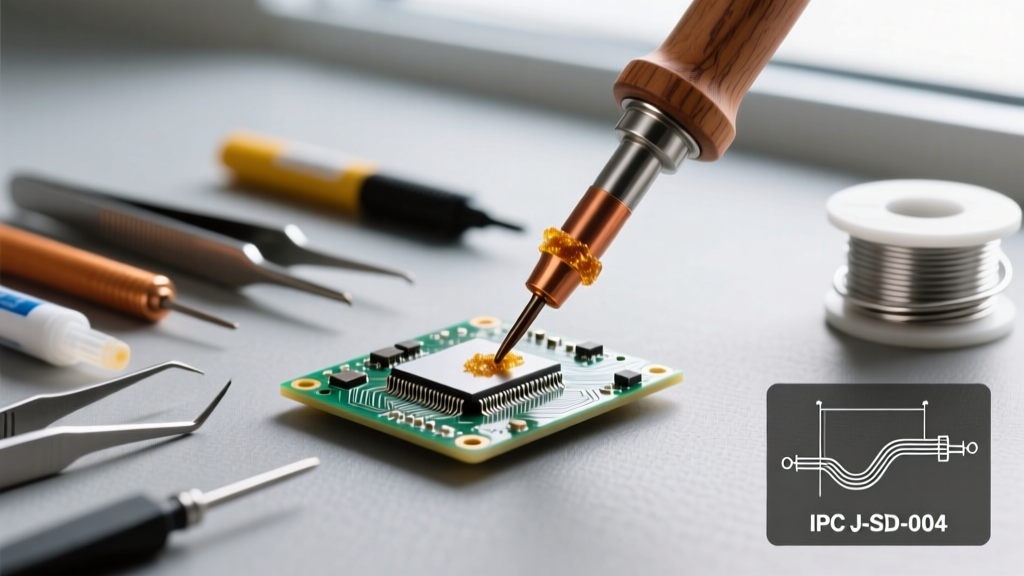
The following table illustrates why engineered fluxes remain the only reliable choice for electronics manufacturing, referencing standards set by organizations like IPC (specifically J-STD-004).
| Material | Primary Active Chemical | Activation Temp (°C) | Oxide Reduction Capability | Residue Conductivity & Safety |
|---|---|---|---|---|
| Commercial ROL0 Flux | Abietic Acid + Halide Activators | 150°C - 180°C | Excellent (Breaks CuO/Cu2O) | Non-conductive, non-corrosive, safe |
| Petroleum Jelly | Aliphatic Hydrocarbons | 40°C - 60°C | None (Acts only as O2 barrier) | Insulating sludge, ruins wetting |
| Lemon Juice | Citric Acid (C6H8O7) | 100°C (Boils off) | Moderate (Dissolves oxides) | Highly conductive, causes dendrites |
| DIY Pine Rosin | Abietic Acid (C19H29COOH) | 150°C - 170°C | Good (Mild reduction) | Non-conductive, requires IPA cleanup |
The Only Valid Substitute: Synthesizing Your Own Rosin Flux
If you are out of commercial flux and need a legitimate substitute for soldering flux, you must look to the foundational ingredient of almost all electronics-grade fluxes: Colophony (Pine Rosin). Rosin is derived from pine tree sap and consists primarily of abietic acid, a diterpene carboxylic acid.
Abietic acid is unique because it is chemically inert at room temperature but becomes mildly reactive at soldering temperatures (around 150°C). It reduces copper oxide to pure copper while forming a protective glass-like barrier over the molten solder pool, preventing re-oxidation before the joint solidifies. Industry experts at Indium Corporation frequently highlight the irreplaceable thermal profile of rosin-based chemistry in advanced SMT assembly.
Step-by-Step: Brewing High-Purity DIY Rosin Flux
Rather than using dangerous kitchen acids, you can synthesize a high-quality liquid rosin flux (equivalent to an RMA - Rosin Mildly Activated formulation) for pennies on the dollar.
- Source Raw Materials: Purchase 1 lb of food-grade or musical-grade pine rosin (colophony) online (approx. $12.00) and 1 Liter of 99% Isopropyl Alcohol (IPA) from a hardware store like Klean-Strip (approx. $9.00). Do not use 70% rubbing alcohol; the 30% water content will cause violent spattering when it hits a 350°C iron.
- Crush the Rosin: Place the rosin chunks in a heavy-duty ziplock bag and crush them into a fine powder using a mallet. Increasing the surface area accelerates dissolution.
- The Golden Ratio: Mix the crushed rosin and 99% IPA at a 40:60 ratio by weight (40g rosin to 60g IPA) in a sealed glass mason jar. This yields a viscosity similar to commercial pen-style fluxes.
- Agitation and Rest: Shake vigorously for 5 minutes, then let the solution sit in a dark cabinet for 24 hours. The abietic acid will fully dissolve, leaving behind a dark amber liquid.
- Filtration: Pour the liquid through a standard coffee filter to remove any un-dissolved bark or organic impurities from the raw pine tears.
Cost Analysis: A 50mL bottle of premium commercial flux (like MG Chemicals 862 or Amtech) costs between $12.00 and $18.00. The DIY 40/60 rosin mixture detailed above yields over 1.5 Liters of chemically identical base flux for a total material cost of $21.00—equating to roughly $0.70 per 50mL.
Failure Modes: What Happens When You Skip Flux Entirely?
Some DIYers attempt to bypass the need for a substitute for soldering flux altogether by simply applying more heat. This violates the core principles of thermal mass and metallurgy. When solder is applied to an oxidized pad without a reducing agent, the following failure modes occur:
- Cold Joints and Dewetting: The solder forms a high-angle meniscus, pulling away from the edges of the pad. The resulting joint is mechanically brittle and possesses high electrical resistance.
- Thermal Damage to Substrates: To force molten solder to mechanically 'stick' to an oxidized pad, operators often hold the iron in place for 5 to 10 seconds. This excessive dwell time exceeds the Tg (Glass Transition Temperature) of standard FR-4 fiberglass PCBs, causing delamination, lifted pads, and destruction of the plated through-holes (PTH).
- Tip Oxidation: Without the protective volatilization of flux, the iron plating on your soldering tip oxidizes rapidly, creating a black, non-wetting crust that ruins the thermal transfer efficiency of the station.
The Final Verdict on Flux Substitutes
From a material science standpoint, there is no safe, effective household substitute for soldering flux. The chemical requirements for oxide reduction, surface tension modification, and thermal stability cannot be met by petroleum products or culinary acids. Attempting to use them will result in catastrophic joint failures, PCB corrosion, and damaged equipment.
If you find yourself without commercial flux, the only scientifically sound alternative is to extract and dissolve pure pine rosin in high-purity isopropyl alcohol. By understanding the chemistry of abietic acid and interfacial thermodynamics, you can ensure reliable, low-resistance intermetallic bonds every time you pick up your iron.