
Beyond the Spool: Why Application Dictates Your Flux Soldering Wire
Walking into an electronics supply store or browsing online catalogs in 2026, the sheer volume of solder options can be paralyzing. Many DIYers and hobbyists make the critical mistake of buying a single, generic spool of 60/40 solder and attempting to use it for everything from delicate 0402 surface-mount device (SMD) rework to heavy-gauge automotive wiring. This one-size-fits-all approach inevitably leads to cold joints, damaged PCB pads, and excessive flux residue. Selecting the correct flux soldering wire is not just about the metal alloy; it is about matching the flux core chemistry, the wire diameter, and the metallurgical melting profile to the exact thermal and mechanical demands of your specific application.
According to the NASA Workmanship Standards for electronic assemblies, the reliability of a soldered connection is directly tied to the proper selection of materials and thermal profiles. Using a water-soluble flux on a dense PCB without ultrasonic cleaning, or using a thin 0.015-inch wire on a 12AWG automotive ground, guarantees failure. This guide breaks down exactly which flux soldering wire you need for specific DIY and professional repair scenarios.
The Anatomy of Modern Flux Soldering Wire
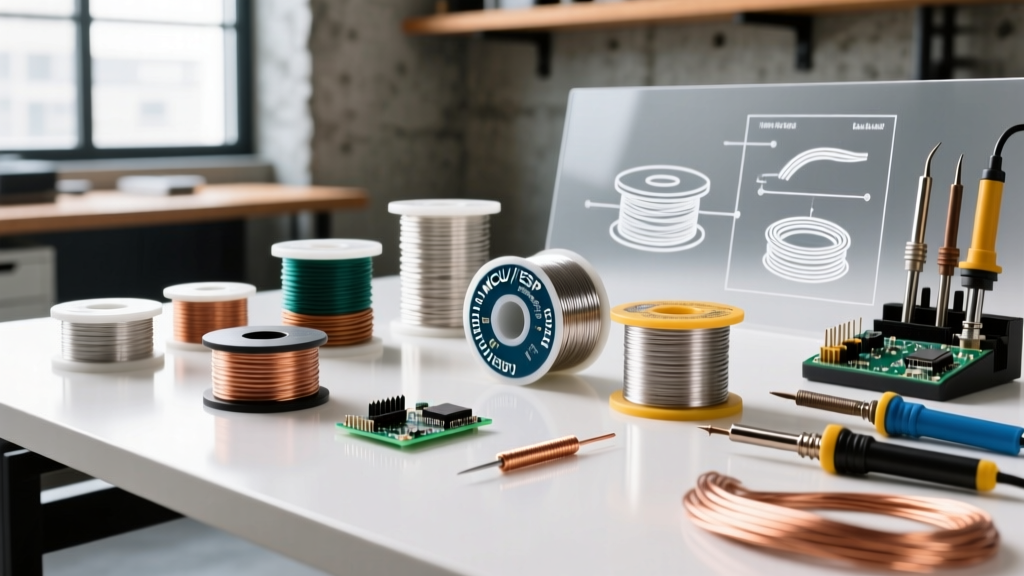
Before diving into applications, it is vital to understand what is inside the wire. Modern flux soldering wire is not simply a hollow tube filled with paste. High-quality wires utilize a multi-core design—often 3 to 5 continuous flux cores extruded through the center. This ensures that even if the wire is bent, kinked, or cut at a sharp angle, flux is continuously delivered to the joint. The flux percentage typically ranges from 1.5% to 3.5% by weight. For fine-pitch SMD work, a lower flux percentage (around 2%) prevents excessive spattering and residue, while heavy-duty through-hole or wire-to-terminal work benefits from a 3% core to aggressively cut through oxidation.
Application-Specific Decision Matrix
Use the following matrix as a quick-reference framework when stocking your workbench. Prices reflect average market rates per pound as of early 2026.
| Application Scenario | Recommended Alloy | Flux Core Type | Ideal Diameter | Est. 2026 Price/lb |
|---|---|---|---|---|
| Precision SMD & 0402 Rework | Sn63/Pb37 (Eutectic) | No-Clean (e.g., Kester 245) | 0.010" - 0.015" | $45 - $55 |
| Standard Through-Hole PCB | Sn60/Pb40 | Rosin Mildly Activated (RMA) | 0.025" - 0.031" | $35 - $45 |
| Automotive & Drone Wiring | Sn63/Pb37 (Eutectic) | Rosin Activated (RA) | 0.050" - 0.062" | $40 - $50 |
| Lead-Free Consumer Repair | SAC305 (Sn96.5/Ag3/Cu0.5) | High-Activation No-Clean | 0.031" - 0.040" | $85 - $110 |
| Stained Glass & Copper Foil | Sn60/Pb40 or 50/50 | Solid Core (Use Ext. Paste) | 0.125" - 0.250" | $25 - $35 |
Precision PCB Prototyping & SMD Rework
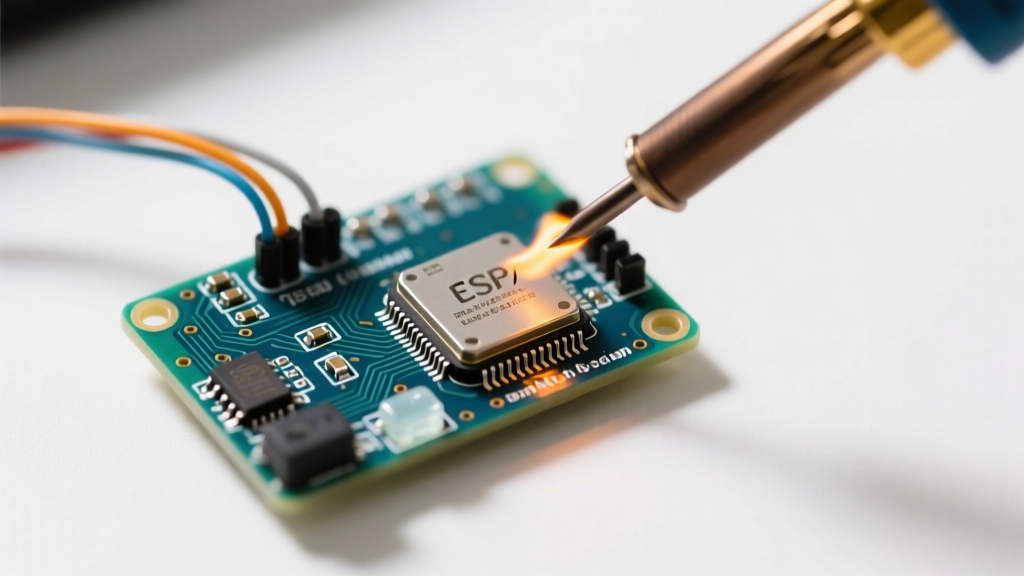
When working with modern microcontrollers, ESP32 modules, or repairing smartphone logic boards, thermal mass is incredibly low. You are soldering components like 0603 resistors or QFN IC packages where excess solder will instantly bridge adjacent pins. For this application, you must use a eutectic Sn63/Pb37 flux soldering wire. Eutectic alloys transition from liquid to solid at a single, precise temperature (183°C / 361°F) with no "pasty" phase. This snap-freeze characteristic prevents disturbed joints if the component shifts microscopically during cooling.
Diameter and Flux Selection
For 0805 and 0603 components, a 0.020-inch (0.5mm) diameter is standard. However, if you are reworking 0402 components or fine-pitch 0.5mm TQFP chips, you must drop down to 0.015-inch (0.38mm) or even 0.010-inch (0.25mm) wire. Pair this with a high-quality No-Clean flux core, such as Kester 245 or Alpha Metals OM-338. No-clean fluxes are formulated with synthetic resins that leave behind a clear, non-conductive, and non-corrosive residue that does not require post-solder cleaning, saving you from accidentally wicking solder out of tight BGA pads with aggressive solvents.
Expert Tip: When using ultra-thin 0.010" flux soldering wire, lower your soldering iron tip temperature to 300°C - 320°C. Higher temperatures will instantly boil the microscopic flux core, causing violent spattering that deposits sticky flux balls across your pristine PCB.
High-Vibration Environments: Drones & Automotive Wiring
Soldering 12AWG silicone wire to a drone flight controller power distribution board (PDB) or repairing automotive sensor wiring requires a completely different approach. The thermal mass of thick copper strands acts as a massive heat sink, pulling heat away from your iron tip. If you use thin wire here, you will spend minutes feeding solder, overheating the wire insulation and degrading the copper.
The Case for Eutectic Sn63/Pb37 and RMA Flux
For high-vibration environments, stick to Sn63/Pb37. While Sn60/Pb40 is cheaper and has a slight pasty range (melting between 183°C and 190°C), that pasty range is a liability in automotive and drone applications. If a wire moves while the 60/40 solder is in its semi-solid pasty state, it creates a "disturbed joint" characterized by a grainy, dull appearance and high internal micro-cracking. Eutectic 63/37 eliminates this risk.
Choose a thick diameter—0.062-inch (1.57mm) or larger—and ensure the flux core is a Rosin Mildly Activated (RMA) or fully Rosin Activated (RA) formula, like the legendary Kester 44. The heavy rosin content provides the necessary thermal barrier to keep the solder wet while the aggressive activators strip the stubborn oxidation that naturally forms on thick, multi-strand copper wires exposed to engine bay heat or outdoor elements.
Lead-Free Consumer Electronics Repair (RoHS Compliance)
If you are repairing commercial consumer electronics manufactured after 2006, or building devices for market sale in the EU or California, you must comply with RoHS directives, meaning lead is prohibited. This forces you into the world of lead-free flux soldering wire, predominantly SAC305 (96.5% Tin, 3.0% Silver, 0.5% Copper) or the cheaper Sn99.3/Cu0.7.
Overcoming the Thermal Hurdle
According to metallurgical data from the Indium Corporation, SAC305 melts at 217°C–220°C, nearly 40°C hotter than traditional leaded solder. Furthermore, lead-free solder does not wet (flow) as easily; it tends to ball up and exhibit higher surface tension. To compensate, your flux soldering wire must feature a high-activation, high-reliability no-clean flux designed specifically for lead-free thermal profiles. Standard rosin flux will burn and carbonize before the SAC305 alloy even reaches its liquidus state, resulting in a charred, blackened joint that refuses to wet.
When hand-soldering SAC305, you must use a heavy-gauge iron tip (like a bevel or large chisel) set to at least 350°C to 380°C to provide the instantaneous thermal recovery needed to melt the wire and activate the flux simultaneously. Expect to pay a premium; as silver prices fluctuate, SAC305 flux soldering wire routinely costs between $85 and $110 per pound in 2026.
Critical Failure Modes & Troubleshooting
Even with the correct wire, technique errors lead to specific failure modes. Cross-referencing your symptoms with these edge cases will save your project:
- Flux Spattering and Solder Balls: Caused by applying the wire directly to the iron tip instead of the joint, or using an iron temperature that exceeds the flux's boiling point. The solvent in the flux flashes to steam instantly, exploding microscopic solder spheres across the board. Fix: Apply iron to joint, then feed wire into the thermal interface between the iron and the pad.
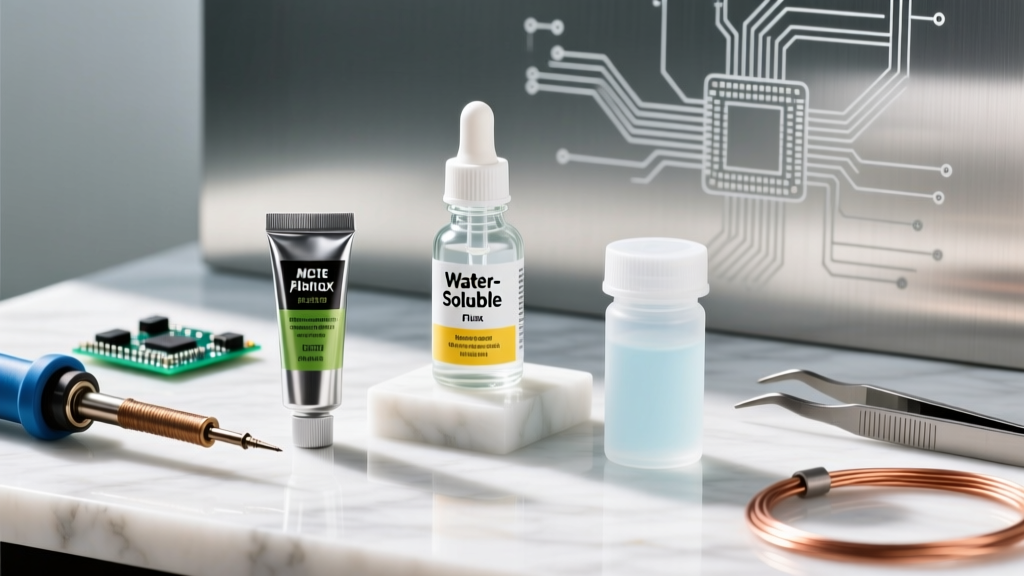
- Dendrite Growth and Short Circuits: If you mistakenly use a Water-Soluble (Organic Acid / OA) flux soldering wire on a dense PCB and fail to clean it with heated deionized water, the highly active acid residue will absorb ambient humidity. Under voltage, this creates conductive dendrites that grow between traces, eventually shorting the board. Fix: Reserve water-soluble wires strictly for chassis grounding or heavy lugs where ultrasonic cleaning is feasible.
- Grainy, Dull Joints on Thick Wire: A classic disturbed joint. The 60/40 alloy was moved during its 7°C pasty range. Fix: Switch to eutectic 63/37 or use a mechanical jig to hold the wire absolutely still for 3 full seconds after removing the iron.
Aligning with Industry Standards
For those pushing beyond hobbyist builds into professional or aerospace-adjacent DIY projects, adhering to established standards is non-negotiable. The IPC Standards for Electronic Assemblies, specifically IPC J-STD-004 (for flux requirements) and IPC J-STD-006 (for solder alloy specifications), dictate the exact testing parameters for flux corrosivity, solder wetting balance, and alloy purity. By selecting flux soldering wire from reputable manufacturers that explicitly certify compliance with these IPC standards, you eliminate the variable of contaminated or mislabeled alloys that plague cheap, unbranded spools found on discount marketplaces.
Ultimately, the "best" flux soldering wire does not exist in a vacuum. It is entirely contextual. By matching the alloy's melting profile, the flux's chemical activity, and the wire's physical diameter to the specific thermal mass and operational environment of your project, you transition from merely melting metal to engineering reliable, lifelong electrical connections.