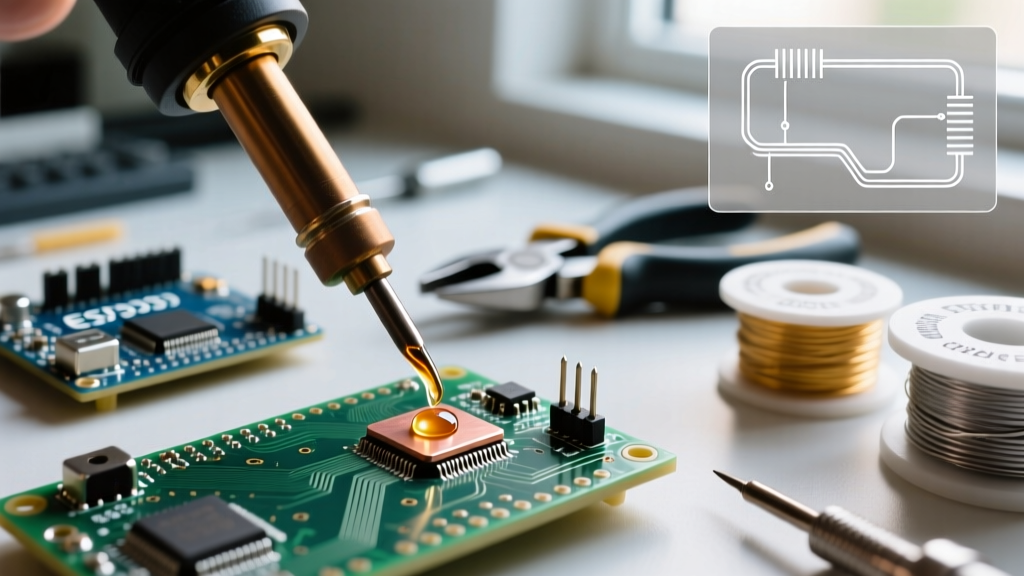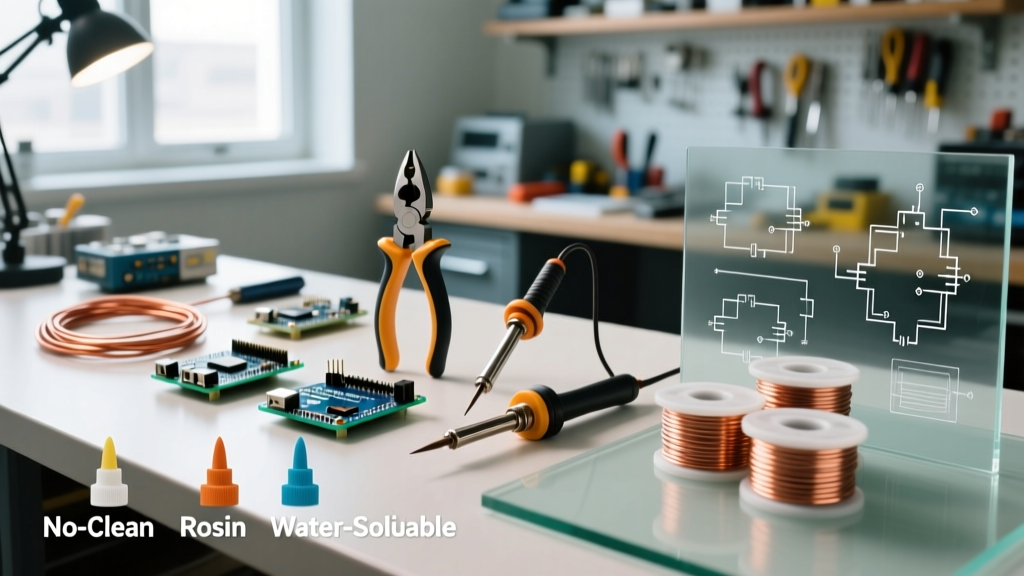

When building or repairing electronics in 2026, the solder alloy often gets all the glory, but the unsung hero of a reliable metallurgical bond is the flux. Without the correct flux for electrical soldering, even the most expensive Sn63/Pb37 or SAC305 wire will bead up, oxidize, and form catastrophic cold joints. As a senior technician, I have evaluated dozens of chemical formulations across consumer electronics, aerospace prototypes, and high-density server boards. This guide cuts through the marketing jargon to provide actionable, expert-level recommendations tailored to specific PCB assembly and rework scenarios.
The Chemistry of Wetting: Why Flux is Non-Negotiable
At a molecular level, copper and gold pads oxidize the moment they are exposed to ambient air. This oxide layer acts as a thermal and physical barrier. Flux contains active chemicals (activators) that dissolve these metal oxides at soldering temperatures (typically 180°C to 240°C), allowing the molten solder to 'wet' the pad and form an intermetallic compound (IMC). Furthermore, the flux vehicle creates a temporary vapor shield, preventing oxygen from re-oxidizing the joint while the solder cools.
Decoding IPC J-STD-004B: The Industry Standard
Before selecting a product, you must understand the IPC J-STD-004B classification system. This standard categorizes flux for electrical soldering by its base material, activity level, and halide content. Ignoring this standard is the leading cause of long-term field failures, such as electrochemical migration (dendrite growth).
| IPC Code | Base Material | Activity Level | Halides | Best Application |
|---|---|---|---|---|
| ROL0 | Rosin | Low | No | High-reliability aerospace, bare copper boards. |
| ROM1 | Rosin | Moderate | Yes | General through-hole, mildly oxidized pads. |
| REL0 | Resin/Synthetic | Low | No | Modern SMD no-clean assemblies, BGA rework. |
| ORH1 | Organic Acid | High | Yes | Heavy oxidation, thick ground planes (must clean). |
Expert Recommendations: Top Fluxes for 2026 Workbenches
Based on extensive thermal profiling, residue analysis, and wetting speed tests, here are the definitive recommendations for different soldering tasks.
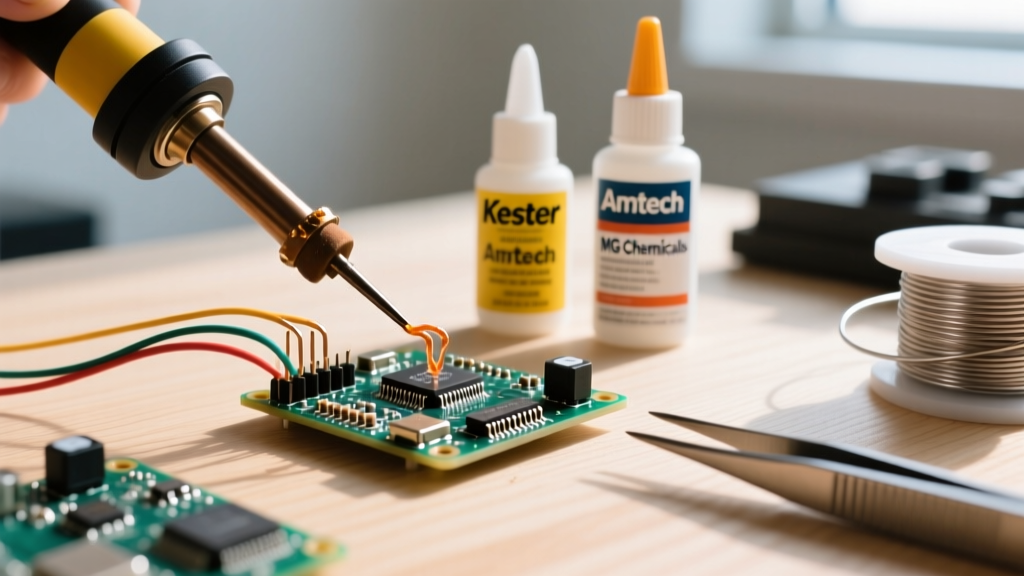
1. Amtech NC-559-V2-TF (Best Overall No-Clean for SMD)
Type: Synthetic Resin, No-Clean (REL0 equivalent)
Format: 10cc Syringe / 30g Jar
Estimated Cost: $38 - $45 USD
Amtech NC-559-V2-TF remains the gold standard for fine-pitch SMD rework and drag soldering. Its synthetic resin base is engineered to withstand the higher thermal profiles required by lead-free SAC305 alloys (up to 260°C) without charring. The 'TF' denotes its high-tack formulation, which acts as a mild adhesive, holding 0402 and 0201 components firmly in place before reflow. The residue is clear, hard, and electrically inert, making it safe to leave on high-impedance circuits.
2. Kester 186 Mildly Activated Rosin (Best for Through-Hole & Wire Tinning)
Type: Rosin Mildly Activated (RMA / ROM1)
Format: 4 oz Liquid Bottle
Estimated Cost: $14 - $18 USD
For tinning heavy-gauge wires, soldering large through-hole connectors, or working on vintage audio equipment, liquid Kester 186 is unmatched. The mild halide activators aggressively strip oxidation from older, tarnished copper without the violent spattering associated with water-soluble acids. While technically 'no-clean' in non-critical consumer electronics, I strongly recommend wiping the sticky residue with 99% isopropyl alcohol (IPA) to prevent dust accumulation and improve cosmetic inspection. For a comprehensive look at traditional rosin formulations, refer to the Kester flux product lineup.
3. Chip Quik SMD291AX Tacky Flux (Best for BGA Rework & Stenciling)
Type: No-Clean Tacky Flux
Format: 10g Syringe with blunt-tip needles
Estimated Cost: $19 - $24 USD
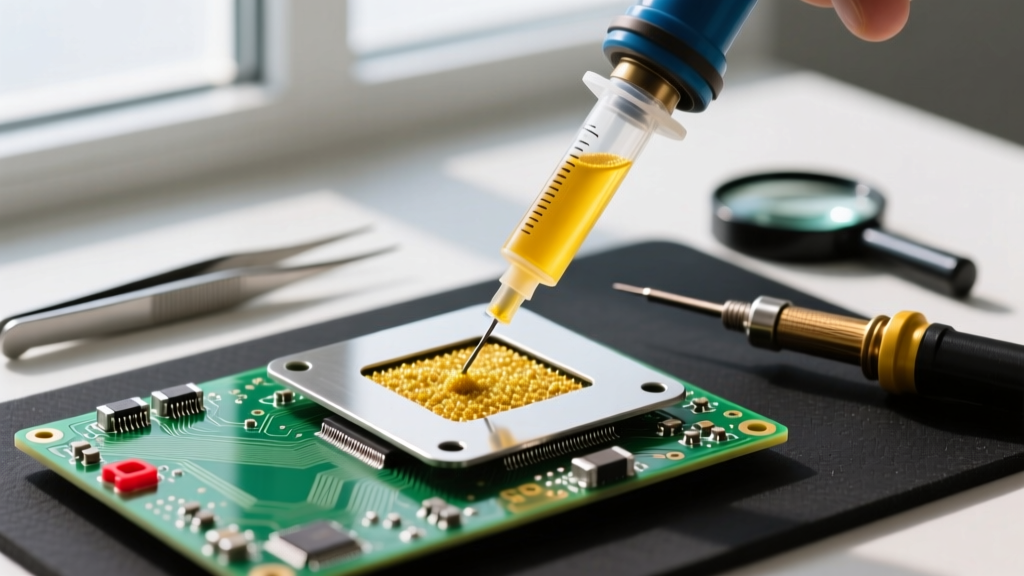
When reballing BGAs or reflowing QFN pads with a hot air rework station, you need a flux that won't boil off or splatter under high-velocity air. Chip Quik SMD291AX has a highly viscous, gel-like consistency. It maintains its wetting properties over a wide thermal window (150°C to 250°C). The included 22-gauge and 25-gauge blunt needles allow for sub-millimeter precision application directly onto IC pads.
4. MG Chemicals 8341 Water-Soluble (Best for Extreme Oxidation)
Type: Organic Acid (OA)
Format: 100ml Liquid Bottle
Estimated Cost: $16 - $20 USD
If you are soldering to heavily oxidized RF shielding cans, thick un-tinned copper ground planes, or dirty mechanical switch lugs, rosin and no-clean fluxes will fail. MG Chemicals 8341 uses organic acids to aggressively dissolve heavy corrosion. Warning: This flux is highly corrosive and electrically conductive when wet. It must be thoroughly cleaned with heated deionized (DI) water immediately after soldering. Never use tap water, as the chlorine and minerals will react with the flux to create highly conductive salts.
The 'No-Clean' Misconception: When You Actually Must Clean
Expert Insight: The term 'no-clean' does not mean 'cannot be cleaned' or 'safe in all environments.' It simply means the residue is non-corrosive and safe to leave on standard digital logic boards.
In 2026, with the proliferation of high-frequency RF circuits, precision analog sensors, and high-voltage power supplies, leaving no-clean residue is often a liability. You must clean no-clean flux residues in the following scenarios:
- High-Impedance Nodes: Flux residue has a dielectric constant that can introduce parasitic capacitance or leakage currents in picoampere-sensitive circuits (e.g., photodiode amplifiers).
- Conformal Coating: Acrylic and urethane conformal coatings will delaminate or fail to adhere if applied over no-clean flux residue. The board must be cleaned and baked prior to coating.
- Underfill and BGA Encapsulation: Epoxy underfills require a pristine surface to bond to the FR4 substrate and silicon die. Flux residue will cause micro-voids and delamination during thermal cycling.
For cleaning synthetic no-clean residues, standard 99% IPA is often insufficient as it merely smears the resin. Use a specialized saponifier or an aerosol flux remover (like Techspray Ecoline) paired with a stiff hog-hair brush, followed by a final IPA rinse.
Application Formats: Matching the Tool to the Joint
The chemical formulation is only half the battle; the delivery method dictates your workflow efficiency.
- Flux Pens: Ideal for quick touch-ups on through-hole components. However, the wick tips degrade over time, and they cannot deliver the volume required for drag-soldering a 100-pin QFP.
- Syringes with Blunt Needles: The professional standard for SMD work. Use a 27-gauge needle for 0402 passives and a 20-gauge needle for applying broad swaths of paste to connector pins.
- Dispensing Bottles with Micro-Tips: Best for applying liquid flux to large wire harnesses or multi-pin DIN connectors where capillary action is needed to draw the flux under the insulation.
Troubleshooting Common Flux Failures
Even with premium consumables, improper technique will ruin the joint. Here is how to diagnose flux-related defects:
1. Violent Splattering and Micro-Solder Balls
Cause: Applying liquid or paste flux to a cold board and immediately hitting it with a 350°C iron. The solvents and moisture in the flux boil instantly, exploding outward and throwing microscopic solder spheres across the PCB.
Solution: Preheat the PCB on a hotplate to 90°C - 110°C before applying flux and solder. This gently evaporates the volatile carriers.
2. Charred, Blackened Residue
Cause: Dwell time exceeds 4 seconds, or the iron temperature is set above 400°C. The organic resin base undergoes thermal degradation and carbonizes.
Solution: Lower the iron temperature to 320°C - 350°C. Use a thicker iron tip (e.g., a 2.4mm chisel instead of a micro-cone) to increase thermal mass, allowing the joint to flow in under 2 seconds without excessive heat.
3. Cold Joints Despite Adequate Heat
Cause: Flux burn-off. If you apply flux, wait 10 seconds while positioning the component, and then apply the iron, the activators have already vaporized before the solder melts.
Solution: Apply the flux and the solder simultaneously. For SMD rework, apply fresh flux immediately before the hot air or iron makes contact.
Final Thoughts on Flux Selection
Selecting the right flux for electrical soldering is not a one-size-fits-all decision. Stock your bench with a high-tack synthetic no-clean (like Amtech NC-559) for 90% of your SMD rework, a mildly activated rosin (like Kester 186) for heavy through-hole and wire work, and keep a water-soluble organic acid on hand for those stubborn, heavily oxidized mechanical joints. By aligning your flux chemistry with your specific thermal profile and cleaning capabilities, you will eliminate cold joints, prevent long-term corrosion, and achieve factory-grade reliability on every board you touch. For further technical data on advanced flux chemistries and wetting dynamics, consult the Indium Corporation soldering flux resources.