
The Chemistry and Purpose of DIY Soldering Flux
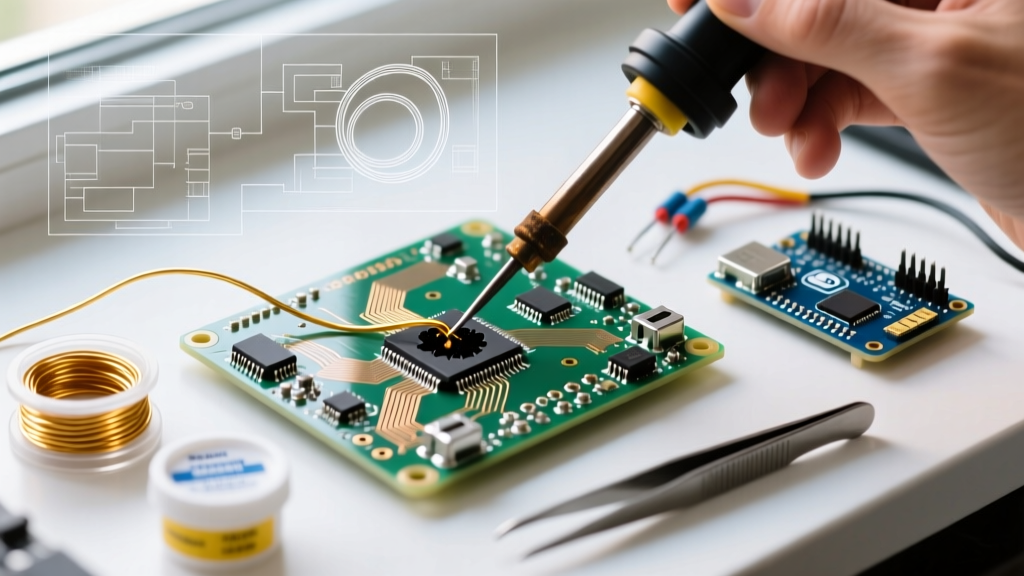
For hobbyists, repair technicians, and DIY electronics enthusiasts, commercial flux can be prohibitively expensive, especially when used in high volumes for tasks like re-tinning vintage PCBs or drag-soldering dense SOIC chips. Learning how to make soldering flux at home is a highly rewarding skill that reduces your consumable costs from roughly $0.80 per milliliter (for premium brands like Kester or Amtech) down to approximately $0.04 per milliliter. However, formulating your own flux requires a strict adherence to chemical safety, precise measurements, and an understanding of flux activation levels.
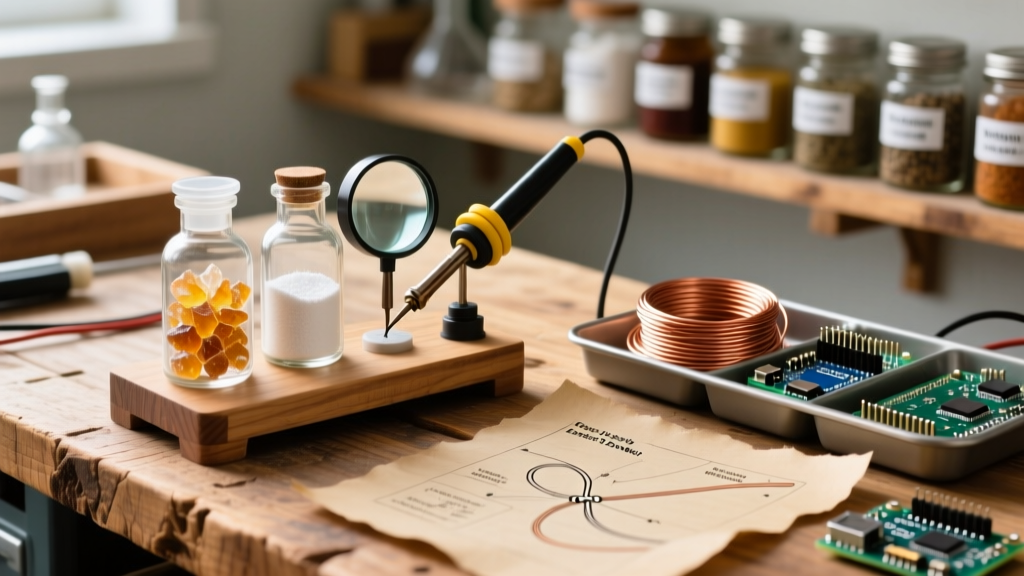
At its core, soldering flux is a chemical cleaning agent designed to remove metal oxides from copper pads and component leads, allowing the molten solder alloy to wet the surface and form a reliable intermetallic bond. The most common and safest base for DIY flux is colophony, widely known as gum rosin. According to the National Center for Biotechnology Information (PubChem), rosin is a solid form of resin obtained from pines and some other plants, mostly conifers, and it exhibits excellent thermal stability and non-corrosive properties at room temperature.
Safety First: Handling Solvents and Rosin Dust
Before measuring a single gram of rosin, you must establish a safe working environment. The primary solvent used in DIY liquid flux is Isopropyl Alcohol (IPA). While IPA is common in household first-aid kits, using it in bulk to dissolve resins introduces significant fire and inhalation hazards.
⚠️ CRITICAL SAFETY WARNING: Isopropyl Alcohol (99%) has a flash point of just 53°F (11.6°C). Vapors are heavier than air and can travel along surfaces to ignition sources. Never mix flux near an open flame, hot plate, or active soldering iron. Always work in a well-ventilated area or under a fume extractor equipped with an activated carbon filter.
The CDC NIOSH Pocket Guide to Chemical Hazards outlines that prolonged inhalation of IPA vapors can cause central nervous system depression, headaches, and respiratory irritation. When working with solvents and fine rosin powders, always wear nitrile gloves (latex degrades rapidly in the presence of high-purity alcohols) and ANSI Z87.1-rated safety goggles to protect against accidental splashes.
Sourcing the Right Ingredients
The quality of your homemade flux is entirely dependent on the purity of your raw materials. Do not substitute hardware store solvents or unknown rosin sources, as impurities will lead to ionic contamination and electrochemical migration (dendrite growth) on your PCBs.
- Gum Rosin (WW Grade): 'Water White' (WW) or 'Extra Light' grade rosin is highly purified and contains fewer organic impurities than darker grades (like X or M). It costs approximately $15 to $20 per pound. Avoid 'violin rosin' or sporting goods rosin, as these often contain tackifiers, waxes, or metallic driers that will ruin your solder joints.
- Isopropyl Alcohol (99%+): You must use anhydrous or 99%+ IPA. Standard 70% rubbing alcohol contains 30% distilled water. When water-laden flux hits a 350°C soldering iron tip, it instantly vaporizes, causing violent spattering that can throw molten solder onto your skin or eyes. Furthermore, trapped water under components can cause 'popcorning' during reflow. A gallon of 99% IPA costs around $25 to $30.
- Activators (Optional): Pure rosin is classified as Type L (Non-Activated) under IPC standards. To create a Mildly Activated (RMA / Type M) flux that cuts through heavier oxidation, you can add Salicylic Acid or Adipic Acid at a ratio of 1% to 2% by weight of the rosin. Salicylic acid powder is inexpensive and widely available from chemical suppliers.
Formulation Ratios and Viscosity Matrix
The viscosity of your flux dictates how it is applied. A thin flux is ideal for flux pens and capillary action under QFN chips, while a thick paste is necessary for SMD rework and keeping components in place before reflow. Below is the precise formulation matrix by weight.
| Flux Type | Rosin (WW) | Solvent (99% IPA) | Activator (Salicylic) | Best Application Method |
|---|---|---|---|---|
| Thin Liquid (Pen) | 25% | 75% | 0% - 1% | Flux pens, fine brushes, capillary wicking |
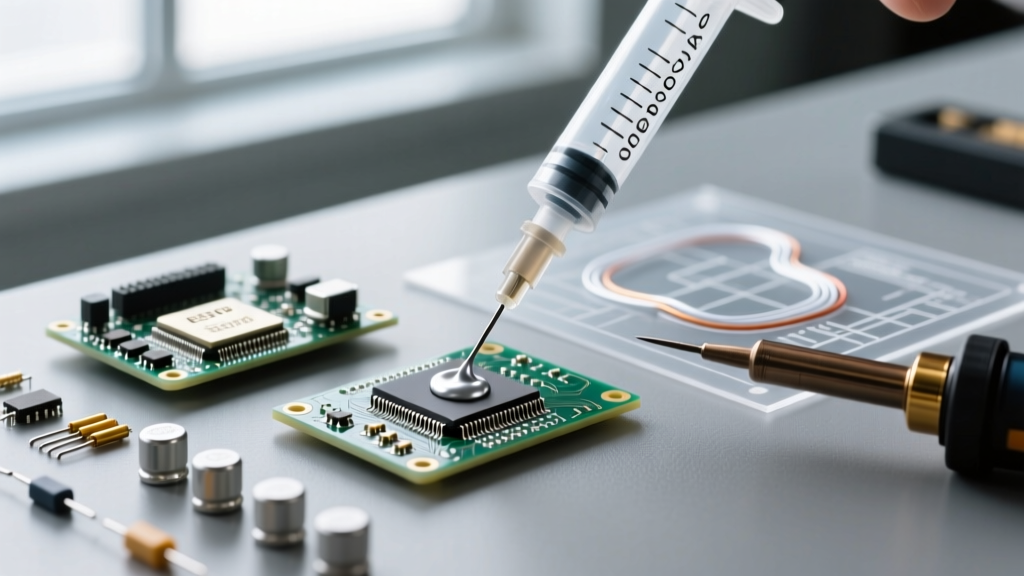
| Standard Liquid (Tacky) | 45% | 55% | 1% - 2% | Syringe dispensing, general through-hole/SMD |
| High-Viscosity Paste | 65% | 35% | 1% - 2% | Needle syringe, BGA stenciling, drag soldering |
Step-by-Step: How to Make Soldering Flux
Follow this exact procedure to create a 500ml batch of Standard Liquid (Tacky) Flux. This recipe yields a mildly activated (RMA) equivalent that performs exceptionally well on oxidized vintage boards.
Phase 1: Preparation and Milling
- Weigh the Solids: Using a digital scale accurate to 0.1g, measure out 180 grams of WW Grade Rosin and 4 grams of Salicylic Acid powder.
- Crush the Rosin: Raw rosin comes in large, glass-like chunks. Place the chunks inside a heavy-duty freezer bag, wrap it in a towel, and crush it with a rubber mallet until it resembles coarse sand. Pro Tip: Increasing the surface area reduces dissolution time from 48 hours down to roughly 4 hours.
- Combine Solids: Transfer the crushed rosin and salicylic acid into a chemically resistant glass mason jar or an HDPE plastic container. (Avoid PET or thin plastics, as high-concentration IPA can degrade them over time).
Phase 2: Dissolution and Filtration
- Add Solvent: Weigh out 220 grams of 99% Isopropyl Alcohol and pour it into the jar. Seal the lid tightly.
- Agitate: Shake the jar vigorously for 5 minutes. Let it sit for an hour, then shake again. Repeat this process until the rosin is completely dissolved. The liquid will turn a translucent, rich amber color.
- Filter the Flux: Raw gum rosin naturally contains microscopic bark, dust, and insect debris. Set up an unbleached paper coffee filter (or 10-micron laboratory filter paper) inside a funnel and decant the dissolved flux into a clean, secondary amber glass bottle. This prevents debris from clogging your flux pens or syringe needles later.
Storage, Shelf Life, and Disposal Best Practices
Homemade rosin flux is highly sensitive to UV light and evaporation. If stored in clear glass, UV radiation will slowly polymerize the rosin, causing it to turn cloudy and lose its thermal reactivity. Always store your finished flux in amber or cobalt blue glass bottles in a cool, dark cabinet. When stored properly at room temperature (68°F / 20°C), DIY rosin flux has an indefinite shelf life, though the solvent may slowly evaporate if the cap seal is poor. If the flux thickens over time, simply add a few milliliters of 99% IPA and shake to restore the original viscosity.
For disposal, never pour rosin-alcohol mixtures down the drain. The rosin will solidify in your plumbing, and the alcohol is a hazardous volatile organic compound (VOC). Allow the solvent to evaporate completely in a well-ventilated outdoor area, then dispose of the hardened rosin pucks in your standard solid waste bin, or take the liquid to a local hazardous waste collection facility.
When to Avoid DIY Flux (Edge Cases & High-Reliability)
While homemade rosin flux is phenomenal for hobbyist projects, audio equipment repair, and general prototyping, it is entirely inappropriate for certain mission-critical applications. The IPC J-STD-004 standard mandates strict testing for flux residues, including Surface Insulation Resistance (SIR) and electrochemical migration.
You must never use DIY flux in the following scenarios:
- Medical and Aerospace Devices: These industries require traceable, batch-tested fluxes with guaranteed ionic purity levels that a home lab cannot verify.
- BGA (Ball Grid Array) Rework: BGA rework requires specialized 'tacky' no-clean fluxes with precise rheology (flow characteristics) to prevent component shifting and head-in-pillow defects during reflow. DIY paste lacks the necessary synthetic thixotropic agents.
- High-Impedance Analog Circuits: Even mildly activated DIY flux can leave microscopic ionic residues that create leakage currents in high-impedance sensor networks or precision audio DACs. For these, use commercial, high-purity no-clean fluxes and follow up with an ultrasonic cleaning bath.
Frequently Asked Questions
Can I use denatured alcohol instead of Isopropyl Alcohol?
Yes, high-proof denatured ethanol (often sold as shellac thinner) is an excellent solvent for rosin and evaporates slightly slower than IPA, which some technicians prefer for extended drag-soldering sessions. However, ensure it does not contain bitterants or denatonium benzoate, which can leave a conductive residue on the PCB.
Why is my DIY flux leaving a white, crusty residue after soldering?
A white, chalky residue is usually unreacted activator (salicylic acid) or oxidized rosin that has been burned by excessive heat. If you are using a soldering iron set above 400°C (750°F), you are thermally degrading the flux. Lower your iron temperature to 320°C - 350°C, or clean the board post-soldering with fresh 99% IPA and a stiff-bristled ESD-safe brush.
Is DIY flux considered 'No-Clean'?
Pure, non-activated rosin (Type L) is generally considered safe to leave on a PCB, as it is non-corrosive and non-conductive at room temperature. However, once you add salicylic acid to create an RMA (Type M) flux, the residue becomes mildly acidic and must be cleaned off with a solvent or specialized saponifier to prevent long-term corrosion of the copper traces.