
The Short Answer: The Rosin-Core Misconception
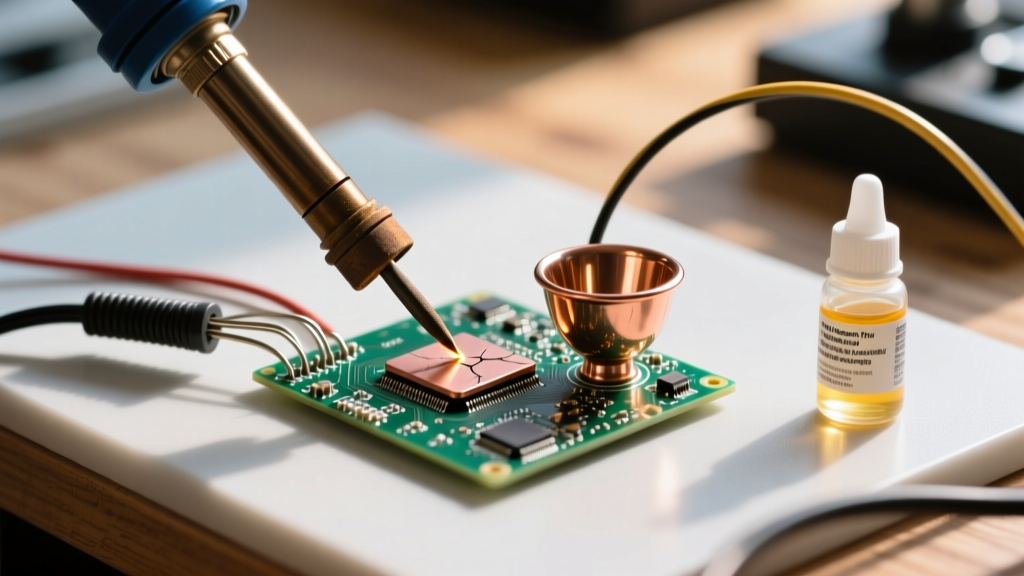
When electronics hobbyists and junior technicians ask, "do I need flux to solder," they are typically holding a spool of rosin-core solder wire, assuming the built-in core is a universal panacea. The short answer is: for pristine, fresh through-hole components, maybe not. For surface mount devices (SMD), rework, or any PCB that has seen ambient humidity for more than a few days, skipping external flux is a catastrophic financial mistake.
To understand why, we must look past the metallurgy and examine the economics of soldering. The cost of a premium no-clean or rosin-activated flux is measured in fractions of a cent per joint. The cost of a lifted PCB pad, a destroyed $15 microcontroller, or a degraded $40 soldering iron tip is exponentially higher. This cost analysis breaks down the true financial impact of omitting external flux from your workbench.
The Metallurgical Economics of Wetting
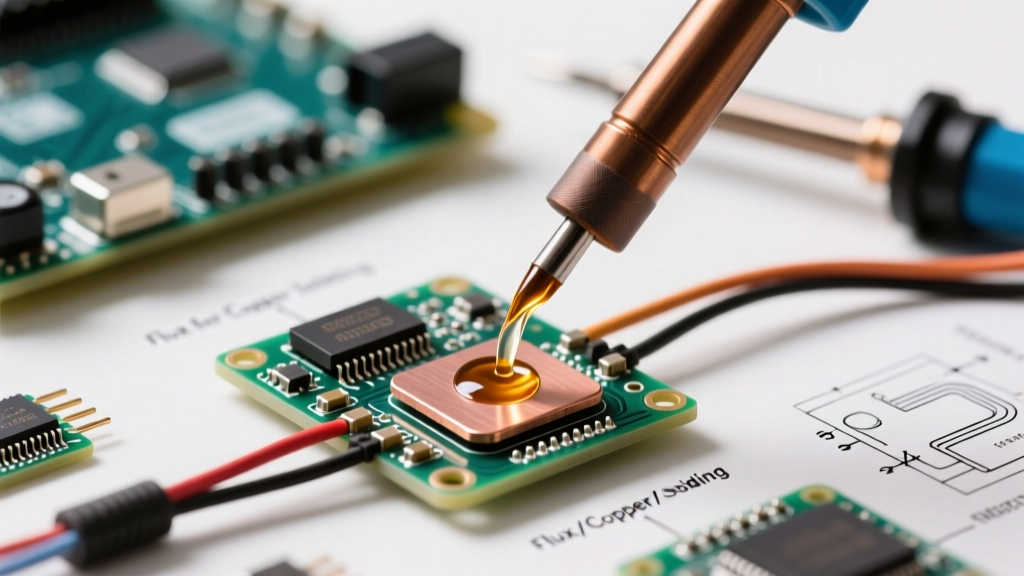
Flux is not merely a cleaning agent; it is a chemical catalyst that alters surface tension. According to the guidelines established by IPC standards, proper wetting requires the molten solder to form an intermetallic bond with the copper pad. When copper is exposed to air, it forms copper oxide. Molten solder will not bond to copper oxide; it will ball up and sit on the surface, creating a high-resistance cold joint.
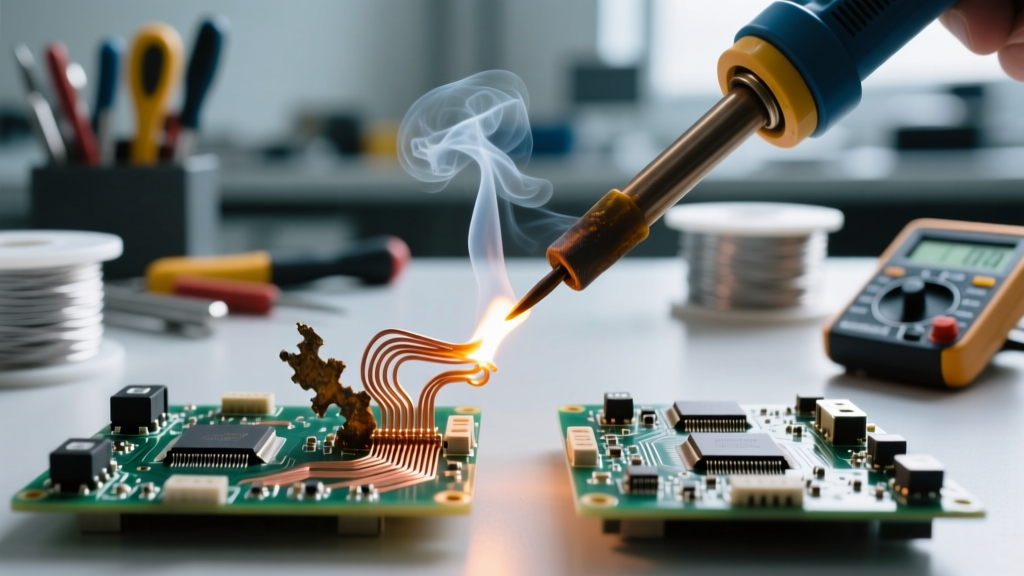
External flux dissolves this oxide layer instantly. Without it, the operator must rely on prolonged thermal transfer to burn through the oxidation. This increases dwell time from an optimal 1.5 seconds to a dangerous 5+ seconds. This extra heat exposure is the root cause of the most expensive failures in electronics assembly.
Breakdown: Rework vs. Preventative Consumables
Let us quantify the immediate costs of a standard SMD rework scenario involving a 0805 capacitor and a fine-pitch IC.
| Scenario | Consumable Cost | Rework / Damage Cost | Total Cost | Time Lost |
|---|---|---|---|---|
| Using MG Chemicals 8341 Paste Flux | $0.02 per joint | $0.00 (First-pass success) | $0.02 | 15 seconds |
| Skipping Flux (Relying on Core Only) | $0.00 | $6.50 (Desoldering wick + flux to fix bridging) | $6.50 | 4 minutes |
| Skipping Flux (Pad Liftoff Occurs) | $0.00 | $45.00 (Replacement PCB + shipping) | $45.00 | 2 weeks |
As the data illustrates, the upfront savings of skipping flux are entirely negated by the first instance of solder bridging or cold-joint rework.
Quantifying Failure Modes by Component Type
The financial risk of skipping flux scales directly with component density and package type. Here is how omitting flux impacts different assembly categories:
1. Surface Mount Device (SMD) Passives
When soldering 0603 or 0402 resistors and capacitors without external flux, the most common failure mode is tombstoning. Because the flux core in the wire takes milliseconds to activate, one pad may wet before the other, causing the surface tension to pull the component upright. Fixing a tombstoned 0402 capacitor requires a micro-soldering iron, precision tweezers, and immense skill. If the component fractures during rework, you must source a replacement, halting production.
2. Fine-Pitch ICs and QFN Packages
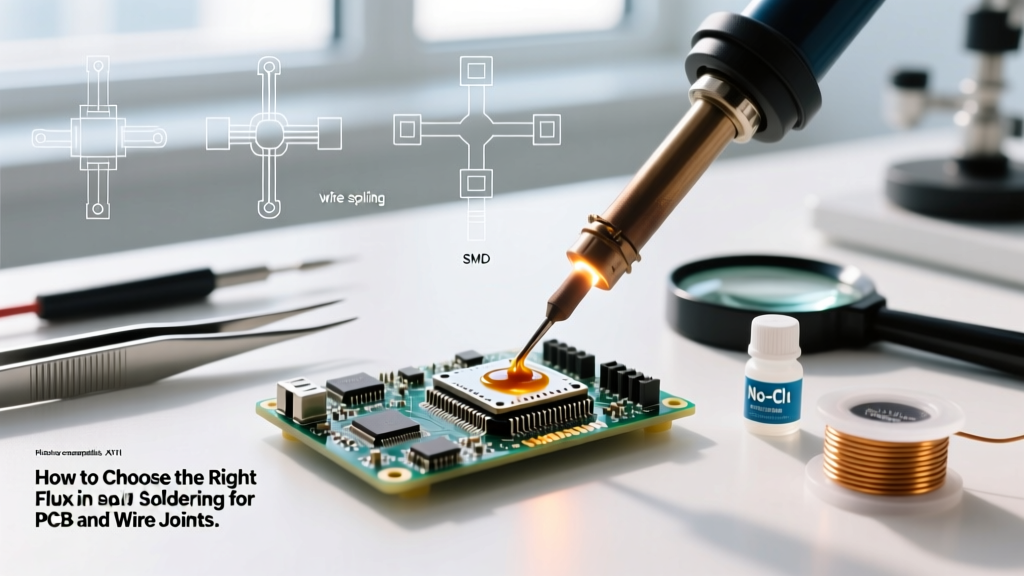
For Quad Flat No-lead (QFN) packages or microcontrollers with 0.5mm pitch legs, external gel flux is mandatory. The flux provides the necessary surface tension to pull molten solder away from adjacent pins, preventing bridging. Without it, solder bridges are almost guaranteed. While desoldering braid (like Chemtronics 80-1-5, costing roughly $6 per spool) can fix bridges, dragging wick across fine pins without copious external flux often results in torn solder masks and scratched traces.
3. Through-Hole Technology (THT) on Multi-Layer Boards
Modern PCBs utilize plated through-holes (PTH) that connect internal ground and power planes. These planes act as massive heat sinks. If you attempt to solder a THT connector without applying liquid or paste flux to the barrel, the solder will freeze before reaching the top of the hole. The resulting incomplete fill violates industry reliability standards and can lead to thermal cracking of the via during operation, resulting in a field failure that costs hundreds of dollars in warranty returns.
"The most expensive tool on your workbench is not your oscilloscope or your hot air rework station; it is the time spent diagnosing a cold joint that could have been prevented with a $0.05 dab of no-clean flux." — Senior Rework Engineering Axiom
The Hidden Cost of Tip Degradation
One of the most overlooked financial penalties of skipping flux is the destruction of your soldering iron tips. High-quality lead-free tips from brands like Hakko, Weller, or Pace feature an iron plating layer over a copper core to prevent solder erosion.
When you solder without external flux, the molten solder does not flow efficiently. Frustrated operators inevitably apply mechanical pressure, pressing the iron tip harder against the pad to force heat transfer. This physical abrasion, combined with the need to leave the iron on the joint for 5 to 8 seconds instead of 2, rapidly degrades the iron plating. Once the plating pits or cracks, the molten solder eats the copper core, ruining the tip. Replacing a genuine Hakko T18 tip costs around $8 to $12. Burning through three tips a month due to poor wetting and excessive pressure adds $30+ to your monthly overhead—a cost entirely avoided by using flux.
ROI of Premium Fluxes: Syringe vs. Jar Economics
Not all fluxes are created equal, and selecting the right chemistry impacts your bottom line. For general DIY and repair, the debate usually falls between rosin-based and no-clean synthetic fluxes.
- MG Chemicals 8341 No-Clean Paste Flux (10g Syringe): Priced around $18. This ROL0 (Rosin, Low-activation, 0% halides) flux is ideal for SMD rework. A 10g syringe contains enough flux for approximately 2,000 to 3,000 SMD joints. The cost per joint is roughly $0.006.
- Amtech NC-559-V2-TF (10cc Syringe): Priced around $25. This is a premium synthetic no-clean flux widely used in professional BGA reballing and micro-soldering. Its superior wetting action reduces hot-air rework time by up to 30%, saving on thermal stress and operator time.
- Kester 44 Rosin Flux (Jar/Pen): Excellent for heavy-duty through-hole and wire tinning, but requires isopropyl alcohol (IPA) cleaning afterward. The cost of IPA and cleaning labor must be factored into your total assembly cost if you choose rosin-activated (RA) fluxes for consumer electronics.
Final Verdict: When Can You Actually Skip Flux?
To directly answer the question: do I need flux to solder? Yes, in 95% of real-world scenarios. The only times you can safely rely solely on the flux core inside your solder wire are:
- Freshly manufactured, unoxidized through-hole components being soldered to a brand-new, HASL or ENIG-finished PCB.
- Tinning fresh, bare copper wire that has just been mechanically stripped and shows no signs of tarnish.
- Quick, non-critical prototyping where joint longevity and aesthetic inspection are irrelevant.
For everything else—including SMD assembly, rework, repair, and soldering to oxidized surfaces—external flux is not an optional luxury. It is a vital, high-ROI consumable that protects your components, preserves your soldering iron tips, and ensures the electrical integrity of your final product. Treat flux as an insurance policy that costs a fraction of a penny per application, but pays out in saved time, saved copper, and saved reputation.