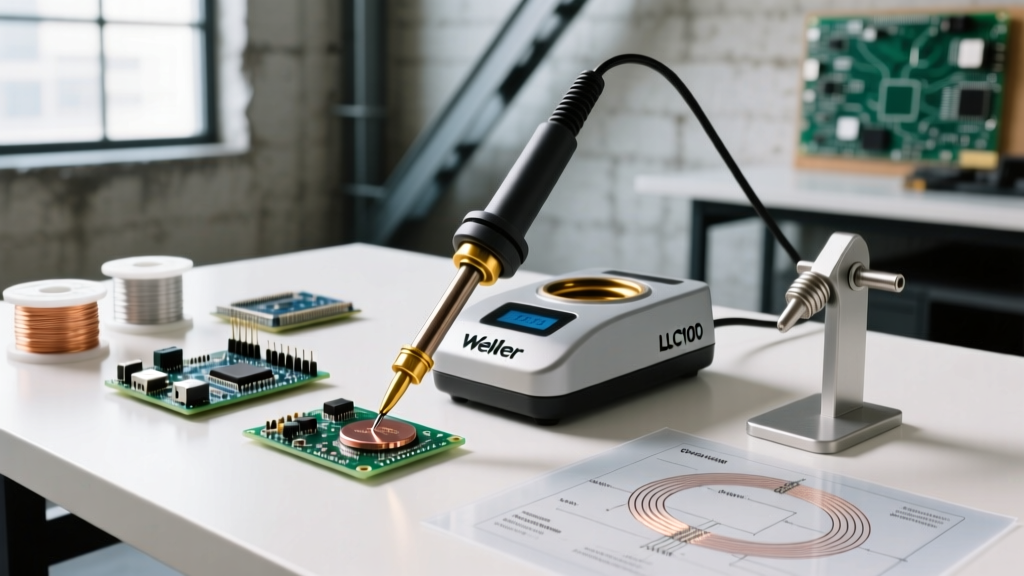

The Weller WLC100 in 2026: A Budget Legend Under the Microscope
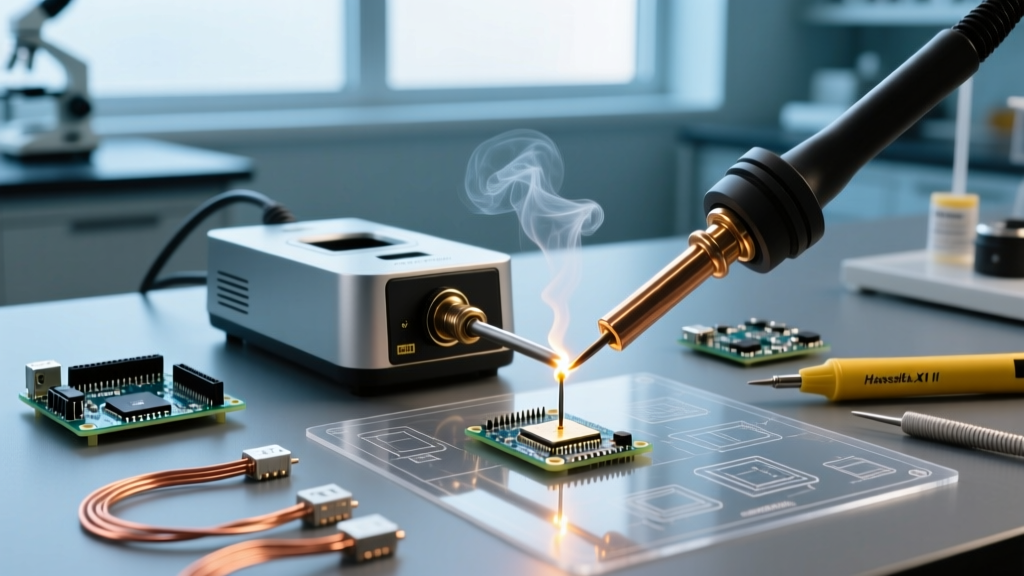
For over a decade, the Weller soldering WLC100 has been the default entry-level soldering station for hobbyists, students, and junior repair technicians. Retailing at a highly accessible price point, it is often the first 'real' station a maker purchases after outgrowing cheap plug-in irons. However, the electronics landscape in 2026 is vastly different. With the market now saturated by USB-C PD-powered smart irons and budget closed-loop digital stations, the economic argument for the WLC100 requires a serious re-evaluation.
In this cost analysis, we look past the initial sticker price. We will dissect the true 5-year Total Cost of Ownership (TCO), factoring in tip degradation rates, energy inefficiencies, thermal recovery penalties, and the hidden costs of open-loop variable power control.
Quick Specs: Weller WLC100- Power Output: 5W to 40W (Variable, Open-Loop)
- Control Type: Triac phase-angle control (Power dial, NOT temperature)
- Tip Series: Weller ST Series (Copper core, iron-plated)
- Average 2026 Retail Price: $55.00 - $65.00 USD
The Open-Loop Reality Check: Variable Power vs. Temperature Control
The most critical misunderstanding among budget buyers is confusing variable power with temperature control. The WLC100 does not feature a thermocouple or closed-loop feedback system. The rotary dial simply adjusts the wattage delivered to the nichrome heating element.
According to the NASA-STD-8739.3 Workmanship Manual, maintaining precise thermal profiles is critical to prevent thermal shock to components and avoid cold solder joints. Because the WLC100 lacks active temperature regulation, maintaining these strict profiles relies entirely on operator intuition. If you leave the dial at 40W while not actively soldering, the tip temperature will skyrocket, rapidly oxidizing the iron plating and destroying the tip. This operational quirk directly inflates long-term consumable costs.
Initial Capital Outlay: 2026 Market Comparison
Before analyzing long-term costs, we must establish the baseline entry price. How does the WLC100 stack up against modern alternatives in 2026?
| Model | Type | Avg. Price (2026) | Feedback Loop |
|---|---|---|---|
| Weller WLC100 | Variable Power Station | $58.00 | None (Open-Loop) |
| Pinecil V2 (w/ 65W PSU) | Smart Iron (PD/DC) | $52.00 | Closed-Loop (PID) |
| Hakko FX-888D | Digital Station | $115.00 | Closed-Loop |
| Weller WE1010NA | Digital Station | $125.00 | Closed-Loop |
At first glance, the WLC100 appears competitive. However, when factoring in the required 65W USB-C power supply for the Pinecil V2, the WLC100 actually carries a higher initial capital cost than the most advanced smart iron on the market, while offering vastly inferior thermal management.
The Hidden Cost of ST-Series Tips
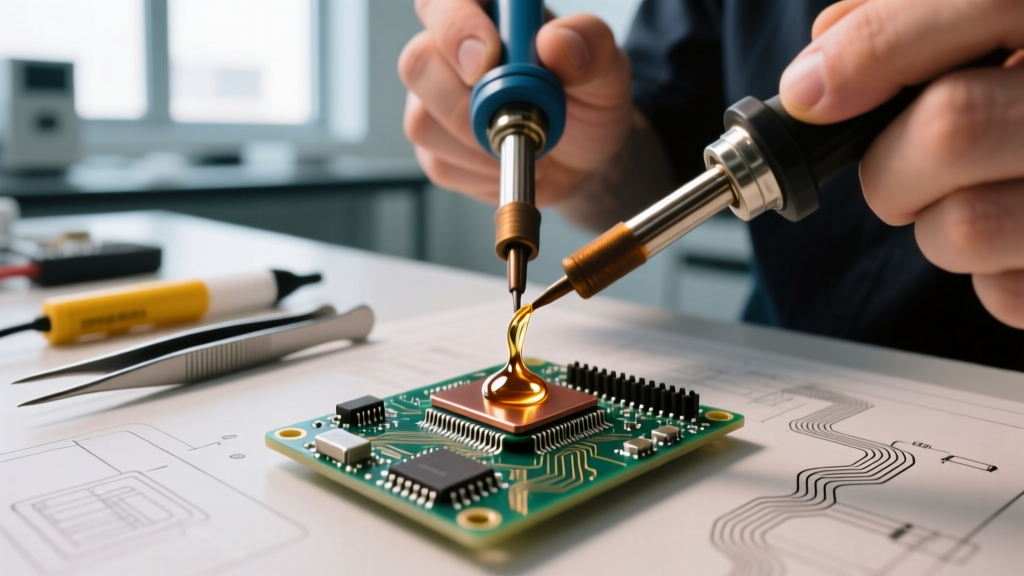
The WLC100 uses Weller's ST-series tips (e.g., ST-1 conical, ST-2 screwdriver, ST-3 chisel). These tips feature a high-conductivity copper core plated with a protective layer of iron to prevent solder dissolution.
Copper Leaching and Plating Breaches
When operating an open-loop station like the WLC100, users frequently crank the dial to maximum (40W) to compensate for the lack of thermal mass when soldering large ground planes. This excessive, unregulated heat accelerates the oxidation of the iron plating. Once the iron plating breaches, the molten solder aggressively dissolves the underlying copper—a phenomenon known as copper leaching.
While the IPC standards for soldering mandate specific tip wetting and maintenance protocols to extend tip life, the WLC100's inability to drop into a low-temperature 'sleep mode' means tips left on a bench will degrade in a fraction of the time compared to closed-loop stations.
- Weller ST Tip Cost: ~$6.50 per tip
- Weller ET Tip Cost (for WE1010): ~$9.00 per tip
- Pinecil V2 (TS100 compatible) Tip Cost: ~$4.50 per tip
Despite the ST tips being individually cheaper, the replacement frequency on a WLC100 is significantly higher for anyone who does not practice meticulous, manual power-cycling habits.
Maintenance and Common Failure Modes
To accurately forecast a 5-year TCO, we must account for hardware degradation. The WLC100 is built with budget-friendly components that exhibit specific failure modes over time:
- Potentiometer Scratchiness: The rotary power dial uses a carbon-track potentiometer. After 2 to 3 years of regular use, carbon dust accumulates, causing erratic power delivery and localized overheating of the iron.
- Nichrome Heater Element Fracture: The handpiece (equivalent to the WP35) houses a fragile ceramic core wrapped in nichrome wire. Dropping the handpiece even from a standard desk height frequently cracks the ceramic, requiring a $25 replacement heater assembly.
- Cord Degradation: The silicone jacket on the handpiece cord stiffens over time when exposed to sustained high-heat environments, eventually leading to internal wire fatigue.
5-Year Total Cost of Ownership (TCO) Matrix
The following matrix models the 5-year cost for a hobbyist or light repair technician soldering approximately 20 hours per month. We assume the WLC100 user replaces tips twice as often as a closed-loop user due to open-loop oxidation, and factors in one heater element replacement.
| Cost Category | Weller WLC100 | Pinecil V2 (Smart) | Weller WE1010NA |
|---|---|---|---|
| Initial Hardware | $58.00 | $52.00 | $125.00 |
| 5-Year Tip Consumption | $78.00 (12 tips) | $36.00 (8 tips) | $54.00 (6 tips) |
| Heater/Part Replacements | $25.00 (1 heater) | $15.00 (1 heater) | $0.00 |
| Energy Inefficiency Penalty | ~$12.00 | ~$4.00 | ~$8.00 |
| Estimated 5-Year TCO | $173.00 | $107.00 | $187.00 |
Note: Energy penalties are calculated based on the WLC100 drawing continuous wattage without the auto-sleep current reduction found in modern PID controllers, scaled to average 2026 residential kWh rates.
The 'Time-is-Money' Deficit: Thermal Recovery
Cost is not strictly measured in dollars; it is also measured in time. The WLC100's 40-watt transformer is undersized for modern, heavy-copper PCBs. When soldering a joint connected to a large ground plane, the WLC100 experiences severe thermal droop.
Because there is no thermocouple to detect the temperature drop and surge the power, the operator must either wait 15-20 seconds for the iron to passively reheat or risk a cold, unreliable joint. If you are running a small repair business or assembling prototype boards, losing 15 seconds per joint across a 500-pad board translates to hours of lost labor. In a professional context, the WLC100's TCO is astronomically higher due to labor inefficiencies and increased rework rates.
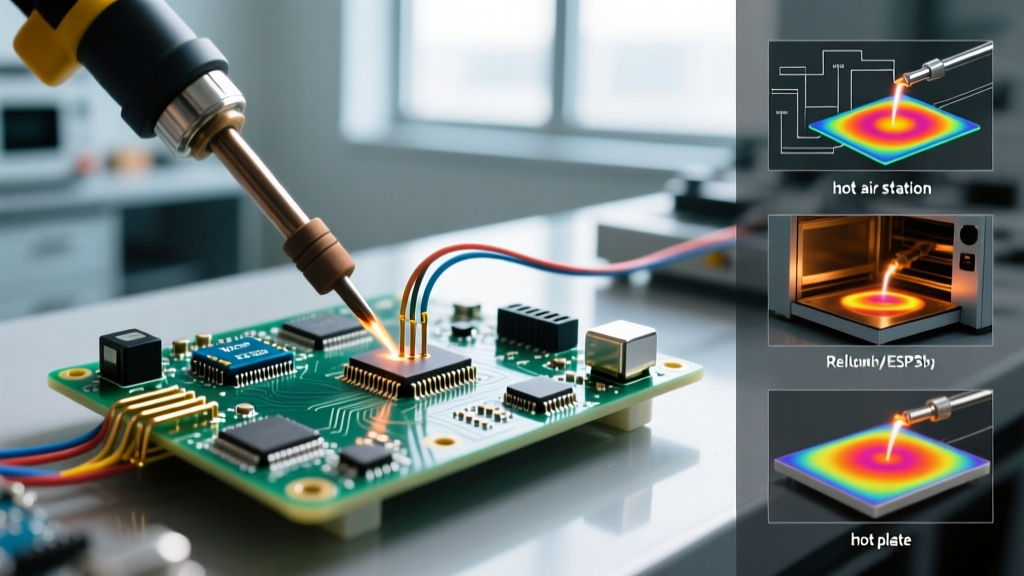
Expert Insight: Never use the WLC100 for SMD rework or heat-sensitive components like electrolytic capacitors and RF modules. Without closed-loop regulation, the tip can easily exceed 400°C (750°F) at maximum power, instantly delaminating PCB pads or venting capacitor electrolyte.
Frequently Asked Questions (FAQ)
Can I upgrade the WLC100 to be temperature controlled?
No. The WLC100 handpiece does not contain the necessary thermocouple wiring to support closed-loop feedback. The base station lacks the operational amplifiers and microcontroller required to read thermal data. You cannot hack it into a temperature-controlled station.
Is the WLC100 safe for beginners?
It is safe from an electrical standpoint (assuming proper grounding and purchasing from authorized distributors to avoid counterfeits), but it teaches bad habits. Beginners often leave the dial on 'High' and walk away, ruining tips and burning flux. A smart iron with an auto-sleep feature is generally safer and more educational for novices in 2026.
What is the best alternative if I already own a WLC100 base?
Unfortunately, the WLC100 base is proprietary and does not support adapters for modern low-voltage smart irons. The best financial move is to sell the WLC100 on the secondhand market (they retain decent resale value among traditionalists) and reinvest the funds into a Pinecil V2 or a used Hakko FX-888D.
Final Verdict
The Weller soldering WLC100 is a durable, mechanically simple tool that has earned its place in electronics history. However, from a strict 2026 cost-analysis perspective, it is no longer the most economical choice. The hidden costs of accelerated tip oxidation, combined with the labor penalties of poor thermal recovery, push its 5-year TCO higher than vastly superior smart irons. Unless you specifically require a rugged, analog, transformer-based station immune to ESD and digital noise in high-interference environments, your capital is better deployed elsewhere.